
Best Time to Visit Florida Keys: Perfect Weather & Quiet Beaches

If you’re looking for the absolute sweet spot to visit the Florida Keys, aim for March to May. It's the perfect window where you get those picture-perfect sunny days and warm water without having to wrestle with the peak winter crowds.
Planning a trip during spring lets you sidestep the winter vacation rush while also getting in just before the intense summer heat and hurricane season kicks in. It’s the best of both worlds.
Your Quick Guide to Florida Keys Travel Seasons

Here's the thing about planning a trip to this chain of tropical islands: it's less about avoiding "bad" weather and more about picking the vibe you're after. Think of it like choosing the right gear for an adventure. Each season offers a totally different experience, from the high-energy buzz of winter to the super chill, laid-back feel of the fall.
To make it simple, the year in the Keys really breaks down into four distinct travel seasons. Each one has its own personality, which will affect everything from hotel prices and how many people you'll be sharing the beach with to the kinds of activities you'll enjoy most.
The Four Travel Seasons
Getting a handle on these seasons is the key to timing your trip just right. Are you looking for lively festivals and don't mind paying a premium for perfect weather? Or are you hunting for a quiet escape with the best deals you can find?
- Peak Season (Winter): This is when the Keys are in their prime. The weather is mild, dry, and absolutely beautiful, drawing in everyone trying to escape the cold up north.
- Shoulder Season (Spring): This is the insider's choice. You get fantastic weather right as the winter crowds start to head home.
- Off-Season (Summer): Things get hotter and you can expect some afternoon rain, but you're rewarded with lower prices and some of the best conditions for getting out on the water.
- Low Season (Fall): This time of year carries the highest risk of storms, but for travelers willing to roll the dice, it offers the fewest crowds and the absolute best prices.
Florida Keys Travel Seasons at a Glance
To give you a quick snapshot, here’s a table breaking down what to expect during each season. It's a great tool to help you match your vacation goals with the perfect time of year.
| Season | Months | What to Expect | Potential Downsides |
|---|---|---|---|
| Peak | Dec – Feb | Perfect weather (75°F avg), lively events, lots of people. | Highest prices, crowded attractions, need to book way in advance. |
| Shoulder | Mar – May | Great weather (80°F avg), warm water, thinning crowds. | Prices are still relatively high, spring break can be busy. |
| Off-Season | Jun – Aug | Hot & humid (89°F avg), great for water sports, lower prices. | Afternoon thunderstorms, start of hurricane season, some humidity. |
| Low | Sep – Nov | Fewest crowds, best deals on flights and hotels. | Peak hurricane season risk (September is highest), some businesses close. |
Ultimately, there’s a perfect season for everyone in the Florida Keys. It just comes down to balancing what's most important to you.
Don’t forget that the Keys are famous for more than just coral reefs. When you're planning your days, make sure to set aside some time to just relax on the sand. You can learn all about the amazing Florida Keys sandbars in our detailed guide.
Choosing the best time to visit is all about your personal priorities. Whether you're dreaming of having a secluded beach all to yourself or you want to be right in the middle of the bustling energy of Duval Street, there’s a perfect season waiting for you. This guide will walk you through each one so you can book your trip with total confidence.
A Month by Month Guide to the Florida Keys
To really nail down your perfect travel window, you have to look beyond broad seasons and get to know the unique personality each part of the year brings. Think of it this way: a trip in January is a completely different world from one in July, even though you’re in the same slice of paradise.
Let's break down the year to find the best time to visit the Florida Keys for your travel style, balancing the all-important trio of weather, costs, and crowds.
Peak Season: The Winter Escape (December to February)
From December through February, the Florida Keys basically become the unofficial capital for "snowbirds" escaping the cold. This is Peak Season, and for good reason. The weather is nothing short of perfect, with daily temps hanging out in the mid-70s, almost no rain, and humidity that has thankfully taken a vacation of its own. It's the kind of weather where you might need a light jacket at night but spend your days soaking up the comfortable warmth.
The whole place is buzzing with a vibrant, festive energy, especially around the holidays. The streets are alive, restaurants are packed, and you can just feel a sense of celebration in the air. This period is loaded with events, from holiday boat parades lighting up the harbors in December to fantastic food and wine festivals in January.
But, all this perfection comes with a price tag. This is the most expensive time to visit, hands down. You'll see the highest prices for hotels, flights, and even rental cars. Booking your stay and any must-do tours well in advance—I’m talking six to nine months out—is pretty much non-negotiable if you want to lock in your spot.
Shoulder Season: The Sweet Spot (March to May)
Once the winter crowds start packing their bags, the Keys slide into what many locals and seasoned visitors consider the absolute best time to visit. This is the shoulder season, running from March to May. The weather stays gorgeous as temperatures climb into the low 80s, but the real magic is what’s happening in the water. The Atlantic has been soaking up the sun, making it perfect for swimming and snorkeling without that little chill you might get in January.
While early March can still feel a bit crowded with spring breakers, things really start to mellow out by April and May. This creates a fantastic balance: you get the beautiful, dry weather of peak season but with more elbow room. Suddenly, it's easier to snag a reservation at that hot new restaurant or book a last-minute spot on a sunset cruise.
Best of all, prices for flights and hotels start to drop from their winter highs, giving your wallet a break. This period is the true sweet spot if you’re looking for amazing weather, warm water, and a relaxed vibe without paying peak-season prices.
Off-Season: The Summer Adventure (June to August)
When summer hits, the whole dynamic in the Keys shifts. From June to August, the islands roll into the Off-Season, which means hot, humid weather where the mercury often pushes into the high 80s. This is also the start of the wet season, so you can expect short, predictable afternoon thunderstorms that cool things down before quickly moving on.
For true water lovers, this can be the best time of the year. The ocean is incredibly warm—think bathwater temperatures—and the underwater visibility for diving and snorkeling is often at its absolute best. Summer also brings awesome events like the official start of lobster mini-season, a huge deal for both anglers and seafood fanatics. It's the perfect time to dive into all the different Florida Keys water activities you can imagine.
The biggest perk of a summer visit? The prices. You’ll find great deals on hotels and flights, making it a much more budget-friendly trip. The trade-off is the heat, humidity, and the start of hurricane season, though the actual risk is statistically lower in these early summer months.
Low Season: The Quietest Time (September to November)
The stretch from September through November is the official Low Season in the Florida Keys. This is when the islands are at their absolute quietest, giving you a peaceful, almost local-like experience. The intense heat of summer finally starts to break, especially by late October and November, as the weather eases back toward those milder winter temperatures.
Now, it’s important to be upfront: this is the statistical peak of hurricane season, with September and October carrying the highest risk. That uncertainty is the main reason tourism drops off, which, in turn, leads to the absolute best deals of the year. If you’re a flexible traveler who doesn't mind keeping an eye on the forecast (and buying travel insurance), the rewards can be huge.
This infographic breaks down the cost difference between the budget-friendly Off-season and the premium Peak-season.
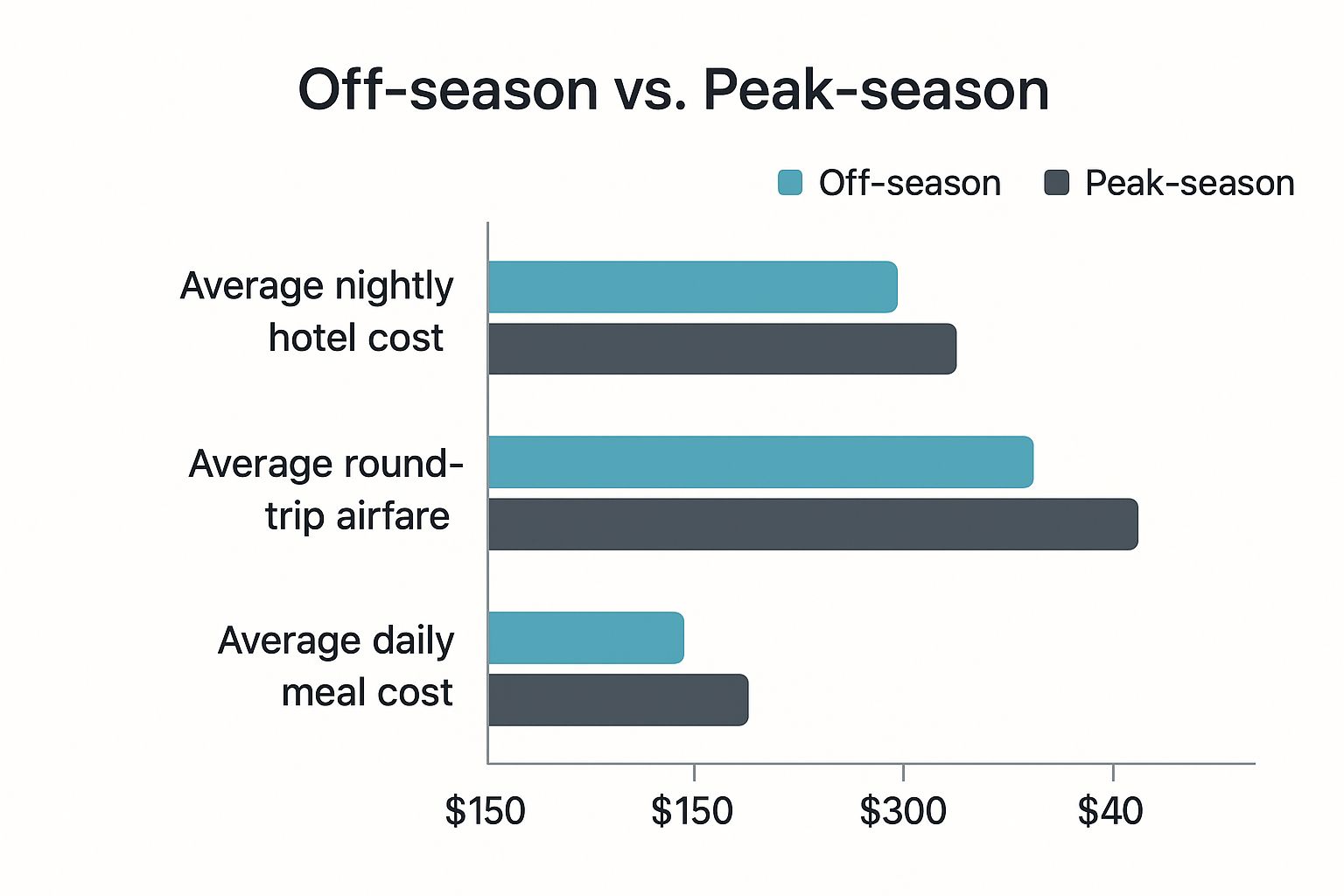
As you can see, visiting during the off-season can save you a serious amount of cash on everything from your hotel to your flight. For those who can handle the storm risk, this season also hosts one of Key West’s wildest events: Fantasy Fest in late October, a massive, eccentric, multi-day costume party that takes over the town.
While every Key has its own vibe, this is especially true when comparing the northernmost and southernmost points during different times of the year. Key Largo and Key West offer distinctly different experiences depending on when you visit.
Comparing Key West vs Key Largo by Season
| Feature | Key West (Peak Season) | Key Largo (Peak Season) | Key West (Shoulder Season) | Key Largo (Shoulder Season) |
|---|---|---|---|---|
| Atmosphere | High-energy, crowded, festive street life | Busy but more relaxed, focused on water activities | Vibrant but less chaotic, more room to breathe | Calm and peaceful, ideal for a quiet getaway |
| Activities | Bar hopping, festivals, sunset cruises, street performances | Diving, snorkeling, fishing, eco-tours | Museums, water sports, dining with less wait time | Excellent diving conditions, uncrowded boat tours |
| Crowds | Maximum capacity, reservations essential | Heavily booked, especially dive shops and charters | Moderate crowds, easier to be spontaneous | Noticeably thinner, feels more like a local spot |
Ultimately, choosing Key Largo or Key West depends on the experience you're after. Key West is the party hub, while Key Largo is the laid-back gateway to the reef—and the season you choose will amplify those characteristics.
Navigating Florida Keys Weather and Hurricane Season
The single biggest thing that will shape your Florida Keys trip is the weather. Forget trying to memorize ten-day forecasts; what you really need to understand is the rhythm of the islands, which boils down to two very distinct seasons. Getting a feel for these patterns is the secret to planning a trip that actually lives up to your expectations.
You can pretty much split the entire year in half. First, you have the dry season, which runs from roughly December through May. This is the postcard-perfect weather everyone dreams of—think low humidity, barely any rain, and temperatures that are just comfortably warm.
Then, from June to November, the wet season takes over. This period brings higher temps, serious humidity, and a predictable routine of afternoon thunderstorms. It might sound intense, but these rain showers are usually quick, refreshing, and happen like clockwork, making it surprisingly easy to plan your day around them.
Demystifying Hurricane Season
That phrase, "hurricane season," can sound pretty scary, but let's look at the facts, not the fear. The official Atlantic hurricane season lasts from June 1st to November 30th. That’s a huge six-month window, but the real peak for storm activity in the Keys is much, much smaller.
If a tropical system is going to impact the area, the highest odds are between mid-August and mid-October. This doesn't mean a storm is a sure thing—far from it—but the risk is a little higher. Visiting during this time just means you need to be a bit more flexible.
A lot of people think hurricane season means non-stop rain and gloomy skies. The reality is that these months, especially June and July, often have long stretches of absolutely beautiful, sunny weather. The key isn't expecting a storm, but simply being prepared for the possibility of one.
Traveling during this off-peak time often comes with incredible deals and way fewer crowds. The trick to making it work is preparation. Hunt for hotels with flexible cancellation policies and seriously consider travel insurance that specifically covers weather-related hiccups.
What a Typical Summer Day Looks Like
Picture this: you wake up to a hot, humid morning in the Keys with bright sunshine and glassy water. It’s the absolute best time to get out for some snorkeling, fishing, or island hopping.
As the day heats up, you’ll start to see clouds building in the distance. Sometime around 3 or 4 PM, a short, powerful thunderstorm might roll through. This is your cue to head inside for a late lunch, check out a museum, or just take a nap. An hour later, the sun is usually back out, leaving the evening air feeling fresh and clean.
This dependable daily cycle actually makes it really easy to plan your activities. Mornings are for adventure, and late afternoons are for kicking back. After a day or two, you’ll fall right into the rhythm. The evenings are often breathtaking, and a sunset cruise is the perfect way to finish the day. Seeing the sky explode with color from a Marathon sunset cruise after a quick afternoon rain is an experience you won’t forget.
Practical Tips for Weather Preparedness
No matter when you decide to visit, being weather-aware is just smart travel in the Keys. The sun here is no joke, so sunscreen, a good hat, and sunglasses are must-haves all year round.
Here’s how to stay ready, especially if you’re traveling during the wet season:
- Monitor the Forecast: In the weeks before your trip, keep an eye on the National Hurricane Center (NHC) website. They are the definitive source for any tropical weather news.
- Read the Fine Print: Before you click "book," dig into the cancellation policies for your flights, hotels, and tours. Know exactly what happens if a named storm throws a wrench in your plans.
- Pack Smart: Toss some lightweight rain gear in your bag, even in the dry season. You never know when a shower might pop up. And don't forget bug spray—mosquitoes love to come out after it rains.
At the end of the day, dealing with the weather is just part of the Florida Keys adventure. If you understand the seasons and come prepared, you can have an amazing vacation any time of year.
Understanding Visitor Crowds and Pricing
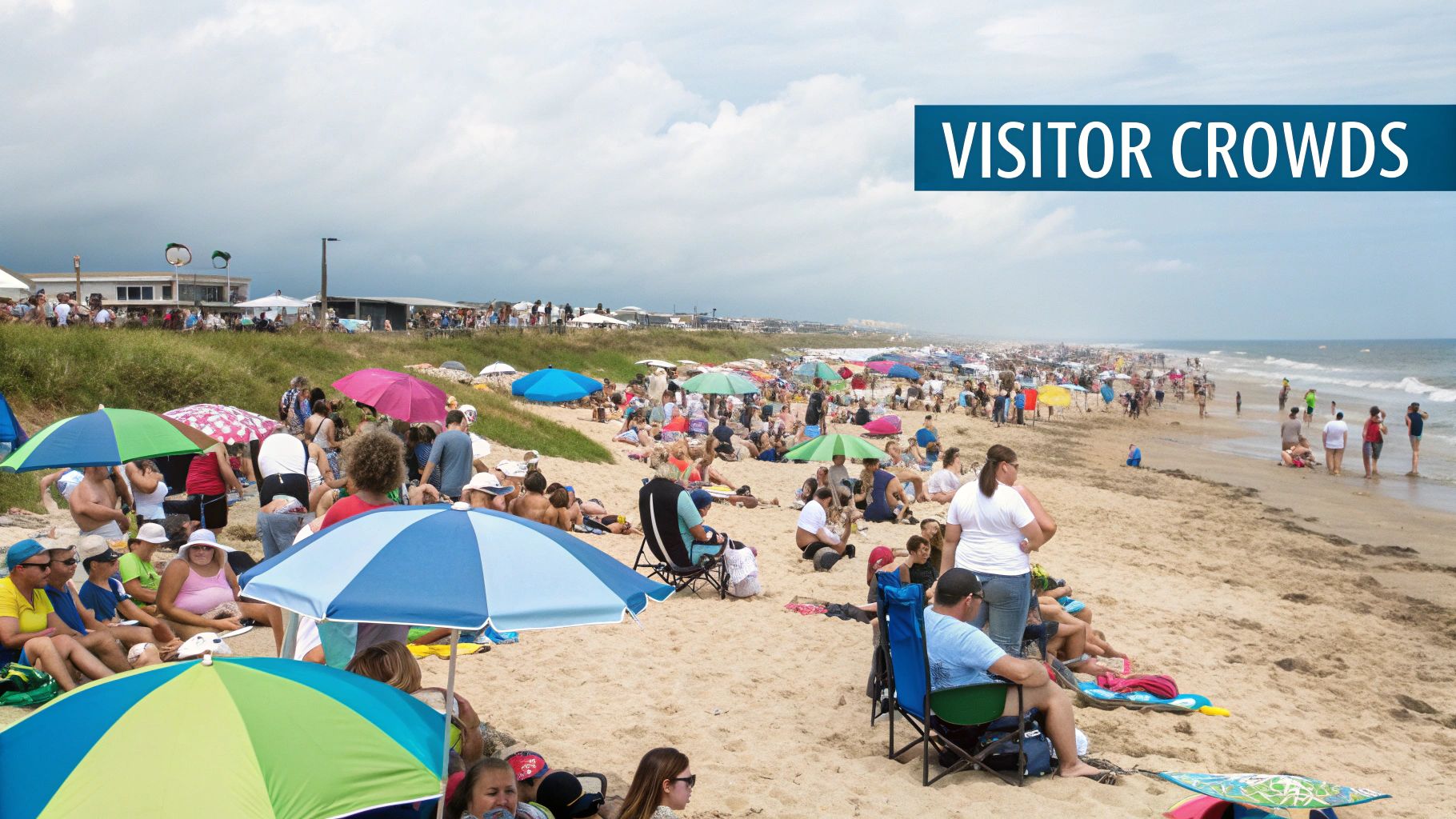
Figuring out the best time for your Florida Keys trip is about more than just dodging rain clouds—it's also about what you want to spend and the kind of vibe you're looking for. Tourism here pulses with a predictable rhythm, creating high and low seasons that dictate everything from your hotel bill to the wait time for a table at that famous seafood spot.
Think of it as having an insider's guide to planning your vacation. Knowing these patterns helps you decide if you want to jump into the middle of a high-energy crowd or kick back for a more peaceful, laid-back escape.
The Ebb and Flow of Keys Tourism
The Keys see two main waves of visitors every year. The biggest one hits in June and July, when families flock south for summer vacation, sun, and adventure. Then, a second, smaller peak comes in March as spring breakers arrive looking for warm weather and good times.
And these aren't just small ripples. Tourism data from 2022-2023 showed the summer rush is powered heavily by Floridians themselves, with folks from Miami and Tampa accounting for over 22% of all trips. The March influx, on the other hand, lines up perfectly with gorgeous weather right before hurricane season officially kicks off. You can dive deeper into these trends with the official Monroe County tourism data.
Knowing this helps you picture what it's actually like on the ground. A July visit means a vibrant, buzzing atmosphere, but it also means more competition for everything, including a spot on that popular snorkeling boat.
It's a classic case of supply and demand, just like buying concert tickets. When everyone wants to go (peak season), prices are sky-high and the place is packed. But if you can catch a show on a less popular night (shoulder season), you get the same great experience for less money and with a lot more elbow room.
This is the key to unlocking the best time to visit the Florida Keys for your budget. By timing your trip just right, you can either save a chunk of change or go all-in on a premium experience when the islands are at their most electric.
Finding Value in the Shoulder Seasons
If you're looking for that sweet spot—perfect weather, fewer people, and better prices—the shoulder seasons are your golden ticket. These are the sweet little windows just before and after the main tourist stampede, and they offer a fantastic mix of everything you want in a Keys vacation.
The best shoulder months here are typically:
- Late April and May: Spring break is over, but the weather is still spectacular. The water is beautifully warm for swimming and snorkeling, and you'll start to see prices drop from their winter peaks.
- November: Hurricane season has passed, but the holiday rush hasn't started yet. November brings mild, sunny days and a much quieter, more relaxed feel. It's a prime time to snag some great deals.
You’ll feel the difference immediately. It’s easier to get a reservation at that restaurant you've been eyeing, the beaches have more open space, and you can book excursions without planning weeks in advance. It's the perfect time to explore popular spots like the sandbars or take a sunset cruise without feeling like you're in a crowd. You'll often find more availability for trips, like our Marathon snorkeling and sandbar excursions, during these months.
Ultimately, it all comes down to what you're looking for. If you thrive on energy and don't mind paying for it, peak season is a blast. But if you're after a little more peace and a lot more value, the shoulder seasons deliver an unforgettable Keys experience without the premium price tag.
Planning Your Trip Around Seasonal Activities and Events
Beyond just tracking weather patterns and crowd sizes, picking the best time to visit the Florida Keys often boils down to one simple question: what do you really want to do? The islands’ calendar is absolutely packed with unique opportunities, from legendary festivals to the absolute prime seasons for specific water activities.
When you line up your trip with these events, a good vacation turns into a truly unforgettable one. You wouldn't bring snow skis to the beach in July, right? It's the same idea here—planning around what's happening ensures you have the right "gear" for the experience, whether that’s a festival wristband or a snorkel and fins.
Matching the Season to Your Adventure
The whole vibe of the Keys shifts with the seasons, and that directly impacts the fun you can have. Spring, for instance, brings calm, crystal-clear water that creates the perfect conditions for a snorkeling trip to Sombrero Reef. Visibility is at its absolute peak, making it the ideal window for underwater exploring before the summer heat really kicks in.
On the flip side, those hot summer months are prime time for something else entirely: lobster season. Anglers and seafood lovers flock here for the annual mini-season in late July, followed by the regular season starting in August. It’s a cultural and culinary experience you just can’t get any other time of year.
Can't-Miss Annual Events
The Florida Keys are famous for vibrant, quirky, and downright delicious festivals that draw people from all over the world. Planning your visit around one of these signature events is a fantastic way to dive headfirst into the local culture.
Here are a few highlights to circle on your calendar:
- Key West Food and Wine Festival (January): A sophisticated celebration for foodies, featuring gourmet tastings, wine seminars, and upscale waterfront parties under the mild winter sun.
- Original Marathon Seafood Festival (March): A more laid-back, family-friendly event celebrating the fresh catch of the Middle Keys. It’s a genuine taste of local life with amazing seafood, live music, and craft vendors.
- Fantasy Fest (October): Key West's legendary, adults-only ten-day festival is an absolute spectacle of elaborate costumes, parades, and street parties. It’s wild, creative, and a uniquely Key West experience.
The decision to plan a trip around cultural events reflects a growing trend. Visitor interests have evolved, with more people seeking out authentic local experiences beyond just the beach. This shift empowers you to plan a trip that truly aligns with your passions.
Recent analysis shows that over the past two decades, tourism patterns in the Keys have shifted. Visits to museums and historic areas increased by 48%, while time spent on these cultural activities grew 53% to 2.6 million days. Interestingly, traditional water sports saw a slight decline, highlighting a diversification in what visitors are looking for.
Creating Your Perfect Itinerary
Ultimately, the best time to visit the Florida Keys is deeply personal. By layering event schedules and activity seasons over the weather and crowd calendars, you can put together a trip that is perfectly suited to you. Whether you're an angler chasing a trophy catch, a foodie dying to sample the local cuisine, or someone looking for a one-of-a-kind party, there's a perfect time waiting for you.
For those looking to add a touch of luxury, considering top-tier accommodations like the Playa Largo Resort & Spa in Key Largo can elevate the entire visit. This kind of thoughtful planning is the difference between simply visiting the Keys and truly experiencing them.
A little research helps you find those perfect moments, whether that's enjoying a quiet afternoon at a sandbar or being in the heart of the action. You can learn more about finding your own slice of paradise in our guide to the Marathon sandbar.
Frequently Asked Questions About Visiting the Florida Keys
Even with all the details ironed out, a few questions might still be floating around in your head. No problem. To help you lock in your plans with total confidence, we've rounded up the most common questions travelers ask.
Here are the straightforward answers you're looking for.
What Is the Absolute Cheapest Time to Visit the Florida Keys?
If you're hunting for a serious bargain, the most budget-friendly time to visit the Florida Keys is from September to November. This window is the peak of hurricane season, which naturally drives down demand for flights, hotels, and tours.
For travelers willing to take a calculated risk, you can score some incredible deals that make a Keys vacation much more affordable. Just be sure to purchase comprehensive travel insurance that covers any weather-related hiccups.
Want a great balance of value and much better weather? Aim for the shoulder months like May or early December. You'll still see a nice drop in prices without the high storm risk.
When Is the Best Time for Snorkeling and Diving?
For the ultimate underwater adventure, the sweet spot for snorkeling and diving is from May through July. During these months, the Atlantic is usually calm, visibility is crystal clear, and the water is perfectly warm, hovering in the mid-80s.
While the winter months also offer clear water, the cooler temperatures might have you reaching for a wetsuit. Summer, on the other hand, is just right for spending hours exploring the vibrant coral reefs without a care in the world.
Pro tip: Plan your water activities for the morning. This helps you dodge the common afternoon thunderstorms that can pop up and spoil the fun.
Is Visiting During Hurricane Season a Good Idea?
Visiting during hurricane season—which officially runs from June 1st to November 30th—is a classic risk vs. reward scenario. The biggest reward? Experiencing the Keys with way fewer crowds and much, much lower prices.
The statistical peak for storm activity is from August through October. While many days during this period are absolutely beautiful and storm-free, you have to be ready for a tropical system to potentially crash your party.
It's all about being prepared. If you travel during this time, keep a close eye on the weather forecasts, book places with flexible cancellation policies, and always, always get travel insurance. This lets you chase the deals while still having a solid backup plan.
How Far in Advance Should I Book My Trip?
This really depends on when you're planning to go. The best time to visit the Florida Keys for you will shape your booking strategy.
Here’s a quick guide:
- Peak Season (December-April): You’ll want to book flights and places to stay a good 6-9 months in advance. This is especially true for hotspots like Key West, where the best rooms and tours get snatched up fast.
- Shoulder Season (May, November): Planning 3-5 months ahead usually does the trick. You'll still have a great selection without the mad rush of peak season.
- Off-Season (June-October): You can often find fantastic last-minute deals. Still, it’s smart to book at least 1-2 months out to lock down your preferred tours and accommodations, including unforgettable experiences like a Marathon, FL sunset cruise.
A little bit of planning goes a long way in making sure your trip is everything you dreamed it would be, no matter the season.
At Marathon Snorkeling And Sunset Cruise, we're all about helping you experience the unbelievable beauty of the Florida Keys right from the water. Whether you're dreaming of exploring colorful coral reefs or kicking back for a spectacular sunset, our expert crew is here to make it happen. As the proud winners of Best Watersports in Marathon for two years running, we promise an adventure you won't forget.
Book your perfect snorkeling or sunset adventure with us today!