
How to Breathe When Snorkeling: Essential Safety Tips
The Science Behind Snorkel Breathing
Snorkeling offers a window into an amazing underwater world. However, breathing through a snorkel is quite different from how we normally breathe. Understanding these differences is essential for a safe and enjoyable snorkeling experience. This section delves into the science behind snorkel breathing and explains why mastering this skill is so important.
Understanding Dead Space and Alveolar Ventilation
One significant change when snorkeling is the increase in dead space. This is the air within the snorkel tube that doesn't reach your lungs for gas exchange. Essentially, you re-breathe some exhaled CO2 with each breath. This is where proper breathing technique becomes critical.
Breathing correctly is crucial for both safety and enjoyment. The snorkel tube increases dead space, reducing the efficiency of each breath. Quick, shallow breaths can increase aspiration risk and decrease alveolar ventilation – the air that actually reaches your lungs for gas exchange.
Slow, deep breaths, on the other hand, can dramatically improve your snorkeling experience. They can even double your alveolar ventilation. At rest, typical alveolar ventilation is about 4.2 liters per minute. With deep snorkel breaths, this can increase to 8.4 liters per minute. Proper breathing instruction from snorkel rental and tour operators is vital for preventing fatigue, panic, and even drowning. For more information on proper breathing techniques while snorkeling, check out this article: Breathe Easy With Proper Technique: Snorkeling Doesn’t Have To Be Deadly.
Adapting to Breathing Resistance
Many new snorkelers feel like breathing through a snorkel requires a lot of effort. They assume the narrow tube creates significant resistance. While some resistance exists, it doesn't drastically increase the energy needed for breathing.
The perceived effort is often more psychological, due to the unfamiliar sensation of breathing through a tube. This is why getting comfortable with the equipment and practicing proper breathing before entering the water is so important. For helpful guidance, see How to master breathing techniques.
Physiological Adaptations
The human body is incredibly adaptable. With regular practice, your respiratory system adjusts to snorkel breathing. The perceived resistance lessens, and efficiency improves. Your diaphragm, the main muscle used for breathing, strengthens, enabling deeper, more controlled breaths.
This increased control helps maximize fresh air intake and minimize CO2 re-breathing. Practicing in a controlled environment, such as a pool, before heading to open water is highly recommended. For more safety tips, especially for nighttime snorkeling adventures, you might find this helpful: 10 Manta Ray Snorkel Tips.
Mastering Essential Breathing Techniques for Beginners
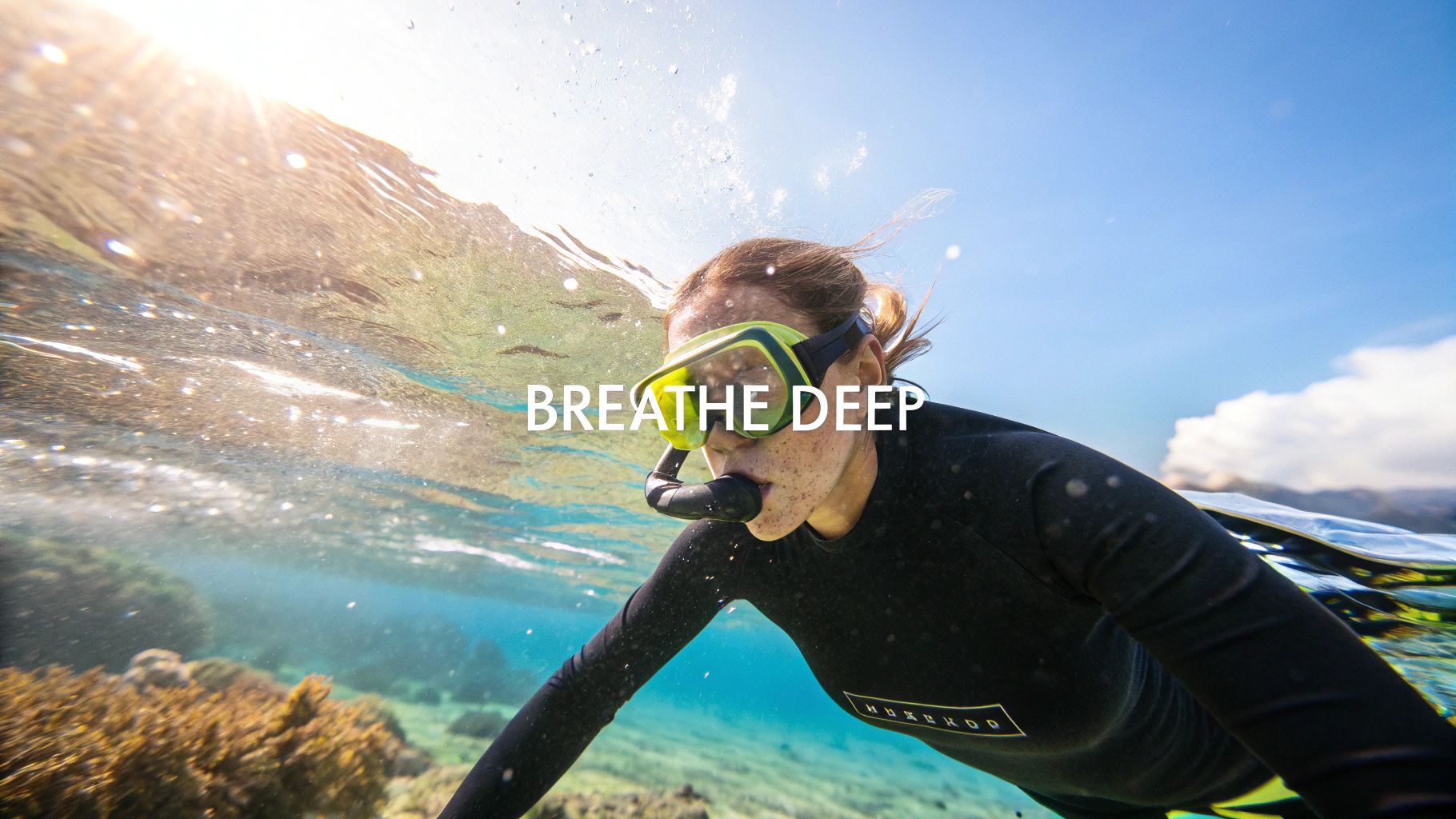
Mastering breathing while snorkeling is key to a safe and enjoyable underwater experience. This section offers a beginner-friendly guide to develop comfortable and efficient techniques. We'll cover everything from proper mouthpiece placement to clearing your snorkel tube, giving you the confidence to explore the underwater world.
Mouthpiece Positioning and Rhythmic Breathing
First, ensure a comfortable seal by placing the mouthpiece between your teeth and lips. Avoid clenching your jaw, which can lead to fatigue. Maintain a relaxed bite for easy breathing and reduced tension. Once secure, focus on a slow, deep breathing rhythm. This prevents CO2 buildup and maximizes air intake. Think of it as blowing bubbles: long, slow exhales followed by controlled inhales.
This steady rhythm is crucial, especially in deeper water. For a deeper dive into snorkeling, check out our snorkeling categories.
Clearing Your Snorkel and Managing Water Entry
Water occasionally entering your snorkel tube is normal and easily managed. To clear it, exhale forcefully through your mouth. This burst of air pushes the water out the top – much like blowing out a candle.
Most snorkels also have a purge valve at the bottom. This allows water to drain without a full exhale. Even if water enters, a small puff will usually clear it.
Even with these features, some beginners experience anxiety about water entry. Practicing in shallow water builds confidence and familiarizes you with the process in a controlled environment. This reduces panic in deeper water.
Practical Exercises For Building Confidence
Building muscle memory before your trip enhances your comfort. Practice slow, deep breaths through your snorkel while sitting by the pool. This helps you acclimate to breathing through a tube without the pressure of being in the water.
The mechanics of breathing through a snorkel have been studied extensively. One study found that while total breathing resistance increases by about 6.5% with a snorkel, the overall mechanical cost of breathing remains largely unaffected. For detailed statistics, see: Snorkel Breathing Research. This highlights that the perceived difficulty is often more psychological than physical. Addressing these psychological barriers can greatly improve your snorkeling experience.
The following table highlights common breathing mistakes beginners make and offers simple solutions:
Common Snorkel Breathing Mistakes and Solutions
| Common Mistake | Potential Consequences | Recommended Solution |
|---|---|---|
| Clenching Jaw on Mouthpiece | Jaw fatigue, discomfort, difficulty breathing | Maintain a relaxed bite on the mouthpiece |
| Breathing Too Quickly | CO2 buildup, shortness of breath, dizziness | Practice slow, deep, rhythmic breathing |
| Panicking When Water Enters | Inhaling water, anxiety, disrupted snorkeling | Practice clearing techniques in shallow water |
| Not Utilizing the Purge Valve | Difficulty clearing water, unnecessary exertion | Exhale gently through the purge valve to drain water |
| Inhaling Too Forcefully After Clearing | Hyperventilation, lightheadedness | Take controlled breaths after clearing the snorkel |
This table helps identify and address common breathing issues, allowing for a more comfortable snorkeling experience. By understanding the potential consequences and applying the recommended solutions, beginners can build confidence and enjoy their underwater adventures.
Traditional Vs. Full-Face Masks: Breathing Differences That Matter
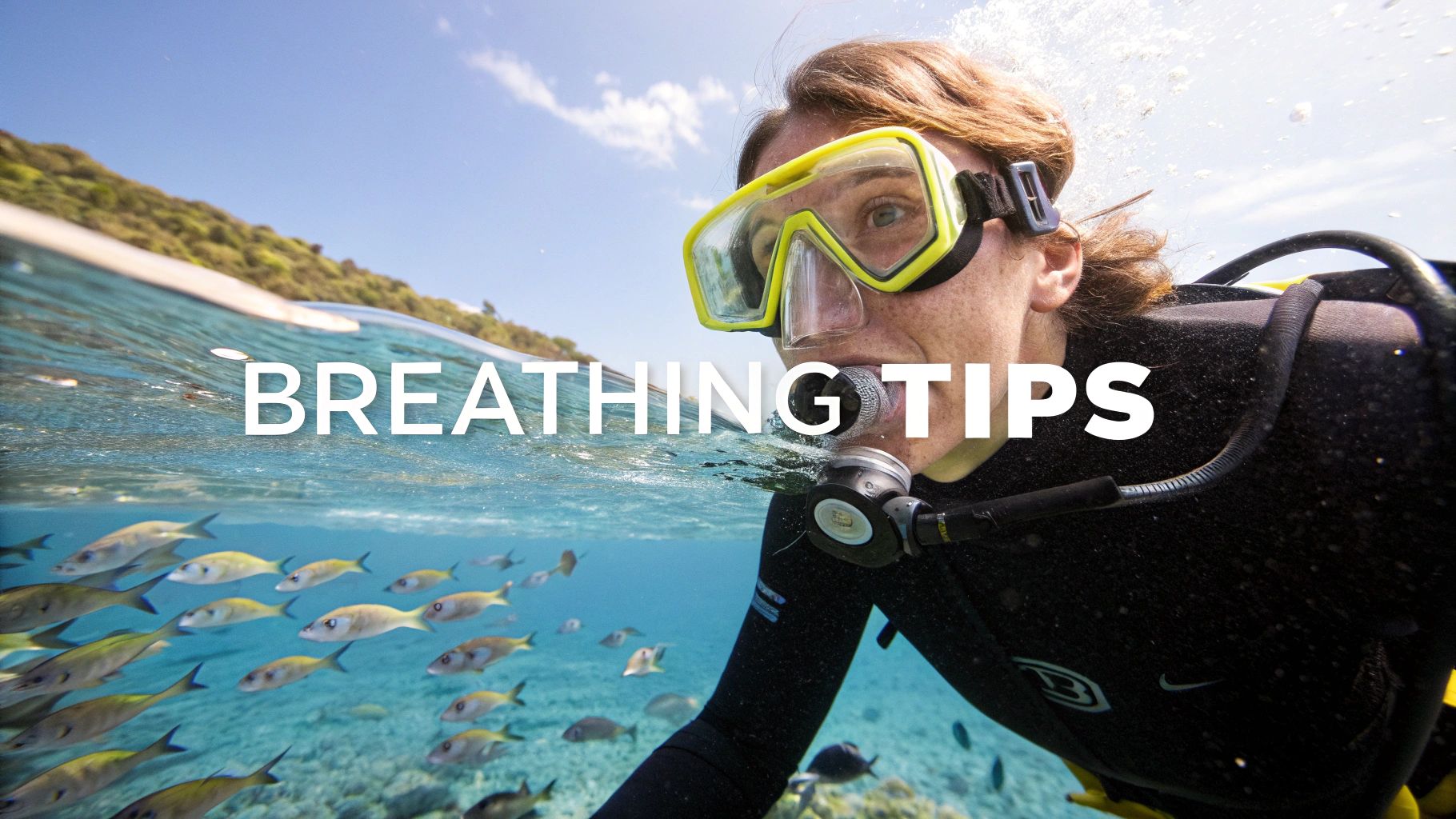
Your snorkel mask choice significantly impacts your breathing while exploring underwater. This section dives into the pros and cons of traditional snorkels and full-face masks, highlighting how each affects your breathing experience. This information will help you choose the best mask for your needs and preferences.
How Mask Design Affects Gas Exchange
Traditional snorkels, with their separate mouthpiece and nose cover, provide a direct breathing path. This straightforward design minimizes dead space, the air that doesn't participate in gas exchange, promoting efficient breathing. Fresh air in, CO2 out – simple and effective.
Full-face masks, while offering a panoramic view and the convenience of breathing through both your nose and mouth, pose different challenges. The larger internal volume increases dead space. This means you re-breathe some of your exhaled air, potentially raising CO2 levels and reducing oxygen intake. This can lead to discomfort, headaches, or even more serious issues.
A study highlighted concerns about gas exchange with full-face snorkel masks (FFSMs). Researchers found that FFSMs can result in higher CO2 and lower O2 levels compared to traditional snorkels, increasing the risk of hypercapnia (excess CO2) and hypoxemia (low oxygen). Some participants even experienced oxygen saturation levels below 95%. These findings underscore the importance of understanding the potential effects of FFSM design on respiratory comfort and safety. You can explore the study's findings in more detail here: Full-Face Snorkel Mask Study.
Breathing Comfort and CO2 Buildup
With traditional snorkels, using the correct breathing technique is key to minimizing CO2 buildup. Slow, deep breaths ensure efficient gas exchange and prevent discomfort. For instance, fully exhaling before inhaling helps clear the snorkel tube of CO2.
Full-face masks might initially feel easier to breathe with. However, the increased dead space can lead to CO2 buildup if not managed carefully. This can become uncomfortable and potentially pose a safety risk, particularly during longer snorkeling trips. Check out our selection of traditional and full-face masks in Our product catalog.
Choosing the Right Mask For Your Needs
The ideal mask type depends on your individual requirements and the snorkeling environment. Traditional snorkels are generally better for beginners due to their simpler design and efficient gas exchange. Experienced snorkelers who are comfortable managing their breathing might prefer full-face masks in calm waters. However, understanding the potential risks linked to CO2 buildup is essential.
To help you make an informed decision, we've put together a comparison table outlining the key differences between traditional and full-face snorkel masks:
Traditional vs. Full-Face Snorkel Mask Comparison
This table compares key features and considerations for both traditional and full-face snorkel masks to help readers choose the right option.
| Feature | Traditional Snorkel | Full-Face Mask | Best For |
|---|---|---|---|
| Dead Space | Lower | Higher | Beginners, deep dives, currents |
| Gas Exchange | More Efficient | Less Efficient, potential for CO2 buildup | Beginners, deep dives |
| Breathing Comfort | Requires proper technique | Initially easier, can become less comfortable | Experienced snorkelers, calm water |
| Field of Vision | More restricted | Wider | Sightseeing in calm water |
As the table highlights, there are distinct advantages and drawbacks to each mask type.
No matter which mask you choose, ensuring a proper fit and testing it in a controlled environment before heading into open water is crucial. This allows you to assess comfort, breathing, and gas exchange in a safe setting. By understanding the differences in breathing mechanics between these mask types, you can make the best choice for a safe and enjoyable snorkeling adventure.
Advanced Breathing Techniques From Pro Snorkelers
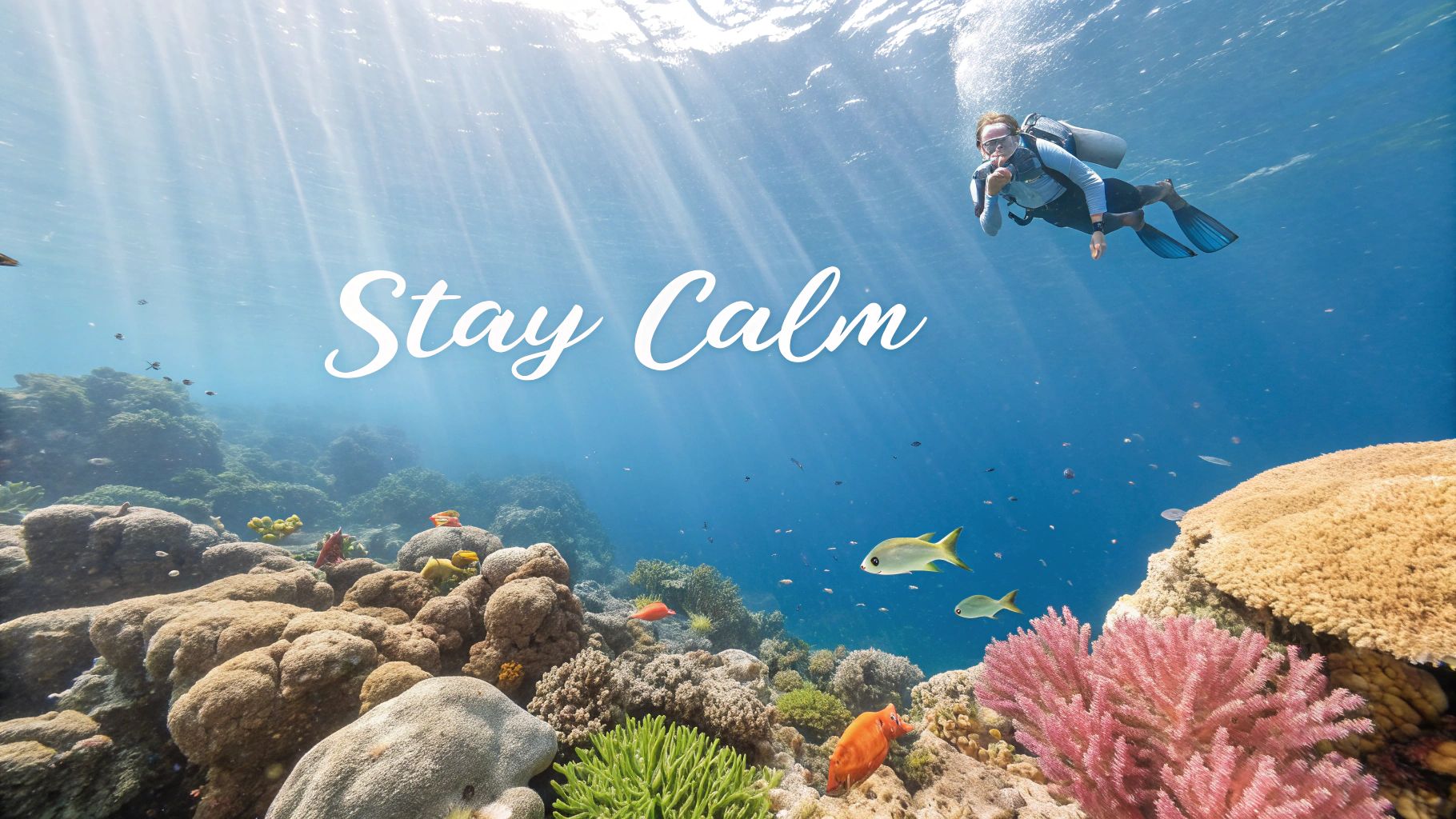
Want to elevate your snorkeling game? This section dives into advanced breathing techniques used by professional freedivers and experienced snorkelers to improve comfort and endurance in the water. These methods will help you optimize air efficiency and extend your underwater exploration time. Check out this resource for additional breathing tips: How to master snorkeling breathing.
Diaphragmatic Breathing for Increased Air Efficiency
One of the best ways to enhance your snorkel breathing is by practicing diaphragmatic breathing, often called belly breathing. This technique utilizes your diaphragm, the primary breathing muscle located beneath your lungs, to facilitate deeper, more efficient breaths. This maximizes oxygen intake and minimizes carbon dioxide buildup.
Think of it like inflating a balloon in your stomach as you inhale; your belly should expand. As you exhale, your belly contracts. This focused breathing pattern helps conserve energy and prolong your underwater time.
Extending Your Breath-Hold Safely
While snorkeling doesn't usually involve long breath-holds like freediving, there may be times you want to stay submerged longer to observe marine life or snap a photo. Understanding how to hold your breath safely is crucial in various water activities.
Never hyperventilate before holding your breath. Instead, practice taking slow, deep breaths to efficiently oxygenate your body. Start with short breath-holds in a controlled environment, like a pool, and gradually increase the duration as comfort allows. Always listen to your body and prioritize safety.
Energy-Conserving Breathing Patterns for Longer Snorkeling
Experienced snorkelers utilize energy-conserving breathing patterns, allowing them to stay in the water longer without tiring. This involves establishing a slow, rhythmic breathing cycle synchronized with your fin kicks. Coordinating your breaths with your movements minimizes wasted energy and optimizes oxygen use.
This is particularly helpful when swimming against a current or covering a large area. This rhythmic approach can significantly extend your snorkeling endurance.
The Science of Breathing and Snorkeling
Interestingly, breathing techniques in snorkeling share a connection with the history of breath-hold diving. Elite freedivers, for instance, use specific techniques like glossopharyngeal breathing, also known as "packing," to increase lung capacity before dives. This technique can boost total lung capacity (TLC) by as much as 47%, enabling longer breath-holds and deeper dives.
Though snorkeling typically doesn’t require these extreme measures, understanding the principles of efficient gas exchange and correct breathing enhances both safety and enjoyment. You can delve deeper into the science of freediving breathing here: Freediving Physiology. This knowledge can inform safer practices for any water activity involving breathing through equipment.
Mastering Breathing in Challenging Water Conditions
Calm, clear water is perfect for snorkeling. But let's face it, sometimes conditions get a little rough. This section covers how to adjust your breathing techniques when dealing with choppy water, unexpected currents, or wave action. Mastering these techniques will make your snorkeling experience safer and more enjoyable, even when things get challenging.
Breathing Through Choppy Water and Waves
Choppy water can splash into your snorkel, sometimes making it difficult to breathe. The key is to stay calm and exhale forcefully to clear the tube. Short, sharp exhales are often more effective than long ones in turbulent water.
Waves present a different challenge. Try timing your breaths with the rhythm of the waves. Inhale deeply before a wave approaches, then hold your breath as it passes over you. Exhale and clear your snorkel once you're back on the surface.
Managing Currents and Maintaining Calm Respiration
Unexpected currents can be unsettling and can affect your breathing rhythm. The key is to avoid fighting the current directly. Instead, try swimming diagonally across it, or let it carry you while focusing on maintaining slow, deep breaths.
Staying relaxed is crucial in currents, as panic can lead to shallow breathing and fatigue. Focus on your breath to remain calm and conserve energy. Visualize calm, steady breathing and avoid holding your breath for long periods unless you're navigating a wave. You might be interested in: How to master….
Recognizing Breathing Warning Signs and When to Seek Calmer Waters
Certain breathing patterns signal it’s time to head to calmer waters. Rapid, shallow breaths, lightheadedness, and feelings of panic indicate you might be overexerting yourself or experiencing anxiety.
Another warning sign is frequent water entry into your snorkel, even when you're using proper clearing techniques. This often means conditions are too rough for your current skill level. Don't hesitate to signal for help or return to shallower, calmer areas.
Applying Scenario-Based Guidance from Experienced Snorkelers
Experienced snorkelers in diverse marine environments stress the importance of preparation and practice. They recommend practicing clearing techniques in a pool before venturing into open water. This helps build muscle memory and confidence for handling unexpected situations.
They also emphasize the importance of self-awareness. Knowing your limits and recognizing early warning signs can prevent incidents. They advise starting with shorter snorkeling sessions in calmer areas before tackling more challenging conditions. This gradual approach helps ensure a safe and enjoyable experience for everyone.
Age-Specific Breathing Techniques That Actually Work
Snorkeling is a fantastic activity for people of all ages. However, breathing through a snorkel isn't always intuitive, and a one-size-fits-all approach just doesn't work. This is especially true for different age groups, each with its own considerations. This section explores breathing strategies for children and older adults, ensuring a safe and enjoyable experience.
Breathing Techniques for Children: Making it Fun and Engaging
Children often approach new experiences with a mix of excitement and apprehension. Turning snorkel breathing into a game can help build their confidence and make learning fun. For example, have them practice blowing bubbles in the bathtub or a pool. This helps them get comfortable exhaling into a tube.
Progress to practicing with the snorkel in shallow water, encouraging them to look for toys or colorful objects at the bottom. This playful approach distracts them from any anxiety about breathing and allows them to acclimate to the snorkel gradually. Short, frequent practice sessions are better than long, overwhelming ones. This helps them build skills and confidence steadily.
Addressing the Unique Challenges of Young Lungs
Children's lungs are smaller than adults’, meaning they have a lower lung capacity. This means they might need to breathe more frequently. Encourage them to take regular breaths, avoiding long breath-holds, which can lead to discomfort or even panic.
Another helpful technique is having them practice blowing bubbles of different sizes. This playful exercise helps them control their exhalation and understand the relationship between breath control and air consumption. This understanding translates directly to better snorkel breathing.
Breathing Techniques for Older Adults: Adapting to Physiological Changes
As we age, our respiratory system undergoes natural changes. Lung capacity may decrease, and breathing might become less efficient. This can make snorkeling more challenging, but certainly not impossible. For older adults, focusing on slow, deep breaths is crucial for maximizing air intake and minimizing fatigue. It's similar to how we learn to breathe efficiently during exercise – controlled and deliberate.
Additionally, using a snorkel with a larger diameter tube can reduce breathing resistance. This can make breathing feel easier and less strenuous, allowing for a more relaxed and enjoyable snorkeling experience. Practicing in shallow, calm water before venturing into deeper areas is also a good idea. This allows them to acclimate to the snorkel and build confidence in a safe environment.
Accommodating Respiratory Conditions and Physical Limitations
Certain respiratory conditions or physical limitations can affect breathing while snorkeling. In these cases, it's crucial to consult a doctor before engaging in the activity. They can offer personalized guidance and recommend modifications or alternative techniques to ensure a safe and comfortable experience. For example, they might suggest using a specialized snorkel or a flotation device for added support.
Ultimately, enjoying snorkeling as we age depends on adapting to our individual needs. Choosing suitable equipment and learning appropriate breathing techniques can make all the difference, enabling continued exploration of the underwater world.
Ready to embark on an underwater adventure? Book your Marathon Snorkeling and Sunset Cruise today and experience the vibrant coral reefs and diverse marine life of the Florida Keys! Visit Marathon Snorkeling And Sunset Cruise to learn more and reserve your spot. Whether you're a family looking for a fun day out, a couple seeking a romantic sunset cruise, or a seasoned snorkeler, we have the perfect trip for you. Our experienced, lifeguard-certified crew will ensure your safety and comfort, providing an exceptional snorkeling experience for all ages and skill levels.