
Discover the Coral Reefs in the Florida Keys: A Snorkeler’s Guide

Imagine you're floating weightlessly over a bustling, vibrant city teeming with life and color. That’s the feeling you get when you dip below the surface at the coral reefs in the Florida Keys, the largest barrier reef system in North America. This guide is your passport to that world, helping you explore one of the planet's most incredible—and fragile—ecosystems.
Welcome to an Underwater Paradise
The Florida Keys are home to the only living barrier reef in the continental United States. It’s a spectacular underwater world stretching for miles, offering a kaleidoscope of colors and activity just waiting for you. For snorkelers, it's an absolute dream, a place where the ocean floor comes alive with intricate coral formations and a dazzling parade of marine creatures.
But this isn't just any reef system; it's a complex and deeply interconnected community. Think of it as a sprawling metropolis built over thousands of years by tiny animals called coral polyps. Every single structure provides critical food and shelter for hundreds of species, creating a delicate balance of life that’s as beautiful as it is intricate.
What Makes These Reefs So Special
The biodiversity here is simply astounding. The Florida Reef Tract supports a mind-boggling variety of life, which means every snorkeling trip is a brand-new discovery.
You'll find:
- Diverse Coral Species: From massive, ancient-looking brain corals to delicate sea fans swaying with the current, the architecture of the reef is always changing.
- Abundant Fish Life: It’s impossible to miss the schools of colorful parrotfish, striped sergeant majors, and graceful angelfish that are common sights.
- Larger Marine Animals: Don't be surprised if you spot sea turtles gliding peacefully by or a friendly nurse shark resting on the sandy bottom.
Unfortunately, this underwater paradise is in serious trouble. The Florida Keys coral reefs have lost an estimated 90% of their healthy coral cover since the 1970s, a staggering decline driven by disease, rising water temperatures, and pollution. This is an alarming reality that highlights the urgent need for all of us to step up and help.
"Exploring the reefs is about more than just seeing fish; it’s about witnessing a fragile ecosystem that needs our help. Every visitor has a role to play in its preservation."
To truly appreciate its beauty, you have to get in the water and see it up close. Exploring a spot like the shallow, vibrant gardens of Coffins Patch reef is the perfect introduction to the magic of the coral reefs in the Florida Keys.
Finding the Best Snorkeling Spots in the Keys
The Florida Reef Tract isn't a single spot you can just plug into your GPS. It’s a massive underwater highway stretching over 350 miles along the Atlantic side of the Keys. For anyone with a mask and fins, that means an almost endless variety of places to explore, from shallow patch reefs perfect for first-timers to more dramatic offshore structures.
Knowing where to dip your fins is the secret to an incredible day on the water. Every reef has its own personality—some are known for their towering coral formations, while others are famous for attracting huge schools of fish. Figuring out which one is right for you makes all the difference.
Premier Reefs Worth the Trip
If you want to see the best of what the coral reefs in the Florida Keys have to offer, two names consistently pop up: Sombrero Reef and Looe Key. Think of them as the national parks of the underwater world.
-
Sombrero Reef: You can't miss this spot, thanks to its iconic 142-foot lighthouse standing guard. Just a few miles offshore from Marathon, Sombrero Reef is a snorkeler's dream, famous for its "spur-and-groove" coral formations. These are basically underwater valleys and ridges teeming with life—you'll see parrotfish, angelfish, and curious snappers everywhere. With depths ranging from just five feet to over 30 feet, it's a great spot for all skill levels.
-
Looe Key Reef: Head a bit further south near Big Pine Key, and you’ll find Looe Key. This U-shaped reef is a designated Sanctuary Preservation Area, which means it gets extra protection. The payoff? An unbelievably dense and diverse fish population. It’s not uncommon to spot bigger guys like goliath grouper and tarpon hanging out with the usual vibrant reef fish. Its unique shape offers calm, shallow spots for beginners and deeper areas for those wanting more of an adventure.
The chart below paints a clear picture of the current state of our reef system.
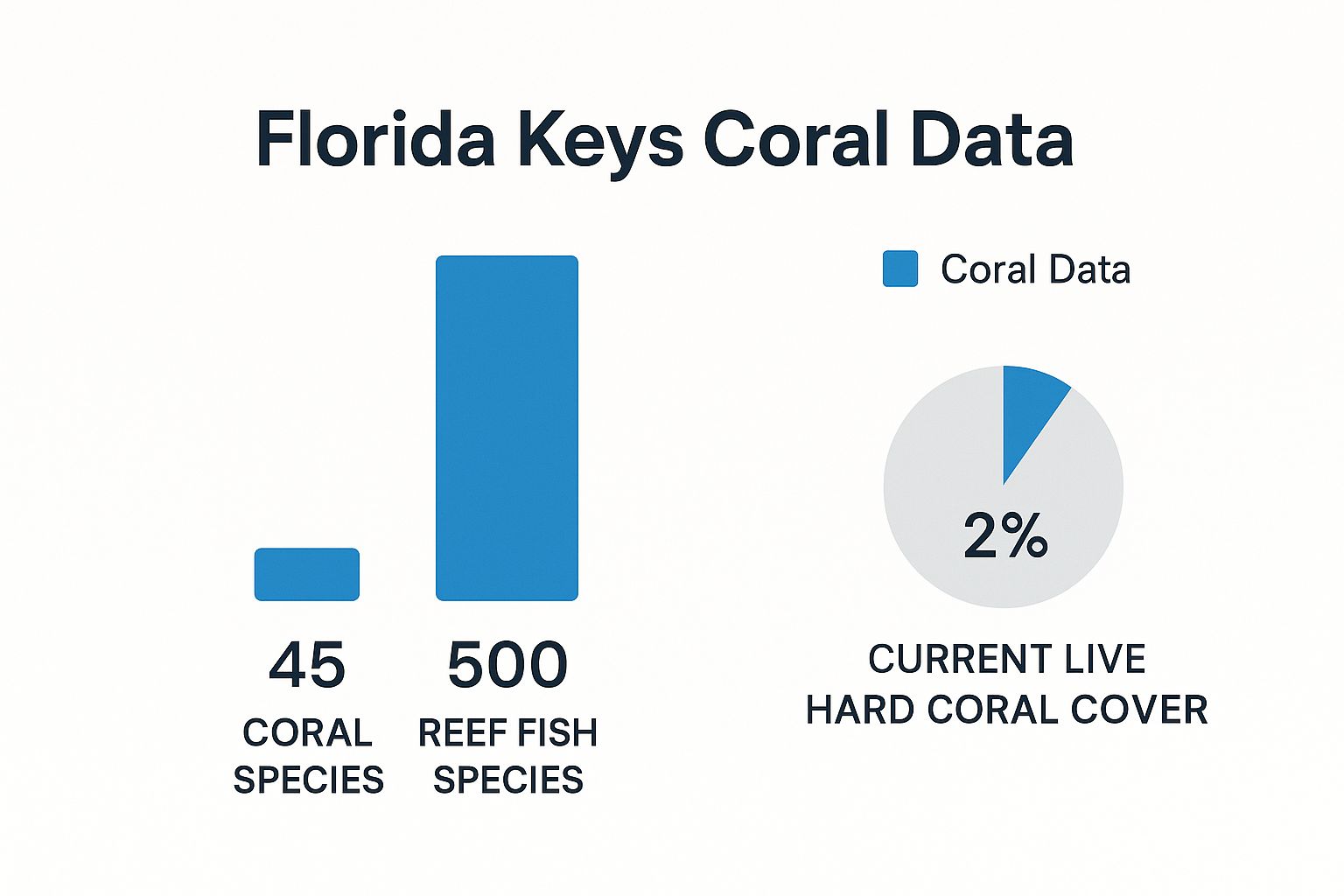
The data here tells a tough story. While the reefs are still home to a staggering number of fish and coral species, the actual live hard coral cover has dwindled to a critical 2%.
A Quick Guide to the Top Reefs
Choosing a reef is about more than just a name; it’s about the kind of day you want to have. The table below breaks down some of the most popular spots so you can find your perfect underwater playground.
Top Snorkeling Reefs in the Florida Keys
| Reef Name | Location (Near) | Key Features | Common Marine Life |
|---|---|---|---|
| Sombrero Reef | Marathon | Iconic lighthouse, spur-and-groove formations | Parrotfish, angelfish, snappers, sea turtles |
| Looe Key Reef | Big Pine Key | U-shaped reef, high fish diversity, protected area | Goliath grouper, tarpon, sharks, eagle rays |
| Alligator Reef | Islamorada | Historic lighthouse, shallow patch reefs, shipwrecks | Nurse sharks, moray eels, barracuda, lobsters |
| Cheeca Rocks | Islamorada | Very shallow, great for beginners, large brain corals | Juvenile fish, damselfish, sergeant majors |
| Dry Tortugas | Key West | Remote, pristine conditions, historic fort | Queen conch, vibrant corals, large pelagic fish |
| Coffins Patch | Marathon | Series of six distinct patch reefs, calm waters | Sponges, soft corals, hogfish, grunts |
No matter which reef you choose, you're in for an unforgettable experience. Each one offers a unique window into the vibrant, complex world just beneath the waves.
What to Look For at Each Site
Water clarity, depth, and the types of marine life you'll see are all part of what makes each trip special.
When you visit these protected areas, you are entering a living museum. Each coral head is a delicate work of art that has taken centuries to grow, and the fish are the vibrant residents that bring it to life.
For instance, visibility can change daily with the weather and tides, but spots further offshore usually have clearer water. The corals themselves also vary, from the massive, ancient brain corals to the delicate, branching staghorn and elkhorn corals.
To get an even better idea of what to expect out on the water, check out our complete guide to snorkeling in the Keys. Whether you end up exploring the dramatic valleys of Sombrero or the busy fish metropolis of Looe Key, you’re guaranteed a front-row seat to one of nature's greatest shows.
Meeting the Residents of the Reef
When you dip below the surface, you quickly realize a coral reef is so much more than just a pretty collection of stationary structures. It’s a living, breathing community—an underwater metropolis absolutely bustling with activity. Understanding who lives there and what they do transforms snorkeling from just looking at fish to witnessing a complex society at work.
Think of it as the perfectly organized neighborhood. In this dynamic ecosystem, every single creature has a job that contributes to the health of the entire community. This intricate web of relationships is exactly what makes the coral reefs in the Florida Keys so captivating to explore.
The Reef's Hardest Workers
Some of the reef's most vital residents are the ones you’ll see constantly working to keep everything clean and healthy. You can spot these diligent workers on almost any snorkeling trip if you know what to look for.
- Parrotfish: These ridiculously colorful fish are the reef’s gardeners. Using their beak-like mouths, they graze on the algae that would otherwise smother the coral, keeping the structures clean so they can soak up the sunlight they need to live.
- Cleaner Shrimp and Gobies: These tiny critters run the local "cleaning stations." It's incredible to watch larger fish actually line up to have parasites and dead skin picked off by these small but essential service providers. It’s a textbook example of a symbiotic relationship where everybody wins.
These are the kinds of interactions happening all around you when you're in the water. Seeing them unfold gives you a much deeper appreciation for the delicate balance of life on the reef.
A Cast of Colorful Characters
Beyond the full-time workers, the reef is home to an incredible variety of other inhabitants, each adding their own splash of color and personality to the underwater landscape. From graceful giants to tiny, jewel-like fish, the diversity is just spectacular.
You might just run into:
- Sea Turtles: Spotting a green or loggerhead sea turtle gliding effortlessly through the water is an experience you won't forget. These ancient mariners often visit the reefs to rest and snack on sponges and jellyfish.
- Angelfish and Butterflyfish: With their bright, vivid colors and intricate patterns, these fish are like the painted butterflies of the sea. They usually travel in pairs and can be seen flitting in and around the coral branches.
- Nurse Sharks: Don't be alarmed! Often found resting peacefully on the sandy bottom, nurse sharks are gentle, slow-moving creatures. They are harmless to humans and a seriously thrilling sight for any snorkeler.
- Spotted Eagle Rays: The sight of a spotted eagle ray "flying" through the water with its massive wingspan is truly breathtaking. They are just pure grace and majesty.
"When you see how all these different species interact—the parrotfish cleaning the coral, the goby protecting its burrow—you realize you're not just a visitor. You're a guest in their intricate, bustling home."
This interconnectedness is what makes the reef so special and, frankly, so fragile. Every single resident, no matter how small, plays a vital role in the ecosystem's survival. Learning about these relationships adds a whole new dimension to your adventure. If you're curious about the specific creatures you might see, you can explore the amazing local marine life that calls our reefs home.
The Threats Knocking at Our Reefs' Door
The vibrant, bustling underwater cities of the Florida Keys are facing a silent but serious crisis. While the beauty of these reefs is undeniable, their health is declining at an alarming rate. Understanding the challenges they face is the first step toward becoming part of the solution and preserving this incredible natural wonder for future generations.
The threats to the coral reefs in the Florida Keys are numerous, but a few stand out for their devastating impact. These aren't abstract environmental problems happening somewhere else; they are active issues affecting the very reefs you can visit today.
The Problem of Rising Temperatures
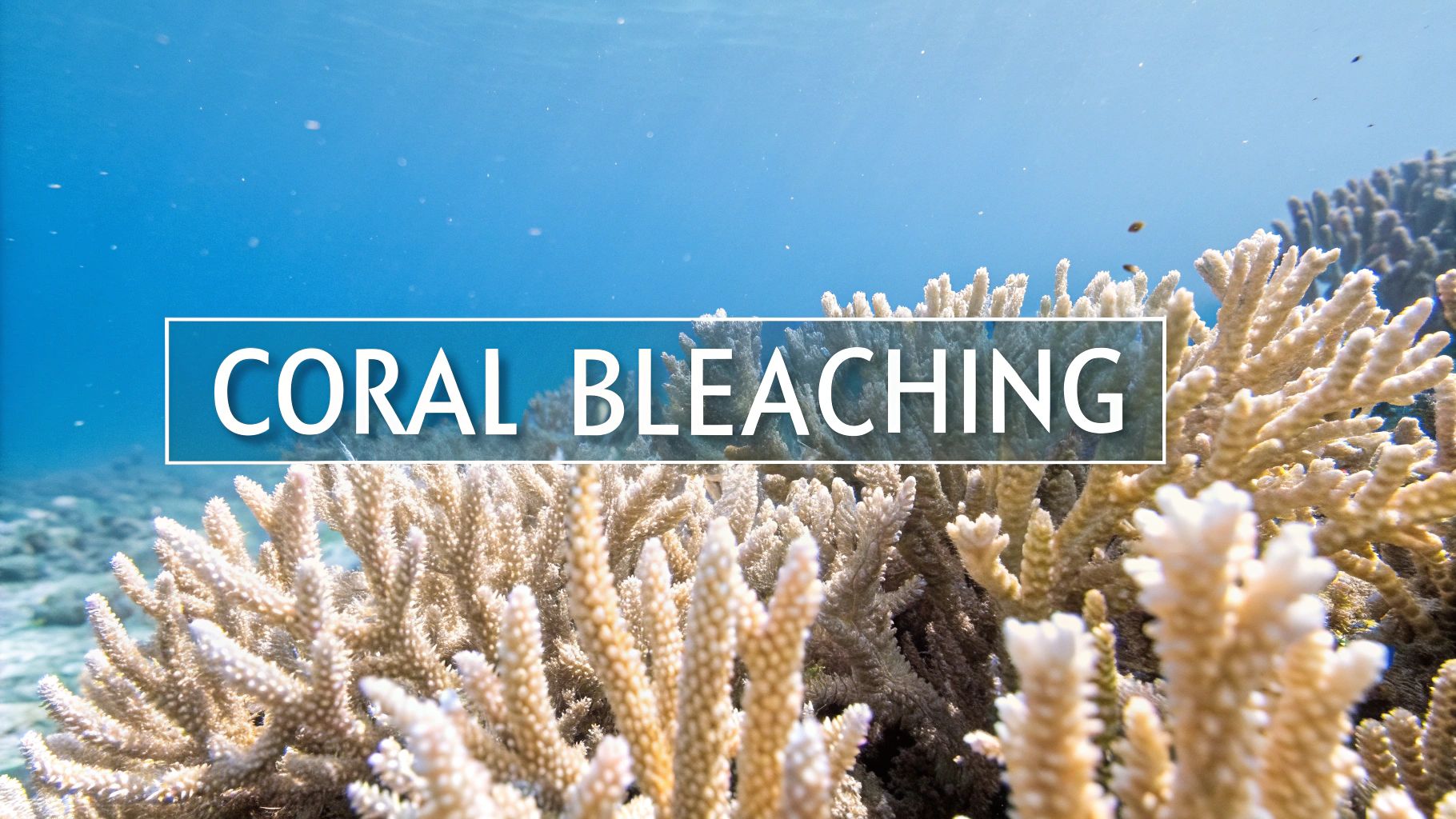
One of the biggest culprits is rising ocean temperatures. Think of coral bleaching as the reef getting a dangerously high fever. When the water gets too warm for too long, corals get stressed and kick out the colorful algae living inside their tissues.
This algae is their main food source. Without it, the coral turns a ghostly bone-white and literally begins to starve. While corals can sometimes recover if temperatures cool down in time, prolonged heat is often a death sentence. To really get a handle on this, check out our guide on what causes coral bleaching.
Diseases Sweeping the Reef
On top of the heat stress, a deadly epidemic called Stony Coral Tissue Loss Disease (SCTLD) has been tearing through the reefs. It's a fast-moving plague that targets the most important, foundational coral species, causing their tissue to rapidly slough off and die.
This disease spreads like wildfire underwater, leaving behind lifeless coral skeletons where vibrant colonies once thrived. The speed and severity of SCTLD have made it one of the most destructive coral diseases ever recorded in the region.
The combination of heat stress from bleaching and the aggressive nature of SCTLD creates a devastating one-two punch that our reefs are struggling to survive.
Pollution and Declining Water Quality
As if that weren't enough, local pollution and declining water quality add another layer of stress. Runoff from land carries nutrients, chemicals, and sediment into the ocean, which can smother corals or fuel algae blooms that block out the sunlight they need to live.
The data paints a stark picture of this decline. For example, research focused on the Looe Key Sanctuary Preservation Area revealed that living coral cover plummeted from nearly 33% in 1984 to less than 6% by 2008. A major factor in this dramatic loss was increased nitrogen and phytoplankton from Everglades runoff, which placed immense stress on the corals. You can learn more about these research findings and their impact on our precious ecosystem. These compounding threats highlight the urgent need for all of us to be aware and take action.
How You Can Help Protect and Restore the Reefs
After learning about the challenges our reefs are up against, it’s easy to feel a little helpless. But this is where the story turns toward hope. Incredible people are doing groundbreaking work right now, and every single person who visits can play a part in turning the tide for the coral reefs in the Florida Keys.
This isn’t just about putting a fence around what’s left; it’s about active, hands-on restoration. Heroic organizations are pioneering some truly innovative techniques to bring corals back from the brink. Picture scientists tending to underwater "gardens," where thousands of tiny coral fragments grow in offshore nurseries until they're strong enough to be replanted on the reef. It's happening as we speak.
Groups like the Coral Restoration Foundation and The Florida Aquarium are essentially giving the reef a fighting chance. When the devastating 2023 bleaching event hit, they rescued adult corals and have since managed to raise over 1,000 coral babies in land-based labs. These precious new corals are now being returned to the ocean.
Your Role in Protecting the Reef
You don't need a degree in marine biology to make a real difference. In fact, the simple choices you make as a visitor can have a powerful, positive ripple effect across this delicate ecosystem.
Your contribution starts before your toes even touch the water. One of the single most important things you can do is choose the right sunscreen. Chemicals like oxybenzone and octinoxate are incredibly toxic to coral, so always, always opt for a mineral-based, reef-safe formula. You can find more details on this and other practices in our guide to coral reef conservation efforts.
Here are a few other simple yet powerful actions you can take:
- Keep Your Distance: Never touch, stand on, or kick the coral. Think of it as a living animal with a very fragile protective layer—even a gentle touch can cause serious, irreversible damage.
- Support Eco-Friendly Tours: Vote with your wallet by choosing tour operators committed to responsible tourism. We make education and safe practices a priority on every trip, making sure our guests know how to protect the very wonders they’ve come to see.
- Leave No Trace: This one’s simple: whatever you bring out with you, bring it back. A stray plastic bag or bottle cap is a major threat to sea turtles, fish, and other marine life.
"The collective impact of thousands of visitors making small, responsible choices adds up to a massive wave of protection for the reef. Your actions truly matter."
Historically, reefs grew fast enough to keep up with changing sea levels. But that's no longer the case. By 2019, only about 15% of Florida Keys reefs were still growing, putting them at serious risk of being drowned by rising seas. Restoration projects offer a path to recovery, but it’s a race against time. To dig deeper, you can learn more about broader conservation efforts that help marine life worldwide.
Your Florida Keys Reef Snorkeling Questions Answered
Planning an adventure out to the coral reefs in the Florida Keys is exciting, but it almost always brings up a few questions. To help you get ready for a safe, unforgettable, and respectful day on the water, we’ve put together answers to the questions we hear most often.
Getting these details sorted out beforehand means that once you're on the boat, your focus can be right where it should be—on the incredible beauty waiting just beneath the waves.
What Is the Best Time of Year to Snorkel in the Florida Keys
Hands down, the absolute best time to snorkel the Keys is during the summer, from late May through September. This is when the Atlantic is typically at its calmest and warmest. These glass-like conditions usually mean you get the best possible water clarity and visibility for checking out the reefs.
Just remember, this is also hurricane season, so you'll want to keep a close eye on the weather forecast. If you'd rather visit when it's a little less crowded, the spring months from March to May are another fantastic choice, offering beautiful weather and great conditions on the water.
Winter can bring cooler water and windier days, which sometimes stirs up sediment and cuts down on visibility. You can definitely still snorkel, but you'll almost certainly want to wear a wetsuit to stay comfortable.
Do I Need to Be an Expert Swimmer to Snorkel
You definitely don’t need to be an Olympic swimmer, but you should have a basic level of comfort in the water. Really, the most important skill is just being able to stay calm and relax while you float.
Every reputable tour operator provides high-quality flotation vests that let you float effortlessly on the surface, taking all the pressure off. The real key is just getting used to breathing steadily through your snorkel and making sure your mask has a good, tight seal.
Always snorkel with a buddy and stay a safe distance from the boat. And if you're feeling a bit nervous, just let the crew know! They're trained to help out and make sure everyone feels totally secure. For a complete rundown, check out our essential snorkeling tips for beginners before your trip.
What Makes a Sunscreen Reef-Safe
This is one of the most important questions a visitor can ask, and we're always happy to hear it. A "reef-safe" sunscreen is one that is completely free of two specific chemical ingredients: oxybenzone and octinoxate. It's not just a buzzword; scientific studies have proven these chemicals are incredibly harmful to coral.
When these chemicals wash off swimmers and into the water, they can damage coral DNA, disrupt reproduction, and accelerate coral bleaching. Protecting the reef starts before you even get on the boat.
To do your part, always choose a mineral-based sunscreen. Look for formulas that use non-nano zinc oxide or titanium dioxide as their active ingredients. These ingredients create a physical barrier on your skin rather than a chemical one, making them a much safer choice for the fragile ecosystem you’re about to explore.
Is It Okay to Touch the Coral or Marine Animals
The answer here is simple and firm: absolutely not. You must never touch the coral or any marine life. It's easy to forget, but coral is a living animal. It's covered in a delicate, mucus-like layer that protects it from disease. A single touch from a hand or even a bump from a fin can scrape off this protective layer, leaving the coral vulnerable to deadly infections.
Likewise, touching or chasing marine animals causes them a huge amount of stress. It disrupts their natural behaviors, like feeding and mating. The golden rule of snorkeling is to be a respectful observer from a distance. Just remember the old motto: "Take only pictures, leave only bubbles."
Ready to see the reefs for yourself? At Marathon Snorkeling And Sunset Cruise, we offer unforgettable and responsible trips to the best snorkeling spots in the Keys. Our award-winning crew is ready to guide you on a safe and amazing underwater adventure. Book your trip today at https://snorkelingmarathon.com.