
Florida Keys Water Temperature A Complete Monthly Guide

Let's be honest, the short answer is that the Florida Keys water temperature is amazing all year round. The water stays warm and inviting no matter when you visit, with temperatures ranging from a comfortable low of 70°F in winter to a bath-like upper 80°F in summer. This makes it a perfect destination for pretty much any water adventure you can dream up.
What to Expect from Florida Keys Water Temperatures
Planning a trip to the Florida Keys almost always revolves around one thing: the water. That legendary turquoise color and inviting warmth are the main event, drawing people from all over the world for snorkeling, swimming, and boating.
Thankfully, the climate here is incredibly consistent. The powerful Gulf Stream current works like a natural thermostat, keeping the ocean pleasantly warm even during the coolest winter months. This means you can comfortably enjoy all sorts of Florida Keys water activities no matter which month is on the calendar.
Think of this guide as your roadmap to understanding the water conditions here. We’ll break down how the temperatures shift from month to month and what that means for your vacation plans.
Here's the key takeaway for any traveler: "cold" is a relative term in the Keys. Even in January, our water is often warmer than the peak summer ocean temperatures in many other U.S. coastal spots.
Knowing this will help you pinpoint the perfect time for your trip, whether you're hoping to dive into the vibrant coral reefs or just kick back on a sandbar. Let's dive into a clear, detailed breakdown to make sure you're perfectly prepared for your adventure in this tropical paradise.
Average Monthly Water Temperature in the Florida Keys (°F)
Use this quick-reference guide to the average sea surface temperatures to plan your activities and decide what to pack for your trip to the Florida Keys.
| Month | Average Low (°F) | Average High (°F) | Best For |
|---|---|---|---|
| January | 69°F | 74°F | Boating, fishing, sightseeing. Wetsuit recommended for snorkeling. |
| February | 70°F | 75°F | Milder snorkeling days, sailing, and enjoying less crowded waters. |
| March | 72°F | 77°F | Spring Break fun, comfortable swimming as temperatures rise. |
| April | 75°F | 80°F | Ideal for all water sports; warm but not yet hot. |
| May | 79°F | 83°F | Perfect snorkeling and diving conditions before the summer crowds. |
| June | 82°F | 86°F | Warm, bath-like water perfect for swimming and long snorkeling trips. |
| July | 84°F | 87°F | The warmest month, ideal for early morning or late afternoon dips. |
| August | 84°F | 88°F | Lobster season! Perfect for diving, but stay hydrated. |
| September | 83°F | 86°F | Still very warm water, great for enjoying the quieter season. |
| October | 80°F | 84°F | Excellent visibility for snorkeling and diving as things cool slightly. |
| November | 75°F | 79°F | Pleasant water for all activities without the summer heat. |
| December | 71°F | 76°F | Holiday boating, kayaking, and light snorkeling on sunny days. |
This table gives you a great starting point for what to expect. While the "shoulder seasons" like April-May and October-November often hit that sweet spot of perfect weather and fewer crowds, there's truly no bad time to get in the water here in the Keys.
A Seasonal Guide to Ocean Temperatures
Talking about the Florida Keys water temperature isn’t just about spitting out numbers; it’s about the feeling. Each season brings a totally different vibe to the ocean, transforming it from refreshingly crisp to something that feels like a warm bath. Figuring out these subtle shifts is the key to planning the perfect trip, so the water feels exactly the way you want it to.
Winter Refreshment: December through February
Winter in the Keys brings the coolest water of the year, but let's be clear—"cool" is a very relative term down here. With average temperatures hovering in the low to mid-70s°F, the ocean is a long way from frigid. Think of it like a lightly heated lap pool. It might feel a bit brisk when you first jump in, but you’ll get comfortable in no time.
It’s perfectly fine for a quick dip on a sunny afternoon. But if you're planning a long snorkeling session out on the reef, this is the one time of year when a light wetsuit top or a "shorty" can be a real game-changer. It’ll keep your core warm and let you explore for hours without getting a chill.
This chart really puts the temperature swings into perspective.
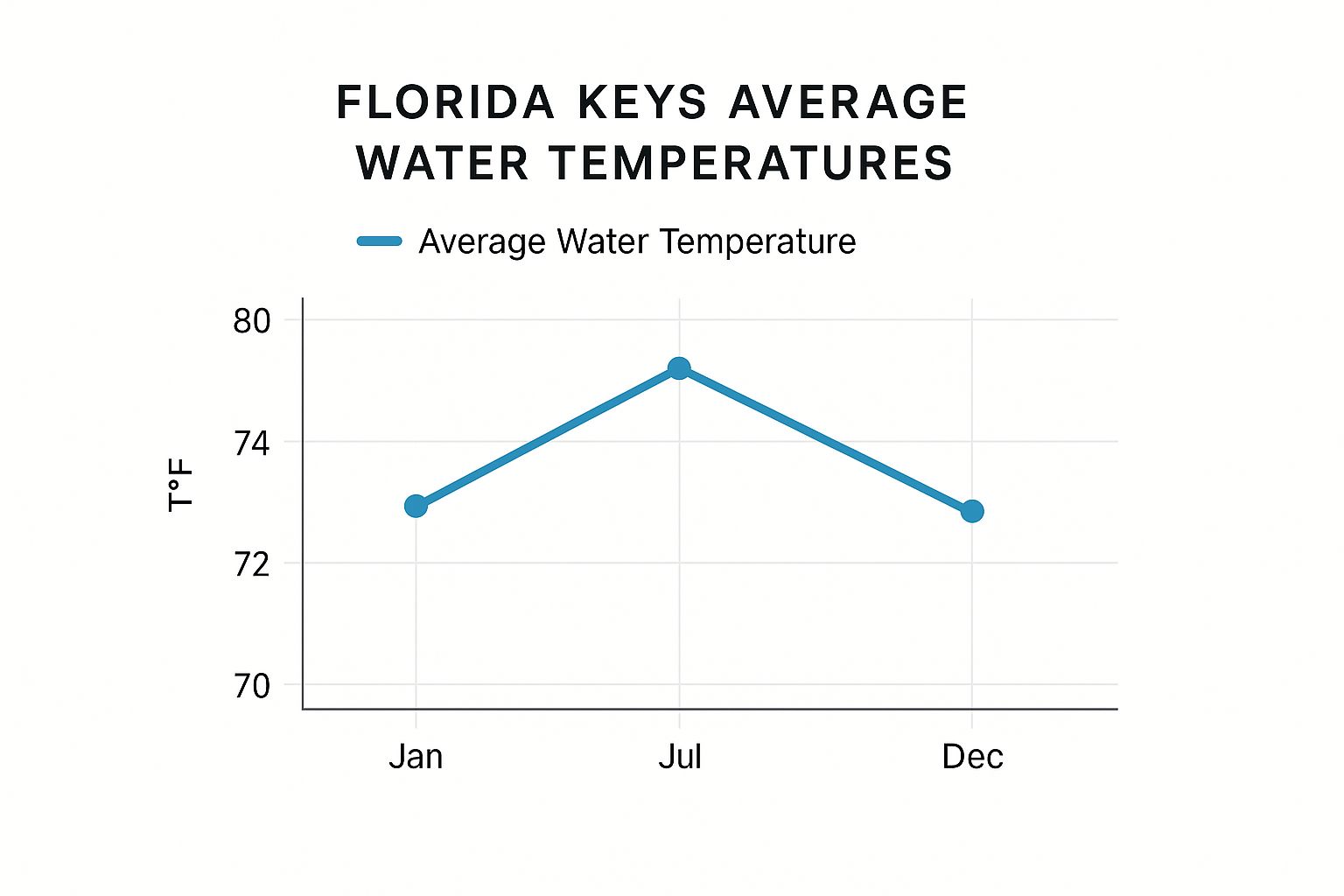
As you can see, even though there’s a seasonal change, the water stays remarkably warm all year. It never even comes close to what most people would call "cold."
Spring Perfection: March through May
Once spring rolls around, the water temperature climbs into that sweet spot that most visitors dream of. Hitting the high 70s to the low 80s, the ocean becomes undeniably warm and inviting. This is when you can comfortably spend hours swimming, snorkeling, and diving without thinking twice about needing extra gear.
The water is warm enough for literally everyone, yet it’s still cool enough to feel refreshing when you need an escape from the afternoon sun. For this reason, a lot of people consider this the absolute best time to visit the Florida Keys.
Summer Bliss: June through August
Welcome to summer, when the ocean in the Florida Keys feels like pure, liquid bliss. We're talking truly tropical, bath-like water. Thanks to the nearby Gulf Stream, our tropical-maritime climate keeps the ocean incredibly warm.
Average monthly water temperatures can hit peak summer highs of 82-86°F (28-30°C) in July and August. It really is like swimming in a natural, saltwater bathtub.
The summer months are the ultimate warm-water experience. There’s zero hesitation before diving in; the ocean is just consistently perfect from sunrise to sunset. It’s ideal for families with kids and anyone who loves truly tropical conditions.
Autumn's Warm Embrace: September through November
Even as the rest of the country starts pulling out their sweaters, the ocean here in the Keys holds onto its summer heat for dear life. Water temperatures stay comfortably in the low to mid-80s through September and October, only gradually dipping back into the high 70s by November.
This extended warmth makes autumn a fantastic time for any water activity, and you often get to enjoy it with fewer crowds than in the peak seasons. If you're curious about how this compares to other famous snorkeling spots, check out this a complete monthly guide to water temperatures in Kona, Hawaii.
How Water Temperature Shapes Your Snorkeling Adventure
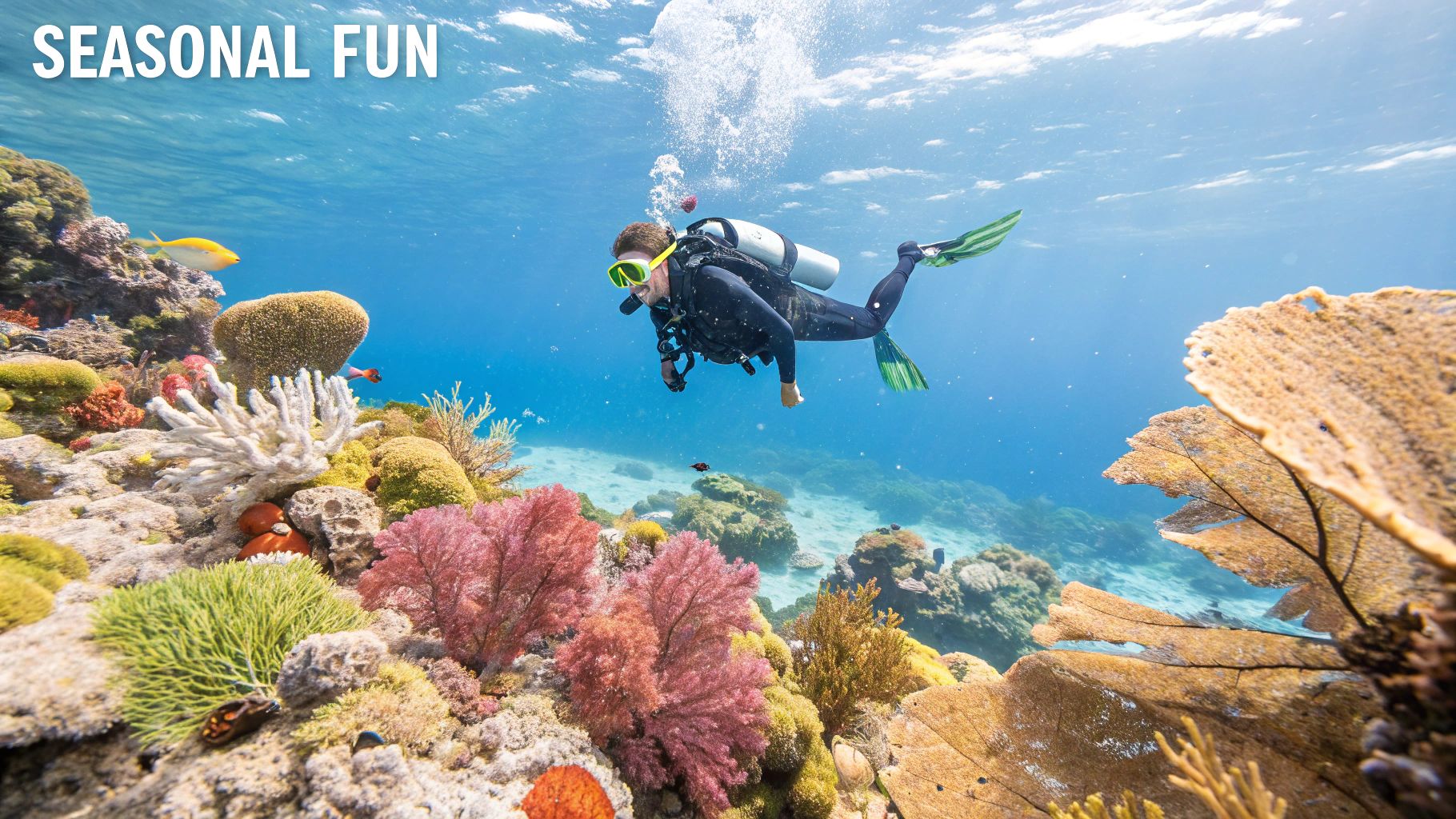
The water temperature in the Florida Keys does a lot more than just decide whether you shiver or not—it completely sets the stage for the underwater world you’re about to see. Think of it as the director of an ocean play; the temperature cues which marine life comes out and how clear the scenery will be.
During the summer, the warmer water acts like a magnet for a huge variety of tropical fish. Species like parrotfish, angelfish, and sergeant majors are at their most vibrant when the ocean feels like a warm bath. The trade-off? That same warmth can sometimes kickstart natural algae blooms, which might knock down the water clarity a bit on certain days.
On the other hand, the cooler winter months often deliver ridiculously good visibility. The crispness in the water means it's often crystal-clear, letting you see way deeper into the reef. You might want a thin wetsuit for longer swims, but you're rewarded with a sharper, high-definition view of everything below.
Gearing Up for the Conditions
Packing the right gear for the season is a game-changer. It’s the difference between a quick dip and spending hours completely lost in the magic of the reef.
- Summer (June-August): Rash guards are your best friend. They give you all the sun protection you need without making you overheat in water that's 85°F+.
- Winter (December-February): A wetsuit top or a "shorty" is a brilliant move. It's just enough insulation to keep you perfectly comfortable for an hour or more when the water dips into the low 70s.
The right gear makes all the difference. When you're comfortable, you can relax, float, and truly soak in the beauty of the reef. It turns a good trip into an unforgettable one.
Don't forget that the time of day matters, too. Morning trips usually give you the calmest seas and the best light for seeing all the colors pop. And for those curious about how different oceans behave, understanding the impact of warm Pacific waters on dive experiences, like in Hawaii, offers some cool perspective.
Ready to find the perfect local spot? Get the inside scoop on Marathon snorkeling to learn about its incredible reef systems.
The Reality of Extreme Heat in the Florida Keys
While the Florida Keys are famous for their wonderfully warm water all year long, it's impossible to ignore the elephant in the room: recent climate trends. The conversation has shifted, and we now have to talk about the growing concern of extreme ocean heatwaves and what they mean for our delicate marine ecosystem.
This isn't some far-off problem, either. In the summer of 2023, the issue blew up in the headlines when water temperatures right here in the Keys shot up to an unbelievable 101.1 degrees Fahrenheit. That reading, taken in Manatee Bay, felt more like a hot tub than the ocean and really drove home the stress our local waters are under. The Smithsonian Magazine even covered these record-breaking temperatures and what they mean for the environment.
What Extreme Heat Means for Coral Reefs
These long stretches of intense heat hit our vibrant coral reefs the hardest. When the water stays too hot for too long, the corals get stressed and kick out the tiny algae living inside their tissues—the very algae that give them their beautiful colors.
When this happens, the coral turns stark white. This is known as coral bleaching. A bleached coral isn't dead, but it's in critical condition. It's basically starving and becomes much more vulnerable to disease and death if the water temperatures don't cool down fast. If you want to dive deeper into the science behind this, our guide explains what causes coral bleaching in more detail.
Coral bleaching is a stark visual reminder of the ocean's health. It’s like a fever for the reef—a clear signal that the system is out of balance and struggling to survive under extreme conditions.
As people who come here to admire this incredible natural wonder, understanding these challenges is the first step toward being a responsible visitor. Being mindful of our impact, choosing tour operators who prioritize sustainability, and supporting conservation efforts are all things we can do to help protect the very ecosystem that makes the Florida Keys so magical.
Tracking Long-Term Temperature Trends in the Keys
Our understanding of the Florida Keys' water temperature isn't just based on a few random dips of a thermometer. It comes from decades of serious, dedicated scientific work. Organizations like the National Oceanic and Atmospheric Administration (NOAA) are out there every day, collecting data to see how our ocean is changing.
Think of it less like a daily weather report and more like a long-term health chart for the ocean. Scientists use a whole network of underwater temperature loggers scattered across different reef sites. This isn't a new thing, either—this kind of monitoring has been going on in the upper Florida Keys since 2003. These little devices record the temperature every thirty minutes, building a massive library of information that shows us the real trends and impacts on our fragile coral systems.
Why This Data Is So Important
Having this steady stream of information is absolutely critical for the health of the entire Keys ecosystem. It’s the foundation for a ton of important work:
- Protecting Coral Reefs: This data gives us an early warning system for marine heatwaves, allowing scientists to see potential coral bleaching events coming and try to get ahead of them.
- Managing Fisheries: Knowing how the water temperature is shifting helps manage fish populations sustainably. It keeps our local fishing industry healthy for the long haul.
- Forecasting Environmental Changes: All this information is fed into complex models that help predict the future impacts of climate change on our coastlines.
By grounding our knowledge in solid science, we can move past the scary headlines and truly appreciate the delicate balance of this incredible place. It’s this data-driven approach that really highlights why conservation is so important.
This kind of detailed information helps paint a much clearer picture of the specific ocean temperature in Marathon, FL, and right on down the island chain. It brings real credibility to the table when we talk about protecting these waters.
A Few Common Questions About Keys Water Temps
When you're planning a trip, a few specific questions always pop up. To help you get your plans locked in and your suitcase packed, here are some quick answers to the things we hear most often about the water in the Florida Keys.
Is The Water Warm Enough To Swim In December?
You bet it is. In December, the water temperature usually hovers in the mid-70s°F (around 23-25°C). Even though it's our coolest time of the year, most people find it perfectly comfortable for a swim, especially when the afternoon sun is out.
It might feel a little crisp for a second when you first jump in, but it’s a world away from the cold water you'll find almost anywhere else in the U.S. at that time. If you’re someone who gets chilly easily or you're planning a really long snorkel session, a thin wetsuit top can add some extra comfort, but it's definitely not a must-have for most folks.
What Is The Best Month For Snorkeling Based On Water Temperature?
If you're looking for that perfect sweet spot of warm water and ideal conditions, aim for April, May, or June. The water is a consistent and beautiful high 70s to low 8s°F, which is just about perfect for spending hours in the water without a wetsuit.
This timeframe also lets you dodge the peak heat of summer and steer clear of the main storm season, which usually means the seas are calm and the water is crystal clear. If you want to book a trip during this prime season, you can check out our options for an incredible day on the reef.
Late spring is the real sweet spot for snorkeling. You get the best of both worlds: beautifully warm water and amazing visibility, all before the summer humidity really kicks in.
Has The Water Temperature In The Keys Been Rising Over The Years?
Yes, it has. Long-term scientific data shows a clear warming trend in the Florida Keys, which matches what's happening globally. While there are always natural ups and downs each year, the overall average has been slowly creeping up.
We're also seeing more extreme heat waves in the summer months. These shifts have real consequences for our marine life, especially the coral reefs. It’s exactly why the research and conservation work happening down here is more critical than ever.
Ready to feel that perfect water for yourself? Marathon Snorkeling And Sunset Cruise runs the best trips out to the reef, the sandbars, and for those unforgettable sunset celebrations. Book your adventure today at https://snorkelingmarathon.com.