
A Visitor’s Guide to the Sea Turtle Hospital Marathon

The sea turtle hospital in Marathon is a real, working veterinary hospital, but it's also a marine conservation hub and one of the most unique attractions you'll find in the Florida Keys. For anyone visiting, it's an incredible chance to see these ancient mariners up close and understand the critical work being done to save them.
A Sanctuary of Healing in the Florida Keys
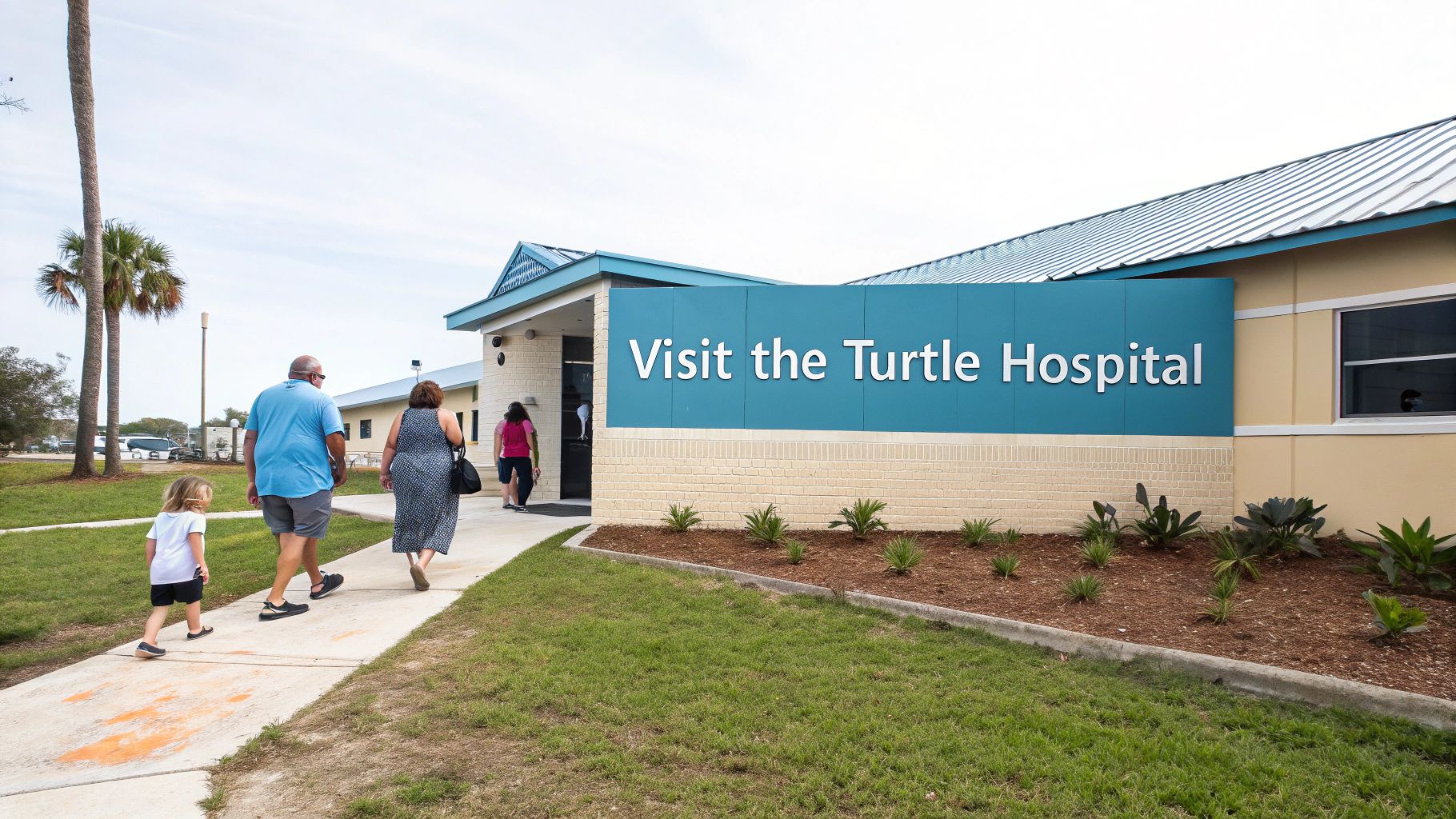
Tucked away in the heart of the Keys, The Turtle Hospital is so much more than a roadside stop. It’s a beacon of hope for sea turtles in distress. When it opened back in 1986, it became the world's first state-certified veterinary hospital dedicated entirely to these amazing creatures. Its mission is simple but powerful: rescue, rehab, and release.
The team here treats all kinds of injuries and illnesses that threaten sea turtles, many of which are unfortunately caused by human activity. From boat strikes and getting tangled in fishing gear to diseases like fibropapillomatosis, the staff works around the clock to give every single patient a fighting chance to return to the ocean.
Why a Visit is So Meaningful
A trip to the hospital isn't like a visit to a zoo or aquarium. It’s a raw, real-life look into a rescue operation. You get to see firsthand the challenges these animals face and the incredible care they receive.
For families, it’s an especially powerful experience. If you’re figuring out the logistics of a Keys vacation with little ones, you might find some great tips in this an ultimate guide to traveling with young children.
Your visit does more than just create memories; it directly fuels their life-saving work. The price of your ticket helps fund:
- Medical Procedures: Everything from complex surgeries to antibiotics for sick turtles.
- Rescue Operations: Keeping the turtle ambulance gassed up and ready for emergency calls 24/7.
- Public Education: Spreading awareness to help prevent these injuries from happening in the first place.
By walking through their doors, you become part of the solution. Every ticket sold helps save an endangered species and keeps our oceans healthy for generations to come.
Deciding on the perfect time for your trip can make it even better. For a breakdown of weather, crowds, and events, check out our guide on the best time to visit the Florida Keys. It’ll help you plan a seamless Marathon adventure that’s both inspiring and impactful.
A Turtle's Journey From Rescue to Release
Every single patient at the sea turtle hospital in Marathon has a story, but their journey back to health follows a familiar path paved with hope and a whole lot of hard work. It almost always kicks off with a single phone call—someone spots a turtle in trouble and knows who to alert. That call sends the hospital's dedicated team scrambling into action, often firing up their specialized turtle ambulance to race anywhere in the Florida Keys.
The reasons a turtle needs help are varied and, honestly, often heartbreaking. You might have a massive loggerhead found floating after a boat strike, its shell shattered. Or maybe it's a young green sea turtle hopelessly tangled in discarded fishing line, unable to swim or hunt. These rescues are the critical first step in what's usually a long, intensive healing process.
As soon as they arrive, each turtle gets a complete medical workup, not unlike a patient rolling into a human ER. Vets run diagnostics, draw blood, and figure out the full extent of the injuries or illness. This initial triage is crucial; it decides the immediate game plan, which could be anything from a round of antibiotics to emergency, life-saving surgery.
From Critical Care to Recovery
That first phase of treatment is usually the most intense. Turtles with severe injuries are stabilized in the hospital's dedicated treatment rooms, where the veterinary staff works around the clock to manage pain, fight off infections, and perform some seriously complex procedures.
For instance, a turtle suffering from fibropapillomatosis—a nasty, tumor-causing disease—might need several surgeries just to remove all the growths. Then there are patients with "bubble butt syndrome," a bizarre condition where trapped gas leaves them unable to dive. These guys need specialized care and even have weights temporarily attached to their shells to help them regain buoyancy control. It's meticulous, painstaking work, but it's vital for their survival.
This level of care doesn't come cheap. Across the United States, rehabilitation organizations invest over $35 million a year to save sea turtles. Most patients are in for the long haul, needing months of care that includes wound treatment, physical therapy, and a specific diet to get their strength back. You can learn more about the national effort to save sea turtles and the laws that help make it happen.
The Final Steps Toward Freedom
Once a turtle is medically stable, they graduate to one of the big saltwater tanks for long-term rehab. This is where the real work of recovery happens. They build back their strength, practice swimming and diving, and have to prove they can still compete for food. The staff watches them like hawks, waiting for the turtle to start acting like a healthy, wild animal again.
The whole point, the ultimate goal, is always a triumphant return to the ocean. A successful release is a huge celebration for the entire team and a powerful symbol of their mission. But this work isn't just about saving one animal at a time; it’s a crucial piece of a much larger puzzle. To get the bigger picture, it's worth exploring the ongoing coral reef conservation efforts in the Florida Keys, which protect the very habitats these turtles depend on.
The journey from a fragile, injured animal to a strong, wild sea turtle is a testament to resilience. It showcases the incredible dedication of the hospital's team and the powerful will of these ancient mariners to survive against all odds. Each release is a victory for the species and for the health of our oceans.
Planning Your Tour and What to Expect
A visit to the sea turtle hospital in Marathon is a truly unforgettable experience, but a little planning goes a long way. The whole thing is a guided educational tour that runs for about 90 minutes, giving you a real behind-the-scenes look at every single step of the rescue and rehab process.
Your journey kicks off with a fantastic presentation. You’ll learn all about the different sea turtle species out there and the common dangers they’re up against in the wild. From there, you get to see the hospital's emergency rooms and even the turtle ambulance they use to bring in new patients. The tour wraps up with a visit to the huge saltwater tanks where you can meet the current residents—some are just visiting, and some are permanent members of the family.
Booking Your Spot and Tour Logistics
This place is popular, especially when the Keys are buzzing with tourists, so booking your tour ahead of time is a must. You can make reservations online through the hospital's official website, and they often sell out days or even weeks in advance. A little prep work ensures you'll have a smooth and awesome visit.
- Tour Schedule: The programs kick off at the top of every hour, starting at 9 a.m. with the last tour leaving at 4 p.m.
- Ticket Information: Pop over to the official website for the latest admission prices for adults and kids. Just remember, every ticket you buy goes directly to funding their mission.
- Parking: There’s plenty of free parking right on-site, but it’s still a good idea to show up about 15 minutes before your tour is scheduled to start.
- Accessibility: The facility is fully accessible for visitors with mobility challenges, so everyone can get in on the experience.
After your tour, make sure to swing by the gift shop. It's packed with cool, unique souvenirs, and every single purchase gives a little extra support to the turtles.
The heart of the hospital's work is a three-step cycle of compassion and science. This simple but powerful process is the foundation of everything they do to save these amazing animals.
The graphic below walks you through the journey each turtle takes, from a critical rescue mission all the way to a hopeful release back into the ocean.
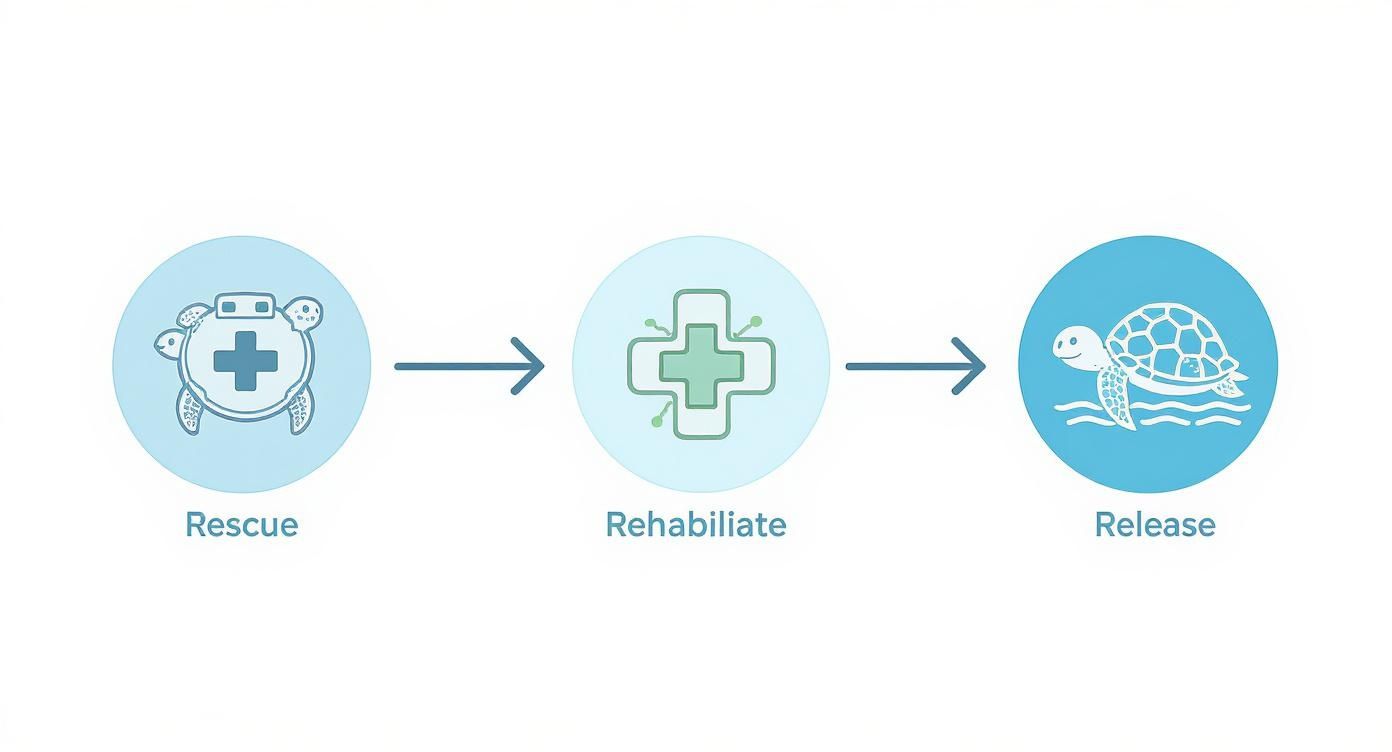
This process really drives home how crucial each stage is, with the rehabilitation phase being the most intensive and time-consuming part of their long road to recovery.
Making the Most of Your Day in Marathon
The tour is a mix of indoors and outdoors, so you’ll want to come ready for that classic Florida Keys sun. Since you'll be spending a good chunk of time near the large, open-air tanks, sunscreen, a hat, and sunglasses are your best friends.
Packing right is key to any Keys adventure, which is why our guide on what to bring on a boat trip has some great tips that work for any outdoor fun in Marathon. A reusable water bottle is also a smart move to stay hydrated. And while you’ll definitely want to snap a ton of pictures, please remember that flash photography is a no-go—it can really stress out the turtles.
Meeting the Famous Permanent Residents
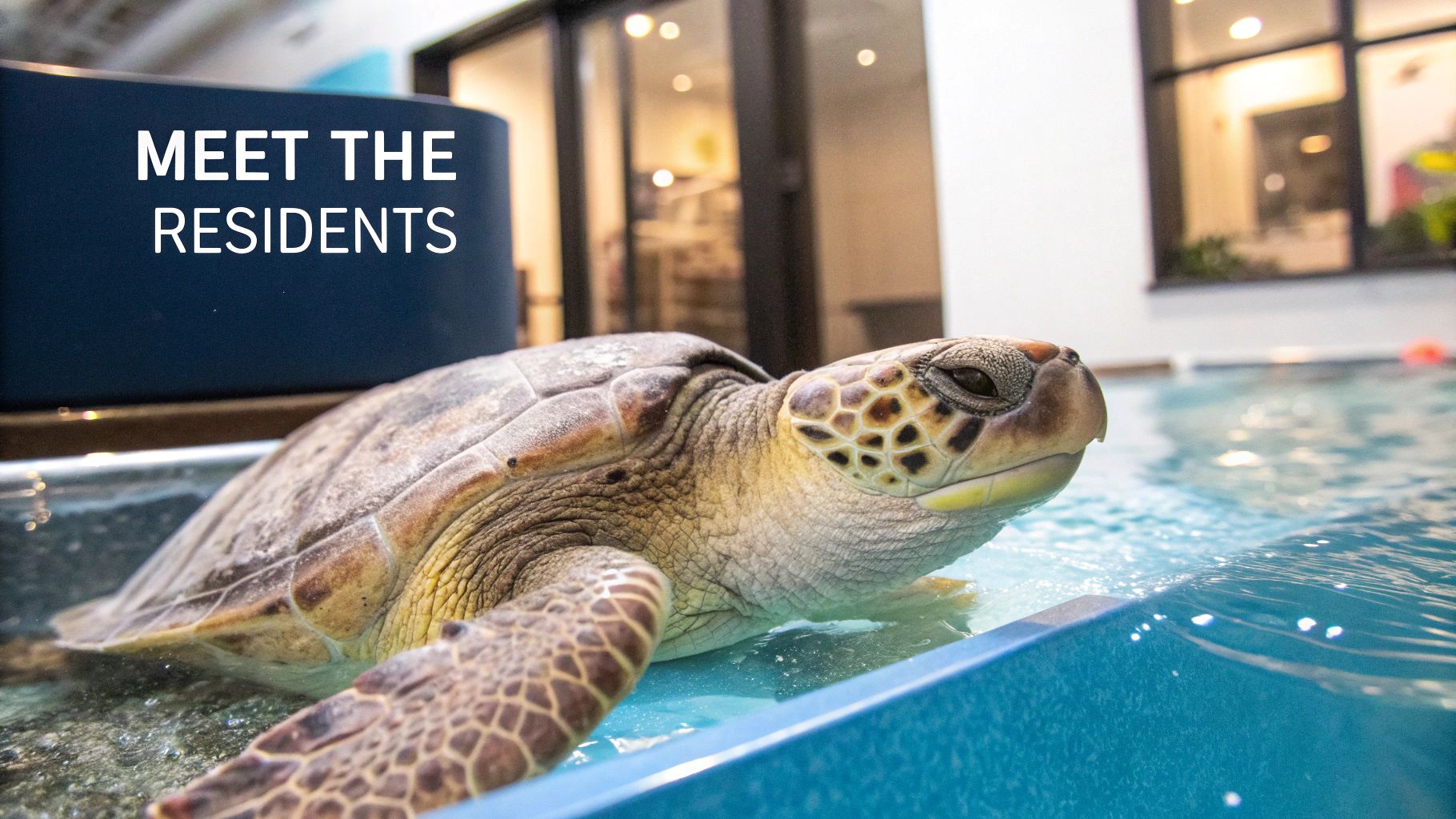
While the ultimate goal at the sea turtle hospital in Marathon is always that triumphant release back into the ocean, some patients arrive with injuries so severe they simply can't survive in the wild again. These special turtles become permanent residents, living out their days in a safe, loving sanctuary.
For most visitors, this is the part of the tour that really hits home. Meeting these turtles is often the most emotional and unforgettable moment of the entire experience.
Each permanent resident has a powerful story, offering a real, tangible look at the consequences of human impact on marine life. These are the survivors of catastrophic boat strikes or debilitating entanglements. Their personal histories create an immediate connection, turning abstract conservation issues into something you can see right in front of you.
This part of the tour really brings the hospital's mission full circle. It's not just a temporary care facility; it's a lifelong home for those who need it most, and it’s a poignant reminder of why this work is so vital.
Stories That Stay With You
One of the most well-known conditions you'll learn about is "Bubble Butt Syndrome." This happens when a boat strike damages a turtle's shell and the lung tissue underneath, trapping air in its body cavity.
That trapped air makes the turtle permanently buoyant, meaning it can no longer dive for food or escape from predators. It's a life-altering injury. To help them, the vet team attaches small, non-invasive weights to their shells, which allows them to submerge and live a more normal life within the sanctuary.
Seeing these turtles is a striking visual that powerfully illustrates the lasting damage a single boat collision can cause.
Meeting a turtle with Bubble Butt Syndrome is an incredibly moving experience. It transforms the abstract concept of boater awareness into a personal story, connecting you directly to the animal's struggle and resilience.
These stories of survival highlight the hospital's deep commitment to every single animal that comes through its doors.
Why Their Stories Matter
The permanent residents are more than just patients; they are ambassadors for their entire species. Their presence allows the hospital's educators to have direct, impactful conversations about specific threats and the simple actions every person can take to help.
Hearing these individual histories helps visitors really understand the importance of:
- Responsible Boating: Navigating with care, especially in areas where sea turtles are known to surface.
- Proper Fishing Line Disposal: Making sure that discarded lines don’t become deadly traps for marine life.
- Reducing Ocean Debris: Seeing firsthand how plastics and other trash can lead to severe injuries or illness.
Meeting these famous residents truly deepens the experience, making a visit to the hospital one of the most enriching things to do in Marathon, Florida Keys. Their stories of resilience and survival inspire visitors to become more mindful stewards of the ocean, helping to ensure a safer future for all sea turtles.
How You Can Support Sea Turtle Conservation
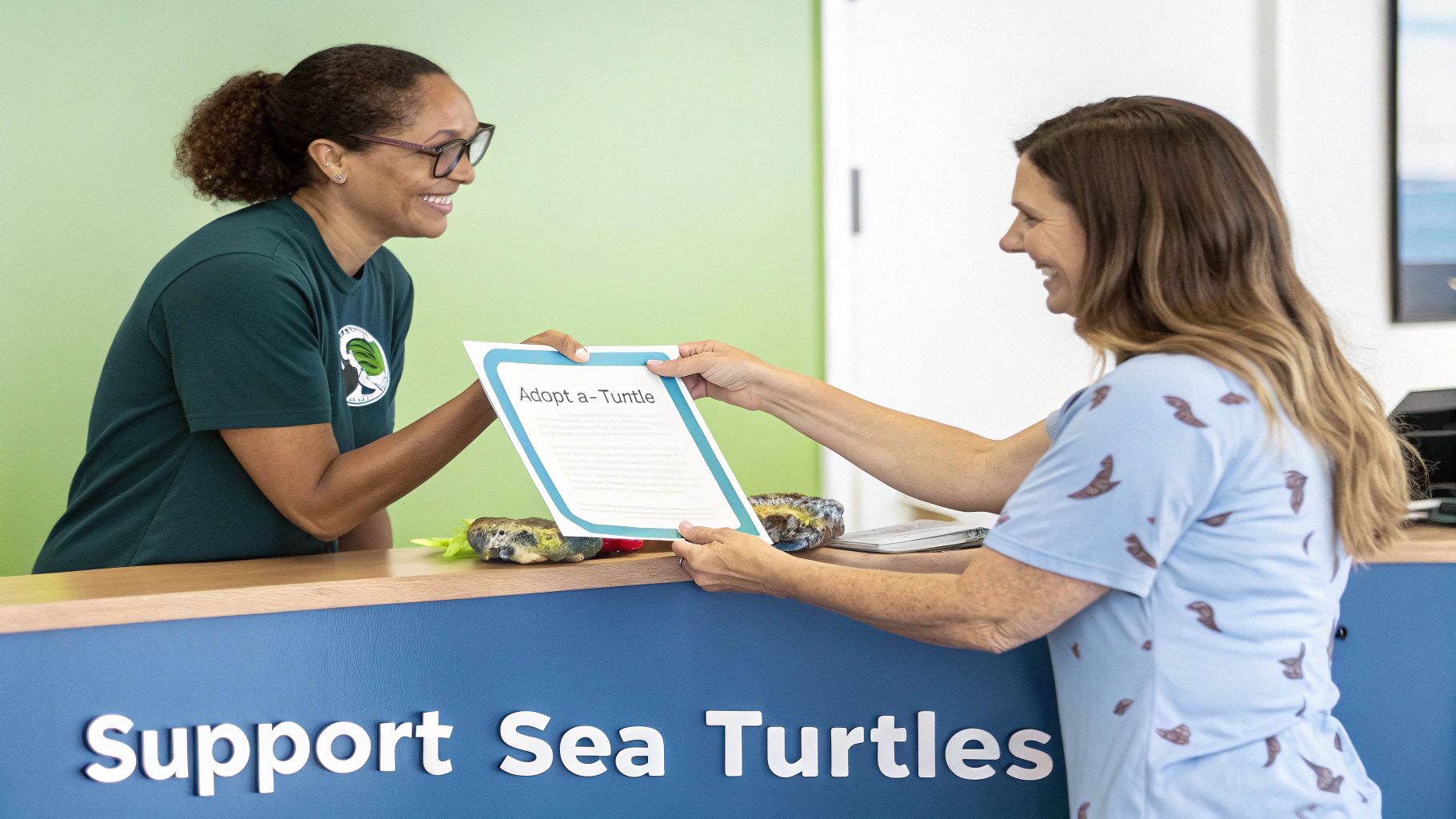
It’s hard to leave the sea turtle hospital in Marathon without feeling a strong pull to do something more. The stories of these turtles stick with you. The good news? You absolutely can help, and your support doesn't have to end when you walk out the door.
One of the most personal and direct ways to make a difference is through the hospital's "Adopt-A-Turtle" program. This isn't just a donation; it's a connection. You get to sponsor a specific turtle currently in their care, and your contribution directly funds their food, medicine, and recovery.
But you don't have to donate money to have a massive impact. Small, conscious choices in your everyday life ripple out into the ocean. Just cutting back on single-use plastics—think bags, straws, and water bottles—is a huge win, since that's the kind of stuff that often ends up in the water, harming turtles.
Practical Steps for Turtle Protection
The inspiration you feel after your visit can be channeled into real, tangible actions that protect these incredible animals, especially when you're enjoying the Florida Keys. It just takes a little awareness.
Here are a few simple but powerful things anyone can do:
- Boat Responsibly: Propeller strikes are one of the top reasons turtles are brought to the hospital. Always keep an eye out for wildlife and slow down in no-wake zones. A little patience on the water can save a life.
- Keep Beaches Clean and Dark: If you’re lucky enough to be near a nesting beach, always pack out everything you pack in. At night, turn off any lights facing the shore. Artificial light can confuse new hatchlings, leading them away from the safety of the sea.
- Choose Sustainable Products: Little choices add up. For instance, knowing what is reef-safe sunscreen and using it helps protect the coral reef ecosystems that turtles rely on for food and shelter.
The Power of Collective Action
The Turtle Hospital is a vital piece of a much larger puzzle. It’s part of a nationwide network of rescue centers working tirelessly to save these species. And the scale of their work is staggering.
Just to give you an idea, in one recent season, the New England Aquarium's Sea Turtle Hospital treated 536 cold-stunned sea turtles for severe issues like pneumonia. This shows just how critical these well-supported organizations are. You can discover more about these impressive rescue efforts to see how different facilities band together.
By taking these small, mindful steps, you join a global community dedicated to protecting marine life. Your visit to the hospital is just the beginning of a lifelong journey as a steward of our oceans.
Every little bit helps ensure that generations to come will get to see these ancient mariners thriving where they belong.
More Adventures in Marathon, Florida
That incredible feeling you get after visiting the sea turtle hospital in Marathon? That sense of connection to the ocean and its creatures? Don't let it fade away. Marathon is packed with amazing ways to see a healthy marine ecosystem in action, turning your day into a powerful, full-circle conservation story.
After seeing the delicate process of rehabilitation, just imagine spotting healthy sea turtles gliding through their natural world. You can do exactly that on a snorkeling trip to Sombrero Reef. The explosion of color from the coral and the sheer abundance of fish and other sea life is a breathtaking reminder of what all that hard work at the hospital is for.
Keep the Adventure Going on the Water
To really make a day of it in the Middle Keys, why not follow up your educational morning with a purely relaxing afternoon? The turquoise water is calling, and there are a few perfect ways to answer.
-
Sandbar Trips: If you're looking for pure, blissful relaxation, nothing beats a Marathon sandbar trip. It's the ultimate way for families and couples to just kick back, wade in the warm, shallow water, and soak up that famous Florida Keys sunshine.
-
Sunset Cruises: Cap off your day with a view that never gets old. A sunset cruise is a classic Keys experience, giving you a peaceful, beautiful moment to reflect on everything you saw and learned.
Pairing a tour of The Turtle Hospital with an adventure out on the water forges a really powerful connection. You witness both the vulnerability of marine life and its incredible resilience, making for a day in Marathon you won't soon forget.
If you're mapping out a longer trip and want to dive even deeper into Florida's natural beauty, there are great resources for finding camping adventures across Florida. By truly connecting with the ocean and the outdoors, you help build a passion for protecting it that lasts a lifetime.
Last-Minute Questions Before You Go
Planning a trip to see the sea turtles in Marathon usually brings up a few final questions. Getting these details sorted out ahead of time means your visit will be smooth, fun, and totally stress-free, letting you focus on the incredible work being done here.
Here are the quick answers to the questions we hear the most.
Do I Need to Book Tickets in Advance?
Yes, you absolutely should. Making reservations ahead of time is highly recommended. The guided educational tours are a huge hit and sell out all the time, especially during the busy season here in the Florida Keys.
To make sure you don't miss out, it's best to book your tickets online through their official website a few days—or even a week—before you plan to visit. This will lock in your spot.
How Long Is the Tour? Is It Good for Kids?
The whole guided experience runs for about 90 minutes. It's fantastic for families and is built to keep visitors of all ages, especially kids, completely engaged.
The guides are amazing at breaking down the hospital's mission and the turtles' stories in a way that's easy for younger kids to connect with. Plus, seeing the resident sea turtles up close is a moment they won't soon forget.
The tour strikes a perfect balance between learning and seeing real wildlife in action. It’s an experience that really holds a child's attention while teaching them a powerful lesson about taking care of our oceans.
What Should I Bring With Me?
The tour has parts that are indoors and parts that are outside around the massive turtle tanks, so you'll want to be ready for that classic Florida sunshine.
Here’s a quick checklist:
- Sun Protection: Sunscreen, a good hat, and sunglasses are a must for the time you'll be outdoors.
- Water: It's always a good idea to bring a reusable water bottle to stay hydrated.
- Camera: You’ll definitely want to snap some pictures, but just remember that flash photography is not allowed. The bright flash can really bother the turtle patients.
A little planning goes a long way in making sure you have the best experience possible.
After your inspiring visit, why not keep the adventure going with Marathon Snorkeling And Sunset Cruise? We offer unforgettable trips to see healthy sea turtles thriving in their natural habitat, chill out on a beautiful sandbar, or catch a world-famous Keys sunset. As the two-time winners of Best Watersports in Marathon, we guarantee a safe, fun, and memorable time on the water. Book your next Florida Keys adventure at https://snorkelingmarathon.com.