
snorkeling marathon fl: Best Spots, Tours & Tips

Welcome to Marathon, the heart of the Florida Keys and a snorkeler’s paradise. Here, crystal-clear waters meet vibrant coral gardens just offshore. This guide lays out everything you’ll need for an unforgettable dive into the only living coral barrier reef in the continental United States.
We’ll cover top sites like Coffins Patch, Valhalla Sandbar, and Pigeon Key. You’ll find tips on the best times to go, gear advice, safety pointers, and local insights. Ready to explore?
Why Choose Marathon For Your Snorkeling Adventure
Imagine gliding over colorful coral formations, schools of tropical fish swirling around you, and perhaps a curious sea turtle drifting by. It feels effortless—and that’s exactly why snorkeling Marathon, FL, is so special.
You don’t need advanced skills or a long boat ride. Many of the best sites sit just a short trip from shore, making them perfect for first-timers and seasoned snorkelers alike.
The real magic comes from Marathon’s geography. Nestled in the Middle Keys, it sits right alongside the Florida Reef Tract. Pristine reef systems brimming with life lie within easy reach.
Protected waters here are typically calm and shallow, creating a safe, comfortable playground for families and beginners.
What Makes Marathon Unique
- Accessibility For All Skill Levels: Shallow patch reefs invite novices, while deeper reefs challenge experienced snorkelers.
- Vibrant And Healthy Reefs: Places like Coffins Patch boast thriving coral and abundant fish—the sign of a well-protected sanctuary.
- Clear, Calm Waters: Visibility often exceeds 50 feet, and water temperatures range from the low 70s in winter to the high 80s in summer, so you can snorkel year-round.
For many, snorkeling in Marathon is more than just an activity—it’s an immersive journey into a living, breathing underwater world. The connection to nature here feels both exhilarating and peaceful.
Before we dive into each site in detail, let’s take a quick look at the top snorkeling spots in Marathon.
Marathon FL Snorkeling at a Glance
| Location | Best For | Key Features | Accessibility |
|---|---|---|---|
| Coffins Patch | Families & Beginners | Shallow patch reefs, high fish density, bright coral | Easy boat access |
| Valhalla Sandbar | Relaxation & Casual Fun | Crystal-clear shallow water, frequent ray and conch sightings | Boat or kayak |
| Pigeon Key | History & Unique Marine Life | Marine life around historic bridge pilings, snapper schools | Ferry or private boat |
With this snapshot, you’re ready to pick the perfect spot for your skill level and interests. In the next sections, we’ll dive deeper into each location’s highlights, tour options, and insider tips to make your Marathon snorkeling adventure truly unforgettable.
Discovering Marathon's Top Underwater Hotspots
Marathon isn't just one single snorkeling spot; it's a whole collection of unique underwater worlds, and each one offers a totally different adventure. Figuring out where to dip your fins really depends on what you're hoping to see and experience.
From sprawling reef systems buzzing with life to glassy sandbars perfect for a lazy float, there's a perfect spot waiting for every kind of snorkeler. This variety is what makes snorkeling marathon fl such an amazing experience. You could seriously spend a week here and have a completely new underwater encounter every single day. Let's dive into three of the most celebrated hotspots that really define the Marathon snorkeling scene.
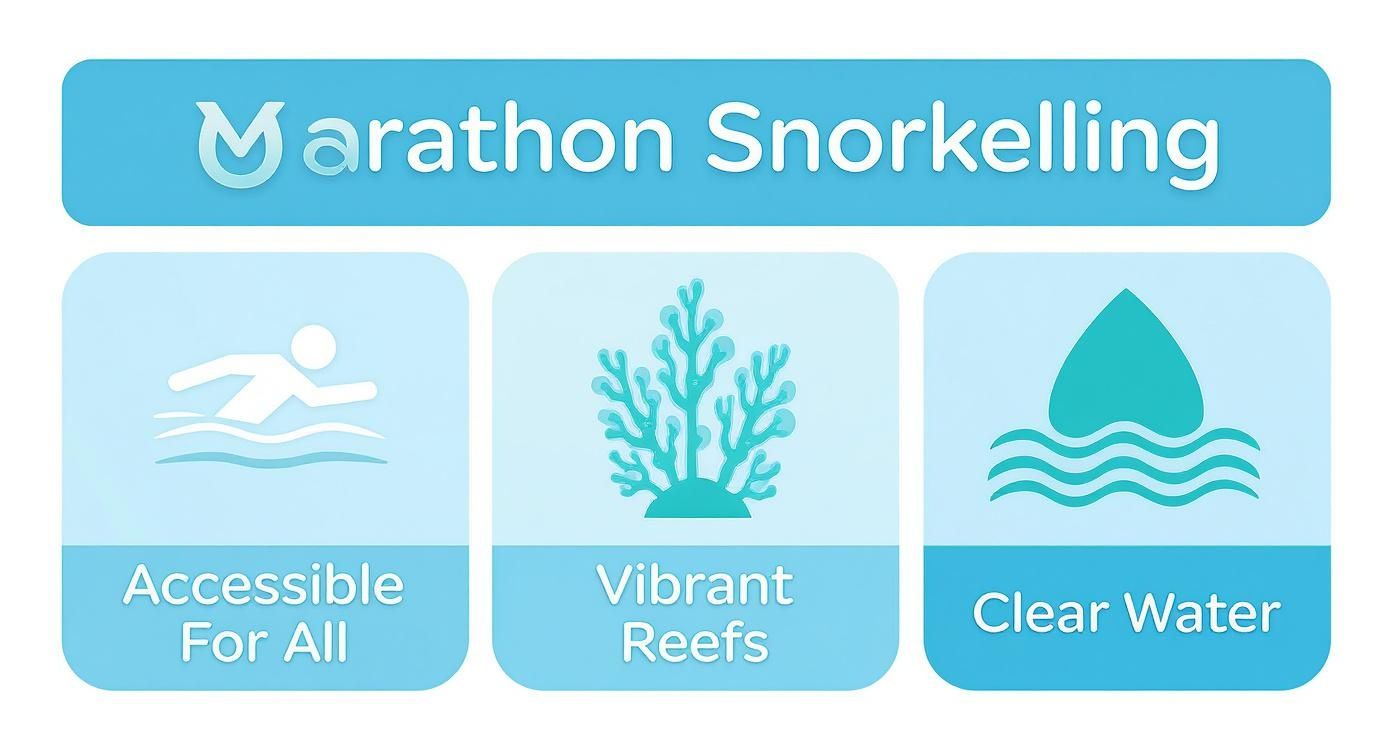
As you can see, the mix of easy-to-reach spots, vibrant marine life, and consistently clear water makes Marathon a slam dunk for snorkelers of all skill levels.
Coffins Patch: A Family-Friendly Reef Sanctuary
Picture a shallow, sun-drenched aquarium that stretches out as far as you can see—that’s the best way to describe Coffins Patch. This isn't just one reef, but a huge area of scattered patch reefs, making it the ideal playground for first-timers and families. The depths here usually only range from a mere 5 to 20 feet, which means all the colorful action is always just a few feet below your mask.
Its biggest selling points are how easy it is to get to and how calm the water is. Protected from the strong offshore currents, the water here is often as placid as a swimming pool. That lets you float effortlessly and just focus all your attention on the incredible world below.
You’ll be surrounded by stunning brain and star coral formations that create these intricate little mazes for fish to dart through. You can actually hear schools of neon-colored parrotfish crunching on the coral, while graceful angelfish and bold sergeant majors zip in and out of view. The sheer number of fish here is just incredible and gives you a spectacular introduction to a living reef. To get the full scoop on what makes this spot so special, you can learn more about Coffins Patch reef in our detailed guide.
Valhalla Sandbar: The Ultimate Relaxation Spot
If your idea of a perfect day involves crystal-clear, waist-deep water and soft white sand, then Valhalla Sandbar is your own personal paradise. Located just a short boat ride from shore, this huge sandbar seems to magically appear out of the turquoise water, creating a natural swimming pool right in the middle of the ocean.
This spot offers a completely different kind of snorkeling marathon fl experience. Instead of looking down at coral, you'll be scanning the sandy bottom and the nearby seagrass beds for unique marine critters. It’s less about intense exploration and more about pure, blissful relaxation.
The Valhalla Sandbar is where the energy of the ocean meets total tranquility. It's a place to wade, float, and simply soak in the stunning 360-degree views of the Florida Keys.
The shallow, warm water is a magnet for all sorts of cool creatures. Keep an eye out for:
- Southern Stingrays: Often seen gliding gracefully across the sand looking for a snack.
- Queen Conchs: These big, beautiful mollusks are frequently spotted moving slowly through the seagrass.
- Juvenile Fish: The seagrass beds are basically a nursery for tons of smaller reef fish.
It’s the perfect place to kick back for an afternoon, mixing some casual snorkeling with sunbathing and just hanging out in an absolutely idyllic setting.
Pigeon Key: Where History and Marine Life Collide
Snorkeling around Pigeon Key is like swimming through a living museum. This tiny, historic island was actually a work camp during the construction of Henry Flagler's famous Over-Sea Railroad. Today, the old bridge pilings that circle the key have transformed into a thriving artificial reef, attracting a fascinating mix of marine life.
The structure provides tons of shelter and food, drawing in creatures you might not see on a natural reef. The water depth around the pilings varies, but much of it is perfect for snorkeling, typically around 10 to 15 feet. Visibility is usually fantastic, letting you see straight to the bottom.
As you navigate around the barnacle-covered pilings, you'll almost certainly run into huge schools of gray and yellowtail snappers just hanging out in the current. Peer into the nooks and crannies for spiny lobsters, and keep an eye out for the occasional sleek barracuda watching you from a distance. The blend of rich history and vibrant sea life makes Pigeon Key a truly one-of-a-kind snorkeling destination.
Choosing the Perfect Marathon Snorkeling Tour
Jumping into Marathon’s underwater world is an experience you won't forget, but picking the right guided tour can feel like trying to navigate a coral reef blindfolded. With so many choices, how do you find the one that makes your day truly special? The trick is to match the tour with your group's vibe and what you hope to get out of the day.
Think of it like planning a road trip. A big, social catamaran is like a comfortable tour bus—awesome for meeting new people and enjoying a party-like atmosphere where everything is included. A private charter, on the other hand, is like renting your own convertible. You get total freedom to set the schedule and enjoy a more personal, intimate trip.
Either way, you're getting to the same amazing reefs, but how you get there will feel completely different. Understanding what sets them apart is the key to planning the perfect snorkeling marathon fl adventure.
Group Catamaran Trips vs Private Charters
Large group tours, usually on spacious catamarans, are the go-to for a reason—they're fun and won't break the bank. They’re perfect for solo travelers, couples, or families looking for a lively, social day on the water. These trips stick to a set schedule, hitting popular spots like Coffins Patch when the conditions are just right.
Onboard, you'll find all the comforts like restrooms, shady spots to relax, and freshwater showers. The crew hands out all the gear you'll need and gives a solid safety briefing, making it a super easy, no-stress option, especially for beginners.
A private charter is a whole other world of personalization. You're renting the entire boat and crew for your group, which means you call the shots. Want to linger a little longer at a secluded reef or mix a sandbar party with some serious snorkeling? A private tour lets you do just that.
A guided tour isn't just a boat ride; it’s your ticket to a local expert’s brain. A great captain knows the hidden gems and can point out marine life you’d swim right past otherwise.
What to Look For in a Tour Operator
Let's be real—not all tour operators are created equal. To make sure your trip is safe and epic, there are a few things you absolutely need to look for. A top-notch company will always put your safety and the health of the reef first.
When you're doing your research, the first thing to confirm is that the company uses USCG licensed captains. This is a non-negotiable. It means your guide has gone through serious training and knows how to keep you safe. Beyond that, a great operator will be passionate about the local marine life, turning your snorkel trip into a fascinating biology lesson.
Here are a few must-haves to check for before you book:
- High-Quality Gear: Make sure they provide well-maintained, sanitized masks, snorkels, and fins. A leaky mask can ruin the entire experience.
- Safety Certifications: Look for a captain and crew who are lifeguard and CPR certified. It adds an extra layer of peace of mind when you're out on the open water.
- Local Knowledge: The best crews don't just drive the boat. They tell stories about the reef, help you identify that cool-looking fish, and know exactly where the sea turtles are hanging out that day.
Doing a little homework upfront means you can book with confidence. When you're ready, you can explore various Marathon snorkeling tour options to see what fits your group. For our handpicked list of the best of the best, check out our complete guide to Marathon snorkeling tours. Picking the right operator is your ticket to a flawless day on the water.
Essential Gear and Tips for Your Adventure
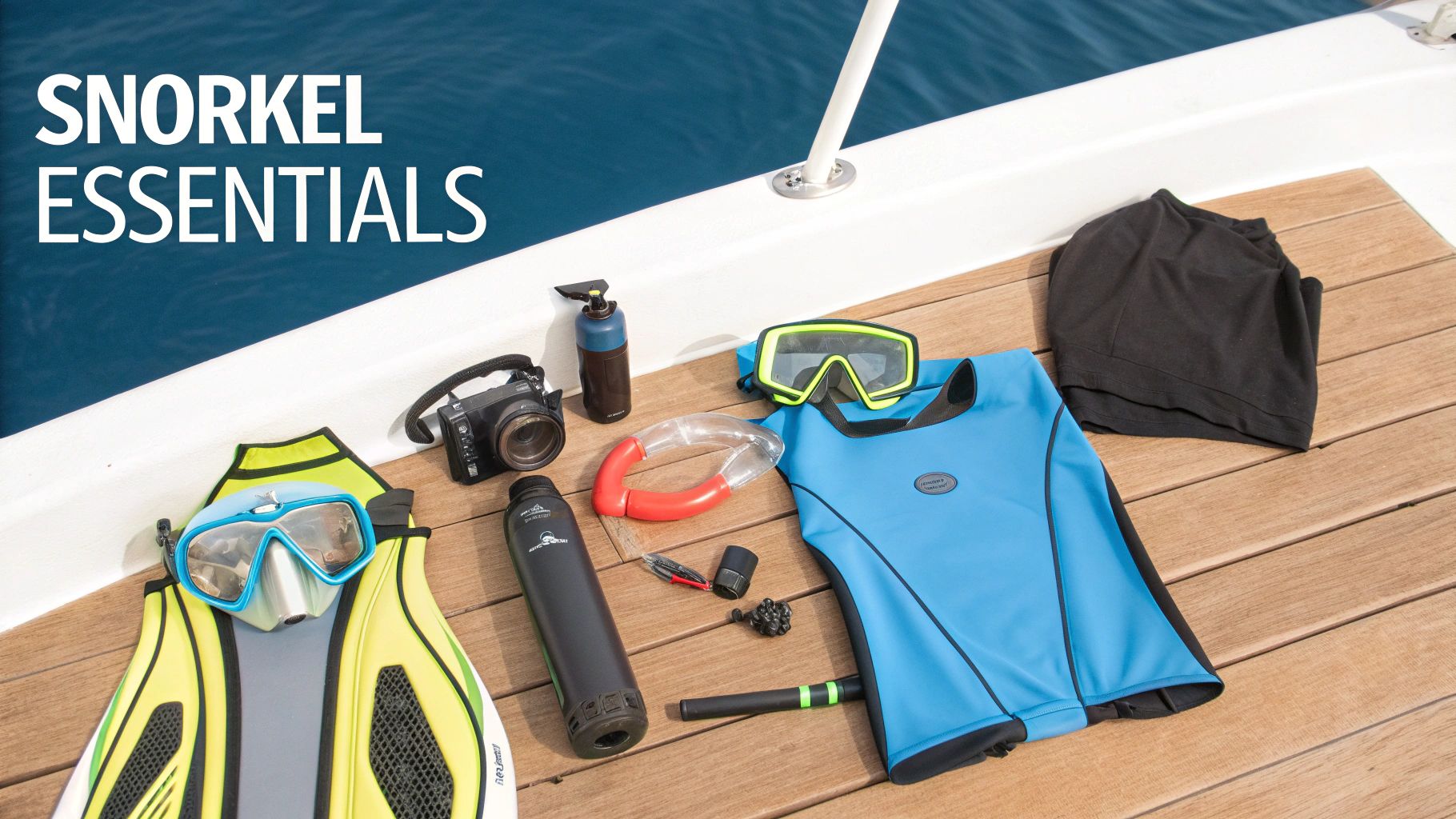
The secret to an amazing day snorkeling in Marathon isn't just picking the right spot—it's having the right gear. Good equipment does more than just keep you comfortable; it’s what transforms a quick swim into a full-blown underwater expedition. Think of it as your personal window into that vibrant world just below the surface.
Getting the basics right—mask, snorkel, and fins—is priority number one. Nothing ruins a perfect day on the reef faster than a leaky mask that keeps fogging up. A few minutes spent making sure your gear fits properly before you even step on the boat will make all the difference.
The Core Trio: Mask, Snorkel, and Fins
Your mask is your portal to everything underwater, so getting a watertight seal is non-negotiable. Here's a pro tip: to test the fit, just hold the mask up to your face (don't use the strap yet) and inhale gently through your nose. If it suctions on and stays put, you’ve found a winner.
Your snorkel is your breathing tube, letting you hang out face-down in the water without a care. I always tell people to look for one with a "dry top" or splash guard. This little feature is a game-changer, stopping waves from sending a rush of saltwater down the tube.
And finally, your fins. They’re your engine out there. They should feel snug, but not so tight they’re cramping your feet. The right pair will let you glide through the water with hardly any effort, saving your energy so you can stay out exploring longer.
Choosing your gear is about finding the right balance between function and comfort. The best equipment is the kind you forget you're even wearing, allowing you to become fully immersed in the marine life around you.
Essential Add-ons for Comfort and Protection
Beyond the main trio, a few other items can seriously upgrade your snorkeling marathon fl experience. That Florida sun is no joke, especially when it’s bouncing right off the water.
A rash guard or a thin wetsuit top is a must-have in my book. It gives you incredible UV protection for your back and shoulders (the spots that always get burned) and even offers a little warmth and protection from stray jellyfish tentacles.
Here are a few other things you’ll be glad you tossed in your bag:
- Reef-Safe Sunscreen: Your typical sunscreen has chemicals like oxybenzone that are devastating to coral. Do the reef a favor and always grab a mineral-based, reef-safe brand.
- Underwater Camera: You’re going to want proof of what you saw! A simple waterproof camera or even a good phone case lets you bring those incredible underwater memories home.
- Defog Solution: There's nothing worse than a foggy mask. A tiny bottle of defogger (or a drop of baby shampoo in a pinch) will keep your view crystal-clear all day.
If you're new to all this, picking out gear can feel a bit overwhelming. Our guide to the best snorkel gear for beginners breaks it all down to help you find the perfect setup. Exploring the reefs is an incredible experience, and if you get the bug, you might even find yourself looking into other water sports like scuba diving to go deeper. With the right gear in hand, you're all set for an unforgettable adventure.
Protecting Marathon's Underwater Paradise
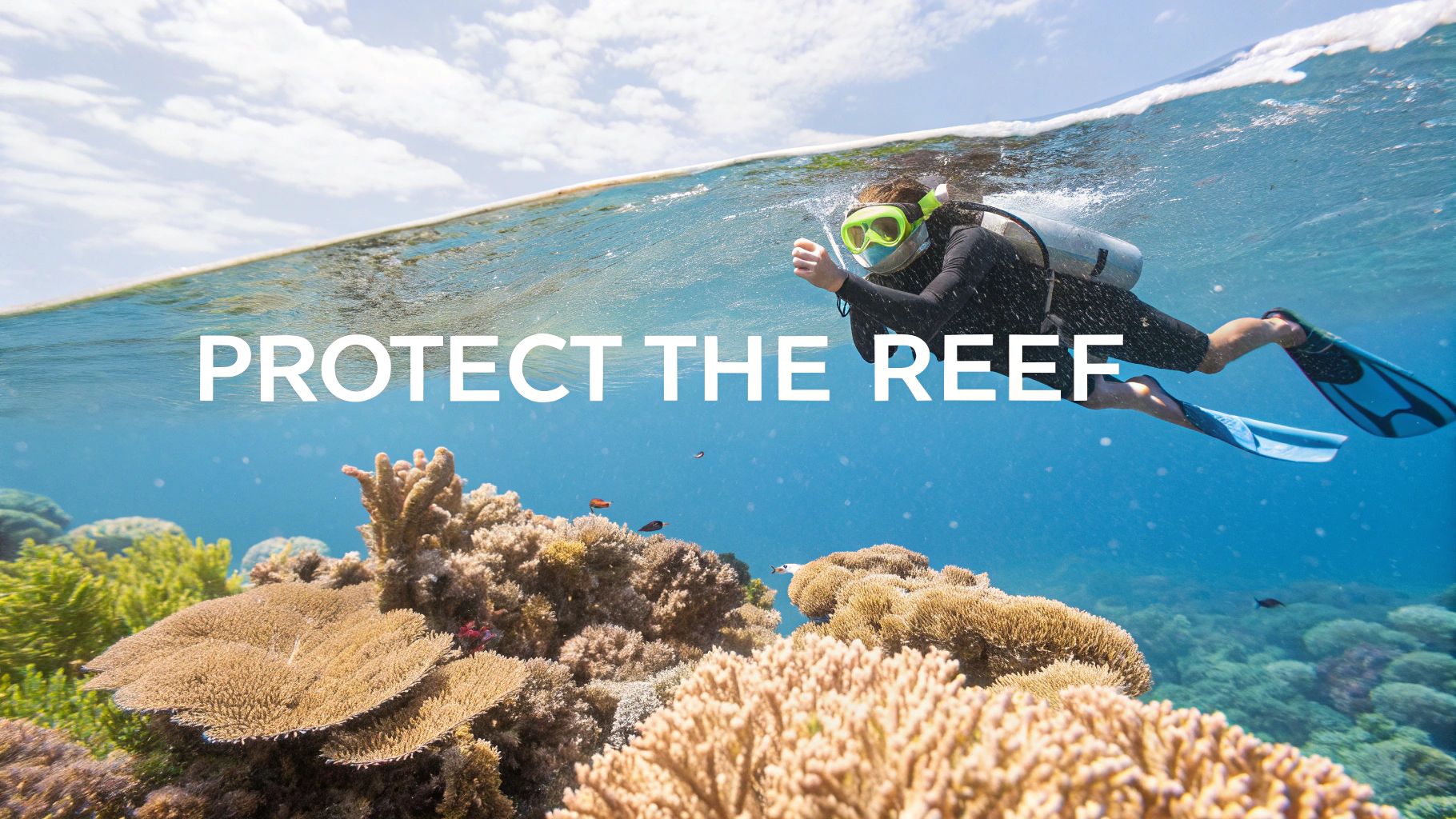
The incredible reefs you see while snorkeling here aren't just pretty backdrops for your photos; they're living, breathing cities under the sea. These delicate ecosystems are the very foundation of Marathon's vibrant marine world, and protecting them is a responsibility we all share as visitors.
Think of the reef as a fragile masterpiece that took thousands of years to create. Every little thing we do, no matter how small it seems, leaves a mark. By adopting a few simple, mindful practices, we can make sure this underwater paradise stays pristine for generations of snorkelers to come.
This isn’t about a bunch of restrictive rules. It’s about becoming a conscious guest in an amazing underwater world and shifting our mindset from being a simple observer to an active steward of the ocean.
The Golden Rules of Reef Etiquette
The most important rule of responsible snorkeling is simple: look, but don't touch. This goes for everything—the vibrant coral, the curious fish, and even the shells that look empty on the seafloor.
Coral isn't a rock; it's a colony of tiny, living animals. Touching it with your hands or even just bumping it with your fins can damage or kill the delicate polyps that build the entire reef structure. That kind of damage can take years, sometimes even decades, to heal.
Likewise, chasing or trying to touch marine animals like sea turtles or fish causes them a ton of stress. It can interrupt their natural feeding and resting patterns, which ultimately harms their health.
The best way to show your love for the reef is to give it space. Observe from a distance, float peacefully, and let the marine world unfold naturally around you. Your respectful presence is the greatest gift you can give.
Mastering Buoyancy and Securing Your Gear
One of the most common ways snorkelers accidentally harm the reef is by not controlling their position in the water. This is where good buoyancy—your ability to float neutrally—is key. Stay horizontal on the surface and use gentle, controlled kicks to avoid stirring up sand or bumping into the coral below.
Before you even jump in the water, it’s also a good idea to secure all your gear. A lost snorkel, camera, or fin can become marine debris, posing a serious threat to wildlife. Just do a quick check to make sure everything is clipped on or tied down tight.
These small actions also have a massive positive effect on the local community. Down here in Southeast Florida, recreational activities like snorkeling support over 8,600 jobs and generate around $902 million in economic output every year. In Monroe County alone, that’s $149 million in economic output and 1,756 jobs, which just goes to show how vital a healthy reef is to the area's livelihood.
Choosing Reef-Safe Sunscreen
What you put on your skin before you get in the water matters more than you might think. Many common sunscreens contain chemicals like oxybenzone and octinoxate, which are incredibly toxic to coral. They can cause bleaching and mess with their ability to reproduce.
Always opt for a mineral-based sunscreen that uses zinc oxide or titanium dioxide as the active ingredients. This is seriously one of the easiest and most impactful changes you can make to protect the world you came here to enjoy.
When to Go and What to Expect Seasonally
Timing your trip to Marathon can be the difference between a good snorkeling adventure and a truly unforgettable one. Each season in the Florida Keys paints the underwater world in a different light, and figuring out when to go is less about finding the “best” time and more about finding the best time for you.
Maybe you're chasing bath-like water temperatures, the clearest visibility imaginable, or just the fewest people on the reef. Whatever your goal, understanding Marathon's seasonal rhythm is the key to making sure that when you finally dip below the surface, the conditions are exactly what you hoped for.
Summer: The Peak of Warmth and Activity
From June through August, Marathon is in full-on summer mode. This is when you'll find the warmest water of the year, often climbing into the mid to high 80s. It feels like jumping into a swimming pool, meaning you can snorkel for hours without even thinking about a wetsuit. It's perfect for families and anyone who loves long, leisurely days out on the boat.
The seas are typically at their calmest during these months, too, sometimes creating glass-like conditions that are incredible for beginners. The trade-off? This is peak season, so expect popular spots like Sombrero Reef to be bustling with boats. You'll also want to keep an eye on the forecast, as quick afternoon thunderstorms are pretty common but usually blow through fast.
Fall: Fewer Crowds and Excellent Conditions
September through November is a real sweet spot for a lot of us who snorkel here regularly. The summer crowds have packed up and gone home, but the water stays wonderfully warm, usually hovering in the low 80s. This season often brings fantastic water clarity, making it a dream for anyone into underwater photography.
The only catch is that this period falls within hurricane season. While major storms aren't a daily threat by any means, it’s just smart to keep an eye on the weather and maybe consider travel insurance. For those willing to be a little flexible, the fall rewards you with quiet reefs and absolutely beautiful snorkeling.
Each season in Marathon offers a distinct underwater personality. Summer is vibrant and bustling, winter is crisp and clear, while the shoulder seasons of spring and fall provide a perfect balance of warmth and tranquility.
Winter: Crystal Clear Waters and Cooler Temps
December through February brings cooler air and, naturally, cooler water. Temperatures usually dip into the low 70s, so you’ll probably want a thin wetsuit if you plan on being in the water for a while. But this season has a major ace up its sleeve: incredible visibility. The cooler, drier air often leads to the clearest water you'll see all year.
This is also the time when gentle manatees head into Marathon’s warmer canals to escape the colder Gulf waters, giving you a chance for some unique wildlife spotting from shore. If you don't mind slightly cooler temps, the crystal-clear views and empty reefs make winter a fantastic time to explore. For a deep dive on what to expect, check out our guide to the ocean temperature in Marathon FL.
Spring: The Ideal Balance for Snorkeling
Ask any local, and many will tell you March through May is the absolute best time for snorkeling. The water temperature climbs back into that perfect comfort zone—mid-70s to low 80s—and the winter winds finally die down, resulting in calm seas and great visibility.
Spring really offers the perfect blend of summer’s warmth and winter’s clarity, all without the peak-season crowds. It’s an ideal window to plan your snorkeling marathon fl trip. The weather is stable, the marine life is active, and the conditions are just about perfect. Florida’s tourism is expected to surpass 145 million visitors statewide in 2025, with snorkeling in the Keys as a major draw. As more people look for less-crowded getaways, visiting during the spring shoulder season can offer a much more relaxed vibe. You can discover more insights about Florida tourism trends to help time your visit perfectly.
Got Snorkeling Questions? We've Got Answers.
Even the best-laid plans come with a few last-minute questions. It’s totally normal. To make sure you feel 100% ready for your adventure, here are some quick and clear answers to the things we get asked most about snorkeling in Marathon, FL.
Do I Need to Be a Strong Swimmer to Snorkel?
Not at all! You don’t have to be a Michael Phelps in the making, but you should be comfortable in the water. Tour operators always provide flotation vests or pool noodles, which let you just bob along the surface without any effort.
Plus, the best snorkeling spots around here, like the incredible Coffins Patch reef, are in shallow, calm, and protected waters. They're practically made for beginners and anyone who isn't a super confident swimmer.
What Kind of Marine Life Will I See in Marathon?
Get ready for a show! Marathon’s reefs are buzzing with an amazing variety of sea life. You'll almost certainly see schools of colorful tropical fish—think parrotfish, angelfish, and sergeant majors zipping around the coral heads.
Look a little closer and you'll spot different types of coral, swaying sea fans, spiny lobsters hiding in crevices, and very often, sea turtles and even gentle nurse sharks chilling on the bottom.
Every single snorkeling trip is like peeking into a bustling underwater city. The cast of characters changes daily, which is what makes getting in the water so addictive.
And if you head to a sandy spot like Valhalla Sandbar, keep your eyes peeled for southern stingrays gliding along the bottom and the occasional majestic queen conch.
Should I Rent Gear or Bring My Own?
Honestly, this one comes down to personal preference. Renting gear from the tour boat is super convenient, and they always have good-quality, well-maintained equipment. It just works.
However, if you think you’ll be snorkeling a lot or you're just particular about how things fit, bringing your own mask and snorkel is a game-changer. A mask that seals perfectly to your face without leaking is the secret to an amazing day on the water. Fins? I'd just rent those. They're bulky to pack and the rental ones are usually just fine.
Ready to see Marathon's stunning reefs and sandbars for yourself? Marathon Snorkeling And Sunset Cruise offers the best guided experiences in the Florida Keys. As winners of the Best Watersports in Marathon for two years running through our sister company, Solé Watersports, our expert, lifeguard-certified crew is all about service and safety. Book your unforgettable adventure today at https://snorkelingmarathon.com.