
What Is Coral Reef Ecosystem? Explained in 60 Words

When you slip beneath the ocean's surface, you’re not just entering the water—you’re stepping into a sprawling, vibrant metropolis teeming with life. That’s the magic of a coral reef ecosystem. Often called the "rainforests of the sea," these are more than just pretty underwater rock formations; they're living, breathing cities built by nature’s tiniest and most dedicated architects.
Exploring the Underwater Metropolis
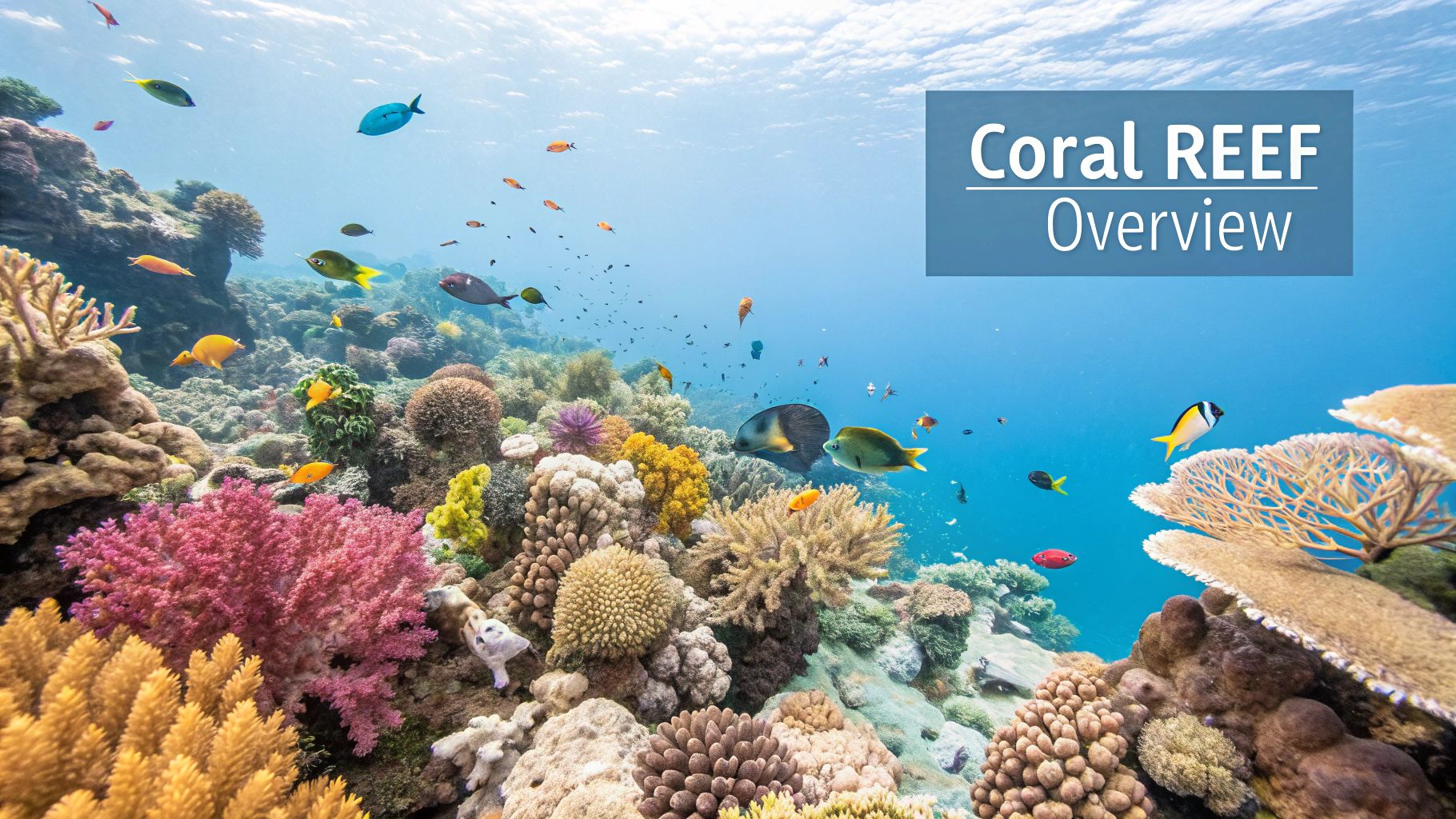
Imagine a world bursting with color and humming with constant, chaotic motion. That’s a healthy coral reef. The entire foundation of this incredible world is constructed by tiny creatures called coral polyps—soft-bodied animals that are actually cousins to sea anemones and jellyfish.
These miniature builders secrete calcium carbonate, which hardens into a protective skeleton. Over thousands of years, as new generations build upon the skeletons of those that came before them, they create the massive, intricate structures we see as reefs. This complex architecture is what provides the essential shelter, food, and breeding grounds for an unbelievable variety of marine life.
The Power of Partnership
So, what's the secret to their success? It all comes down to a remarkable partnership. Tucked away inside the tissues of most reef-building corals are microscopic algae called zooxanthellae. Their relationship is a perfect example of symbiosis, where everyone wins.
- The Algae's Role: The zooxanthellae act like tiny solar panels, using photosynthesis to turn sunlight into food. They provide the coral with up to 90% of its energy.
- The Coral's Role: In exchange, the coral gives the algae a safe, protected home and the raw materials it needs to photosynthesize.
This beautiful partnership is the power grid for the entire reef city, fueling its growth and allowing it to flourish in tropical waters that are often surprisingly low in nutrients. When you’re out snorkeling and marveling at the brilliant greens, oranges, and purples of the coral, what you're actually seeing are the vibrant colors of the algae living inside.
A coral reef ecosystem is a delicately balanced community where every single organism plays a role. From the smallest polyp to the biggest predator, each one is a vital piece of a much larger puzzle.
To help you get a clearer picture of this underwater world, let's break down the key players you'll encounter.
Core Components of a Coral Reef Ecosystem
This table gives you a quick snapshot of the main elements that make a coral reef tick. Think of it as your field guide to the underwater city.
| Component | Role in the Ecosystem | Snorkeler's View |
|---|---|---|
| Coral Polyps | The primary architects, building the reef's physical structure. | The intricate, textured surfaces of the reef itself. |
| Zooxanthellae | Microscopic algae that live in coral tissue, providing energy. | The stunning, vibrant colors you see in healthy corals. |
| Herbivorous Fish | Grazers like parrotfish that keep algae growth in check. | Schools of colorful fish nibbling on the reef's surface. |
| Invertebrates | Animals like sea urchins, crabs, and shrimp that clean and maintain the reef. | Creatures hiding in crevices or crawling along the coral. |
| Predators | Sharks, groupers, and eels that control fish populations. | Larger fish patrolling the reef edges or resting under ledges. |
Understanding these relationships transforms what you see from just a pretty view into a dynamic, living system where every character has a job to do.
A Small Footprint with a Giant Impact
Coral reefs might seem vast when you're swimming over them, but they are incredibly rare on a global scale. In fact, they cover less than 0.2% of the entire ocean floor.
But here’s the mind-blowing part: despite their tiny footprint, these ecosystems support an astonishing 25% of all marine species. Found in over 100 countries, their importance to the planet's health simply can't be overstated.
For anyone itching to see these incredible underwater cities up close, there are some truly amazing Big Island snorkeling spots with vibrant coral reefs that showcase this biodiversity in all its glory. Once you understand the science behind the spectacle, you'll never look at a reef the same way again.
How Corals Build an Underwater World
It seems almost impossible, doesn't it? The idea that creatures often no bigger than a pencil eraser can build geological features so enormous they're visible from space. Yet, that's the incredible reality of a coral reef. The master builders behind these underwater cities are the corals themselves, working tirelessly over millennia.
At its core, the process is a masterclass in marine architecture. Corals fall into two main groups: hard corals and soft corals. While soft corals, like sea fans, add texture and sway gracefully in the current, it's the hard corals that are the true engineers of the reef. They lay the foundation, piece by tiny piece.
The Architects of the Ocean
Hard corals perform a remarkable feat of natural chemistry. They literally pull calcium carbonate—the same stuff found in limestone and chalk—right out of the seawater. They then use this mineral to secrete a hard, protective skeleton around their soft bodies.
It's a slow and steady process. Think of it like a forest growing, one tree at a time. Each individual coral polyp adds its own tiny limestone cup. As the colony expands, new polyps build on top of the skeletons of their ancestors, and the reef structure grows upward and outward. Over thousands of years, this patient construction creates the complex, three-dimensional world that so many other creatures call home.
This diagram breaks down how a coral reef ecosystem is structured, from its living parts to the vital services it provides.
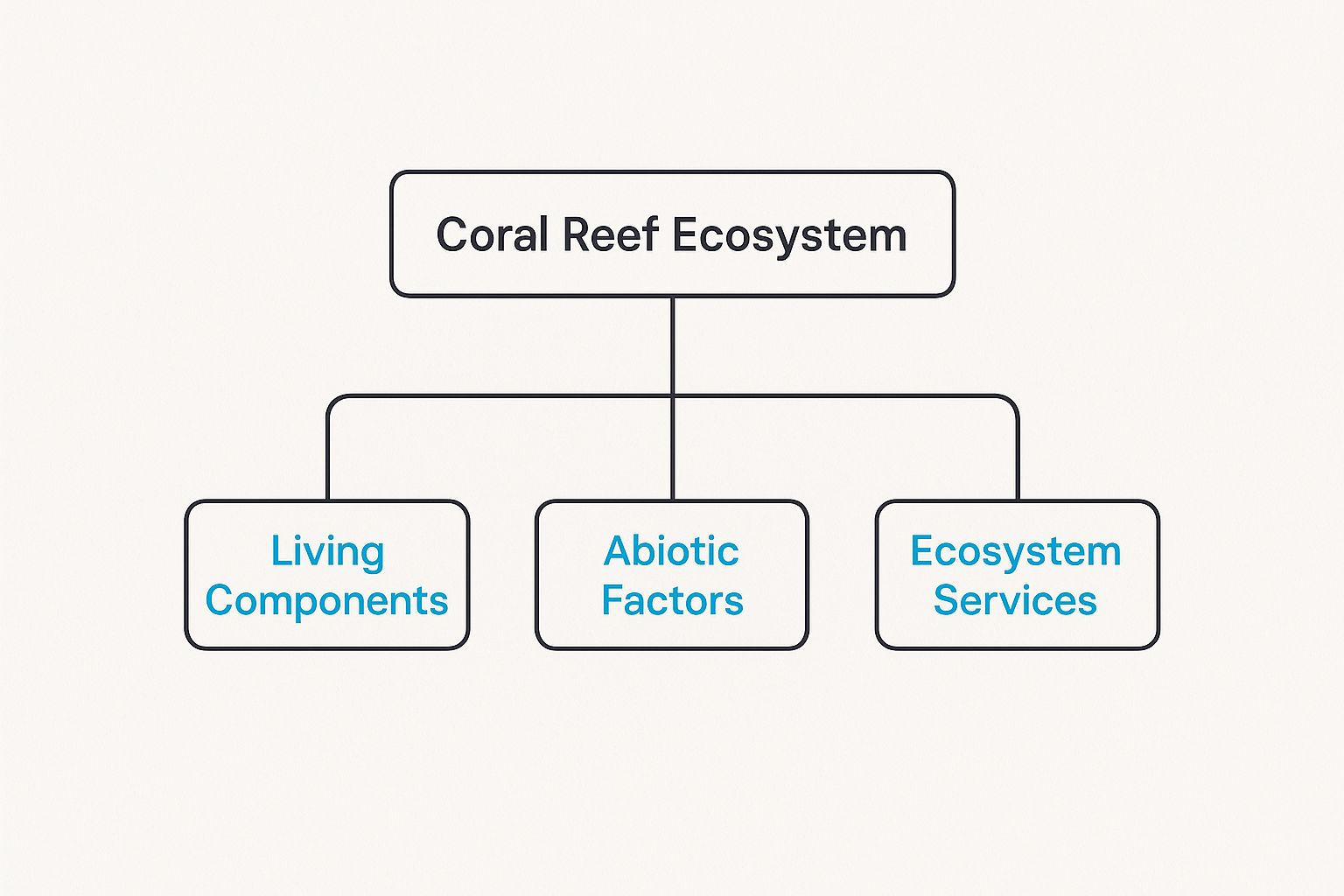
As you can see, a reef is so much more than just its biological components; it's a complete system where living and non-living elements interact to produce critical benefits for the whole planet.
A City of Diverse Neighborhoods
This architectural process doesn't create a uniform, boring structure. Instead, corals grow into a wild variety of fascinating shapes, each creating a unique habitat—or "neighborhood"—within the larger reef city. Once you know what to look for while snorkeling, you'll start spotting these different forms everywhere:
- Branching Corals: These look like underwater trees and are absolutely crucial for small fish looking for a place to hide from predators.
- Boulder Corals: Growing in massive, dome-like shapes, these corals offer huge, stable surfaces for other organisms to latch onto and grow.
- Plate Corals: These form flat, shelf-like structures, creating shady overhangs where nocturnal creatures can hide out during the day.
Each coral shape provides a unique set of nooks, crannies, and surfaces that different species are perfectly adapted to use. This structural complexity is the main reason why reefs can support such a staggering amount of biodiversity.
Recognizing these different coral shapes turns a simple swim into an exploration of marine city planning. You start to see not just a reef, but a series of interconnected habitats. The best way to appreciate this is to see it for yourself. The clear waters on some of the top-rated Florida Keys snorkeling tours offer a perfect window into this incredible underwater world, where every single structure tells a story of slow, persistent growth.
Meeting the Residents of the Reef
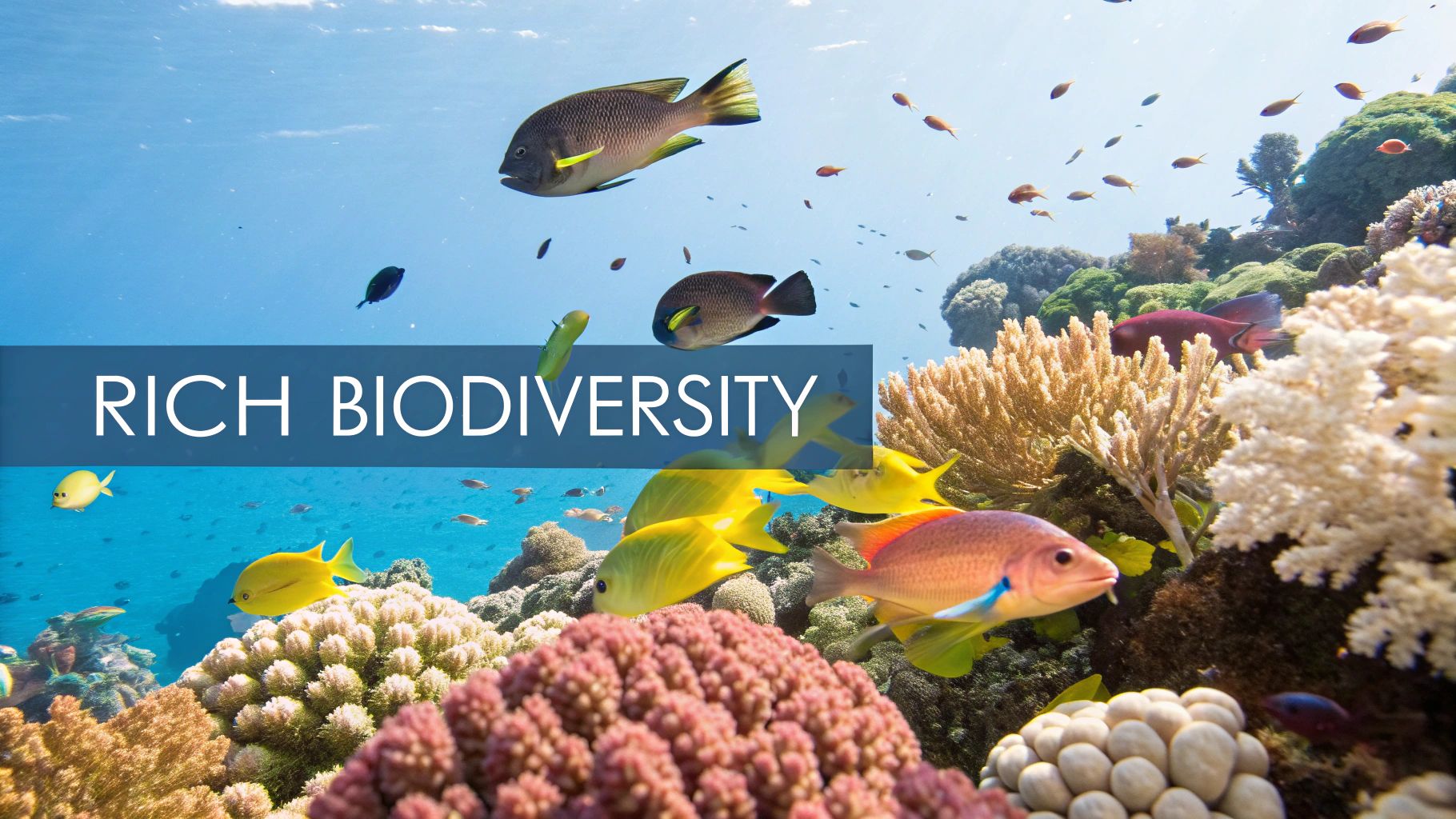
A coral reef is so much more than its incredible architecture; it's a bustling, vibrant neighborhood with millions of inhabitants. Every single resident, from the tiniest shrimp to the largest predator, has a specific job that keeps the entire community humming. Dropping into this world is like visiting a massive underwater city where every citizen plays an absolutely vital role.
The cast of characters is mind-blowingly diverse. You’ll spot the famous clownfish darting fearlessly among the stinging tentacles of its anemone home, totally protected by a special layer of mucus. At the same time, a clever octopus might be perfectly camouflaged just a few feet away, its skin mimicking the exact texture and color of the surrounding coral as it waits for an unsuspecting meal to swim by.
These endless interactions create a community that is incredibly fine-tuned. It's not just a random collection of fish and invertebrates, but an intricate web of life where survival depends on a delicate dance of cooperation and competition.
The Reef's Unsung Heroes
While the big-ticket animals like sea turtles and dolphins often steal the spotlight, it's the reef's tireless workers that keep the whole ecosystem running. Many of these residents have jobs that are essential for maintaining the health and balance of their underwater city.
Take the humble parrotfish, which you’ll often see chomping directly on the coral. That might sound destructive, but this fish is actually one of the reef's most important gardeners.
- Algae Control: Its primary job is to graze on algae that would otherwise smother and kill the coral polyps.
- Sand Production: After digesting the algae and coral, it excretes fine, white sand. A single parrotfish can produce hundreds of pounds of sand each year, helping create the beautiful beaches many tropical islands are famous for.
- Clearing Space: By scraping away at the coral, they also clear prime real estate for new coral larvae to settle down and start growing.
Without these dedicated grazers, the entire coral reef ecosystem could quickly become overgrown and unhealthy.
A Global Hub of Marine Life
The sheer density of life on a reef is staggering, making these areas critical hotspots for biodiversity. The Pacific Ocean region, for instance, is a vital global warehouse for marine life. It hosts over 26% of the world's coral reefs, covering around 65,255 square kilometers across 30 different countries and territories. These reefs are the foundation for the culture, food security, and coastal protection of countless island communities.
This incredible biodiversity is a direct result of the complex structure the corals create. Every single nook, cranny, and crevice provides a potential home, hiding spot, or hunting ground for a different species.
Understanding these specialized roles turns a simple snorkeling trip into a captivating story. You start to see not just what the animals are, but what they are doing. Seeing this vibrant community firsthand is an unforgettable experience, and our guide to snorkeling in Marathon Key can help you witness these incredible interactions up close. Every dive reveals another chapter in the life of this underwater metropolis.
Why Healthy Reefs Matter to Everyone
Coral reefs can feel like a distant, magical world, something you only see on a screen or if you’re lucky enough to go snorkeling. But the truth is, their health is directly tied to our daily lives, even for those of us living hundreds of miles from the nearest coast. These underwater cities aren't just beautiful—they are hardworking engines that keep our planet humming.
We can break down their incredible value into three main jobs. First, and maybe most importantly for coastal communities, they act as powerful natural barriers. Think of a healthy reef as a living, breathing sea wall, the first line of defense against the ocean's raw power.
Nature's Bodyguards and Economic Engines
When a hurricane or a massive storm rolls in, the reef's complex, jagged structure acts like a giant shock absorber. It can soak up and dissipate over 90% of a wave's energy before it ever smashes into the shore. This isn't just a neat trick; it saves lives, prevents catastrophic erosion, and protects homes and infrastructure for millions of people.
But reefs are more than just bodyguards—they’re also massive economic powerhouses. On a global scale, more than 500 million people rely on coral reefs for their food and to make a living. These ecosystems are the foundation of huge fishing industries that feed families and supply markets all over the world.
And of course, there's tourism. When you book a snorkeling trip, you're plugging into a multi-billion dollar industry that creates jobs for guides, boat captains, hotel staff, and countless others. A vibrant, colorful reef directly translates into a vibrant, healthy local economy.
Protecting a coral reef isn’t just an environmental issue—it's a human one. Their health underpins coastal safety, economic stability, and even our future medical breakthroughs.
The Underwater Pharmacy
Here’s a role you might not expect: a coral reef is basically a massive, underwater pharmacy. The sheer biodiversity packed into these ecosystems means it’s a constant battle for space and survival. To get an edge, many of the creatures living there produce unique chemical compounds to defend themselves.
Scientists are just beginning to realize that these compounds hold incredible potential for developing new medicines. We're talking about treatments for everything from cancer to arthritis. The reef is a living library of biomedical treasures, most of which we haven't even discovered yet.
By protecting the reef, we're also preserving this invaluable resource for future generations. Even simple choices, like learning about what is reef-safe sunscreen, can make a real difference in safeguarding this vital, life-giving world.
Understanding the Threats to Our Coral Cities
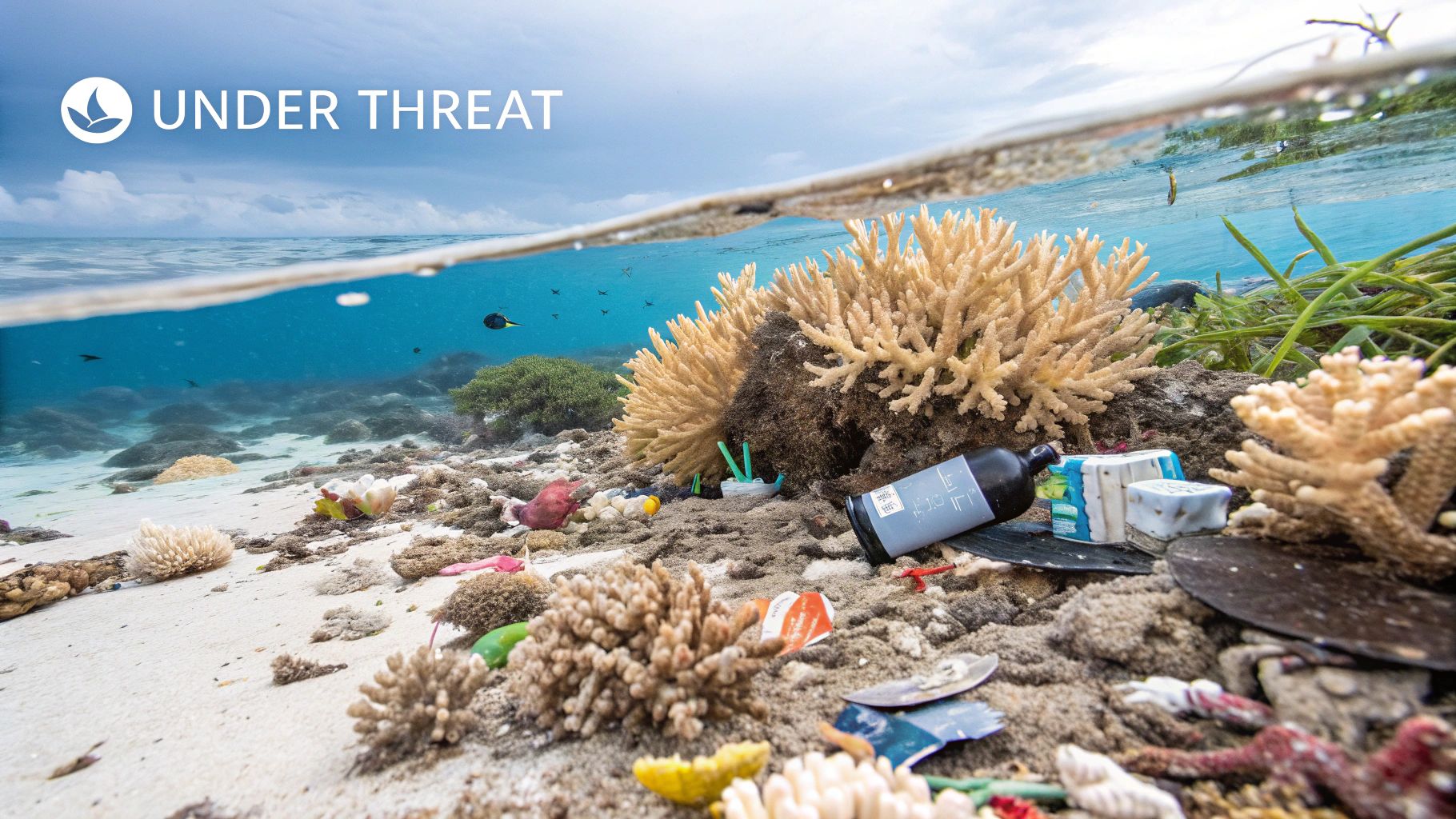
Coral reefs are incredibly tough, having survived for millennia, but they're now facing a crisis on a scale we've never seen before. It’s like these vibrant underwater cities are under siege from all directions at once. The dangers are both global and local, creating a perfect storm of stress that threatens their very existence.
The biggest enemy on the global front is, without a doubt, climate change. As our planet heats up, the oceans absorb a huge chunk of that extra warmth. This spike in sea temperature is absolutely devastating for corals, which are so sensitive that even a tiny, sustained change can be a death sentence.
When the water stays too warm for too long, the corals get stressed out and kick out the symbiotic algae living inside their tissues. This is what's known as coral bleaching. It drains them of their beautiful colors and, more critically, cuts off their primary food source. A bleached coral isn't dead yet, but it's starving and incredibly vulnerable. We dive deeper into this in our guide on what causes coral bleaching.
A Global Heatwave Underwater
This isn't some far-off problem for future generations; it's happening right now, with terrifying speed and intensity. The world’s reefs have been hammered by one thermal stress event after another, leading to what is now the largest global coral bleaching event ever recorded.
From January 2023 through at least August 2025, a staggering 84.0% of the world's coral reef areas have experienced heat stress bad enough to trigger bleaching. This forces them to expel their algae, turning them into ghostly white skeletons. You can track these ongoing global bleaching events and see the impact for yourself.
The sheer scale of coral bleaching shows how a global problem like climate change can reach out and touch even the most remote, seemingly pristine coral reef.
Local Stressors Piling On the Pressure
While climate change is the big-picture threat, a whole bunch of local issues are weakening reefs from the inside out, making them less able to bounce back from these global heatwaves. Think of these as compounding injuries, each one chipping away at the reef's natural resilience.
These threats often come from human activities much closer to home:
- Pollution: Runoff from farms and coastal towns carries a nasty cocktail of fertilizers, pesticides, and sewage straight into the ocean. This pollution can trigger massive algae blooms that literally smother corals or introduce deadly diseases.
- Overfishing: When too many plant-eating fish like parrotfish are caught, the reef loses its "gardeners." Without them, algae can grow out of control and completely overwhelm the corals.
- Physical Damage: Careless boating, dropping anchors on living coral, and destructive fishing methods can shatter decades—or even centuries—of slow, painstaking coral growth in a matter of seconds.
Getting to know these enemies is the first step toward becoming a true ally for our reefs. By understanding both the massive climate issues and the immediate local threats, we can start to see just how urgent the need for action really is to save these priceless underwater worlds.
How You Can Become a Guardian of the Reef
Learning about the threats facing our coral cities can feel a little heavy, but it should also be inspiring. Every single person who loves the ocean—and that probably includes you—has the power to become a guardian of the reef.
It’s true. Your choices, both on vacation and back at home, create a powerful ripple effect that can help protect the entire coral reef ecosystem for years to come.
It all starts with exploring responsibly. Think of it as following a simple "Reef Guardian's Code" when you're out on the water. This isn’t about strict rules; it’s about being mindful so these delicate environments are kept safe for everyone who comes after you.
Your Reef Guardian Code of Conduct
Small tweaks to how you act while snorkeling or boating can make a world of difference. The most important rule is also the simplest: look, but don't touch.
Coral polyps are incredibly fragile. A slight brush from a hand or fin can destroy something that took centuries to grow. It’s just not worth the risk.
Here are a few more practical tips for your next underwater adventure:
- Choose Reef-Safe Sunscreen: Many popular sunscreens contain chemicals like oxybenzone and octinoxate, which are known toxins for corals. Always grab a mineral-based, reef-safe formula. You’ll protect your skin and the reef.
- Keep a Safe Distance: It can be tempting to get close, but never stand on, kick, or grab onto coral. Give them their space to avoid accidentally breaking off pieces of their delicate skeletons.
- Support Eco-Conscious Operators: When you book a tour, choose a company that genuinely cares. Look for operators with knowledgeable guides who are committed to sustainable practices and show real respect for the local marine life.
If you’re out on a boat, you can take your stewardship a step further by following some smart environmentally conscious boating tips that minimize your footprint on the water.
Your impact doesn't stop when your vacation ends. The choices you make every day contribute to the health of our oceans, no matter how far you live from the coast.
Making a Difference from Home
Protecting coral reefs is a global team effort, and you can be part of the solution from anywhere on the map.
Since climate change is the number one threat, one of the most impactful things you can do is shrink your carbon footprint. Simple actions like using less energy, choosing sustainable transportation when you can, and reducing waste all help fight the ocean warming that leads to coral bleaching.
You can also support credible conservation organizations working on the front lines of reef protection and restoration. Your choices, big and small, add up to create a powerful force for good, ensuring these underwater wonders are still here for generations to come.
Frequently Asked Questions About Coral Reefs
If you're gearing up for a snorkeling trip, it's only natural to have a few questions swirling around about the incredible underwater world you're about to see. Let's clear up some of the most common curiosities about coral reefs.
What Is the Ideal Water Temperature for Coral Reefs?
Corals are a bit like Goldilocks—they need their water to be just right. They absolutely thrive in a narrow temperature range, typically between 73°F and 84°F (23°C and 29°C).
If the water gets even a little too warm, the corals get stressed and kick out the colorful algae living inside them, which leads to coral bleaching. Understanding the local water conditions is a must for any snorkeler, and you can get a better handle on the seasonal trends in our guide to Florida Keys water temperature.
Are Corals Animals or Plants?
This is a classic, and the answer surprises a lot of people: corals are definitely animals.
Each coral is made up of tiny, soft-bodied creatures called polyps, which are close relatives of sea anemones and jellyfish. So, where do all those vibrant colors come from? They're actually from microscopic algae that live inside the coral's tissues, giving them the look of an underwater garden.
The entire reef structure is a massive colony of these individual animal skeletons, built up over thousands of years. It’s a living city made by its inhabitants.
How Do Coral Reefs Protect Coastlines?
Think of a healthy coral reef as a natural, living sea wall. Their incredibly complex and rugged structures are amazing at absorbing and breaking up wave energy from big storms and even hurricanes.
In fact, they can dissipate up to 97% of a wave's force before it ever reaches the shore. This powerful buffering effect is huge for reducing coastal erosion, preventing property damage, and ultimately, saving lives.
Ready to see this breathtaking ecosystem for yourself? At Marathon Snorkeling And Sunset Cruise, we offer unforgettable trips to the most vibrant reefs in the Florida Keys. Our expert crew, winners of Best Watersports in Marathon two years running, will guide you on an adventure you'll never forget. Book your tour today at https://snorkelingmarathon.com.