
What Is Marine Protected Area and Why It Matters

Ever heard of a Marine Protected Area, or MPA? The simplest way to think about it is like a national park for the ocean. It's a specific, designated part of the sea where human activities are dialed back to give the natural environment a fighting chance to thrive.
Getting to Grips With a Marine Protected Area
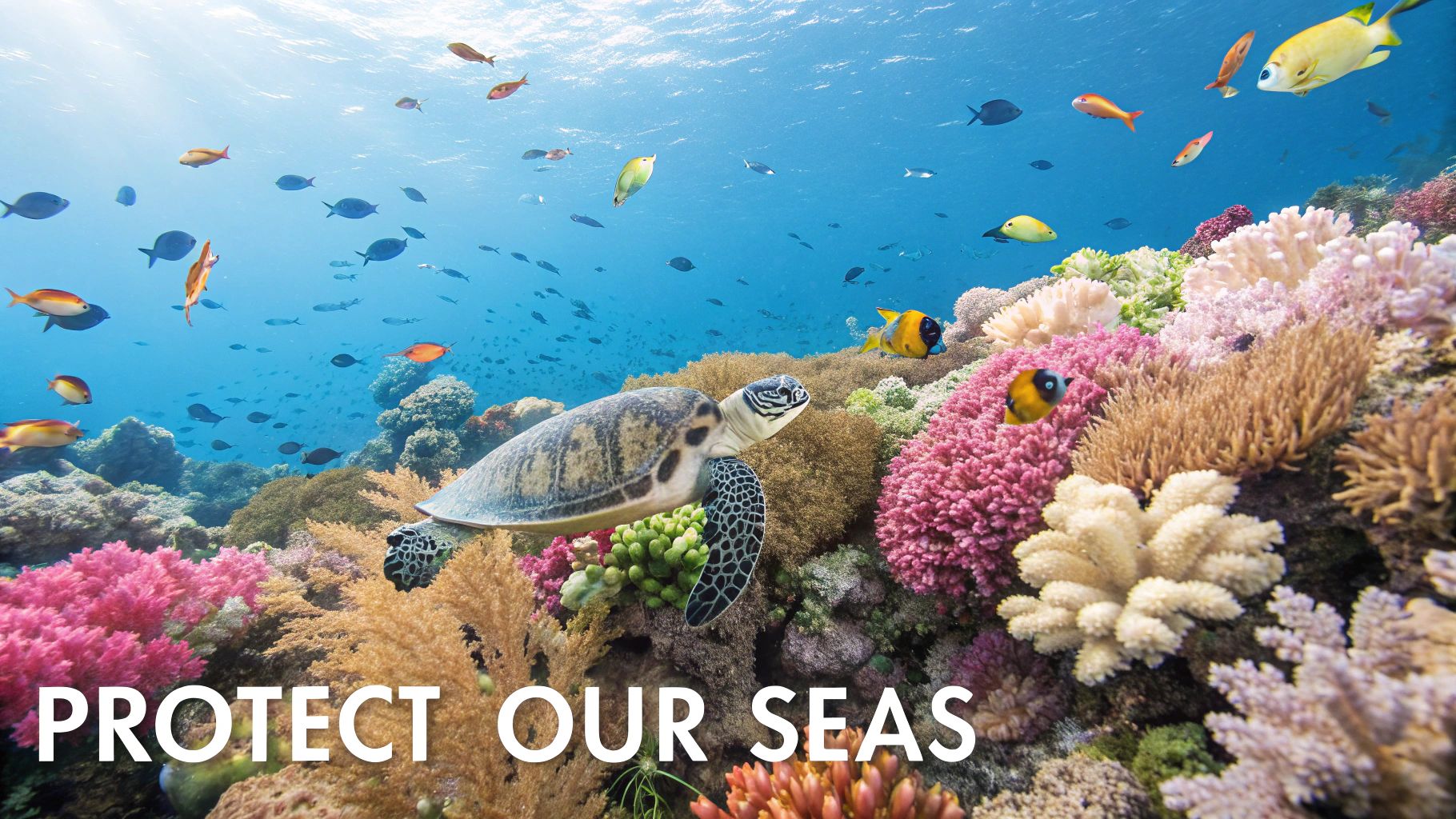
Picture a huge, bustling city with zero parks or green spaces. It wouldn’t take long for things to go downhill, right? The air would get nasty, people would have nowhere to relax, and the city's overall health would suffer. Our oceans are facing similar pressures from human activity, and MPAs act as those crucial "parks"—safe zones where marine life can recover and flourish.
These protected areas are one of the most effective tools we have for ocean conservation. By carefully managing what happens within their borders, they safeguard entire ecosystems, from the tiniest plankton all the way up to the biggest whales. At its core, the goal is to protect biodiversity and lock in the long-term health of our seas.
The Main Goals of an MPA
The reasons for setting up a marine protected area are straightforward and incredibly powerful. They aren't just about preserving what’s left; they're designed to actively help damaged marine environments heal themselves.
Here are the key objectives:
- Protecting Biodiversity: MPAs create safe havens where all sorts of species can breed, grow, and maintain healthy populations without being disturbed.
- Conserving Critical Habitats: These zones shield essential environments like coral reefs, seagrass beds, and mangrove forests from direct physical harm. You can dive deeper into why these underwater cities are so vital in our guide to the coral reef ecosystem.
- Rebuilding Fish Stocks: By limiting or even banning fishing, MPAs become nurseries where fish populations can bounce back. This often creates a "spillover effect," where the booming fish numbers spill out into nearby waters, actually helping local fisheries.
- Boosting Resilience: Healthy, thriving ecosystems inside MPAs are much better prepared to handle the stresses of climate change, like warming waters and ocean acidification.
To make this even clearer, let's break down the fundamental components of an MPA.
Marine Protected Area Key Characteristics
| Characteristic | Description |
|---|---|
| Defined Boundaries | An MPA has clear geographical borders, so everyone knows exactly where the protected area begins and ends. |
| Conservation Focus | The primary purpose is always the long-term conservation of nature and its associated cultural resources. |
| Specific Regulations | Rules are established to limit certain human activities, like fishing, anchoring, or development, to achieve conservation goals. |
| Management Plan | Each MPA is actively managed according to a plan that outlines objectives, regulations, and monitoring strategies. |
Ultimately, these protected zones are about proactive management, not just setting aside a piece of the ocean and hoping for the best. This hands-on approach is what helps maintain the delicate balance of marine life that's so critical to our planet's health—and to our own enjoyment when we slip on a mask and snorkel.
Exploring Different Types of MPAs
Just like national parks on land, not all marine protected areas are created equal. The term "MPA" is really a broad umbrella, covering everything from areas with very few restrictions to zones where pretty much all human activity is off-limits. For anyone who loves the ocean, especially snorkelers, knowing the difference is key.
The level of protection an MPA gets is always tailored to its specific conservation goals. Some are designed to strike a balance between human use and conservation, while others are set up as strict sanctuaries to give fragile ecosystems a chance to recover without any interference.
From Multi-Use to No-Take Zones
The easiest way to understand the different types of MPAs is by looking at what you can and can't do inside their boundaries. This creates a spectrum from flexible, multi-use areas to highly restrictive no-take zones.
- Multi-Use Areas: These are the most common and flexible MPAs. They allow for a whole range of sustainable activities, like recreational snorkeling, boating, and sometimes even specific types of fishing. The Florida Keys National Marine Sanctuary is a perfect example, managing a huge area where conservation and recreation manage to coexist.
- No-Take Reserves: On the complete opposite end are no-take marine reserves. In these zones, taking or removing any natural resource is strictly forbidden. That means no fishing, no collecting shells, and definitely no touching the coral. These areas are vital scientific benchmarks, giving us a rare glimpse of what a marine ecosystem looks like when left completely alone.
When an MPA is highly protected with no-take rules, the results are incredible. Within just a decade, these areas can see roughly 21% higher species richness and a staggering 6.7 times the fish biomass compared to nearby unprotected waters. It just goes to show the amazing power of giving nature its own space to bounce back.
Key Classifications in the Florida Keys
If you're planning a snorkeling trip to the Florida Keys, you'll definitely come across a few specific MPA designations. One of the most important is the Sanctuary Preservation Area (SPA). These are typically smaller, clearly marked zones within the larger sanctuary that are set aside to protect particularly sensitive coral reefs. Inside an SPA, activities like fishing and anchoring are prohibited to prevent any damage to the delicate reef structures below.
While the idea of protecting our oceans is gaining some serious momentum, there’s a big gap between ambition and reality. Right now, only about 8.3% of the global ocean is under some form of protection, and a mere 3% benefits from the high level of protection needed to truly limit damaging human activities. To hit the global goal of protecting 30% of the ocean by 2030, a massive effort is needed. You can read the full analysis on what it will take to meet this ambitious target.
This infographic does a great job of visualizing the core benefits that well-managed MPAs deliver for biodiversity, fisheries, and even climate resilience.
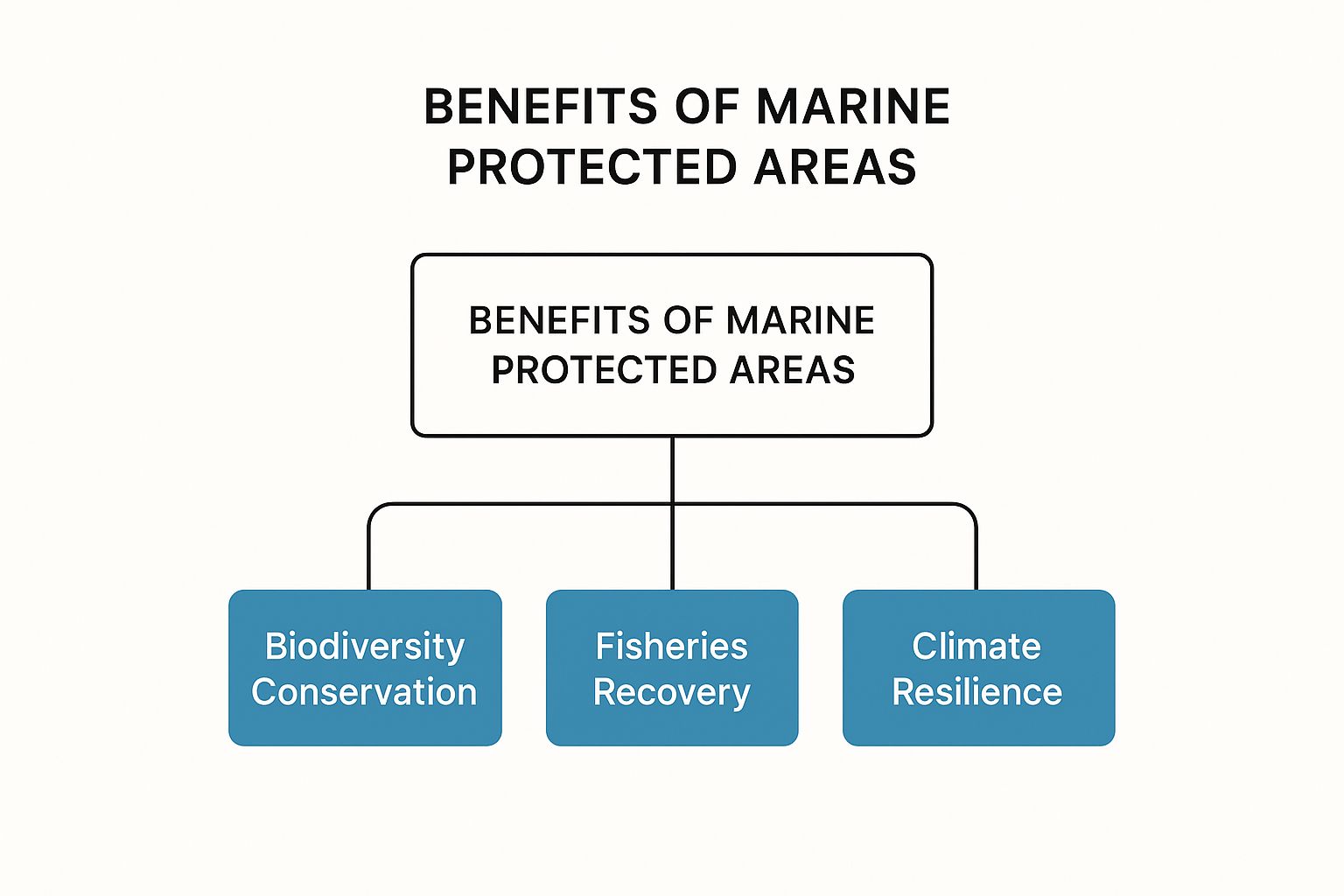
As the diagram shows, protecting specific ocean areas creates a positive ripple effect. It's a win-win that supports everything from species conservation to more sustainable fishing and, ultimately, a healthier planet for all of us.
Why Effective Protection Is So Urgent
It’s one thing to draw a line on a map and call it a marine protected area. It’s another thing entirely to make that protection real. This gap between an MPA on paper and one that's actually managed effectively is one of the biggest hurdles in marine conservation today.
Sadly, many so-called protected areas fall into the trap of becoming "paper parks." They have the official title, but they lack the funding, enforcement, and community buy-in to mean anything in the real world. Think of it like a speed limit sign on a highway with zero police patrols—the rule exists, but it doesn't actually change how people drive.
The Problem With Paper Parks
A paper park might look impressive in a government report, but beneath the surface, illegal fishing, pollution, and habitat destruction can run rampant. Without boats on the water, scientists monitoring the ecosystem, and clear rules that are actually enforced, the area is protected in name only. This creates a dangerous false sense of security, making us think we're doing more to save the oceans than we really are.
This lack of real-world follow-through is a massive problem. The threats to our oceans are escalating every day, making truly effective MPAs more critical than ever, especially for the countless endangered marine animals that rely on these specific habitats to survive.
The difference between designation and real protection is staggering. While about 8% of the world's oceans are officially designated as MPAs, only a tiny fraction of that is genuinely safeguarded. When it comes to conservation, quality beats quantity every single time.
Effective management is what turns a line on a map into a thriving sanctuary. This means consistent patrols to deter illegal activity, ongoing scientific research to track the health of the reefs and marine life, and, crucially, working hand-in-hand with local communities. When fishermen, tour guides, and residents are part of the solution, they become the MPA's strongest defenders.
What Makes an MPA Truly Effective
For a marine protected area to actually work, it needs a few key ingredients. These are the things that transform a paper park into a vibrant, living underwater haven.
- Sufficient Funding: Let's be honest, conservation isn't cheap. You need money for patrol boats, staff salaries, monitoring gear, and outreach programs.
- Active Enforcement: Having rangers on the water is non-negotiable. Their presence ensures the rules are followed and sends a clear message that protection is taken seriously.
- Community Engagement: Getting local folks involved creates a sense of ownership and shared purpose. That’s the secret sauce for long-term success.
- Scientific Monitoring: You can't manage what you don't measure. Regular data collection helps managers see what’s working and adapt to new challenges, like the ones we cover in our article on what causes coral bleaching.
Despite all the global commitments, the hard truth is that only about 2.8% of the world's ocean is strongly protected. This huge gap between promises and action is what’s holding us back from hitting critical targets, like protecting 30% of the ocean by 2030.
How MPAs Benefit Marine Life and People
When a marine protected area is well-managed, it creates a powerful ripple effect that travels far beyond its invisible boundaries, benefiting both the underwater world and our coastal communities. Think of them as sanctuaries where bruised and battered marine ecosystems can finally catch a break, heal, and thrive again.
For marine life, the results are almost immediate and often profound. Inside an MPA, especially a no-take zone, species are shielded from the constant pressure of fishing and other disruptive human activities. This protection gives them the chance to grow larger, live longer, and reproduce far more successfully. Over time, this leads to a stunning comeback in both the variety and sheer number of animals.
The Spillover Effect Supporting Local Economies
One of the coolest outcomes is something scientists call the "spillover effect." Imagine a fish nursery that becomes so healthy and crowded that its residents naturally start moving into the surrounding neighborhoods. That's exactly what happens with a successful MPA.
As fish populations boom inside the protected zone, they don't just stay put. Larger, healthier fish and their massive number of offspring spill over into the adjacent, non-protected waters. This directly helps local fisheries by naturally restocking the areas where they fish, leading to more sustainable catches and a healthier bottom line for the community.
A single hectare within a highly protected MPA can produce, on average, at least five times as many fish offspring as a similar unprotected area. This incredible reproductive power is the engine that drives the spillover effect, fueling both the ecosystem and local economies.
Ecotourism and Thriving Communities
Let's be honest: nobody travels across the country to see a barren reef. Healthy oceans fuel a vibrant tourism industry, and snorkelers and divers come from all over the world to witness the thriving coral and abundant sea life that MPAs are designed to protect. A pristine underwater environment is a powerful economic engine for coastal towns like ours.
This creates a fantastic cycle where everyone wins:
- Pristine Sites Attract Visitors: Well-managed MPAs create world-class snorkeling and diving destinations. Those tourists, in turn, spend money on local tours, hotels, restaurants, and shops.
- Economic Incentive for Conservation: When local communities see the direct financial upside of a healthy marine environment, they become its most passionate defenders.
- Educational Opportunities: These areas also act as living laboratories, showing people firsthand why ocean conservation matters. You can see this in the amazing work being done to protect iconic species like sea turtles. To learn more about local efforts, check out the Sea Turtle Hospital in Marathon, FL right here in the Keys.
By connecting smart conservation policy to the incredible underwater experiences people are searching for, MPAs prove that protecting marine life isn't just an environmental issue—it's a direct investment in our future.
A Snorkeler's Guide to the Florida Keys
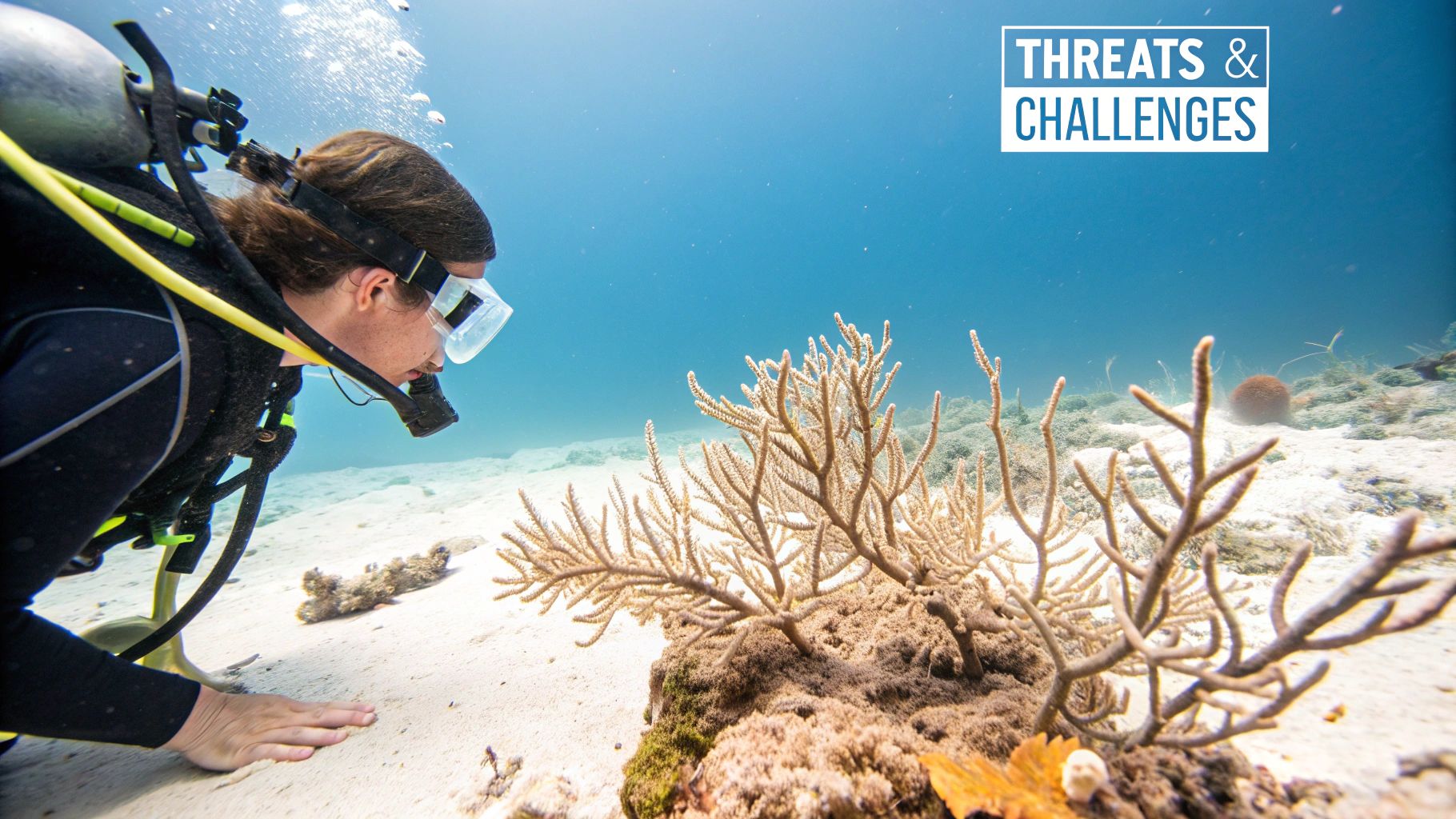
Honestly, the best way to wrap your head around what is a marine protected area is to just jump right into one. For snorkelers, there's no better classroom than the Florida Keys National Marine Sanctuary. It’s the perfect real-world example of how these underwater parks work, offering a jaw-dropping mix of fun and serious conservation.
Spanning a massive 2,900 square nautical miles, this sanctuary isn't just one giant "look but don't touch" zone. Think of it more like a massive patchwork quilt. It’s made up of different management areas, and each patch has its own set of rules designed to protect the fragile Florida Reef Tract while still letting people like us experience its magic.
Understanding the Different Zones
Navigating the sanctuary is kind of like driving through a country with different speed limits. Some areas are wide open for general use, while others require you to slow down and be extra careful. As a snorkeler, you'll mostly come across two important types of zones.
- General Use Areas: This is most of the sanctuary. It's the standard "playground" where responsible fun like snorkeling, diving, and boating is welcome. You can enjoy the water freely as long as you follow the basic conservation rules.
- Sanctuary Preservation Areas (SPAs): Now, these are the crown jewels. SPAs are smaller, highly protected zones set up to guard shallow, popular reefs. Inside these spots, things like fishing and anchoring are a big no-no, all to prevent damage to the delicate coral ecosystems below.
These SPAs are usually marked with big, yellow boundary buoys, so they're easy to spot. Just think of them as the most pristine neighborhoods in this huge underwater city—the places where the coral is healthiest and the fish are out in full force.
The mooring buoy system in the Florida Keys National Marine Sanctuary is a total game-changer for reef health. By tying up to these buoys instead of dropping an anchor, boaters prevent an estimated 50,000 anchor drops a year on sensitive coral. That simple action is absolutely crucial for preserving the very reefs we all come to see.
How to Snorkel Responsibly in the Keys
When you follow a few simple guidelines, your snorkeling trip actually helps protect the reef for the future. It's all about practicing good underwater etiquette to make sure these incredible ecosystems stick around for generations to come.
- Use Reef-Safe Sunscreen: Your everyday sunscreen is loaded with chemicals like oxybenzone that are poison to coral. Always, always choose a mineral-based sunscreen that uses zinc oxide or titanium dioxide instead.
- Master the Mooring Buoy: Never, ever anchor on coral. Look for the white buoys with a blue stripe—those are your designated parking spots. Tying up there stops your anchor and chain from smashing coral heads that took centuries to grow.
- Practice Hands-Off Snorkeling: The golden rule of the ocean is simple: look, but don't touch. Even a light brush from your hand or fin can scrape off the protective slime on coral, leaving it open to disease. Give all marine life a respectful amount of space.
By following these tips, you're not just a tourist; you're a guardian of the reef. For a deep dive into the best spots and local tips, our complete guide to snorkeling in the Keys has everything you need to plan a trip that's both responsible and absolutely unforgettable.
The Financial Challenge of Ocean Protection
While the benefits of marine protected areas are crystal clear, meaningful conservation comes with a pretty hefty price tag. Drawing lines on a map is the easy part. Funding the science, enforcement, and community programs that actually make an MPA work? That requires a serious financial commitment—and right now, we're falling way short.
Think about trying to run the entire national park system on a shoestring budget. Patrols would be rare, trails would fall apart, and wildlife would suffer. That's the tough reality for many MPAs around the world, creating a massive gap between our conservation goals and the cash needed to hit them.
The Staggering Funding Gap
The numbers really lay it all out. As of 2025, the world invests about $1.2 billion in marine conservation each year. The problem? Experts say we need $15.8 billion annually to meet the crucial '30×30' target.
That leaves us with an alarming $14.6 billion gap. It's a massive hurdle, but it also shines a light on an incredible opportunity for a high-return investment. For a deeper dive into the numbers, you can read the full ocean funding gap report.
Closing this funding gap isn't just an expense; it's a strategic investment in our planet's future. Investing adequately could unlock estimated returns of about $85 billion per year by 2050 through healthier fisheries and a stronger blue economy.
This isn't just about protecting biodiversity; it's about supercharging industries that depend on a healthy ocean. For instance, it directly supports eco-friendly travel and reinforces the principles of what is sustainable tourism, a concept vital for places like the Florida Keys.
By properly funding ocean protection, we’re really investing in more resilient ecosystems, more stable coastal economies, and a healthier planet for all of us.
Got Questions About MPAs? We’ve Got Answers.
Even after getting the basics down, it’s natural to have a few questions about how Marine Protected Areas work in the real world. Let’s clear up some of the most common ones.
So, Can I Snorkel in Any Marine Protected Area?
You bet! In fact, most MPAs are all about welcoming people to snorkel, dive, and swim. The whole point is to help everyone appreciate how incredible these underwater worlds are.
That said, the rules aren't one-size-fits-all. Some super sensitive spots might be temporarily or permanently off-limits to protect fragile coral nurseries or important fish breeding grounds. The best move is to always check the specific regulations for the MPA you’re heading to. For instance, the Florida Keys National Marine Sanctuary has tons of amazing areas designated for snorkeling, but a few zones are strictly protected.
Who Decides Where an MPA Begins and Ends?
Drawing the line for an MPA is a team effort. It’s a careful mix of scientific data, government policy, and, crucially, input from local communities who know the waters best. The goal is always to protect the most vital habitats, like the vibrant coral reefs we explore on our snorkeling trips.
Once the boundaries are set, agencies like park rangers or the coast guard step in. They keep an eye on things with regular patrols and monitoring to make sure everyone is following the rules and the ecosystem stays healthy.
People often ask what the difference is between a Marine Protected Area and a Marine Reserve. Think of ‘Marine Protected Area’ as the umbrella term for any protected patch of ocean. A ‘Marine Reserve’ is a specific type of MPA with the highest level of protection, often called a "no-take" zone where fishing and other extractive activities are completely off-limits to let nature truly rebound.
Ready to see a world-class Marine Protected Area up close? Come join Marathon Snorkeling And Sunset Cruise for an unforgettable adventure into the stunning reefs of the Florida Keys. Book your trip today and dive into the action