
Best Underwater Camera for Beginners: Top Picks & Tips

For my money, the best underwater camera for a beginner is easily the GoPro HERO series. Why? It’s tough, versatile, and shoots incredible video. It manages to cram a ton of professional-level features into a tiny body that’s simple to use right out of the box, which is exactly what you want for those first snorkeling or diving trips.
Your Quick Guide to Top Beginner Underwater Cameras
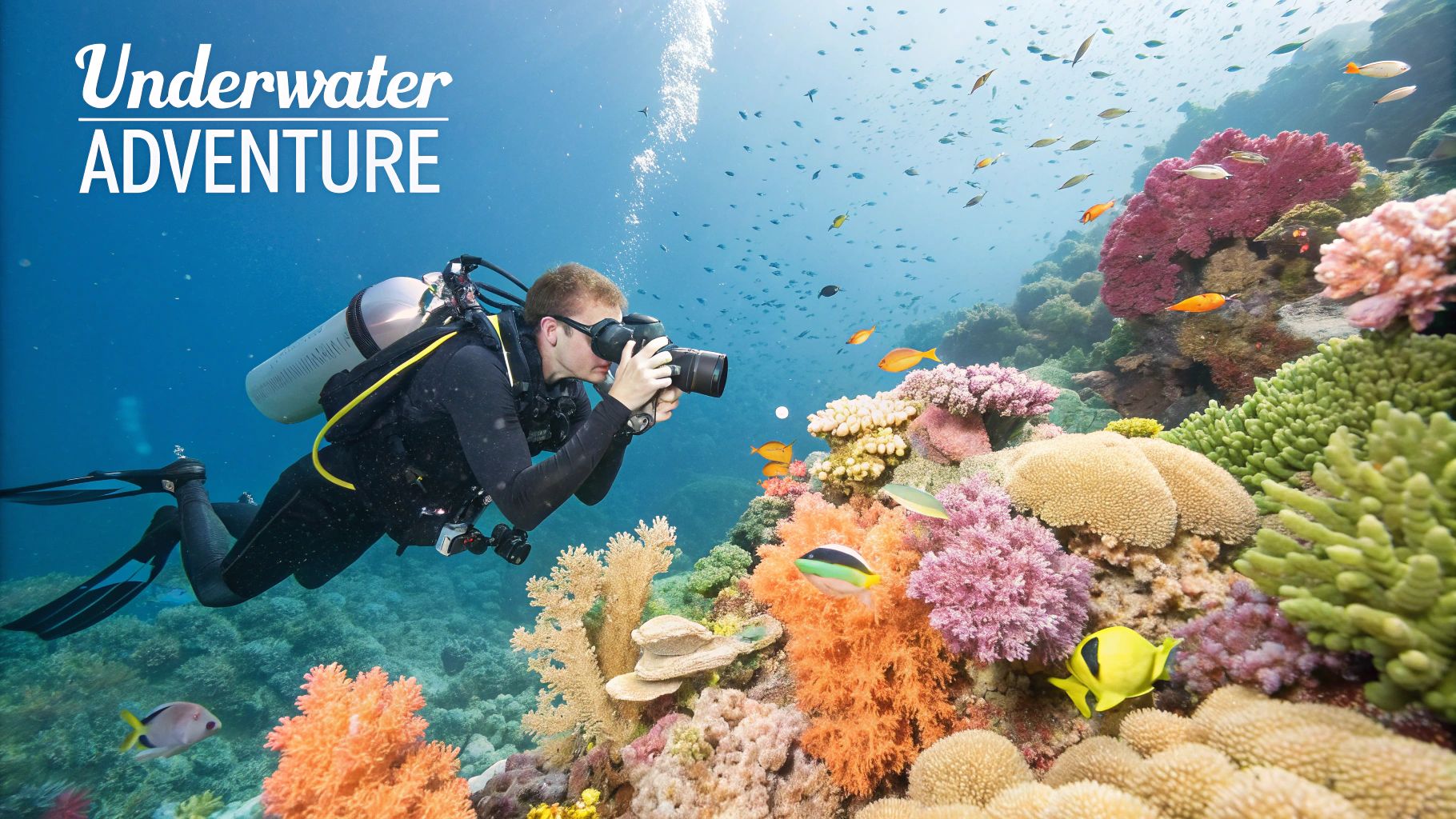
Jumping into underwater photography can feel like you’re in the deep end, surrounded by a dizzying number of cameras and a whole lot of techy jargon. But don't worry, finding the best underwater camera for beginners is way easier than it seems. The mission is simple: find a camera that’s tough, a breeze to use, and gets you amazing shots without needing a degree in photography.
Your first underwater camera is your ticket to a whole new world. It needs to be so easy to handle that you can focus on that sea turtle swimming by instead of digging through complicated menus. We’ve done the legwork for you, narrowing the list down to models that nail the three most important things: performance, durability, and great value.
Finding Your Perfect Underwater Match
To get you started, we’re spotlighting three standout cameras that are consistently praised for being incredibly beginner-friendly. Each one is built to handle the bumps, scrapes, and pressures of exploring underwater while capturing those vibrant colors and smooth videos you're after. While they're all great, each has its own unique strength, whether it’s for casual snorkeling trips or your first shallow scuba dive.
The right camera for a beginner is one that inspires confidence. It should be rugged enough to handle accidental drops, simple enough to operate with wet hands, and capable enough to capture the magic of the underwater world with clarity.
To make things even easier, we've put together a quick comparison table below. Think of it as your cheat sheet—it cuts right through the noise and gives you a clear look at how our top picks stack up against each other.
Top Three Underwater Cameras For Beginners
This table gives you a side-by-side look at our favorite beginner cameras. We’ve broken it down by the most important specs to help you decide which one best fits your underwater ambitions.
| Camera Model | Depth Rating | Ideal Use | Price Range |
|---|---|---|---|
| GoPro HERO Series | 33 ft (10m) standalone | Snorkeling, Shallow Dives, All-Around Action | $250 – $450 |
| Olympus Tough TG-6 | 50 ft (15m) standalone | Deeper Snorkeling, Macro Photography | $400 – $550 |
| SeaLife Micro 3.0 | 200 ft (60m) | Scuba Diving, Low Light Conditions | $500 – $600 |
Ultimately, any of these cameras will serve you well as you start exploring beneath the waves. The choice really comes down to how deep you plan to go and what kind of underwater scenes you're most excited to capture.
What Really Matters in an Underwater Camera
Choosing your first underwater camera can feel like you're drowning in tech specs. But once you know what actually counts, the whole process gets a lot easier. You don't need to be a tech wizard; you just need to know which features will make or break your photos and videos beneath the waves.
Think of it this way: you wouldn't buy a car without knowing the difference between horsepower and fuel efficiency. It’s the same deal here. Getting a handle on a few key camera specs will help you pick a model that’s a perfect match for your snorkeling or diving adventures. Let's break down the most important features, skipping the jargon.
Built to Withstand the Pressure
First things first, and this one is non-negotiable: the depth rating. This number tells you exactly how deep the camera can safely go without being tucked into an external waterproof case. Think of it like a diver's certification—some are cleared for shallow reefs, while others can handle much deeper dives. A camera rated for 33 feet (10 meters) is plenty for snorkeling and casual free diving.
If you're planning on scuba diving, though, you'll absolutely need a camera with a higher native rating or, more likely, a separate underwater housing. Ignoring the depth rating is a one-way ticket to a waterlogged, very dead camera. Consider this spec your number one safety check.
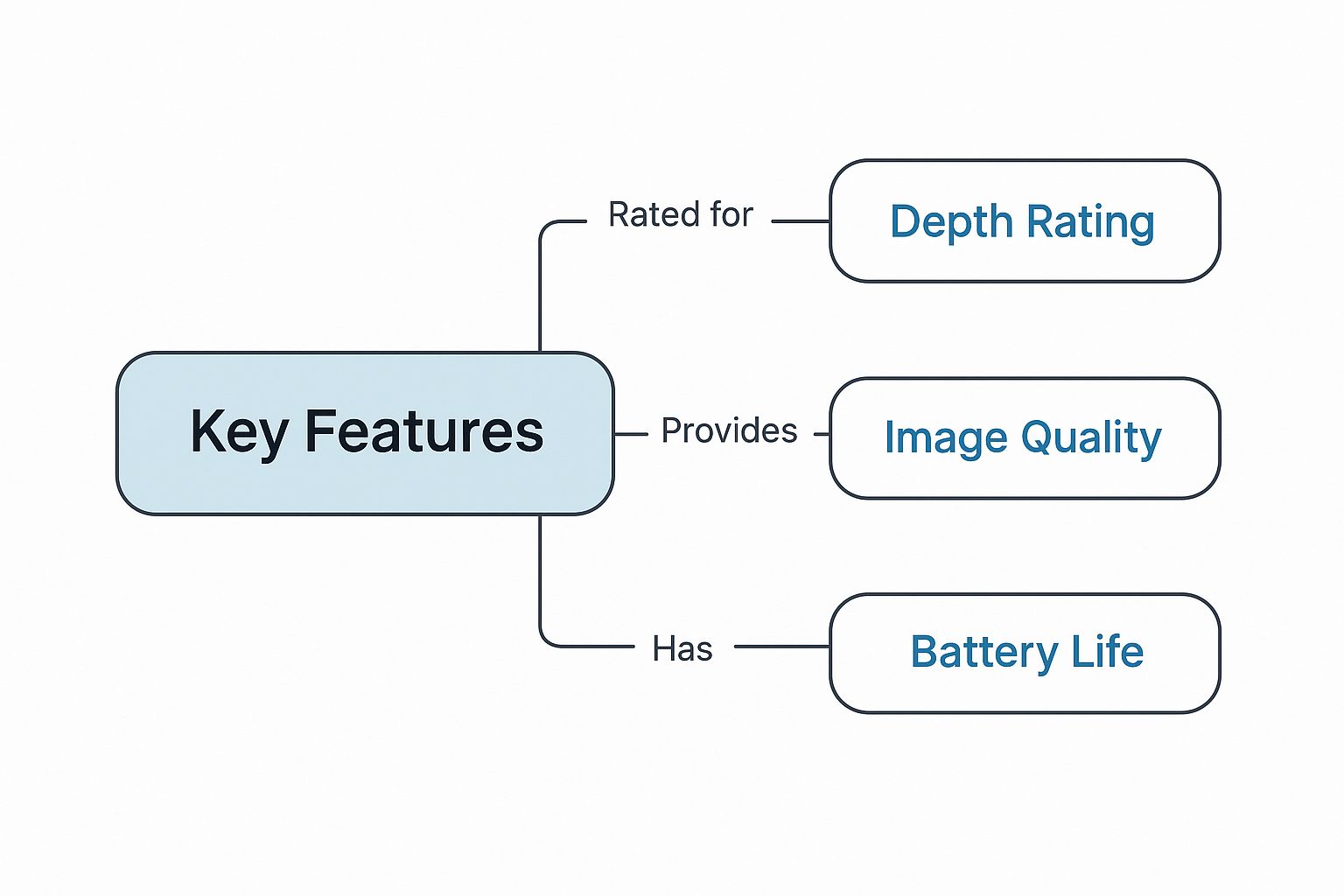
This visual boils it down to the big three: depth rating, image quality, and battery life. These are the pillars that determine how well a camera will perform when you take it for a swim.
Capturing the Underwater World in True Color
Next up is image quality, and it's about so much more than just megapixels. The real MVP here is the camera's sensor size. A bigger sensor is like having better night vision; it can gather more light, which is a game-changer in the dim, blue-filtered underwater world. The result? More vibrant colors and way less grainy, noisy shots.
Another key ingredient for great shots is image stabilization. This handy feature acts like a steady hand, smoothing out the shakes and jitters from currents or your own movements. It’s the difference between a blurry, seasick-inducing video of a passing fish and a smooth, cinematic clip you’ll actually want to share.
A camera's ability to handle low light and motion is what separates a good underwater camera from a great one. You want a tool that compensates for the challenging environment so you can focus on the incredible marine life around you.
Powering Your Underwater Adventures
Last but not least, do not overlook battery life. There’s nothing worse than your camera dying right as a majestic sea turtle glides into view. Trust me. Cold water drains batteries much faster than on land, so a camera with a robust, long-lasting battery is an absolute must.
Check the manufacturer's specs for the estimated battery performance, but be sure to scan real-world reviews, too. Having a reliable power source means you can spend more time exploring and less time stressing about a dead camera. Once you've got a handle on these features, you can put them into practice with our top underwater photography tips to get even better results on your next trip.
How to Choose the Right Camera for Your Adventures
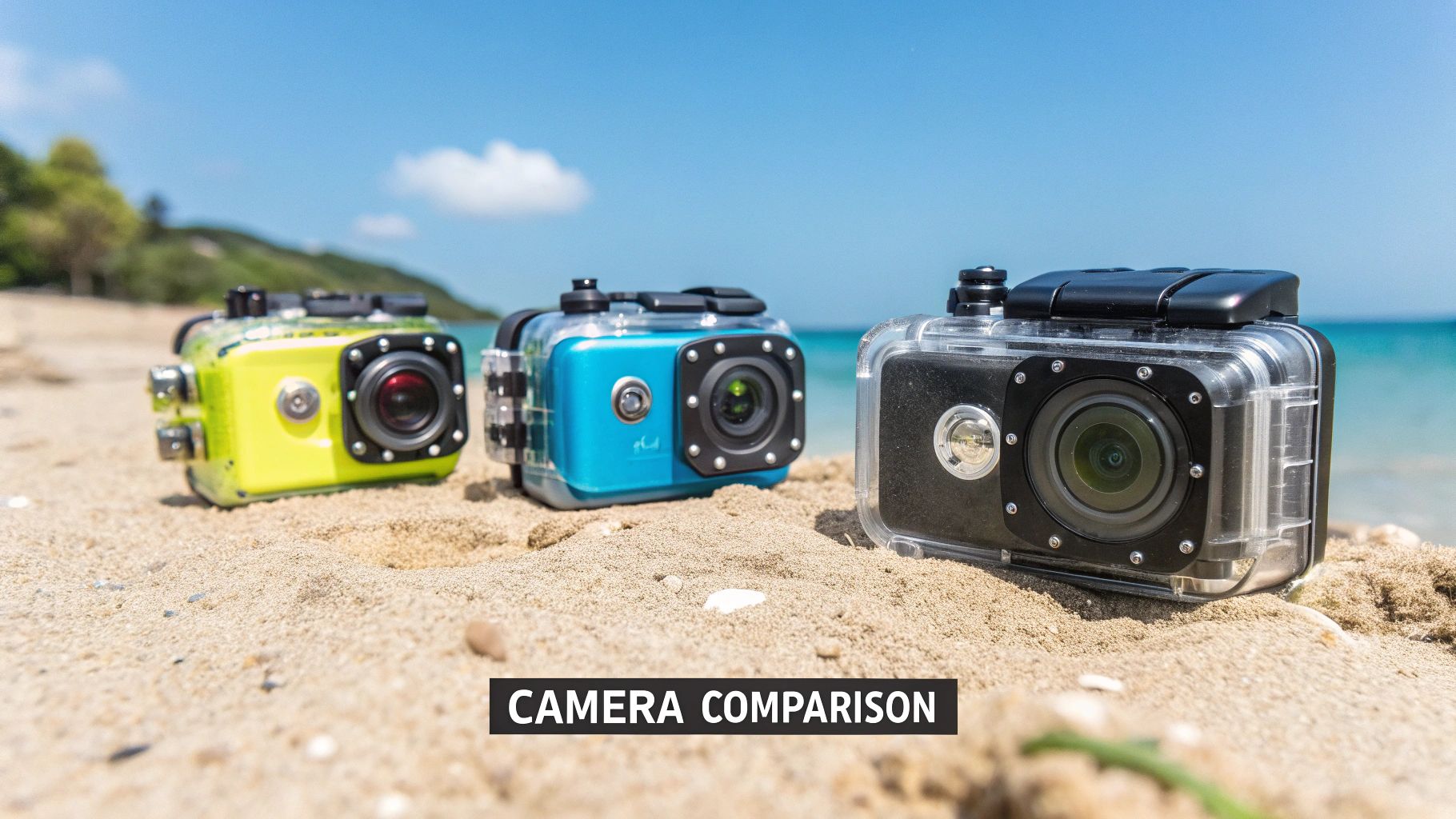
Finding the perfect camera really comes down to matching its features to your personal diving or snorkeling style. The best underwater camera for beginners isn’t a one-size-fits-all gadget; it's the one that best fits your adventures.
So, take a moment and think about what you'll be doing most often. Are you chasing fast-moving fish while snorkeling in shallow, sunlit reefs? Or are you planning to explore the calm, deeper waters on a scuba dive? Answering that one question is the most important first step to narrowing down your options and making a smart buy.
Align Your Camera with Your Activity
The camera you need for snorkeling just off the beach is worlds apart from one built for deep scuba trips. It’s like choosing between sneakers and heavy-duty hiking boots—sure, they’re both shoes, but they’re engineered for completely different worlds.
For casual snorkeling, a simple, tough, and compact camera is usually your best bet. You want something you can handle easily while swimming, with straightforward controls and automatic settings that do the hard work for you. When you’re bobbing in the waves, ease of use is king.
But if you plan on getting into scuba diving, your needs shift dramatically. You’ll need a camera that can handle serious depths, either on its own or with a dedicated underwater housing. Features like manual controls and the ability to add external lights become way more important as you sink into darker environments.
Assess Your Current Skill and Future Goals
It’s time for a little honesty session: what are your current photography skills, and where do you want to take them? Are you just looking to grab fun memories of your family vacation, or are you hoping to turn underwater photography into a serious hobby?
A beginner's camera should remove barriers, not create them. Choose a model that lets you start capturing great images immediately, with room to grow as your skills and confidence improve.
If you’re starting from square one, a point-and-shoot camera with killer automatic modes is a fantastic way in. These cameras are designed to get you great results with minimal fuss, letting you focus on enjoying the reef. Many modern action cameras, like the GoPro series, are champs at this with their set-it-and-forget-it vibe.
However, if you already have some photography chops or a burning desire to learn, a camera with manual controls might be a better long-term investment. Having the power to tweak settings like shutter speed, aperture, and ISO gives you incredible creative freedom as you get more comfortable behind the lens.
- For the Casual Snorkeler: A simple, waterproof point-and-shoot or an action camera is perfect. Focus on durability, auto settings, and good video quality.
- For the Aspiring Photographer: Look for a camera with manual controls, RAW image capture, and the ability to add accessories like strobes or lenses down the line.
Durability and Handling in the Water
Let’s face it, the ocean is tough on electronics. Saltwater is corrosive, and the pressure ramps up fast the deeper you go. A camera built for this world needs to be rugged. Look for models that aren't just waterproof but also shockproof, crushproof, and freezeproof.
Beyond sheer toughness, think about ergonomics. How does the camera actually feel in your hands? Are the buttons big enough to press if you’re wearing gloves? A camera with clumsy controls is a surefire way to get frustrated when you’re trying to snap a photo of a shy sea turtle.
This is where the market is really heating up. As of 2024, the underwater camera system market was valued at around USD 5.74 billion globally. It’s projected to jump to USD 13.78 billion by 2031, which shows just how much this tech is booming. That growth is fueling some serious innovation in durability and user-friendly designs, making it easier than ever for beginners to find a solid camera.
Thinking about gear that can withstand the ocean is a good mindset to have in general. Learning the principles for selecting durable saltwater gear can give you a much better feel for what makes equipment last.
Video Quality Versus Still Photography
Last but not least, think about what you actually want to create. Are you more interested in capturing breathtaking, high-resolution photos, or dynamic, smooth-as-silk videos of your underwater world? Most cameras do both, but they almost always shine brighter in one area.
Action cameras are famous for their mind-blowing video features, offering high frame rates for epic slow-motion shots and incredible image stabilization. They’re perfect for capturing the fluid motion of swimming alongside a school of fish. For more on this, check out our guide on how to take underwater photos, which has tips for both.
On the flip side, dedicated compact cameras like the Olympus TG series often have better sensors and lenses for still photography. They can produce sharper images with more accurate colors, especially if you shoot in RAW format, which gives you a ton of flexibility when you're editing later. Your choice here really depends on whether you see yourself as a budding filmmaker or a future photographer.
Comparing the Top Underwater Cameras for New Photographers
Alright, now that you know what all the bells and whistles do, let’s put some of the top contenders head-to-head. Picking the best underwater camera for beginners isn't just about comparing spec sheets; it's about figuring out how each one feels and performs in the real world—you know, when you're actually underwater.
We're going to dive into the good, the bad, and the practical for the most popular options out there. This will give you a clear picture of which camera will be the perfect co-pilot for your underwater adventures, whether you're dealing with wet hands, thick gloves, or tricky lighting.
The All-Around Action Hero: GoPro HERO Series
When you think "action camera," GoPro is probably the first name that pops into your head, and for good reason. It’s incredibly versatile, built like a little tank, and captures some of the most breathtaking video footage you can get from a camera this size. The image stabilization on newer models like the HERO12 Black is an absolute game-changer, magically smoothing out shaky footage from swimming against a current.
While it’s famous for video, its photo game has gotten much stronger over the years. A killer feature for beginners is the ability to pull high-res still photos right from your video clips. Missed the perfect moment? No problem, just scroll through your footage later. The main trade-off is its classic wide-angle "fisheye" lens—awesome for capturing sweeping reef scenes, but not so great for getting up close and personal with tiny critters without some extra gear.
The Rugged and Reliable: Olympus Tough TG-6
The Olympus Tough TG-6 is a legend in the underwater community, especially for snorkelers and divers who are more focused on stills than video. This thing is practically indestructible—it’s waterproof down to 50 feet (15 meters) without any extra housing, and it’s also shockproof, crushproof, and freezeproof. It’s a camera that begs to be taken on an adventure.
But where the TG-6 really sets itself apart is its absolutely phenomenal macro and microscope modes. You can get mind-blowing, detailed shots of tiny critters like shrimp and nudibranchs with stunning clarity. Its sensor is dialed in for still photography, producing rich, vibrant colors and sharp details that often leave action cams in the dust.
The Olympus TG-6 is for the budding underwater naturalist—the explorer who wants to document the tiny, intricate details of marine life. Its specialized macro modes open up a hidden world that most other cameras simply can't see without expensive add-ons.
And it seems more people than ever are getting into underwater exploration. The consumer underwater camera market is booming, expected to grow from USD 6.27 billion in 2024 to USD 7.04 billion in 2025, with a CAGR of 12.1%. You can learn more about these underwater camera market insights to see just how fast the industry is growing.
The Dive-Ready: SeaLife Micro 3.0
For those who are serious about their scuba diving from day one, the SeaLife Micro 3.0 is a fantastic choice. Unlike anything else on this list, it's permanently sealed and ready to go down to a whopping 200 feet (60 meters) straight out of the box. That completely removes the single biggest risk for underwater gear: O-ring maintenance and the dreaded camera flood.
Its simple, "piano-key" style buttons are a dream to use, designed specifically for fumbling fingers in thick dive gloves. It also features built-in color correction modes for diving, which automatically bring back the vibrant reds and yellows that disappear the deeper you go. It might not have the all-purpose flash of a GoPro, but for a dedicated diver who values pure, simple reliability, it’s a trusted friend.
If you're sticking to the shallows, our guide on the best underwater cameras for snorkeling has some great recommendations tailored for that.
Beginner Camera Feature Comparison
To make things even clearer, let's lay out the key differences in a simple table. This should help you see at a glance which camera aligns best with what you want to do.
| Camera Model | Depth Rating | Key Features | Price Range |
|---|---|---|---|
| GoPro HERO Series | 33 ft / 10m | Top-tier video stabilization, pull still frames from video, super wide field of view. | $250 – $450 |
| Olympus Tough TG-6 | 50 ft / 15m | Incredible macro modes, RAW photo capability for editing, seriously rugged build. | $400 – $550 |
| SeaLife Micro 3.0 | 200 ft / 60m | Permanently sealed (no flooding!), easy-to-use buttons, built-in dive color modes. | $500 – $600 |
At the end of the day, the right camera really comes down to what you'll be doing most. If you want a do-it-all action cam for amazing videos of all your adventures (in and out of the water), the GoPro is tough to beat. If your passion is capturing the tiny, colorful details of marine life in stunning photos, the Olympus TG-6 is your soulmate. And for the dedicated beginner scuba diver who just wants a simple, bulletproof camera that works every time, the SeaLife Micro 3.0 is an outstanding choice.
Keeping Your Camera Safe and Ready for the Next Dive
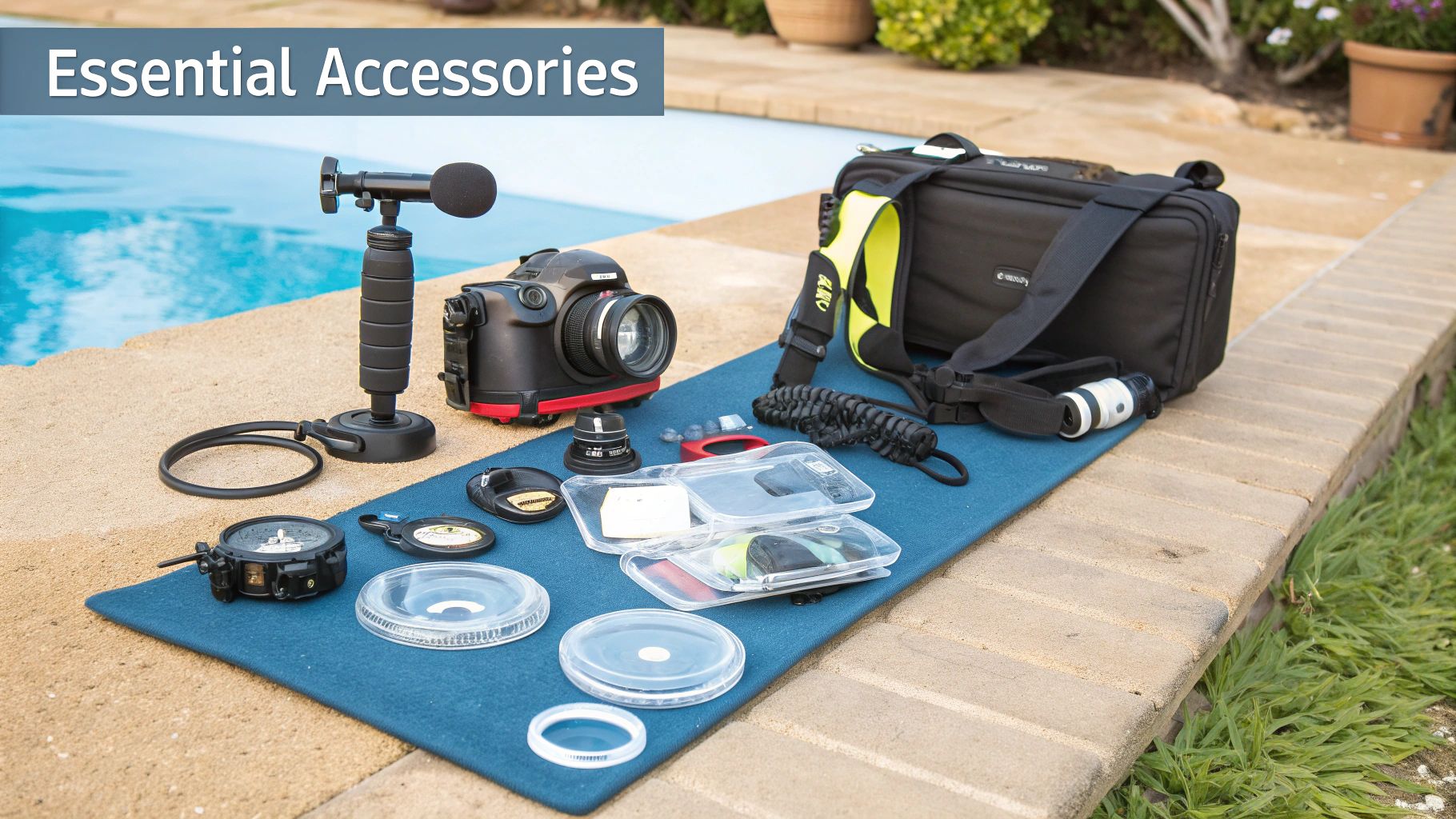
You’ve made an investment in your new camera, and it’s your ticket to bringing home incredible underwater memories. To make sure it’s ready for many adventures to come, you’ve got to treat it with a little care. The biggest enemy of your gear isn’t a curious fish or a bump against some coral; it’s the corrosive power of saltwater left unchecked.
Putting a simple, effective maintenance routine in place is the single best thing you can do to protect your camera. Think of it like brushing your teeth—a small daily habit that prevents huge problems down the road. This isn’t about complicated technical work, just a few straightforward steps that will dramatically extend the life of your equipment.
The Non-Negotiable Post-Dive Ritual
The moment you’re out of the ocean, your camera care routine begins. The most critical step is to rinse your camera and its housing thoroughly in fresh water. When saltwater dries, it leaves behind abrasive salt crystals that can jam buttons, scratch lenses, and eat away at metal parts over time.
Give your camera a good dunk in a bucket of fresh water or hold it under a gentle tap. While it's wet, make sure to press and work all the buttons and dials. This simple action dislodges any trapped salt or sand that could cause a headache later. Whatever you do, never let salt dry on your camera.
Think of saltwater as liquid sandpaper. A quick freshwater rinse after every single dive is the easiest and most effective way to prevent long-term damage and keep your camera in perfect working order.
This rinse is just as crucial for your camera as it is for the rest of your kit. For a full rundown on what makes for quality equipment, check out our guide on the best snorkel gear for beginners.
Caring for Your O-Rings: The Unsung Heroes
See those thin rubber O-rings in your camera's housing? They are the only things standing between the ocean and your camera's delicate electronics. They are truly the unsung heroes of underwater photography, and they need your attention.
Before every single dive, you should carefully inspect the O-rings for any signs of trouble—cracks, dirt, or even a stray piece of hair. Any little bit of debris can compromise the seal and lead to a catastrophic flood.
Your O-Ring Checklist:
- Remove and Clean: Gently take the O-ring out and wipe both it and the groove it sits in with a clean, lint-free cloth.
- Inspect Closely: Look for any nicks, cuts, or flat spots. If you spot any damage, replace the O-ring immediately. It's not worth the risk.
- Lubricate Lightly: Apply a very thin, even layer of silicone grease. Too much grease is a bad thing—it can attract sand and debris, so less is more.
This check only takes a minute, but it’s the most important step you can take to prevent a camera flood.
Smart Storage and Travel Habits
How you store your camera between dives is just as important as how you clean it. Always take the battery out before storing it for a long time to prevent a leaking battery from causing corrosion. Keep your gear in a cool, dry place away from direct sunlight.
To make sure your valuable gear stays safe not just in the water but also on the way there, it's wise to learn how to pack efficiently and travel smarter. Proper packing protects your investment from bumps and drops on the way to your next dive spot. A little care on land ensures your camera is always ready for the water.
Common Mistakes to Avoid as a Beginner
Look, every new underwater photographer makes a few classic blunders—it’s just part of the learning process. But you don’t have to make all of them. Knowing what trips people up will help you skip a lot of the initial frustration and get to the good stuff much faster.
One of the biggest hurdles isn't the camera at all; it’s the water itself. You can't just point and shoot like you do on land. You have to become a stable, steady platform for your camera, and that’s where most beginners really struggle, ending up with a memory card full of blurry shots.
Neglecting Buoyancy and Stability
Before you even think about f-stops or ISO, your first priority has to be how you move in the water. Buoyancy control is everything. If you're constantly kicking to stay afloat or waving your arms around to stay balanced, your shots are going to be a mess. The goal is to be completely still, like a human tripod.
Seriously, practice your form. A great place to start is by reviewing some basic snorkeling tips for beginners, because having solid skills in the water directly translates to better photos. The less you fight the ocean, the clearer your pictures will be.
Another rookie mistake is getting the distance wrong. You’re either too far away or right on top of the marine life. It's a tricky balance. You should never, ever touch or harass an animal, but you do need to get close. Water robs your photos of light, color, and sharpness, so closing the distance (safely!) is the secret to getting crisp, vibrant images.
Misunderstanding Light and Color
Water completely changes the rules of light, and forgetting that is a classic beginner move that leads to sad, blue-ish, washed-out pictures.
The most common technical mistake is firing the camera's built-in flash. All this does is light up the millions of tiny particles floating in the water (we call this backscatter), making your photo look like you shot it in a snowstorm.
Instead of using that pop-up flash, learn to use the sun. Try to keep it behind you so it shines on your subject, bringing out its natural colors. Also, don't forget to adjust your white balance. Most cameras have an "underwater" or "dive" mode that automatically corrects for the blue tint. Toggling this one setting can instantly make your photos look a hundred times better.
Making just a few of these simple adjustments will have a massive impact. Avoid these common slip-ups, and you'll be on the fast track to capturing the incredible beauty you see beneath the waves.
Answering Your Beginner Questions
Getting your fins wet in underwater photography for the first time? You’ve probably got a ton of questions. Let's clear up some of the most common ones so you can dive in with total confidence.
Do I Really Need a Separate Waterproof Housing?
That all depends on what your camera can handle on its own and, more importantly, where you plan on taking it. Lots of the best beginner cameras come waterproof straight out of the box, typically rated for depths between 33 to 50 feet (10 to 15 meters).
For snorkeling trips and casual shallow dives, that built-in protection is usually all you need. But if you’re planning on getting your scuba certification and exploring deeper reefs, a dedicated housing becomes non-negotiable. It's a tough outer shell designed to withstand the crushing pressure of deeper water, saving your camera from a very sad, very expensive flood.
What's the First Accessory I Should Buy?
Forget about fancy lights and filters for a second. The very first thing you need to buy is a good wrist lanyard or a float strap. The ocean has a bad habit of swallowing gear, and a simple strap is the cheapest insurance you can get to keep your brand-new camera from becoming a permanent resident of the sea floor.
Once you know your camera is securely attached to you, then you can start thinking about the fun stuff. As you get more comfortable, you’ll probably want to add:
- A red filter: This is a game-changer for bringing back the vibrant reds and oranges that water filters out as you go deeper.
- An external light or strobe: This will make the biggest difference in your photos, adding color, clarity, and pop, especially when it's a bit dark and gloomy down there.
Just remember: secure your camera first. A lost camera doesn't take any pictures.
How Do I Get Clearer Photos in Murky Water?
Ah, the age-old challenge of shooting in less-than-perfect visibility. This is something every underwater photographer deals with, not just beginners. The absolute best trick in the book is to get as close to your subject as you safely can. By closing the distance, you reduce the amount of water—and all the sand, plankton, and gunk floating in it—between your lens and your subject.
The less water you have to shoot through, the sharper and more colorful your photo will be. When it comes to clarity, getting close is everything.
Another powerful technique is to use an external light, often called a strobe. By positioning the light off to the side of your camera instead of right on top of it, you light up your subject without illuminating all the distracting particles floating in front of your lens. This makes your subject stand out beautifully, even when the water looks like pea soup.
Ready to capture your own underwater memories in the Florida Keys? Join Marathon Snorkeling And Sunset Cruise for an unforgettable trip to the reef. Book your adventure today