
Best Underwater Cameras for Snorkeling

When you’re looking for the best underwater cameras for snorkeling, top contenders like the GoPro HERO series and the OM System TG-7 always come to mind. GoPro is the king of action video, while the TG-7 is a fantastic all-around shooter, especially if you love macro photography.
But the "perfect" camera really comes down to what you need. It’s all about finding that sweet spot between video quality, photo capabilities, durability, and your own personal snorkeling style.
Finding Your Perfect Snorkeling Camera
The world beneath the waves is bursting with color and life, just waiting for you to capture it. But with so many cameras out there, picking the right one can feel like a chore. This guide is here to cut through the noise and help you find the perfect match for your underwater adventures.
We're skipping the dense technical jargon and focusing on what actually matters for bringing home incredible snorkeling memories.
Whether you're just looking to grab some fun family shots on vacation or you're a serious marine life enthusiast trying to get that perfect, frame-worthy image, the best camera is simply the one that fits you. We'll pit the top models against each other based on how they actually perform in the water.
What to Look for in a Snorkeling Camera
Knowing what features to prioritize will make your decision a whole lot easier. What a snorkeler needs is often quite different from what a deep-sea diver is looking for.
- Native Waterproofing: A camera that's waterproof right out of the box, like a GoPro or TG-7, is so much more convenient than dealing with a separate, clunky housing.
- Image Stabilization: Let's face it, the ocean is always moving. Good stabilization is an absolute must-have if you want clear, steady videos and crisp photos.
- Underwater Color Accuracy: As you go deeper, water filters out red light, which is why underwater shots can look so blue or green. A good camera will have built-in underwater modes to fix this for you.
- Ease of Use: When you’re floating in the water, maybe even wearing gloves, you need big buttons that are easy to find and press without fumbling.
The biggest mistake I see new buyers make is getting hung up on megapixels. For snorkeling, things like in-camera color correction and solid image stabilization will have a much bigger impact on how your photos and videos turn out.
A great camera becomes an extension of your eyes, letting you share the magic you saw firsthand. From the complex patterns on a parrotfish to the slow, graceful glide of a sea turtle, the right gear makes all the difference.
Think about where you'll be snorkeling, like the stunning reefs in our guide to snorkeling in Marathon Key. Knowing your destination will help you zero in on the features that matter most for your trip. Get ready to finally make a confident choice for your next underwater journey.
What Truly Matters in a Snorkeling Camera
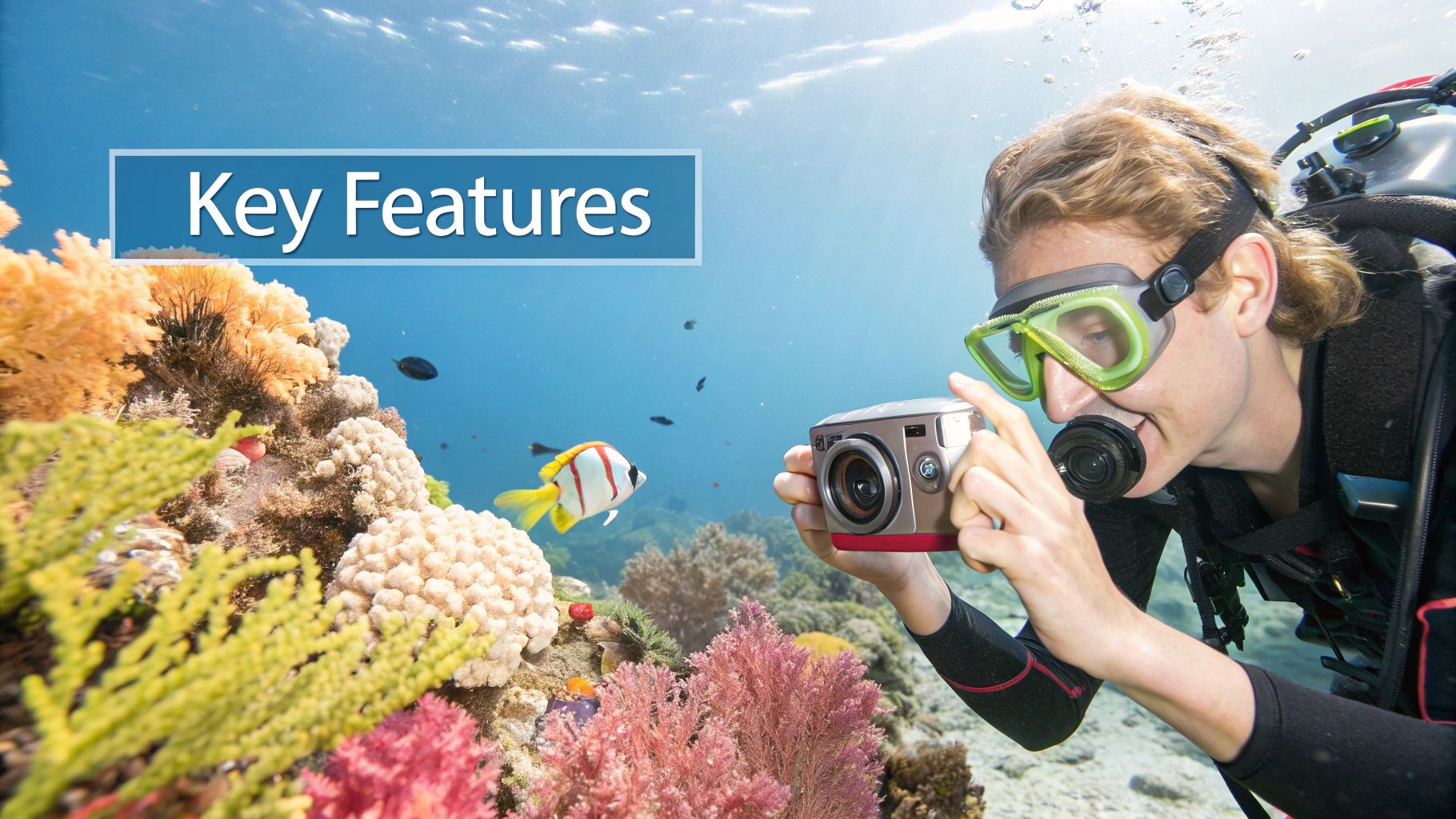
When you start shopping for an underwater camera, it’s easy to get lost in a sea of megapixels and flashy marketing specs. But to find a camera that actually performs when you’re floating over a reef, you have to know which features make a real difference in the water. This is what separates a good shot from a great one.
The demand for solid underwater cameras is blowing up. The market hit around USD 4.97 billion in 2025 and is set to keep climbing as more people get into water sports. With all the new tech and options hitting the shelves, it's more important than ever to know what to look for.
Waterproofing and Durability
This is the big one. A camera’s most basic job for snorkeling is to survive the ocean. You want a camera with a native waterproof depth rating, meaning it’s sealed and ready to go right out of the box—no clunky external housing needed. Look for a rating of at least 33 feet (10 meters). That gives you plenty of wiggle room to dive down for a closer look at something interesting.
Don't be fooled by a "splash-proof" label. That’s not going to cut it. Saltwater is incredibly corrosive, and a camera built for snorkeling is designed to handle it. Durability is a close second, because let’s be honest, it’s going to get bumped against rocks or the side of the boat.
Image Stabilization and Color Correction
The ocean is constantly moving, and so are you. This makes getting a steady shot a serious challenge. That's why effective image stabilization is a must-have. Without it, you’re just going to end up with blurry, shaky footage that’s pretty much unusable.
Just as critical is underwater color correction. As you go deeper, water filters out red and yellow light, which is why everything can look annoyingly blue or green in your photos. The best cameras have underwater modes that automatically fix this, bringing back the vibrant, true-to-life colors of the coral and fish.
A camera's ability to render accurate colors underwater and stabilize footage in moving water will have a far greater impact on your final images than its megapixel count. These two features are the bedrock of great snorkeling photography.
Ergonomics and Battery Life
Picture this: you're having an amazing time exploring a beautiful reef, maybe one of the spots from our guide to the best snorkeling in Marathon, FL. The last thing you want is to be fumbling with tiny buttons with wet hands or, even worse, have your battery die right when a turtle swims by.
Look for a camera with an ergonomic design and large, easy-to-press buttons. You should be able to switch modes or hit record without taking your eyes off the action. And finally, don’t overlook long battery life. You need a camera that can last the whole trip, from the moment you jump in until you’re back on the boat. A dead battery is the ultimate photo-op killer.
Comparing The Top Underwater Cameras For Snorkelers
Choosing the right camera isn't about staring at a spec sheet. It’s about how it performs in the real world—how it handles the shifting light on a shallow reef, how easy it is to use while you're floating, and whether it can truly capture the electric colors of marine life.
Here, we'll put the top contenders head-to-head in genuine snorkeling situations to see which ones really make a splash.
This lineup gives you a glimpse of the powerful, compact options out there, each with its own strengths for different underwater adventures.
Snorkeling Camera Feature Showdown
To get a quick sense of how these cameras stack up, this table highlights the features that matter most when you're in the water.
| Camera Model | Native Waterproof Depth | Max Video Resolution | Key Stabilization Tech | Best For |
|---|---|---|---|---|
| GoPro HERO Series | 33 ft (10m) | 5.3K | HyperSmooth | Action-packed video and pulling high-quality stills. |
| DJI Osmo Action 4 | 59 ft (18m) | 4K | RockSteady 3.0+ | Natural color, low-light performance, and ease of use. |
| Sealife Micro 3.0 | 200 ft (60m) | 4K | N/A | Foolproof reliability, simplicity, and dedicated stills. |
While the specs provide a starting point, the real story is in how these cameras feel and perform during a snorkel.
H3: GoPro HERO Series: The Action King
The GoPro HERO series is still the one to beat, and for good reason. It’s built like a tank, making it incredibly durable and dead simple to operate while you're bobbing in the water. Its HyperSmooth stabilization is the best in the business, turning shaky, current-tossed clips into buttery-smooth footage.
Video quality is where the HERO really shines. With resolutions up to 5.3K, the detail you can capture is just stunning. But here’s the killer feature for snorkelers: you can pull crisp 24.7MP still photos right from your video clips. This means you can focus on filming a passing sea turtle and grab the perfect shot later without the stress of trying to time it just right.
The single most important differentiator for the GoPro HERO is its Frame Grab capability. For a snorkeler, who is often in constant motion and has limited time underwater, the ability to record high-resolution video and later extract a perfect still photo is a game-changer.
The downside? Its still photography, while much better these days, isn't its main focus. You can't sync it with an external flash (strobe), so you’re relying on natural light. For snorkelers who prioritize video, though, it’s the ultimate tool.
H3: DJI Osmo Action Series: The Challenger
DJI’s Osmo Action series gives GoPro a serious run for its money, often matching it on video quality and stabilization. The Action 4, for instance, has a larger sensor that really helps in low light—a subtle but key advantage when you're shooting in the shadows of a coral overhang or on a cloudy day.
Where the Osmo Action often pulls ahead is its user-friendly design. The magnetic mounting system is a dream, letting you swap accessories way faster than GoPro’s screw-in mounts. It's a small thing, but you'll appreciate it when you're getting geared up on a rocking boat.
Color science is another battleground. GoPro’s colors are famously vibrant and punchy, while DJI's tend to look more natural right out of the camera. It really boils down to your personal taste. For a deeper dive, this comprehensive comparison of action cameras like the Osmo Action 4 and GoPro Max can help clarify the nuances.
H3: Sealife Micro Series: The Snorkeler’s Specialist
Unlike action cams adapted for the water, the Sealife Micro series was born for it. These cameras are built from the ground up for divers and snorkelers, and it shows. The design features huge, piano-key-style buttons that are a breeze to use, even if you’re wearing thick gloves.
The camera is permanently sealed. No doors, no o-rings, no maintenance. This completely eliminates the risk of flooding from user error, giving you incredible peace of mind. It's perfect for anyone who just wants to get in the water without fussing over gear.
The single most important differentiator for the Sealife Micro is its permanently sealed, flood-proof design. This makes it the most worry-free and user-friendly camera on the market for snorkelers who prioritize reliability and simplicity above all else.
Its underwater color correction modes are perfectly tuned for aquatic scenes, delivering beautiful, rich colors without needing filters in most shallow water. It might not have the high frame rates of a GoPro, but its focus on image quality and foolproof operation makes it a fantastic choice. For those planning trips like the amazing snorkeling tours in Florida, the Sealife’s reliability is a massive asset.
How to Choose the Right Camera for Your Snorkeling Style
Technical specs on a sheet of paper only tell you half the story. Honestly, the best underwater camera for snorkeling is the one that just clicks with your personal style and what you want to achieve. If you can figure out what kind of snorkeler you are, you can cut through all the noise and find a camera that feels like it was practically made for you.
This approach is more important than you might think. Between 2024 and 2025 alone, the underwater camera market jumped from USD 6.27 billion to USD 7.04 billion, all because more people are getting hooked on exploring life below the surface. With so many options out there, finding your perfect match is the real key to getting photos and videos you'll love.
The Family Adventurer
Is your main goal just to capture those priceless memories of your family's ocean adventures? If so, you're looking for three things: durability, simplicity, and reliability. You need a camera that can be passed around, dropped in the sand, and operated with wet hands without anyone having to think twice about it.
For this job, a camera like the OM System TG-7 is a fantastic choice. It’s built like a tank, is practically foolproof to operate, and has excellent automatic modes that let you focus on the fun, not the settings. You get great photos and videos without a steep learning curve, which means you won't miss that perfect shot of your kids seeing their first sea turtle.
The goal for the family adventurer is effortless capture. You want a camera that gets out of the way and lets you document the joy of the moment, with features that are intuitive enough for everyone to use.
The Content Creator
Now, if your goal is to produce stunning, cinematic footage for social media or a YouTube channel, your needs are totally different. You'll be prioritizing high-resolution video, buttery-smooth image stabilization, and the freedom to add accessories like filters and external lights. You want maximum creative control over the final product.
This is where action cameras like the GoPro HERO series or DJI Osmo Action really shine. Their best-in-class 5.3K and 4K video capabilities, paired with incredible stabilization tech like HyperSmooth, deliver professional-looking results right out of the box. They also have a massive ecosystem of mounts and accessories, allowing you to build a rig perfectly suited to your creative vision. To really make your footage pop, it's also a great idea to brush up on the essential composition rules for photography.
The Marine Observer
Maybe you're more of a patient observer, the kind of person fascinated by the tiny, intricate details of marine life. You value exceptional photo quality, colors that look true-to-life, and the ability to get incredibly close for macro shots. Your goal is to capture the pure beauty of a single subject, whether it’s a tiny nudibranch or the complex pattern on a parrotfish.
Cameras like the Sealife Micro 3.0 or the OM System TG-7 (with its legendary macro mode) excel here. They are designed from the ground up with underwater color rendering in mind and offer specialized features just for close-up photography. This allows you to create detailed, vibrant images that truly reflect the magic of the underwater world. It’s a different kind of skill that requires patience, much like learning how to breathe when snorkeling for the first time—slow and steady wins the race.
Essential Accessories for Your Snorkeling Camera
Picking out one of the best underwater cameras for snorkeling is a killer first step, but the right gear is what really separates a good day from a great one. These accessories aren't just extra toys; they're the practical tools that solve the most common frustrations you'll face in the water.
A great camera is just the beginning. The right setup lets you stop fussing with your equipment and start focusing on the incredible world unfolding below you.
Keeping Your Camera Safe and Stable
The very first thing you should buy is a floating hand grip. I'm not kidding. One clumsy moment, one slippery hand, and your brand-new camera is on a one-way trip to the bottom of the ocean. These grips give you a solid handle and usually have a brightly colored tip, making it a cinch to spot if you do let go.
Trust me on this one: don't even think about taking your camera into the water without a floaty grip. It's the cheapest insurance policy you'll ever buy for a very expensive piece of gear.
Want to get close-up shots of that shy octopus or clownfish without scaring it away? An extension pole is your best friend. It lets you gently poke your camera into coral crevices or near curious fish from a comfortable distance, which means you'll capture more natural behavior and much better photos.
Getting a Clearer, More Colorful Shot
Ever wonder why your underwater photos look so… blue? It's because water filters out red light first. A simple red filter is an absolute game-changer, especially when you're snorkeling in deeper or intensely blue water. It snaps right onto your camera's housing and fixes the color balance before you even take the shot, bringing back all those rich, natural reef colors.
Along the same lines, anti-fog inserts are a must. Nothing is more frustrating than pulling your camera out of the water only to find your shots are ruined by condensation inside the lens housing. These little absorbent strips suck up the moisture that builds up from temperature changes, keeping your view perfectly clear for your entire snorkel.
Finally, a decent carrying case is non-negotiable. It protects your camera and all its new accessories from sand, scratches, and saltwater when you're on the move. For deeper dives into specific gear recommendations, you can always check out our full guides over at SnorkelingMarathon.com.
Common Questions About Snorkeling Cameras
Even after you've narrowed down the options, picking the right underwater camera for snorkeling can leave you with a few lingering questions. Let's tackle some of the most common ones so you can feel totally confident in your gear choice before you even hit the water.
Getting these details straight can be the difference between coming home with epic footage and a memory card full of disappointment.
Do I Really Need a Dedicated Camera for Snorkeling?
You might be wondering if your water-resistant smartphone is good enough. Honestly, a dedicated underwater camera is a much smarter move. They're built from the ground up to handle the corrosive saltwater and pressure that a phone simply isn't designed for long-term.
More importantly, they pack features you just won't find on a phone, like superior image stabilization for shooting in wavy water and specific modes for underwater color correction. Plus, using a dedicated camera keeps your expensive phone safe from the very real possibility of being lost or damaged at sea. Following basic snorkeling safety tips isn't just about you—it's about protecting your gear, too. A dedicated camera is the safest bet all around.
The two absolute must-have features for any snorkeling camera are rock-solid image stabilization and accurate underwater color rendering. You're always going to be moving with the current, so great stabilization is key for smooth videos and sharp photos. And without proper color correction, the vibrant world you see with your eyes will look dull and blue on screen.
How Can I Avoid Blurry or Dark Photos?
Blurry photos almost always come down to movement—either you're moving, the fish is moving, or both—combined with a shutter speed that's just too slow to freeze the action. The best weapon against blur is a camera with fantastic image stabilization. Shooting in bright, sunny conditions also helps a ton, as it lets the camera use a faster shutter speed naturally.
Dark photos are just a classic case of not enough light hitting the camera's sensor, which is a constant battle underwater. Even on the brightest days, your shots can come out underexposed. Luckily, learning a few tips for fixing underexposed photos in editing can save many of your images, turning a dark, murky picture into a beautiful memory. Another pro tip? Get closer to your subject. The less water between your lens and the fish, the more light gets through.
At Marathon Snorkeling And Sunset Cruise, we take you to the most vibrant reefs where your camera can truly shine. Book your unforgettable snorkeling adventure with us today!