
difference between scuba and snorkeling: Quick Guide

The real difference between scuba and snorkeling is beautifully simple: snorkeling keeps you floating on the surface, while scuba diving lets you explore deep beneath it. Think of it this way—snorkelers get a bird's-eye view of the underwater world, using a mask and snorkel to peer down from above. Scuba divers, on the other hand, become part of that world, using a self-contained breathing apparatus to get face-to-face with reefs and marine life.
Understanding the Core Differences at a Glance
Choosing between these two amazing activities really comes down to what you’re looking for in terms of comfort, budget, and the kind of experience you want. Snorkeling is the definition of easy fun. It's an accessible, low-cost way to get a peek into the ocean's wonders, requiring little more than a mask and the ability to swim. It's perfect for families and anyone just wanting to dip their toes in.
Scuba diving is a whole different ballgame—a fully immersive adventure. It demands specialized equipment and mandatory certification to make sure you can safely breathe and navigate dozens of feet below the surface. That commitment, however, unlocks a world most people never get to see, from deeper ecosystems and shipwrecks to unique marine life. If that sounds intriguing, our guide to scuba diving in Marathon, Florida breaks it all down.
Key Takeaway: Snorkeling is all about peacefully observing the underwater world from above. Scuba diving is about actively exploring it from within, giving you unmatched freedom and depth.
To make these distinctions crystal clear, let's put them side-by-side.
Quick Comparison Scuba Diving vs Snorkeling
This table strips away the fluff and gives you a straightforward look at what each activity involves.
| Aspect | Snorkeling | Scuba Diving |
|---|---|---|
| Primary Activity | Floating on the surface, looking down | Breathing and exploring deep underwater |
| Breathing Method | Through a tube (snorkel) connected to the air | From a compressed air tank via a regulator |
| Typical Depth | Surface level (0-15 feet) | 30-130 feet, depending on certification |
| Required Training | None; basic swimming ability is sufficient | Mandatory certification course required |
| Essential Gear | Mask, snorkel, fins | BCD, regulator, tank, dive computer, mask |
| Cost & Accessibility | Low cost, highly accessible for all ages | Higher initial investment, requires planning |
Training And Skills: What Each Activity Demands
One of the biggest things that separates snorkeling from scuba diving is what you have to put into it before you even touch the water. The beauty of snorkeling is just how easy it is to start. If you’re comfortable in the water and can swim, you’re pretty much good to go.
There's no need for a formal certification to get out there and see the shallow reefs. You just grab your gear and jump in.
Scuba diving, on the other hand, is a whole different ballgame. It's an incredible experience that turns you into a true underwater explorer, but it requires a serious commitment to training and developing new skills. You don't just decide to go scuba diving one afternoon.
The Path To Certification
To call yourself a scuba diver, you have to earn it through a certification course, like the PADI Open Water Diver program. This isn't just a quick class; it's a deep dive into the knowledge and skills needed to safely handle complex gear and navigate the underwater world.
The process is typically broken down into three main parts:
- Knowledge Development: This is the "book smarts" phase, where you learn the core principles of diving, either online or in a classroom setting.
- Confined Water Dives: Here, you'll head to a pool or a similar calm environment to get hands-on with your gear and practice essential scuba skills until they feel like second nature.
- Open Water Dives: Time for the real deal! You’ll apply everything you've learned on actual dives out in the ocean, all under the watchful eye of a certified instructor.
This image gives you a great side-by-side look at what’s involved.
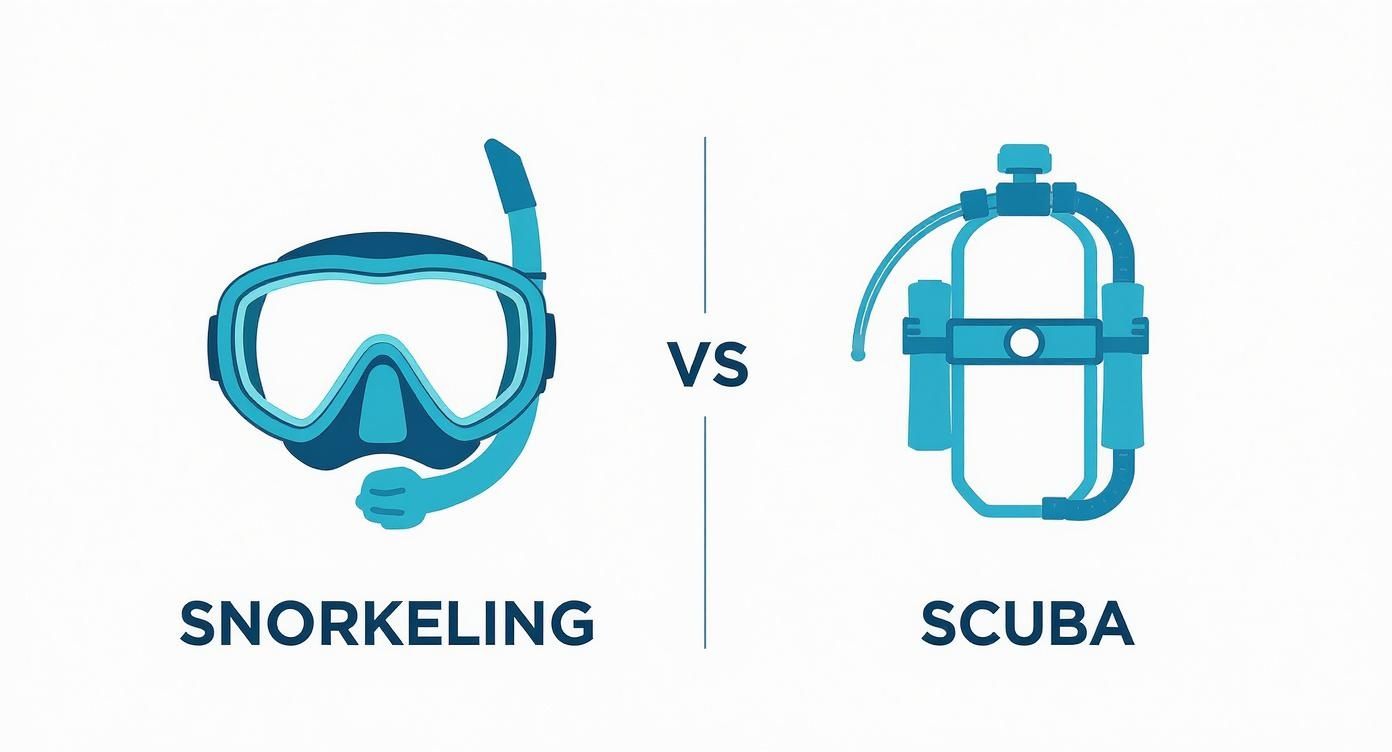
You can see snorkeling's grab-and-go simplicity right next to the structured, multi-step process required to become a certified diver.
Think of it this way: Scuba certification is your passport to explore the deeper underwater world, but snorkeling is the ticket that gets you in the door immediately, no waiting required.
These different training paths create two very distinct experiences. Snorkeling? No formal training needed. Scuba? Mandatory certification that covers critical knowledge, skills, and safety procedures.
This alone creates a huge barrier to entry for diving. You have to be willing to invest the time and money—often $300 to $500 or more—just to get certified. For anyone just starting out, our guide on snorkeling tips for beginners will help you get comfortable in the water quickly and safely, without any of the hassle.
A Detailed Comparison of Gear and Equipment
At first glance, the most obvious difference between scuba diving and snorkeling boils down to the gear. For snorkeling, the equipment is wonderfully simple, focusing entirely on letting you peek below the surface. Scuba gear, on the other hand, is a full-on life-support system that turns you into a temporary aquatic creature.
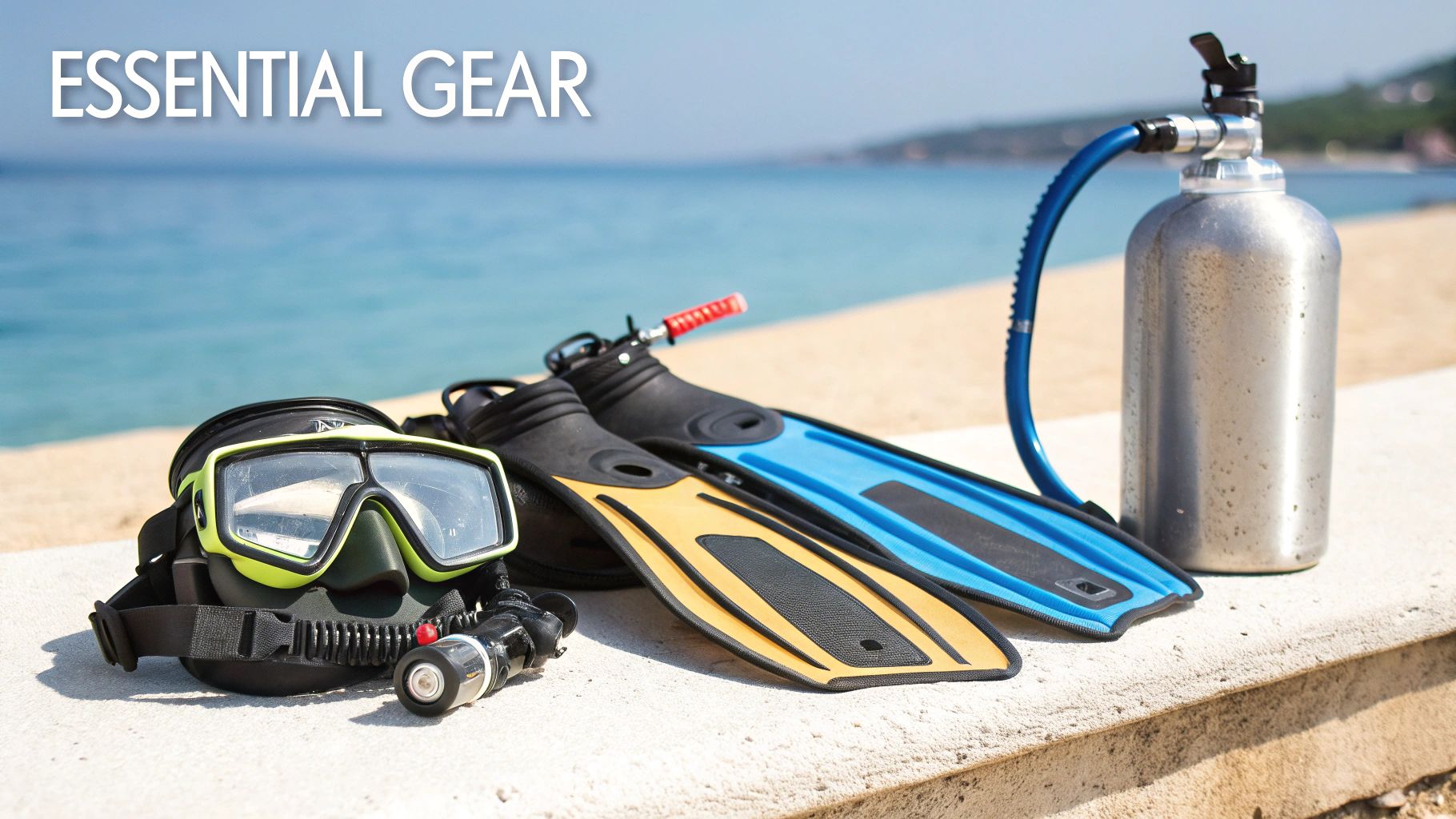
A snorkeler’s kit is beautifully minimalist, typically just three essential items. You’ve got a well-fitting mask for a clear window into the underwater world, a snorkel tube to breathe while your face is in the water, and fins to help you glide along with minimal effort.
Key Insight: Snorkeling gear enhances your natural ability to see and swim at the surface. Scuba gear, in contrast, gives you an entirely new capability—to breathe and exist comfortably beneath it.
Scuba Diving Life Support Systems
Now, a scuba diver’s setup is a whole different ballgame. It's far more complex because it has to manage your breathing, buoyancy, and depth—all things you don’t worry about when you're floating on top. Each piece of gear serves a critical, life-sustaining function.
The core components of a scuba setup include:
- Air Tank: A cylinder filled with compressed air that lets you breathe underwater.
- Regulator: This is the clever device that takes high-pressure air from the tank and delivers it to your mouth at a pressure you can actually breathe.
- Buoyancy Control Device (BCD): Think of this as an inflatable vest. It allows you to control whether you float, sink, or hover weightlessly in the water.
- Dive Computer: Worn like a watch, this is your most important safety tool. It tracks your depth and time underwater to keep you safe from decompression sickness.
This specialized equipment is precisely why you can't just jump in and go diving; formal training is an absolute must. Understanding how this gear works is fundamental to your safety.
Meanwhile, finding the best snorkel gear for beginners is a much simpler task centered around comfort and a good fit, which we cover in another guide. The gear you choose really just reflects the adventure you're after: simple surface observation or total underwater immersion.
Comparing the Underwater Experience and Perspective
Beyond all the gear and training, the real difference between scuba and snorkeling comes down to one thing: perspective. It’s about how you feel and what you see when you dip below the waves.
Snorkeling gives you a gorgeous, panoramic view from above. Think of it like peering into a massive, sun-drenched aquarium. You’re floating peacefully on the surface, watching the vibrant world of a shallow reef buzz with life just a few feet below you.
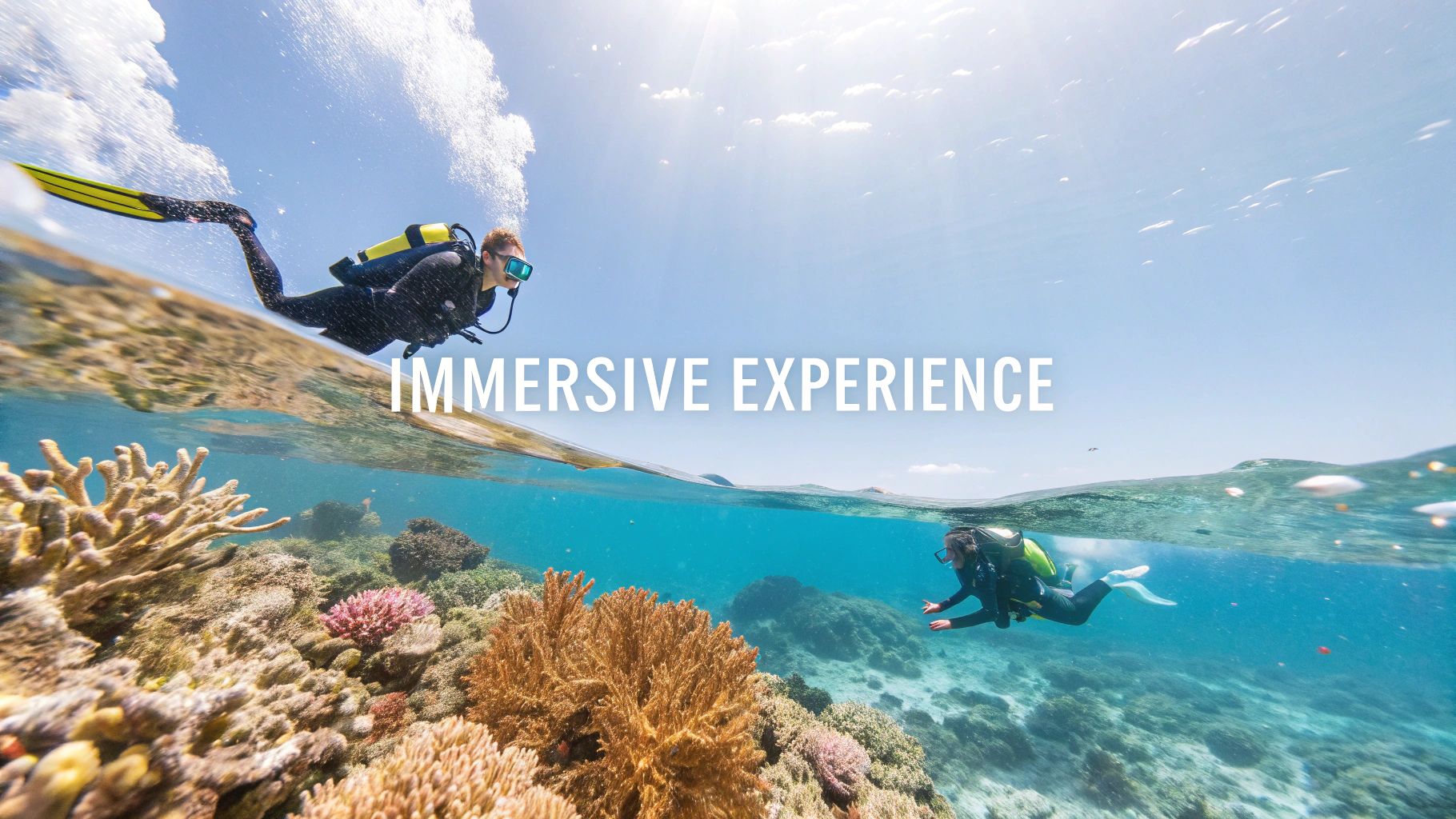
It’s a bird's-eye view, really. You get to watch schools of yellowtail snapper dart around as you glide effortlessly along. This top-down vantage point is perfect for taking in the grand scale of a reef ecosystem.
Scuba diving, on the other hand, puts you inside that aquarium. It’s a completely immersive, first-person adventure that lets you feel true weightlessness and move freely in three dimensions.
Key Difference: A snorkeler observes the underwater world from a beautiful, detached viewpoint. A scuba diver becomes a part of that world, experiencing it from the inside out.
From Observer to Participant
This fundamental shift in perspective changes everything about how you interact with the marine environment. As a diver, you can hover motionless next to a sea turtle, explore the hidden corridors of a shipwreck, or look up from the ocean floor to see the sun’s rays filtering down through the water.
You're no longer just looking down at the action—you are in it. This up-close and personal view leads to encounters you just can't get from the surface.
Let’s paint a picture of these two scenarios:
- The Snorkeler's View: You’re floating above a stunning coral garden, watching parrotfish munch on algae from ten feet away. The scene is beautiful, expansive, and incredibly calming.
- The Diver's View: You descend to become level with that exact same coral, close enough to spot the intricate patterns on a tiny blenny peeking out from its hidey-hole. You’re a silent visitor in its neighborhood.
That’s the magic of it. Snorkeling showcases the breathtaking beauty of the reef, which is why understanding the different types of coral reefs in the Florida Keys can make your time on the surface so much richer. Diving lets you explore the reef's complex structure and its inhabitants on their own terms. It’s the ultimate way to feel truly connected.
How Much Will It Cost You? Breaking Down the Budget
Let’s be real—for most of us, budget and time are the biggest factors when planning a vacation adventure. This is where the difference between snorkeling and scuba diving becomes crystal clear.
Snorkeling is hands-down the winner for anyone looking for a low-cost, high-reward day on the water. It’s the perfect fit for families, spontaneous travelers, and anyone who wants to see incredible marine life without a huge upfront investment. You can buy a solid mask, snorkel, and fin set for under $100, and renting gear for the day is even cheaper. It’s this incredible accessibility that opens up the underwater world to just about everyone.
On the other hand, scuba diving is more of a commitment, both in terms of time and money. Think of it less as a one-off activity and more like taking up a new hobby. The costs are layered, which naturally makes the barrier to entry much higher.
The Real Investment in Scuba Diving
Before you can even think about exploring a deep wreck, you have to get certified, and that’s where the expenses begin to stack up.
If you're serious about diving, you’ll need to budget for:
- Certification Courses: An Open Water Diver course will typically run you anywhere from $300 to $500. This is non-negotiable.
- Gear Expenses: While you can rent gear, most serious divers eventually buy their own. A complete, quality setup can easily cost thousands of dollars.
- Ongoing Costs: The spending doesn't stop after certification. You'll have ongoing costs for tank fills, boat fees for dive trips, and regular equipment servicing.
The numbers tell the story. There are roughly 11 million active snorkelers in the United States, compared to just 2.5 million scuba divers. While divers are a smaller group, they definitely contribute a hefty amount to marine tourism, as you can see in these marine tourism economic insights.
The Bottom Line: Snorkeling is all about easy, affordable fun you can jump into on a whim. Scuba diving is an incredible, lifelong hobby that requires a deliberate investment in training and gear.
For anyone visiting the Florida Keys, the choice is usually a no-brainer. Guided snorkeling trips offer incredible value and are designed to fit perfectly into a vacation schedule. Exploring the different Marathon boat tours is the best way to find an unforgettable underwater adventure that won’t break the bank.
Making the Right Choice for Your Marathon FL Adventure
So, how do you choose between scuba and snorkeling for your Florida Keys trip? It really just boils down to what you want to get out of your day on the water.
Both will get you incredible underwater views, but they offer two very different kinds of experiences. If you're after deep exploration and have the time and money to get certified, scuba diving absolutely unlocks another world. But for most folks visiting Marathon, the answer is refreshingly simple.
Snorkeling is the perfect blend of amazing sights, affordability, and pure, simple fun. You can float above a world-class shallow reef system like Coffins Patch without any training, certifications, or hauling around heavy, expensive gear. It’s this easy access that makes it the go-to for families, couples, and anyone who just wants to effortlessly connect with the ocean.
The best adventure is one that fits seamlessly into your vacation. For a hassle-free, memorable day exploring vibrant marine life in crystal-clear water, snorkeling is the clear winner in Marathon.
Our Marathon Snorkeling and Sunset Cruise is designed to show you the absolute best of the Keys' underwater world, taking you to pristine spots that are perfect for exploring from the surface. We handle all the details so you can have an unforgettable experience. Making your decision easy is what we do best.
And hey, planning trips to other amazing Florida spots can be just as straightforward. For example, a good guide to things to do in Siesta Key can help you find all sorts of local activities, both in and out of the water.
Frequently Asked Questions
When you're weighing your options for an underwater adventure, a few questions always seem to pop up. Let's clear the water on the most common ones to help you decide between strapping on a tank or just grabbing a mask and fins.
Do I Need to Be a Strong Swimmer for These Activities?
For snorkeling, you really just need to be comfortable in the water. That's it. If you can do a basic doggy paddle, you're pretty much set, especially since flotation vests are standard issue for a little extra peace of mind.
Scuba diving, on the other hand, is a different story. It demands more confidence and competence in the water. Part of the certification process actually involves a swim test to make sure you can handle yourself and your equipment if things get a little wavy.
Can I Try Scuba Diving Without Full Certification?
You absolutely can. If you're "scuba-curious" but not ready to commit to a full course, look for a "Discover Scuba Diving" program.
Think of it as a test drive. A professional instructor will walk you through the essentials in a calm, controlled setting (like a pool) and then guide you on a real, shallow dive. It’s the perfect way to see if breathing underwater is your thing before going all-in.
Which Is Better for Seeing Marine Life?
Honestly, this comes down to what you want to see.
Snorkeling is your front-row seat to the bustling city life of shallow coral reefs. For seeing the brilliant colors and swarms of fish that make places like the reefs in the Florida Keys so spectacular, you can't beat it.
Scuba diving unlocks a different world entirely. It gets you down deep where you can explore shipwrecks, swim through dramatic ledges, and encounter entirely different creatures that stick to the ocean floor. If you want to see the bigger, deeper, and more hidden side of marine life, diving is the way to go.
Ready to explore Marathon's incredible reefs from the best seat in the house? Marathon Snorkeling And Sunset Cruise offers unforgettable trips perfect for families and couples. Book your adventure today at https://snorkelingmarathon.com