
Your Guide to Scuba Diving in Marathon Florida

Picture this: you’re descending into warm, turquoise water, completely surrounded by vibrant coral and curious schools of tropical fish. That’s the magic of scuba diving in Marathon Florida, the undeniable heart of the Keys' underwater world. This guide is your complete map to that adventure, covering everything from serene reefs perfect for beginners to challenging wrecks that seasoned divers dream about.
Why Marathon is a Premier Dive Destination
Marathon isn't just another spot on the map; it's a world-class hub for scuba diving that offers an incredible mix of natural marine ecosystems and jaw-dropping artificial structures. It’s a place where every single dive tells a different story. The climate here is a diver's best friend, supporting year-round adventures with water temperatures hitting a perfect 82–86°F from April to July.
Its unique position in the middle Keys gives divers access to a spectacular variety of underwater environments. You can spend one day exploring a shallow, sun-drenched reef and the next descending onto a historic shipwreck steeped in mystery. It’s this incredible diversity that truly sets Marathon apart from the rest.
To get a better handle on what to expect from your dive trip, we've put together a quick overview of Marathon's underwater scene. This table breaks down the key features, giving you an at-a-glance look at what makes this destination so special for divers of all stripes.
Marathon Florida Diving At a Glance
| Feature | Description | Ideal For |
|---|---|---|
| Water Temperature | Ranges from 70°F in winter to 86°F in summer. | Year-round diving, with peak comfort from April to October. |
| Visibility | Typically 40-80 feet, sometimes exceeding 100 feet on good days. | Underwater photographers and anyone who loves clear, blue water. |
| Marine Life | Abundant coral reefs, sea turtles, nurse sharks, goliath groupers, and vast schools of tropical fish. | Divers who want to see a bustling and diverse ecosystem. |
| Dive Sites | A mix of shallow reefs (Sombrero, Coffin's Patch) and deep wrecks (Thunderbolt). | All skill levels, from beginners on their first open-water dive to advanced wreck divers. |
| Accessibility | Most sites are a short boat ride from shore, with professional dive operators readily available. | Divers looking for convenient and well-supported dive logistics. |
As you can see, Marathon really does have it all. Whether you're here to float peacefully over a reef or explore the silent corridors of a sunken ship, you'll find your perfect dive. It's this blend of accessibility and adventure that keeps divers coming back year after year.
The Best of Both Worlds
What makes scuba diving in Marathon, Florida, so special is how it caters to everyone. If you’re new to diving or just want a relaxed, beautiful experience, the area is home to some of the most stunning and accessible coral gardens in the United States. These sites are perfect for just observing, taking photos, and getting your buoyancy dialed in.
Marathon’s underwater realm offers something for every skill level, from the serene coral gardens of Sombrero Reef to the deep, silent corridors of the Thunderbolt wreck. It’s a diver’s paradise where you can grow your skills and always find a new challenge.
On the flip side, for the thrill-seekers and experienced divers, Marathon is a premier wreck diving location. These massive artificial reefs, like the legendary Thunderbolt, create complex habitats that attract larger marine life, including goliath groupers and majestic rays. Trust me, exploring these submerged giants provides an entirely different kind of underwater thrill.
Accessible Underwater Wonders
Marathon’s reefs are famous for their health and vibrancy. Sites like Sombrero Reef and the lesser-known but equally stunning Coffin's Patch are protected, allowing coral and marine life to flourish. You can explore our detailed guide on the beautiful Coffins Patch reef system to learn more about what makes it such a must-see spot. The sheer density of life on these reefs is just astounding.
This abundance makes Marathon the perfect place for divers who want to see it all. On any given dive, you’re likely to run into:
- Schools of vibrant fish: Parrotfish, angelfish, and sergeant majors create a constantly moving kaleidoscope of color.
- Graceful sea turtles: Loggerhead and green sea turtles are common residents, often seen gliding peacefully over the reef.
- Curious nurse sharks: These docile creatures are frequently found resting on sandy bottoms, offering a safe and exciting shark encounter.
- Intricate coral formations: Brain coral, staghorn coral, and sea fans build the very foundation of this bustling underwater city.
Discover Marathon's Most Incredible Dive Sites
The real magic of scuba diving in Marathon happens the moment you slip beneath the waves. An entire underwater kingdom is waiting down there, a playground for divers that offers the perfect mix of shallow, sun-drenched reefs and deep, mysterious shipwrecks. Every single site has its own story, promising an unforgettable day for divers of all stripes.
Think of Marathon’s underwater world like a well-stocked library. The shallow reefs are the bright, easy-to-read sections, brimming with color and life, perfect for a casual browse. The deeper wrecks? They're the special collections, requiring a bit more experience to access but rewarding you with incredible history and encounters with much bigger marine life.
This sheer variety means no two dives are ever the same. One day you could be gliding through vibrant coral gardens under the gaze of a historic lighthouse; the next, you might be descending onto the deck of a massive ship that’s become a bustling city for fish. Let's dive into the crown jewels of Marathon's underwater scene.
Sombrero Reef: A Beginner's Paradise
For new divers or anyone just wanting a relaxed, jaw-droppingly beautiful dive, Sombrero Reef is the undisputed champion. Sitting about eight miles offshore and marked by the iconic Sombrero Key Light, this reef is a designated Sanctuary Preservation Area. That protection means the coral is pristine and the marine life is absolutely thriving.
The depths are incredibly manageable, usually between 10 to 30 feet, which is perfect for Open Water divers, underwater photographers, and even snorkelers. The water is almost always calm and clear, creating a stress-free environment where you can just focus on the incredible world around you without fighting any currents.
The reef is a classic "spur-and-groove" system, forming natural channels and small canyons of coral that are a blast to explore. You’ll drift over huge brain corals, past delicate sea fans, and through massive schools of yellowtail snapper that move like a single organism. It's totally normal to spot sea turtles cruising by, moray eels peeking out of crevices, and gentle nurse sharks snoozing on the sand. For a closer look at its surface-level beauty, you can learn more about what to expect when exploring the vibrant Sombrero Reef.
The beauty of Sombrero Reef is its accessibility. It delivers a world-class reef experience—teeming with color and life—in a calm, shallow setting that allows divers to relax, build confidence, and truly soak in the underwater world.
This flowchart can help you figure out which type of Marathon dive site is the right fit for your certification and comfort level.
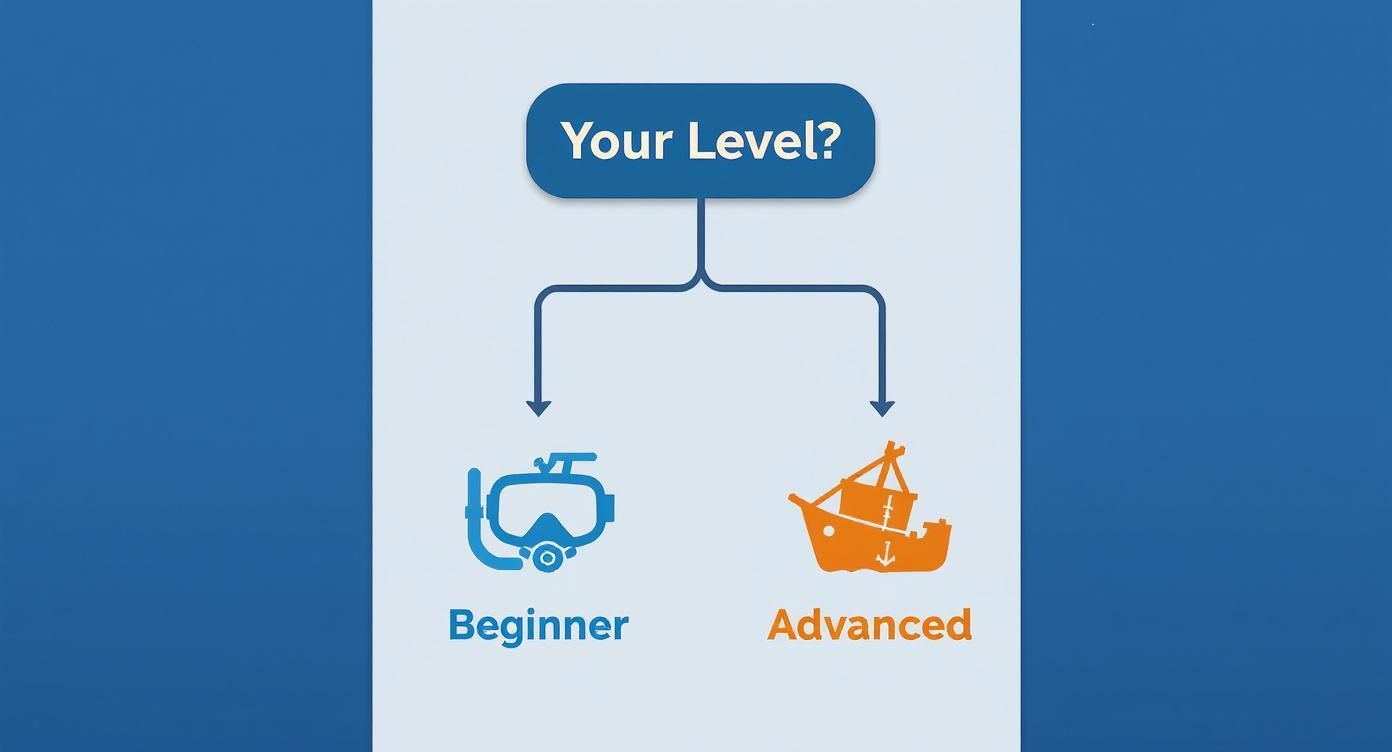
This quick visual guide shows how Marathon’s dive sites cater to both new and experienced divers, with clear pathways to either reefs or wrecks depending on your training.
The Legendary Wrecks of Marathon
For advanced divers, Marathon serves up a collection of spectacular shipwrecks that now act as thriving artificial reefs. These sunken giants are absolute magnets for bigger marine life and deliver a completely different kind of diving thrill.
-
The Thunderbolt: This is the signature wreck dive in Marathon. A former 189-foot US Army cable-laying ship, the Thunderbolt was intentionally sunk back in 1986. It now sits perfectly upright in 120 feet of water, creating a breathtaking silhouette as you descend. Because of the depth, you'll need an Advanced Open Water certification. The wreck is draped in sponges and corals and attracts massive goliath groupers, barracuda, and schools of amberjack. Exploring its intact superstructure is an experience you won't forget.
-
The Adolphus Busch Sr.: Another giant of the deep, this 210-foot cargo ship was sunk in 1998 and now rests in about 110 feet of water. The wreck is famous for its wide-open cargo holds, which are safe to swim through for divers with the proper training. It has become a sanctuary for big fish, and it’s a hotspot for spotting goliath groupers, especially during their spawning season in late summer.
Diving these wrecks demands careful planning, constant attention to your depth, and sharp buoyancy control. For those with the training and experience to explore them safely, they represent the absolute pinnacle of scuba diving in Marathon.
Other Must-See Dive Sites
While Sombrero Reef and the big wrecks steal most of the spotlight, Marathon has other incredible sites that are well worth a visit. These spots offer their own unique features and really round out the area's diverse underwater portfolio.
Coffin's Patch is another stunning shallow reef system. It's similar to Sombrero but often has fewer boats, giving it a more intimate feel. It’s actually a series of six distinct patch reefs known for their healthy brain coral formations and huge schools of grunts and snappers.
Finally, for something a bit different, the "Ivory Wreck" offers a much shallower wreck dive experience. This old barge sits in just 20 feet of water, which makes it accessible for every certification level. It's a fantastic spot for a second, more relaxed dive of the day. This variety is what ensures every diver can find their perfect underwater adventure in Marathon.
How to Plan Your Marathon Dive Trip
Timing is everything when you’re planning a dive trip, and Marathon is no exception. Picking the right time to visit can be the difference between a good dive and a truly unforgettable one. It’s like choosing the right lens for a camera—different seasons bring different elements into focus, from water clarity to the marine life you'll run into.
The good news? Marathon has fantastic diving all year round. Still, the experience definitely shifts with the seasons. Summer brings bathtub-warm water and typically calmer seas, making it a dream for long, leisurely reef dives or for anyone who gets chilled easily. Winter, while a bit cooler, often shakes things up with different marine life patterns and can offer surprisingly crisp visibility.
Knowing these subtle shifts is the key to matching the trip to your own dive style. It helps you set the right expectations and show up ready for whatever the ocean has in store.
Decoding Marathon's Dive Seasons
Choosing the best time to visit all comes down to what you want out of your dives. Are you hoping for bath-like water for long, relaxed bottom times? Or are you a seasoned diver looking to hit the deep wrecks when conditions are just right?
The peak season for calm, warm diving runs from late spring through early fall (May to October). During these months, the Atlantic often looks like glass, which means comfortable boat rides and gentle conditions out on the reefs. It’s the perfect time for new divers, underwater photographers, and anyone looking to soak up the sun at sites like Sombrero Reef.
On the flip side, the winter months (November to April) can bring cooler water and the occasional windy day. But this season has its own unique charm. Visibility can be absolutely incredible after a cold front rolls through, and some of the bigger marine species are more active. For a full breakdown of what to expect each month, check out our guide to Florida Keys water temperature to make sure you pack the right wetsuit.
To give you a clearer picture, here’s a quick look at what you can expect throughout the year.
Seasonal Diving Conditions in Marathon
| Season | Avg. Water Temp | Avg. Visibility | Marine Life Highlights |
|---|---|---|---|
| Spring (Mar-May) | 75-80°F (24-27°C) | 60-90 ft | Turtle mating season, schools of baitfish, goliath grouper gatherings. |
| Summer (Jun-Aug) | 82-86°F (28-30°C) | 50-80 ft | Calmest seas, high coral spawning activity, abundance of reef fish. |
| Fall (Sep-Nov) | 78-83°F (26-28°C) | 60-100 ft | Post-summer clarity, larger pelagic fish passing through, migrating birds. |
| Winter (Dec-Feb) | 70-75°F (21-24°C) | 70-100+ ft | Exceptional visibility after cold fronts, eagle rays, sailfish offshore. |
As you can see, there’s really no bad time to dive here—it just depends on what you’re hoping to see and feel.
What to Expect Underwater
Beyond just the time of year, it helps to know the typical underwater conditions you'll find. Marathon is known for generally good visibility and manageable currents, but these can change from site to site.
Visibility:
Underwater visibility in Marathon is consistently solid, usually ranging from 50 to 80 feet. On those really special days, particularly offshore at deeper wreck sites, it can push past 100 feet. It feels like you're flying through the deep blue.
Currents:
Most of Marathon's reef sites, like Coffin's Patch, have very little current, making them perfect for all skill levels. The deeper wrecks like the Thunderbolt are a different story. They're more exposed, and the currents can sometimes rip. This is why an Advanced Open Water certification and some drift diving experience are usually recommended.
If you're totally new to the underwater world, looking into introductory Discover Scuba Diving experiences is a great way to get your feet wet. No matter your skill level, always listen to your divemaster's briefing—they'll have the real-time scoop on the day's conditions.
Choosing the Best Dive Charter in Marathon
Picking the right dive operator is the difference between a pretty good day of scuba diving and an absolutely epic one. Seriously. Think of your charter crew as your underwater guide, concierge, and safety net all rolled into one. Choosing wisely means your adventure will be smooth, safe, and perfectly matched to what you want to do.
The kind of boat you pick completely shapes your day. Some operators run big, high-volume boats—divers sometimes call them "cattle boats"—which can be a blast if you're social and on a budget. Others focus on smaller, more personal trips, perfect for photographers or anyone wanting a bit more hand-holding from the crew. Neither is better than the other; it just depends on the vibe you’re after.
Vetting Potential Dive Operators
Before you even think about booking, do a little homework. The best shops are an open book about their credentials, safety gear, and what's included. You're looking for a charter that lines up with what you expect for safety, comfort, and, of course, fun.
First thing's first: look for certifications from major agencies like PADI or NAUI. This tells you the operator meets international standards for training and safety. Don't be shy about asking to see their credentials—a pro shop will be proud to show you. It’s a simple check that acts as your first line of defense.
Next, ask about their safety record and what they do in an emergency. A reputable charter will have a clear plan for everything, with onboard oxygen, first aid kits, and radios that actually work. This isn't about being paranoid; it's about being prepared. That's the sign of a true professional crew.
Questions to Ask Before You Book
To really get a feel for a charter, you need to ask the right questions. This isn't an interrogation, just a friendly chat to make sure they're the right fit for you. A good operator will welcome your questions and give you straight answers.
Here’s a quick checklist to get you started:
- What’s your divemaster-to-diver ratio? A lower number (like 1-to-6) means more personal attention. This is a game-changer for new divers or anyone tackling a challenging site for the first time.
- How’s your rental gear? Ask when it was last serviced. Well-maintained equipment is completely non-negotiable for a safe dive. Period.
- What certifications do I need for specific dives? This is huge for wrecks like the Thunderbolt, where you’ll need your Advanced Open Water certification.
- What’s your cancellation policy if the weather turns bad? Knowing this upfront can save you a lot of frustration later on.
Choosing a dive charter is about more than just booking a boat ride; it’s about entrusting a team with your safety and your underwater experience. A great operator prioritizes small details, from the quality of their rental fins to the thoroughness of their pre-dive briefing.
The dive industry here is a massive part of the local economy. In fact, scuba diving in Marathon helps explain why Florida sees around 4.56 million visitor-days in scuba activities each year, supporting about 26,000 tourism-related jobs. When you pick a great local charter, you're not just setting yourself up for an amazing dive; you're supporting this awesome community. You can read more about this on DEMA.org.
Big Boats vs. Small Charters
The size of the boat makes a big difference. A larger boat might have more creature comforts like a spacious deck or a bathroom (a "head" in boat-speak), but a smaller boat offers a much more customized adventure.
If you’re looking for a trip that's 100% tailored to you, it's worth exploring the benefits of a private boat charter in the Florida Keys. This gives you total control over where you go and how long you stay.
Ultimately, the best dive charter is the one that makes you feel comfortable, safe, and pumped for the day ahead. By asking these questions and knowing what kind of trip you want, you can confidently pick a team that will help you make some incredible underwater memories.
Protecting the Reefs We Love
Diving into Marathon’s underwater world is an absolute privilege. But with that privilege comes a big responsibility: we have to protect these fragile ecosystems for the divers who will come after us. Everything we do, from the moment we gear up to the moment we surface, directly impacts the health of the reefs we traveled so far to see.
It all starts with being a safe, prepared diver. A thorough pre-dive gear check is non-negotiable—you need to know your equipment is working perfectly before you even think about hitting the water. Just as important is knowing your own limits. Never let a cool-sounding dive site push you beyond your training or comfort zone. A safe diver is always an aware diver.
Becoming a Steward of the Sea
Once you’re underwater, your role changes from visitor to guardian. The reefs here are part of the protected Florida Keys National Marine Sanctuary, which means we need to be extra mindful of our impact. The philosophy is simple: leave this amazing place exactly as you found it.
This "Leave No Trace" approach is easy to follow if you stick to a few key principles:
- Perfect Your Buoyancy: This is the single most important skill for protecting the reef. Nailing your buoyancy lets you float effortlessly over the coral, preventing an accidental kick from breaking off decades of fragile growth in a split second.
- Hands-Off Policy: It’s tempting, but you can never, ever touch the coral. The oils from our skin can harm the delicate polyps living on its surface. The rule is simple: take only pictures, leave only bubbles.
- Respect the Locals: Admire the turtles, eels, and fish from a comfortable distance. Chasing or cornering marine life causes a ton of stress and disrupts their natural behavior. Just relax, observe, and let them come to you.
Supporting Local Conservation Efforts
Protecting these resources is a community-wide mission. The Florida Keys are home to the largest living coral reef in the continental U.S., a critical habitat for thousands of species. Local organizations are working tirelessly to preserve these reefs through research, restoration, and public outreach.
You can learn more about the awesome work being done by checking out our guide to coral reef conservation efforts in the Keys.
As a visiting diver, you are a crucial part of the conservation equation. By choosing responsible dive operators, practicing excellent dive etiquette, and educating yourself on local issues, you contribute directly to the long-term health of Marathon's underwater treasures.
These efforts are vital, and by supporting them, we help ensure the vibrant world we see today will still be here for years to come. Every mindful dive makes a difference, turning your passion for scuba diving in Marathon Florida into a positive force for the ocean.
Got Questions About Diving in Marathon? We've Got Answers
Alright, let's wrap this up by tackling some of the most common questions divers have before they take the plunge in Marathon. Think of it as a quick cheat sheet to get you ready for an incredible adventure in the heart of the Florida Keys.
Do I Need to Be Certified to Scuba Dive in Marathon?
Yes, for pretty much any dive site you'll want to see, you'll need at least an Open Water Diver certification. It's the standard ticket to the show.
But what if you're not certified yet? Don't sweat it. Many local dive shops offer what's called a "Discover Scuba Diving" experience. It’s a fantastic way to dip your toes in the water, letting you try out diving on a shallow, calm reef with a certified instructor glued to your side.
Now, for the big-ticket sites like the legendary Thunderbolt wreck, you'll need to step up your game. An Advanced Open Water certification is a must-have because of the serious depth and potential currents. Always double-check with the dive boat you book; they'll tell you exactly what you need for each spot on their itinerary.
What Is the Best Marathon Dive Site for Beginners?
Hands down, Sombrero Reef is the place to be if you're new to diving. It’s almost picture-perfect every time. We're talking easy-going depths between 10 and 30 feet and currents that are usually nonexistent. Plus, you can't miss the massive, historic lighthouse—it makes getting your bearings a piece of cake.
The reef itself is just stunning. It's a massive, vibrant coral garden absolutely packed with colorful fish, sea turtles, and all sorts of other critters. It gives you a world-class dive in a super safe and controlled setting, making it the perfect spot to build your confidence and get hooked on diving in Marathon.
Can I See Sharks While Diving in Marathon?
You bet! Seeing a shark is not only possible, it's often the highlight of the trip for many divers here. The most common ones you'll bump into are the super chill nurse sharks, which you'll often find just lazing around on the sandy bottom near the reefs.
You might also get to see Caribbean reef sharks, blacktips, or even lemon sharks gliding by in the deep blue. These encounters are overwhelmingly safe. The local divemasters are pros at making sure every interaction is respectful and totally safe for both you and the sharks. Trust me, seeing these amazing animals in their own backyard is something you'll never forget.
Are Marathon Dive Sites Accessible from Shore?
Nope, not really. Almost all of Marathon's best dive sites—we’re talking the famous reefs and the deep wrecks—are located a few miles offshore. This means that grabbing your gear and walking in from the beach just isn't a practical option here.
To really see the spectacular underwater world that makes Marathon so special, you have to book a trip with a professional dive charter. It's not just about safety; it's about getting to the absolute best spots with a local guide who knows them like the back of their hand.
Ready to explore Marathon's underwater paradise for yourself? Whether you're a seasoned diver or just want to see the reefs from the surface, Marathon Snorkeling And Sunset Cruise offers unforgettable adventures. As the winner of Best Watersports in Marathon for two years running, our expert crew is ready to show you the best of the Keys. Book your trip with us today!