
Florida Keys Weather By Month Travel Guide

Picture this: a place where "winter" means sunny skies and a gentle breeze, and "summer" is all about warm, tropical afternoons. That's the Florida Keys in a nutshell. This guide will walk you through the Florida Keys weather by month, giving you the inside scoop on what to expect so you can plan the perfect island escape.
Decoding The Florida Keys Climate
The best way to understand the climate in the Florida Keys is to think of it as having two distinct personalities: a picture-perfect "dry" season and a lush, truly tropical "wet" season. This split is exactly what makes the Keys an incredible place to visit all year long, with each season offering a completely different vibe. The islands owe their amazing weather to the warm waters of the Gulf Stream, which acts like a giant natural thermostat, keeping things comfortable even in the middle of winter.
What does that mean for you? You can pretty much leave your heavy coat at home. Thanks to this tropical-maritime climate, even the coolest months are wonderfully mild. Looking back at historical data, average daily highs in the Keys hover around a pleasant 75°F in January and climb to a balmy 91°F in July and August. You can dig deeper into these climate specifics with official reports from the National Weather Service. This dependable warmth is a huge part of the appeal for anyone trying to escape a brutal northern winter.
The Two Sides Of Keys Weather
The dry season, which generally runs from December through May, is what most people are dreaming of when they book a trip to the Florida Keys. It’s defined by low humidity, endless sunshine, and very little rain. There's a reason this is the peak tourist season—the weather is simply unbeatable for any outdoor activity, from sipping cocktails on a patio to exploring every corner of the islands.
Then, the wet season rolls in from June to November. This time of year brings higher temperatures, more humidity, and those classic afternoon thunderstorms that show up, cool everything off, and disappear just as quickly. While this is also hurricane season, it’s a time when the islands are incredibly green and alive, the ocean is at its warmest, and you'll find far fewer people around.
Understanding these two distinct seasons is the key to planning your trip. Choosing between the dry season's perfect weather and peak crowds or the wet season's lower prices and tropical ambiance will define your vacation experience.
A quick look at the seasons really helps clarify the trade-offs:
- Dry Season (Winter/Spring): Get ready for gorgeous, sunny days that are perfect for just about anything. It's the ideal time for sightseeing and soaking it all in, but just know you'll be sharing the paradise with plenty of other visitors.
- Wet Season (Summer/Fall): This season is a dream come true for anyone who loves the water. The ocean is as warm as a bathtub, making it the absolute best time for a snorkeling trip to Coffins Patch reef. You’ll just need to plan your afternoons around the possibility of a quick rain shower.
Before we dive into the month-by-month details, here’s a quick overview to help you see the bigger picture.
Florida Keys Weather At A Glance By Season
This table gives you a snapshot of what to expect during the two main seasons in the Florida Keys, so you can quickly weigh the pros and cons for your trip.
| Season | Months | Average High Temp | Rainfall | Pros & Cons |
|---|---|---|---|---|
| Dry Season | December – May | 75°F – 85°F | Low | Pros: Perfect weather, sunny skies, low humidity. Cons: Peak tourist season, higher prices, more crowds. |
| Wet Season | June – November | 86°F – 91°F | High | Pros: Fewer crowds, lower prices, warmest ocean temps. Cons: High humidity, afternoon showers, hurricane risk. |
As you can see, there's no "bad" time to visit—it just depends on what kind of vacation you’re looking for. Now, let’s get into the specifics of what each month has in store.
Visiting During the Dry Season: December to February

From December through February, the Florida Keys basically transform into the ultimate winter escape. This stretch is the heart of our dry season, offering a perfect getaway from colder climates with weather that feels like it was special-ordered for a vacation. You can count on brilliantly sunny days, wonderfully low humidity, and a gentle breeze that makes any outdoor activity an absolute joy.
It’s no wonder this is the most popular time to visit. The conditions are just right for everything from a lazy stroll through Key West to sipping a coffee at an outdoor café without breaking a sweat. If you're planning a trip centered around sightseeing, boating, or just kicking back by the water, these months deliver reliably beautiful weather.
Unbeatable Weather and Outdoor Activities
The main reason people flock here in winter is the postcard-perfect climate. A look at historical data shows just how amazing it is, especially when the rest of the country is shivering. The coolest month, January, sees average highs around a comfortable 75°F and lows near 64°F. That daily 10-degree swing means evenings are pleasantly cool but never truly cold.
This mild weather opens up a world of possibilities for adventure. The clear skies and minimal rain create fantastic conditions for all sorts of excursions.
- Sightseeing: Explore historic sites and outdoor markets without the sweltering heat.
- Boating: Enjoy calm seas and bright sunshine out on the water.
- Dining Al Fresco: Take full advantage of the pleasant temperatures for every meal.
The winter dry season is celebrated for its stability. Unlike the summer months, you rarely have to plan your day around a potential rain shower, giving you the freedom to explore from sunrise to sunset.
Water Temperatures and Packing Essentials
While the air is warm and inviting, the ocean does cool down a bit. Water temperatures during these months usually hover in the low to mid-70s. For many, that's still perfect for a quick dip. But if you're planning on a long snorkeling session, you might want to pack a wetsuit for extra comfort. On the bright side, the underwater visibility is often fantastic, making it a prime time for a snorkeling adventure.
Figuring out what to pack is pretty straightforward. Think light layers, and you'll be set.
- Daytime: Shorts, t-shirts, sundresses, and sandals are all you'll need.
- Evening: A light jacket, sweater, or a long-sleeved shirt is a smart move for cooler evenings, especially if you're near the water.
- Essentials: Don’t even think about leaving without sunglasses, a wide-brimmed hat, and reef-safe sunscreen—the sun is still plenty strong.
Ultimately, these months offer an ideal balance of incredible weather and endless things to do. To get the most out of your trip, check out our full guide on the best time to visit the Florida Keys, which dives into even more detail.
Finding the Sweet Spot in Spring: March to May
If you ask any Keys veteran when the absolute perfect time to visit is, you'll hear "spring" over and over again. There's a reason March through May is known as the "sweet spot." It’s that magical window where you get the best of both worlds: the glorious sunshine of the dry season mixed with the comfortable warmth of the approaching summer.
This is when the weather truly hits its stride. We see a gentle climb in temperatures, with daily highs moving from the high 70s in March and creeping up into the mid-80s by May. Better yet, the sticky summer humidity hasn't shown up yet, and those afternoon downpours are still few and far between. It’s the kind of weather that was made for getting out and exploring everything the islands have to offer.
A Paradise for Underwater Exploration
For anyone with a mask and fins, spring is pure bliss. The water quality is simply outstanding during these months. As the ocean warms up to a perfect upper 70s and low 80s, the clarity is often the best you’ll see all year.
The combination of calm, crystal-clear seas and bright sunshine makes the underwater world pop with color. It's an incredible time to see our coral reefs in all their glory. When you plan a spring trip with us at Snorkeling Marathon, you're setting yourself up to witness the reef at its most spectacular.
Spring is the ultimate win-win for water lovers. The ocean is finally warm enough for you to swim and snorkel for hours without a chill, while the visibility is typically phenomenal right before the summer rains arrive.
Packing Tips and Planning Your Spring Visit
Packing for a spring trip is pretty straightforward—think warm, sunny days and breezy nights. Your suitcase should be full of lightweight, casual clothes.
- Your Go-To Gear: Definitely pack lots of shorts, t-shirts, swimsuits, and sundresses.
- Sun Essentials: A wide-brimmed hat, polarized sunglasses, and reef-safe sunscreen are absolute must-haves. Don't leave home without them.
- For the Evenings: It's always a good idea to bring a light sweater or a windbreaker for those cooler nights, especially if you're out on a boat after sunset.
The weather is so pleasant this time of year, making it perfect for hopping between islands and soaking up their unique vibes. For some inspiration on where to focus your time, take a look at our guide to the top places to visit in the Florida Keys for 2025.
A quick heads-up: while the peak winter crowds have started to thin out, spring is still a very popular season. It’s always a smart move to book your accommodations and tours well in advance to avoid missing out.
Embracing Summer Heat and Rain: June to August
When summer rolls into the Florida Keys, it brings the full-blown tropical experience with it. From June to August, the islands settle into a rhythm of serious heat, high humidity, and those famous afternoon thunderstorms. While the term "wet season" might sound like a deal-breaker, it's actually a predictable pattern that’s surprisingly easy to work around.
The real key to a great summer trip is to think like an early bird. Your mornings are almost guaranteed to be bright, sunny, and calm, giving you the perfect window to get out on the water. The air is thick with that classic tropical warmth, and the sun shines hard before the clouds start gathering in the afternoon.
High Temps and Warm Waters
There’s no sugarcoating it: summer is hot. The absolute hottest month of the year is August, which averages a high near 89°F and a low that barely dips to 81°F. This lines up perfectly with the peak of the wet season, creating a consistently steamy environment. You can dig into more of the specifics by checking out regional climate data from usclimatedata.com.
But all that intense heat comes with one massive perk: the ocean becomes incredibly inviting.
Water temperatures climb into the mid-to-high 80s, feeling less like the Atlantic and more like a perfectly heated swimming pool. This is, hands down, the best time of year for swimming and snorkeling without even thinking about a wetsuit. We break down all the seasonal changes in our complete guide to Florida Keys water temperature.
Don't let a forecast for afternoon rain scare you off. These showers are usually short, intense, and you can practically set your watch by them. They often bring a welcome break from the heat, clearing the air just in time for a gorgeous evening.
Navigating Hurricane Season and Finding Value
June 1st officially kicks off the Atlantic hurricane season, which runs all the way through November. Now, while the statistical chances of a major storm hitting during your specific travel dates are low, it's something to keep on your radar. Modern weather forecasting gives plenty of warning, so a little flexibility goes a long way.
Because of the heat and the hurricane risk, summer is considered the off-peak season. For a savvy traveler, this opens up two huge advantages:
- Fewer Crowds: You’ll find way more elbow room at popular spots, in restaurants, and out on the water.
- Lower Prices: The cost of hotels and activities often drops significantly compared to the busy winter months.
If you’re willing to work with the weather, a summer visit offers incredible value and a much more laid-back vibe. Just remember to pack lightweight, breathable clothes, drink plenty of water, and schedule your big outdoor adventures for the morning. Do that, and you'll make the most of your trip.
Navigating The Peak Rainy Season: September And October
If you're looking at the Florida Keys weather by month, September and October stand out for one big reason: they are the absolute peak of the rainy season. This is when the Keys get drenched with the highest rainfall of the year, and it’s also the most active time for hurricanes.
That might sound a little intimidating, but it doesn't mean your vacation is destined for a total washout. The key is understanding the daily rhythm. Most days follow a surprisingly predictable pattern: the mornings are often gorgeous, with bright sun and calm seas, but the heat and humidity build up, leading to heavy (but usually brief) thunderstorms in the afternoon.
This pattern makes it easy to plan around. Get your big outdoor adventures done early! If you want to explore the incredible sandbars, morning is your time to shine. Check out our guide to the most stunning Florida Keys sandbars to see what you could be enjoying before the afternoon clouds roll in.
Understanding The Rainfall And Risks
There's no sugarcoating it—this time of year is wet. The rainy season runs from June through October, but September takes the crown. Marathon, for example, can see nearly 7.7 inches of rain in September. This downpour comes from two sources: the almost daily afternoon thunderstorms and the occasional tropical system passing through. For a deeper dive into the climate data, the National Weather Service has detailed local information.
With the increased storm risk, getting travel insurance is a no-brainer. It’s a small price for the peace of mind knowing you’re covered if a hurricane decides to crash your party. Keeping a close eye on the weather forecast as your trip approaches is just as crucial.
Now, let's talk about the rainfall data more directly.
Average Monthly Rainfall In The Florida Keys (Inches)
This table illustrates the significant increase in precipitation during the wet season, with a clear peak in late summer and early fall.
| Month | Key West Avg. Rainfall | Marathon Avg. Rainfall |
|---|---|---|
| September | 6.49 | 7.69 |
| October | 5.08 | 5.58 |
As you can see, both locations experience a serious uptick in rain during these two months before things start to dry out again in November.
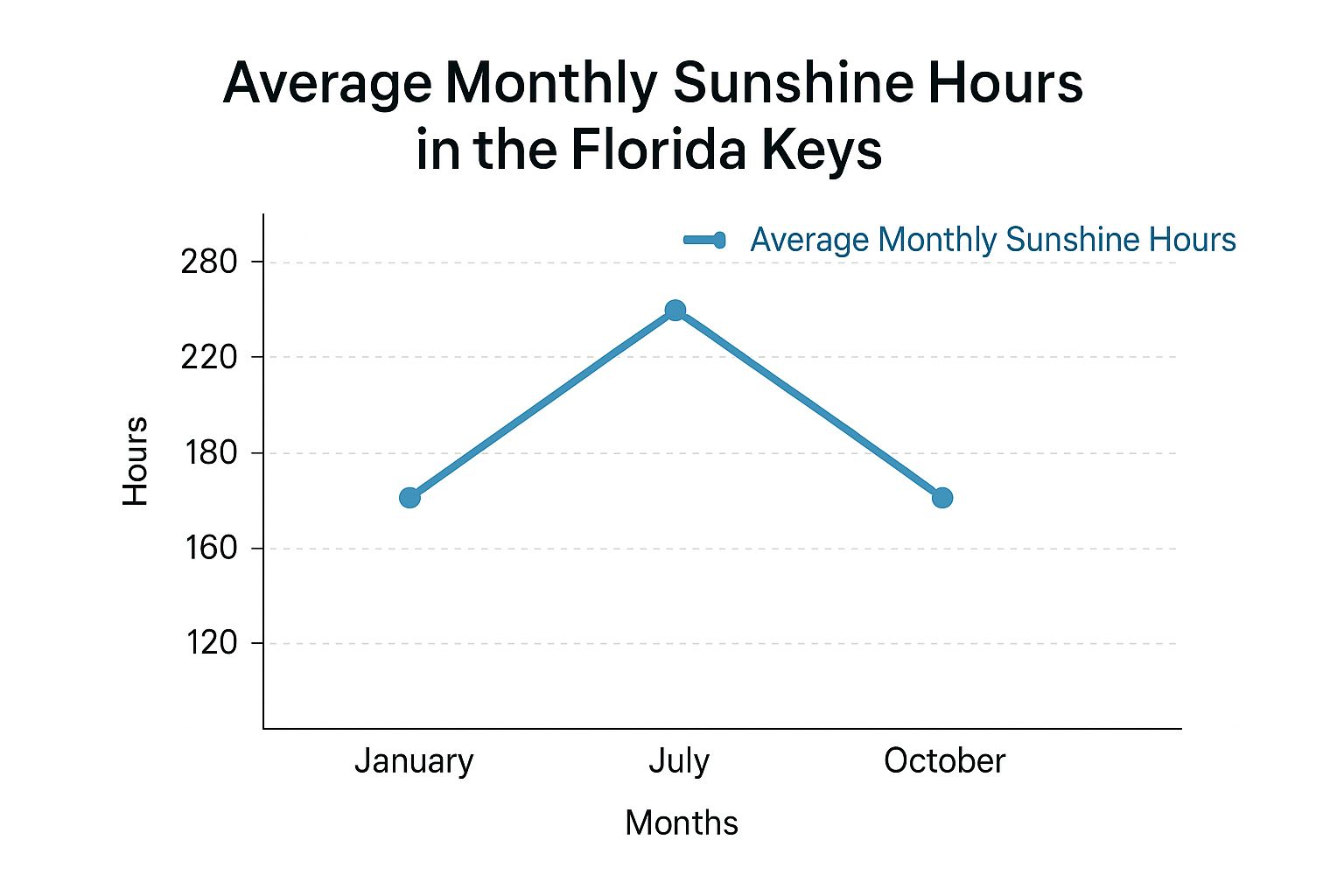
This chart shows that even though it's the rainy season, you still get a good amount of sunshine. While it's less than the peak summer months, October still offers plenty of bright, beautiful hours for your trip.
The Upside: Lower Prices And Fewer Crowds
So, with all this talk of rain and storms, why would anyone visit now? The answer is simple: massive savings and blissful quiet. September and October are, without a doubt, the most affordable months to visit the Florida Keys.
This is the ultimate off-season. You’ll find the lowest prices on accommodations and activities, and you'll experience the islands with a tranquility that's impossible to find during the bustling winter months.
If you’re a budget-savvy traveler who doesn’t mind a bit of unpredictability, this can be the perfect time for a laid-back escape. You’ll enjoy popular restaurants, beaches, and attractions without the long lines and packed crowds, giving your vacation a much more personal and relaxed feel.
Answering Your Florida Keys Weather Questions

Alright, let's wrap this up by tackling some of the most common questions travelers have about the weather in the Florida Keys. Getting these sorted out will help you lock in the perfect time for your trip with total confidence.
What Is The Absolute Best Month To Visit?
If you ask locals and seasoned visitors, most will point you toward March and April. It's the real sweet spot. You're still getting those gorgeous, sunny dry-season skies, but the ocean has had a chance to warm up nicely after the brief winter chill.
It’s just about the perfect balance of incredible weather before the summer humidity really kicks in.
How Serious Is Hurricane Season?
Hurricane season officially runs from June 1st to November 30th, but the real peak risk is between mid-August and late September. Let's be real: a direct hit on any given week is statistically unlikely, but it's something you have to take seriously.
The good news is that modern forecasting gives you plenty of warning, so having some flexibility in your plans is a smart move. If you book a trip during these months, getting travel insurance is highly recommended.
When Is The Water Warmest For Snorkeling?
For water that feels like a bathtub, you'll want to plan your trip between June and September. The ocean temperatures consistently hit the mid-to-high 80s (°F) during this time.
It's absolutely perfect for spending hours in the water snorkeling without even thinking about a wetsuit. For a deeper dive into the year-round patterns, check out our guide to the ocean temperature in Marathon, FL.
November is a fantastic and often overlooked month to visit. It’s a wonderful "shoulder season" offering beautiful weather, lower humidity, and fewer people right before the peak winter crowds descend in December.
This transitional month gives you a great shot at enjoying the tail end of the warm water with a much lower chance of rain. You really get the best of both worlds.
Ready to experience this amazing weather and the crystal-clear water for yourself? Come join Snorkeling Marathon And Sunset Cruise for an unforgettable adventure out to the reef. Book your trip today at https://snorkelingmarathon.com