
Your Ultimate Guide to Snorkeling Marathon FL

Welcome to the heart of the Florida Keys, where the turquoise water hides some of America's most incredible underwater worlds. Marathon is famous for its crystal-clear visibility and super accessible coral reefs, making it a perfect spot for snorkelers of any skill level. Think of this guide as your complete roadmap to the absolute best snorkeling Marathon FL has to offer.
Why Marathon is a Snorkeling Paradise
Tucked right into the middle of the Florida Keys, Marathon is so much more than just a chain of islands—it's an aquatic sanctuary. Unlike a lot of other coastal spots, Marathon's most amazing marine life isn't miles offshore. Instead, it’s thriving in protected, shallow reefs that are just a quick boat ride away.
This unique geography, kissed by the warm currents of the Gulf Stream, creates a stable and inviting home for a wild variety of sea creatures. The result? A snorkeler’s dream come true: calm, warm waters absolutely teeming with life.
The Heart of the Florida Reef Tract
Marathon sits right alongside the Florida Reef Tract, which happens to be the only living coral barrier reef in the continental United States. This massive underwater ecosystem is what truly sets the snorkeling experience here apart from anywhere else.
This infographic gives you a quick visual of why Marathon is such a top-tier snorkeling destination.
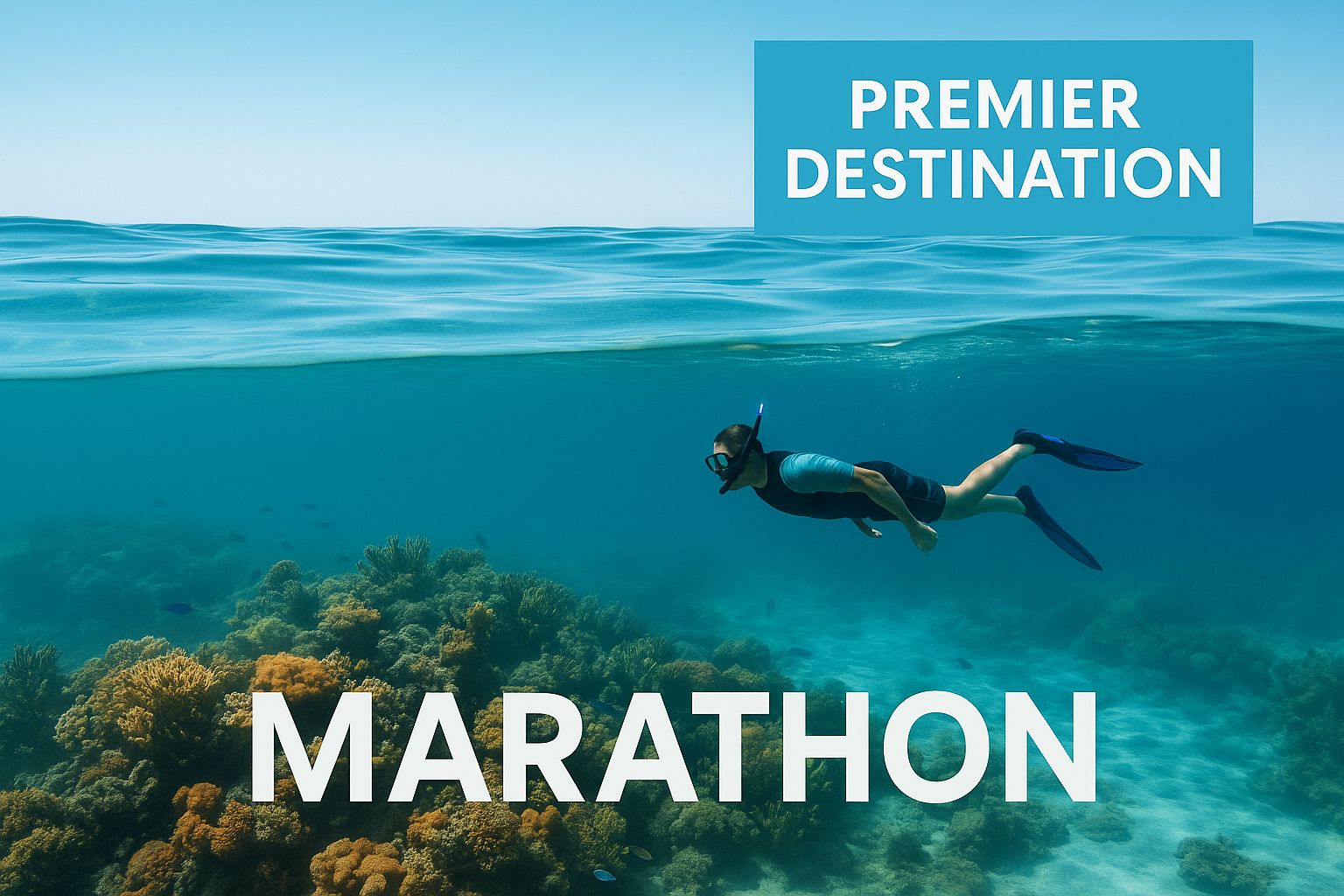
The image really nails the essence of a Marathon snorkeling trip—clear water, healthy coral, and tons of marine life just waiting for you to jump in.
This vital role in marine tourism also makes a big difference locally. In Southeast Florida, snorkeling and diving bring in roughly $902 million a year to the economy. Monroe County, where Marathon is located, accounts for $149 million of that and supports over 1,700 jobs. It feels good knowing your adventure helps support the community.
What makes Marathon special is the perfect balance it strikes. It offers the epic biodiversity of a major reef system while maintaining the calm, shallow conditions ideal for beginners and families.
Beyond the reefs, the area has a ton of other activities both on and off the water. For a complete look at everything the area has to offer, check out our guide on the top things to do in Marathon, Florida Keys. This mix of natural beauty and fun attractions is what makes Marathon a truly exceptional place to visit.
Discovering Marathon's Top Snorkeling Hotspots
Marathon's underwater world is a patchwork of incredible reefs and picture-perfect sandbars, each offering a totally different glimpse into the Florida Keys marine life. Knowing where to dip your fins is everything, whether you're a seasoned pro or trying on a mask for the first time. Let's dive into the absolute must-see spots.
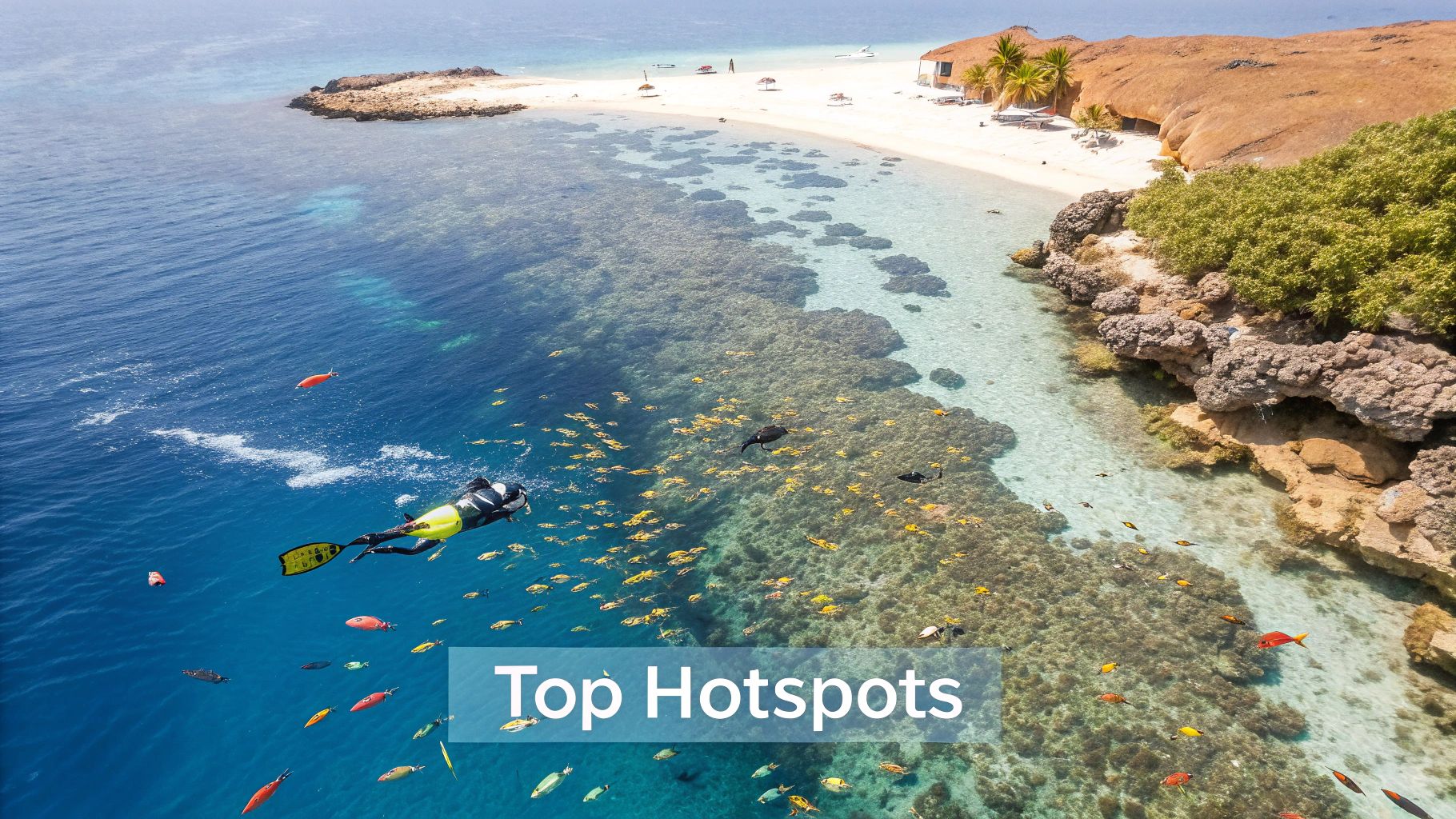
First up, the undisputed king of Marathon snorkeling: Sombrero Reef. You can't miss it. Just look for the iconic black-and-white lighthouse a few miles offshore. This place is a federally protected Sanctuary Preservation Area, and for good reason—it’s home to some of the most stunning coral formations you'll find anywhere in the Keys.
Think of it as a bustling underwater city. You’ll be swimming through incredible coral canyons teeming with curious parrotfish, graceful angelfish, and massive schools of yellowtail snapper. The sheer volume of fish is astounding; it feels like you've been dropped into a giant, living aquarium. If you want the full scoop, check out our complete guide to snorkeling at Sombrero Reef.
Beyond The Famous Lighthouse
While Sombrero Reef rightfully steals the spotlight, the adventure doesn't end there. A few other reefs have their own unique personalities and marine residents, making them crucial stops for anyone serious about snorkeling Marathon FL. These spots are often less crowded, giving you a more personal experience with the ocean.
One of my personal favorites is Coffins Patch, which is actually a string of six separate patch reefs. It's known for being shallow and calm, which makes it absolutely perfect for families and beginners just getting their sea legs. The coral heads rise up from the sand, creating perfect little hideouts for spiny lobsters and moray eels.
Another fantastic option is Delta Shoal. This spot is a bit deeper than Coffins Patch and has these dramatic spur-and-groove formations that are just incredible to see. You're more likely to spot larger animals here, like nurse sharks snoozing on the seafloor or elegant eagle rays gliding by.
Quick Guide to Marathon Snorkeling Locations
To help you pick the perfect spot for your adventure, here’s a quick rundown of Marathon’s best snorkeling locations.
| Location | Best For | Typical Depth | Marine Life Highlights |
|---|---|---|---|
| Sombrero Reef | All skill levels, amazing biodiversity | 5-25 feet | Parrotfish, turtles, angelfish, large snapper schools |
| Coffins Patch | Beginners and families, calm waters | 5-15 feet | Lobster, smaller reef fish, vibrant soft corals |
| Delta Shoal | Intermediate snorkelers, larger life | 10-30 feet | Nurse sharks, stingrays, impressive coral structures |
This table is a great starting point, but always remember that ocean conditions are the real boss. Any good boat captain will check the day's visibility and currents to take you to the best possible spot for your trip.
The Charm Of Local Sandbars
Looking for a totally different vibe? Marathon's local sandbars offer a super relaxed and easy way to get in the water. These shallow, sandy hangouts are perfect for a laid-back afternoon, especially if you prefer to chill out in calm, waist-deep water instead of heading offshore.
The most popular spot is Valhalla Sandbar, which everyone just calls the Marathon Sandbar. On a sunny day, it turns into a social hub where boats anchor up and people just wade in the crystal-clear water. You won't find the dramatic coral of the main reefs, but it’s far from empty.
Sandbars are the nurseries and playgrounds of the ocean. The shallow, protected waters are perfect for observing juvenile fish, crabs, and starfish in a low-pressure environment, making it an excellent learning ground for new snorkelers.
While you're poking around the sandbar, keep an eye out for:
- Conchs and Whelks: You'll often see these big sea snails cruising slowly across the sandy bottom.
- Cushion Sea Stars: Look for these puffy, five-armed starfish, especially in the grassy areas nearby.
- Small Reef Fish: Tiny grunts and snappers use the grassy patches for cover, making it a great place to see baby fish.
This kind of shallow-water exploring is fantastic for building confidence. It lets you get comfortable with your gear and breathing without the mental hurdle of being in deep, open water, making it the perfect first step before you tackle a world-class spot like Sombrero Reef.
Choosing the Best Time for Your Snorkeling Adventure
Timing is everything when you're planning the perfect snorkel trip. Think of the ocean here as a living, breathing thing—its mood and clarity can shift with the seasons, the weather, and even the time of day. Nailing the right moment to dive in is the difference between a pretty good day and a totally unforgettable underwater adventure.
Marathon has a huge advantage thanks to the warm, gentle currents of the Gulf Stream. This natural thermostat keeps our ocean temperatures incredibly pleasant all year long, so the water rarely gets too chilly for a swim. It’s the perfect welcome mat for both marine life and snorkelers.
Peak Season Summer Snorkeling
Summer, from June through August, is without a doubt the peak season for snorkeling Marathon FL. During these months, the ocean feels like a warm, calm swimming pool. Water temperatures often climb into the mid to upper 80s Fahrenheit. These bathtub-like conditions are perfect for long, lazy snorkeling sessions without ever thinking about a wetsuit.
The calm weather patterns typical of summer often lead to glass-like seas and phenomenal water clarity. With the sun high overhead, its rays cut deep into the water, lighting up the vibrant colors of the coral reefs and the fish that call them home. This is when the underwater world truly puts on its most brilliant show.
The combination of warm water and exceptional visibility makes summer the gold standard for snorkeling. It’s the ideal time for beginners to build confidence and for photographers to capture stunning, crystal-clear images of the reef.
Of course, summer is also the most popular time for tourists. If you’d rather have a quieter experience, you might want to look at the shoulder seasons. They have their own unique perks.
The Secrets of Spring and Fall
The shoulder seasons—spring (March to May) and fall (September to November)—are often considered the sweet spot by folks who know the Keys well. During these months, you get fantastic snorkeling conditions with way fewer boats on the water.
Water temperatures stay very comfortable, usually hovering in the mid-70s to low 80s. You might want a thin rash guard on cooler days, but the conditions are still absolutely ideal for exploring the reefs.
- Spring: This season is known for exceptionally clear water and calm days before the summer humidity really kicks in.
- Fall: After the peak summer heat, the water is still incredibly warm, and the crowds have thinned out, offering a much more peaceful experience.
These periods strike a perfect balance of great weather and a more laid-back vibe. For a deeper dive into the specific weather patterns and local happenings, our guide on the best time to visit the Florida Keys has all the details you need to pick the perfect window for your trip.
Gearing Up for a Safe and Responsible Snorkel Trip
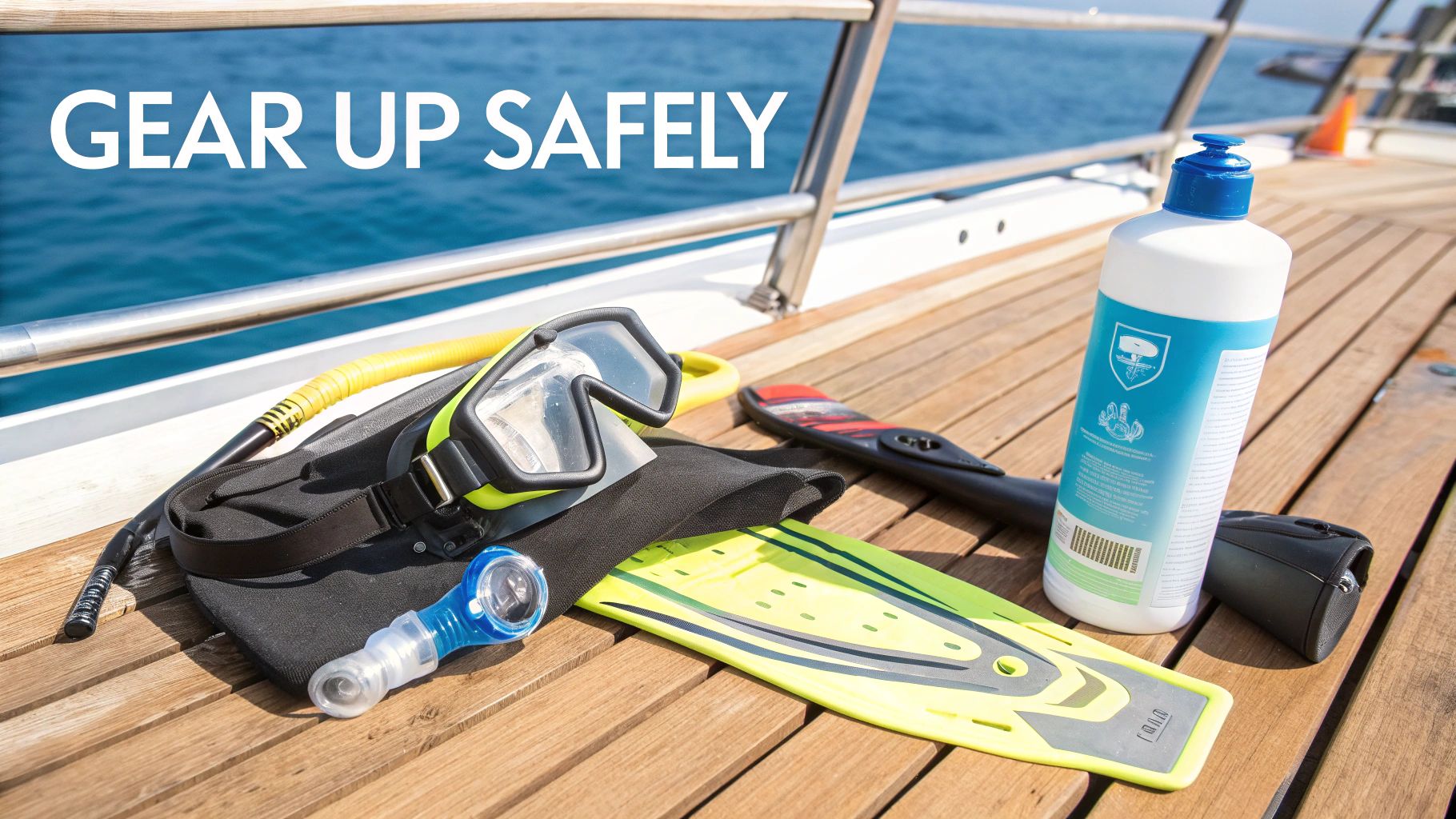
A fantastic day on the water starts long before you ever dip a toe in. The secret to an unforgettable snorkeling trip in Marathon isn't just finding the right spot—it's all about preparation. It turns a good day into a truly amazing one.
This is about more than just having the right equipment. It's about bringing the right mindset to explore the underwater world safely and responsibly. Getting ready is a huge part of the adventure, from making sure your mask fits just right to understanding your role as a visitor to a fragile ecosystem.
Your Essential Snorkeling Kit
The classic trio—mask, snorkel, and fins—is the foundation of any snorkeling adventure. But the quality and, more importantly, the fit of each piece can make or break your day. Think of your gear as your personal window to the ocean; a clear, comfortable view changes everything.
A leaky mask is more than an annoyance; it's a trip-ruiner. Same goes for fins that are too tight or so loose they feel like you're kicking with floppy clown shoes. Test your gear beforehand to make sure it's up to the task.
Beyond the big three, a few other items are non-negotiable for a day out in the Keys:
- Reef-Safe Sunscreen: This is an absolute must. Your average sunscreen is loaded with chemicals like oxybenzone that are incredibly toxic to coral. Always grab a mineral-based sunscreen with zinc oxide or titanium dioxide to protect your skin and the reef.
- Dive Flag: In Florida, this isn't a suggestion—it's the law. Anytime someone is in the water, a dive flag has to be flying on your boat. It’s a bright red flag with a white diagonal stripe that tells other boaters to steer clear, keeping everyone safe.
- Rash Guard or Sun Shirt: A long-sleeve rash guard is your best friend out here. It provides awesome sun protection (meaning less sunscreen you have to cake on) and can save you from a minor jellyfish sting or a scrape against a rope.
The Safety Mindset
Having the right gear is only half the battle. The single most important tool you can bring is a healthy respect for the ocean and a safety-first attitude. The water is beautiful, but it's also powerful and unpredictable.
The buddy system is the golden rule of snorkeling. Never, ever go alone. Always have a partner, stick together, and keep an eye on each other.
Before you even think about jumping in, take a minute. Look at the water. How strong is the current? Which way is it moving? A light current can give you a lazy, relaxing drift snorkel, but a strong one can get you into trouble fast if you're not paying attention.
For a complete rundown on being prepared, check out our full list of essential snorkeling safety tips. It’s worth the read.
Becoming a Steward of the Reef
Being a responsible snorkeler means looking out for more than just yourself. It’s about protecting the very reason you’re out here—that incredible, living underwater world. Marathon’s coral reefs are stunning, but they are also incredibly fragile.
The number one rule is simple: look, but don't touch. Never stand on, kick, or grab the coral. The tiny living polyps that build these massive structures can be killed by a single careless touch.
It’s also crucial to give the local residents their space. Chasing after a sea turtle for a selfie or cornering a parrotfish just stresses them out. Observe from a respectful distance, and you'll be rewarded with a much more natural and magical experience. By following these simple rules, you're doing your part to make sure these reefs stay vibrant for generations to come.
Finding the Perfect Marathon Snorkeling Tour
For most of us, the golden ticket to Marathon's incredible offshore reefs is a guided tour. A boat is pretty much the only way you're getting out to protected spots like Sombrero Reef, and honestly, picking the right tour company can make or break your day. It’s the first real step of your underwater adventure.
Think of it like choosing your ride for a road trip. A big, lively catamaran with music blasting and drinks flowing is the party bus—perfect if you're with a fun-loving group. On the other hand, a small six-passenger private charter is more like a luxury SUV. It offers a quiet, personal, and totally flexible journey that’s all about you.
Your perfect trip really just boils down to the kind of experience you're after. The trick is to ask the right questions before you hand over your cash.
Questions to Ask Before You Book
Trust me, not all snorkeling tours are created equal. To find the one that fits you best, you’ve got to get into the nitty-gritty details. Any tour company worth its salt will be happy to answer your questions and make sure their trip is exactly what you're looking for.
Here are the must-ask questions for any tour operator:
- Which reefs will we visit? Some trips have a set destination, while others let the captain pick the best spot based on that day's wind and water clarity.
- How long is the actual time in the water? A three-hour tour doesn't mean three hours of snorkeling. You have to account for the boat ride to and from the reef to know how much time you'll really get to explore.
- What’s included in the price? Does the fee cover good-quality masks, snorkels, fins, and a floaty noodle? Are drinks and snacks on the house, or should you pack your own?
- What is the group size? Knowing the maximum number of people on the boat helps you figure out if you’re signing up for an intimate experience or a bigger party.
A great guide does more than just drive the boat; they are your underwater interpreters. They can point out a hidden lobster, identify a colorful parrotfish, and share fascinating insights about the reef's ecosystem, adding a rich layer of discovery to your trip.
It's no secret that people love getting in the water. The US diving and snorkeling tourism market is projected to hit around $1.59 billion by 2035, which just shows how much people value quality underwater experiences. It also highlights why picking a knowledgeable, conservation-minded operator in a hotspot like Marathon is so important.
Private Charters Versus Group Trips
Your choice between a private charter and a public group trip will completely shape your day on the water. Each has its own vibe, so it’s worth thinking about what matters most to your crew. A private tour gives you total freedom, while a group trip is more structured and often easier on the wallet.
To get a feel for the different options out there, you might want to check out various Marathon snorkeling tours and see what they offer.
Here’s a quick breakdown to help you decide:
| Feature | Private Charter | Public Group Trip |
|---|---|---|
| Flexibility | High (your schedule, your spots) | Low (fixed schedule and destinations) |
| Cost | Higher per-trip price | Lower per-person price |
| Experience | Personalized, intimate, and quiet | Social, structured, and energetic |
| Best For | Families, experienced snorkelers, photographers | Solo travelers, couples, budget-conscious groups |
At the end of the day, it comes down to your budget and the kind of atmosphere you want. For a deep dive into operators who are fantastic at both private and group trips, take a look at our guide to the best recommended Marathon snorkeling tours. Getting this choice right is the final step to making sure your snorkeling trip is a true highlight of your Florida Keys vacation.
Answering Your Top Snorkeling Questions
As you gear up for your underwater adventure, you've probably got a few questions floating around. Let's clear the water and dive into the most common things people ask before snorkeling in Marathon. Think of this as your quick guide to getting confident and ready to go.
Can I Snorkel Directly from the Shore in Marathon?
This is a big one, and the short answer is yes… but with a catch. You can definitely get your fins wet right from the shore at places like Sombrero Beach. It’s perfect for first-timers or families with little ones who want to test out their gear in calm, shallow water. You’ll spot some small fish and crabs darting through the seagrass beds.
However, to get the full, mind-blowing experience that makes snorkeling Marathon FL so famous, you have to head offshore by boat. The real magic—the vibrant coral canyons, the massive schools of fish, the whole underwater city—is out at protected spots like Sombrero Reef and Coffins Patch.
Think of it this way: shore snorkeling is like a fantastic appetizer that gives you a taste of what’s to come. The main course, with all its incredible flavors, is served up at the offshore reefs.
What Marine Life Can I Expect to See?
Get ready for an incredible show! The waters around Marathon are part of the protected Florida Keys National Marine Sanctuary, which means they are absolutely packed with life. Every trip is different, but you’re almost guaranteed to meet some of the colorful locals.
Keep an eye out for these regulars:
- Parrotfish: These guys are the reef’s landscapers, constantly munching on algae. You can actually hear their beaks crunching on the coral!
- Angelfish: Queen and French angelfish are just as elegant as they sound, gliding through the coral with incredible grace.
- Yellowtail Snapper: You’ll often find these guys hanging out in huge, shimmering schools that move like a single silver cloud.
- Sea Turtles: Spotting a loggerhead or green sea turtle is a truly unforgettable moment. Watching them swim so effortlessly is pure magic and incredibly common out here.
Peer into the nooks and crannies of the reef, and you might also find spiny lobsters hiding out, stingrays cruising over the sand, or even a shy moray eel peeking out to say hello.
Do I Need Experience to Snorkel in Marathon?
Not at all! Marathon is one of the best places on the planet for beginners. The combination of shallow, calm reefs and amazing tour guides makes for a stress-free learning curve. You don’t need any experience to have an incredible time.
Our tour captains and crew are fantastic teachers. Before you even get in the water, they'll give you a quick rundown on how to use the gear and offer up some pro tips. They also provide flotation vests or pool noodles, so you can just float on the surface without a care in the world and focus on the amazing world below. Plus, the captains are experts at reading the weather and always pick the calmest, clearest spot for the day.
Why is Reef-Safe Sunscreen So Important?
This question is a crucial one because the answer directly affects the health of the beautiful reefs you’re here to see. Coral isn't a rock; it's a living colony of tiny animals called polyps, and they are extremely sensitive.
Most common sunscreens contain chemicals like oxybenzone and octinoxate, which act like poison to coral. When these chemicals wash off your skin, they can cause coral bleaching, disrupt reproduction, and seriously damage the entire ecosystem.
By simply choosing a reef-safe, mineral-based sunscreen (look for zinc oxide or titanium dioxide), you become part of the solution. These minerals form a physical block on your skin instead of a chemical one and don't harm marine life. An even better choice? Wear a long-sleeved rash guard. It drastically cuts down on how much sunscreen you need to apply in the first place. It’s a small change for you that makes a huge difference in protecting Marathon’s underwater paradise for years to come. For more details on protecting yourself and the ocean, see our guide on snorkeling safety tips.
Ready to make some memories? At Marathon Snorkeling And Sunset Cruise, we run the best-guided tours to the most stunning reefs and sandbars in the Keys. We offer the lowest passenger-to-crew ratios in Marathon, and our team has been voted Best Watersports two years running. We promise a safe, personal, and unforgettable adventure. Book your trip with us today and see the magic for yourself