
A Traveler’s Guide to Sustainable Tourism Practices

When we talk about sustainable tourism, we’re really talking about making travel choices that leave a place better than we found it—or at least, just as good. Think of it as being a thoughtful guest. You get to enjoy an amazing destination while also helping to protect its natural beauty, unique culture, and local community for everyone who comes after you.
What Are Sustainable Tourism Practices
Picture yourself snorkeling over a vibrant coral reef, absolutely mesmerized by the explosion of color and marine life. Now, imagine coming back a few years later to find that same reef bleached and lifeless. That stark contrast is exactly why sustainable tourism practices are so important. It’s a shift in mindset, moving travel from something we just consume to something that can actually be regenerative.
At its heart, this whole idea is about balance. It’s about recognizing that every single trip we take creates ripples. The choices we make—where we stay, what we eat, the tours we book—can either drain a destination's precious resources or help them flourish. The good news? Sustainable travel isn’t about giving up the fun. It’s about making it better by connecting more deeply and respectfully with the places we visit.
The Three Pillars of Sustainability
To really get a handle on this, it helps to break it down into three core pillars. These aren't separate ideas; they're interconnected pieces that work together to make sure tourism is a win for everyone involved—the travelers, the local residents, and the planet itself. The whole point is to create a travel model that can last for the long haul.
This infographic lays out the core components of sustainable tourism perfectly.
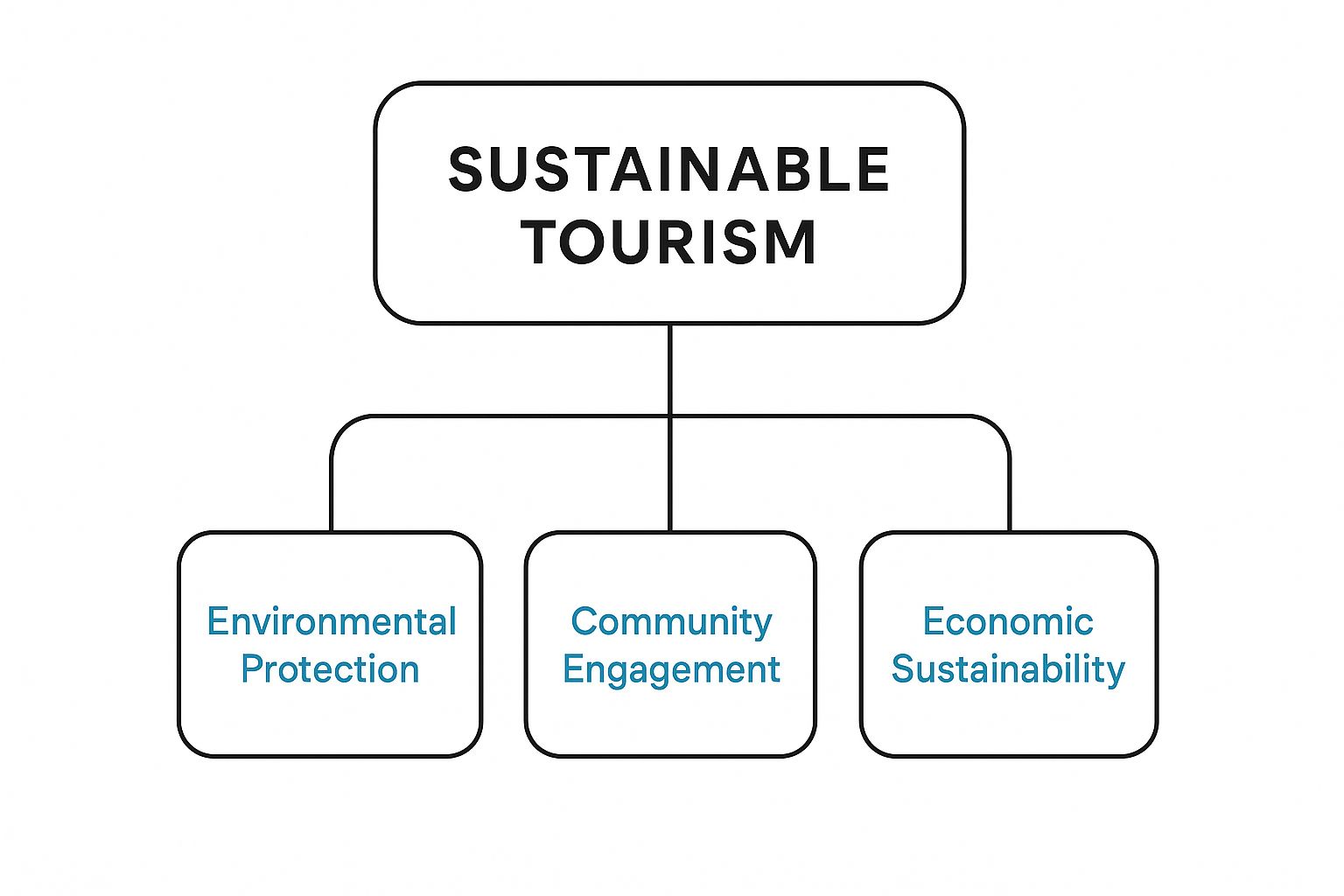
As you can see, the environmental, community, and economic factors are all equal and essential parts of the bigger picture.
Let's unpack what each of these pillars looks like in the real world. A great way to visualize this is through a simple table that shows the principle and a practical action you can take as a traveler.
The Three Pillars of Sustainable Tourism
| Pillar | Core Principle | Example Action for Travelers |
|---|---|---|
| Environmental Protection | Minimizing your ecological footprint and actively protecting local biodiversity. | Choosing a tour operator that uses reef-safe sunscreen and avoids single-use plastics. |
| Community Engagement (Social) | Respecting local cultures, traditions, and heritage in a positive, non-disruptive way. | Visiting a local artisan market to learn about traditional crafts directly from the makers. |
| Economic Sustainability | Ensuring your travel spending directly supports and benefits the local economy. | Eating at family-owned restaurants and hiring local guides for excursions. |
By keeping these three pillars in mind, your travels transform into a powerful force for good. You’re no longer just a visitor passing through; you become a partner in preserving what makes a destination so special in the first place.
This balanced approach ensures that incredible places don't just survive tourism—they thrive because of it, making them just as amazing for the next generation to enjoy.
To dive deeper into this foundational concept, check out our detailed guide on what is sustainable tourism.
Why Responsible Travel Is Gaining Momentum

Let's be honest: sustainable travel used to feel like a niche interest, something only for the most hardcore eco-warriors. Not anymore. It's exploded into a full-blown global movement, and it’s about way more than just reusable water bottles.
This shift isn't just a fleeting trend. It comes from a real, collective awakening about our impact on the planet. Travelers are smarter and more conscious than ever, realizing that every dollar they spend and every choice they make leaves a footprint on the places they’ve come to love.
A Surge in Conscious Consumerism
Today's traveler votes with their wallet, and they're actively looking for hotels, tour operators, and experiences that do good. It’s not just about feeling virtuous; it's about using their spending power to spark real, positive change.
Think about it. When a tour company right here in Marathon, FL, makes a point to hire local guides and champion coral reef protection, it proves that sustainable tourism practices aren't just the right thing to do—they're also great for business. This demand from consumers is pushing the entire industry to step up its game, from hotels bragging about water conservation to airlines investing in more fuel-efficient planes. The market has spoken: responsibility sells.
The numbers don't lie. The global sustainable tourism market was valued at an incredible USD 3.56 trillion in 2025. It's projected to soar to around USD 11.39 trillion by 2034, growing at a staggering rate of 11.39% each year.
That’s a massive economic wave. As this market keeps growing, it gives more and more businesses a powerful reason to go green. If you're curious about the details, you can read the full analysis on this market growth and see just how big this movement has become.
The Quest for Authentic Experiences
Beyond the environmental angle, travelers are just plain tired of cookie-cutter vacations. The days of generic, mass-produced trips are fading fast. People now crave genuine connection—sharing a meal with a local family, learning a traditional skill, or finding that hidden spot only a community guide knows about.
These are the kinds of unique, unforgettable moments that sustainable tourism naturally creates. When you choose to support locally-owned businesses, you’re doing more than just boosting the economy. You're opening the door to a richer, more immersive experience that the big international chains could never replicate.
- Community-Led Conservation: Up in North America, Indigenous communities are now leading tours that weave together ancient storytelling with ecological preservation, offering a powerful window into their culture.
- Eco-Innovations in Asia: From solar-powered resorts in the Maldives to farm-to-table restaurants in Thailand, the region is becoming a hotbed for creative sustainability.
- Local Focus in the Keys: Here in Marathon, opting for a smaller, local snorkel trip gives you a far more personal adventure while putting less pressure on our fragile coral reefs.
Even the little things, like being prepared for your day on the water, make a difference. Showing up ready for a boat trip means a smoother, more enjoyable time for everyone and less potential disruption to the marine environment. For some great tips, check out our guide on how to prevent motion sickness.
The Urgency of Now
At the end of the day, what's really driving this momentum is a shared sense of urgency. We can all see the impacts of climate change and over-tourism on the world's most incredible places. With that awareness comes a responsibility to protect them.
The great news? Every single traveler can be part of the solution. By making thoughtful choices and backing businesses committed to sustainable tourism practices, we collectively ensure the places we love will be around for future generations to explore. It’s not just about saving the planet—it’s about making our own travels richer and more meaningful in the process.
Actionable Sustainable Practices for Your Next Trip
Making a real difference doesn't mean you have to completely reinvent how you travel. It’s actually about the small, thoughtful choices you make along the way—choices that, when added up, create a massive positive ripple effect.
The easiest way to get started with sustainable tourism practices is to break your trip down into three simple stages. Thinking about it this way—before you go, while you're there, and after you get back—makes it much less overwhelming and helps build good habits for every future adventure.
Smart Planning Before You Leave Home
The groundwork for a truly great, sustainable trip is laid long before you even lock your front door. A little bit of planning upfront can seriously shrink your footprint and pave the way for a much richer experience.
Start with packing smarter, not harder. One of the simplest moves you can make is tucking a reusable water bottle and shopping bag into your suitcase. This single habit can dramatically reduce single-use plastic, which is a huge problem for coastal communities like ours in the Florida Keys.
Beyond that, think about what you're packing. Knowing what to bring on a boat trip, for instance, means bringing the right kind of sun protection. Using reef-safe sunscreen isn't just a suggestion; it’s a critical step in protecting the fragile coral ecosystems that make this place so special.
Finally, do a little digging on where you'll stay and who you'll book your adventures with. Try to find businesses that are locally owned and operated. When you spend your money with locals, it stays right here in the community, supporting the families who call this amazing place home.
Making Conscious Choices During Your Trip
Once you've arrived, your daily decisions are your superpower. This is where your good intentions turn into real-world actions, and honestly, they usually make your trip even better.
Get into the habit of conserving resources. Be mindful of how much water and electricity you’re using in your hotel room. Flick off the lights and A/C when you head out, and maybe cut your shower short by a minute or two. These little things reflect the resource-conscious mindset of island communities where essentials like fresh water are truly precious.
Next up: eat and shop local. Ditch the big chain restaurants you can find anywhere and hunt down the small, family-run spots. You’ll not only get a taste of authentic local food, but your money will go directly to a local family. The same goes for souvenirs—buy handcrafted goods from local artisans instead of the mass-produced stuff.
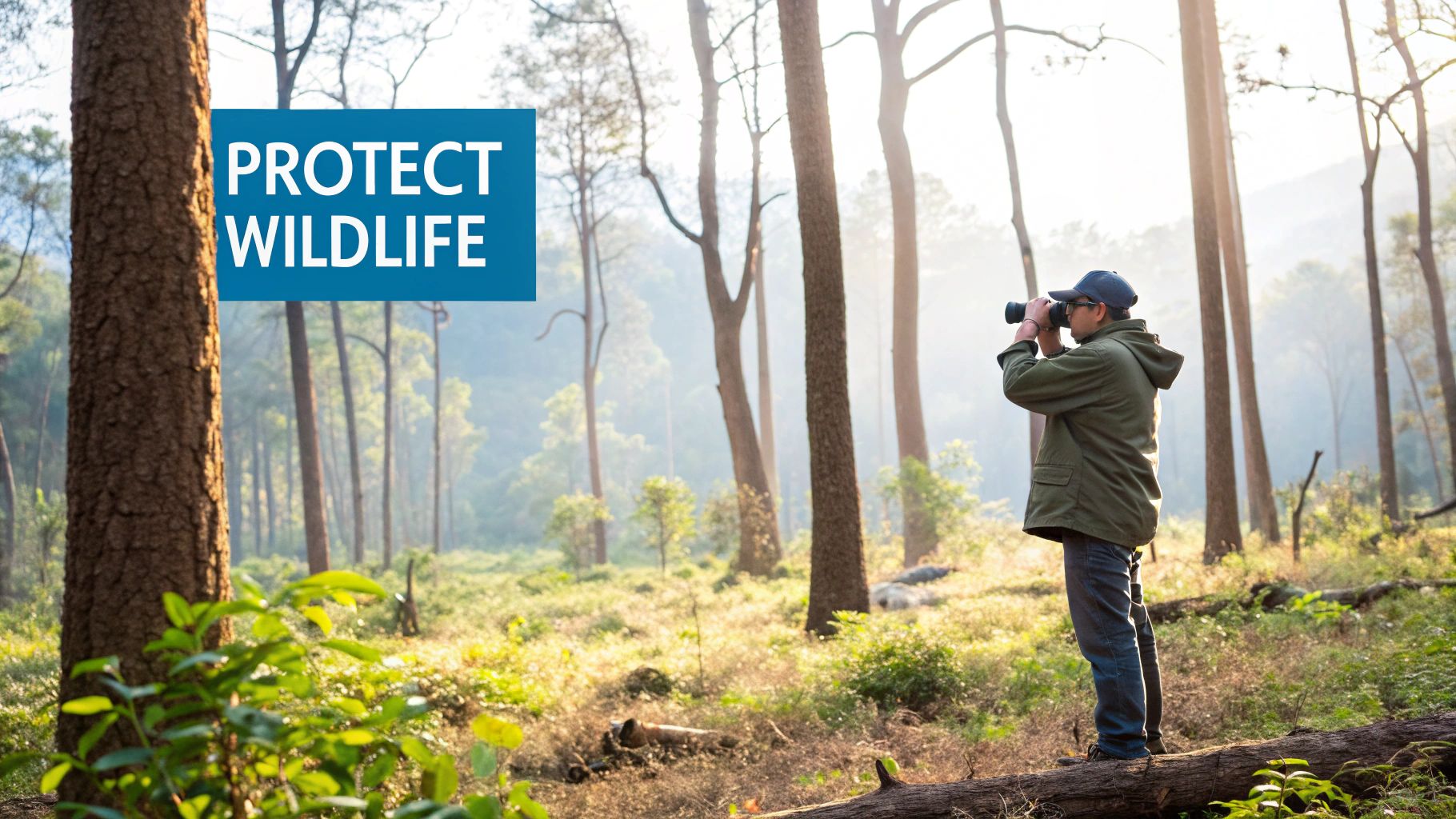
Respecting wildlife is non-negotiable. Always keep a safe, respectful distance from animals in their natural habitat. Never, ever feed them. It messes with their natural instincts and can make them dangerously dependent on humans.
When looking at tours, especially anything involving marine life, do your homework. Choose operators who run ethical marine wildlife tours, such as swimming with whales and put the animals' well-being first. Supporting companies with strict ethical guidelines ensures these incredible encounters are possible for generations to come.
To make these choices easier, here’s a quick rundown of simple swaps you can make.
Sustainable Choices At-a-Glance
| Conventional Habit | Sustainable Alternative | Impact |
|---|---|---|
| Buying single-use plastic water bottles | Using a reusable water bottle | Reduces plastic waste and pollution. |
| Using conventional sunscreen | Choosing reef-safe sunscreen | Protects coral reefs from harmful chemicals. |
| Dining at international chain restaurants | Eating at locally-owned eateries | Supports the local economy and community. |
| Staying at large corporate hotels | Booking with local inns or guesthouses | Keeps tourism dollars within the destination. |
| Feeding wildlife for a photo op | Observing from a respectful distance | Prevents harm to animals and their habitats. |
| Buying mass-produced souvenirs | Purchasing goods from local artisans | Supports local culture and craftsmanship. |
Seeing it side-by-side really shows how small shifts in our behavior can lead to big, positive changes.
Meaningful Actions After You Return
Think the trip's over once you've unpacked? Not quite. Your role as a sustainable traveler continues, shifting from personal action to powerful influence.
Take a few minutes to give some thoughtful feedback. If you had an amazing experience with a hotel that was crushing its sustainability goals or a tour guide who was passionate about conservation, leave a glowing online review. Be specific! Mentioning what they did right helps other travelers find them. If you saw room for improvement, a polite, private email can be a great way to offer constructive suggestions.
Most importantly, share your stories. Tell your friends and family about that incredible little restaurant or the small tour company that gave you a respectful and unforgettable snorkeling trip. A personal recommendation is way more powerful than any ad. Your enthusiasm can inspire others to adopt their own sustainable tourism practices, helping the entire responsible travel movement grow.
At the end of the day, sustainable travel isn’t a checklist you complete. It’s a journey of continuous learning, where every trip is a chance to do a little better and connect more deeply with the beautiful world around us.
How to Support Local Communities and Economies
True sustainable tourism isn’t just about protecting the environment. It runs much deeper, weaving into the very fabric of the places we visit and enriching the lives of the people who call them home.
Every choice you make—where you eat, what you buy, who you book with—sends ripples through the local economy. It can either strengthen a community or strain it. By being intentional about where your money goes, you can turn your vacation into a powerful force for good.
Think of your travel budget as a handful of seeds. When you spend it all at a huge, foreign-owned resort, most of those seeds get swept away, leaving very little to nourish the local soil. But when you shop and eat locally, you’re planting those seeds right where they belong. They grow, flourish, and support local families for years to come.
This is the economic pillar of sustainable tourism practices in action. It’s all about making sure the perks of tourism flow directly to the folks preserving the culture and protecting the natural wonders you traveled so far to see.
Putting Your Money Where the Heart Is
Supporting the local economy is one of the easiest and most satisfying ways to travel responsibly. It’s a simple strategy with a huge payoff, and honestly, it almost always leads to better, more authentic experiences anyway.
Start with your adventures. In a place like Marathon, FL, choosing a smaller, family-run snorkel operator means your money supports guides with a real, personal connection to these waters. Not only does this keep your cash in the community, but you usually get a more personal and educational trip out of it. These guides are passionate about protecting their own backyard. To really get it, you need to understand what is a coral reef ecosystem and see why its health is so critical to everyone in the Florida Keys.
This idea applies to everything. Instead of hitting a familiar chain restaurant, ask a local for their favorite mom-and-pop spot. Ditch the generic t-shirt and buy a unique, handcrafted souvenir directly from the person who made it.
- Look for Authenticity: Find businesses that are proud of their local culture, whether it's through their food, decor, or the stories they tell.
- Ask Questions: Don't be shy! Chat with business owners about their connection to the area. Their passion is usually infectious.
- Choose People Over Polish: Opt for experiences led by local guides who can offer genuine insights you’ll never find in a guidebook.
Engaging with Culture Respectfully
Sustainable travel is a two-way street. While you’re boosting the economy, you also have a responsibility to interact with the local culture in a way that’s respectful and positive. This social side of things ensures your visit is a welcome one, not a burden.
The goal is to be a guest, not just a consumer. This means showing genuine curiosity, honoring local customs, and recognizing that you are visiting someone's home. It’s about creating connections built on mutual respect.
This can be as simple as learning a few words in the local language, dressing a bit more modestly when visiting cultural sites, or just asking permission before snapping someone’s picture. These small gestures go a long way in showing you value the culture beyond its role as a tourist attraction.
Beyond just food, seeking out local experiences like wine tours can significantly benefit regional economies and help maintain traditional crafts. For instance, exploring some of the best Cyprus wine tours helps preserve agricultural heritage and supports rural families.
Championing Ethical Wildlife Encounters
Finally, supporting local communities also means choosing tour operators who put both people and nature first. Ethical wildlife tours are a huge part of this. They make sure local guides have good jobs and that the animals are treated with the respect they deserve.
When an operator hires local guides, they’re not just creating jobs—they’re empowering community members to become guardians of their own natural resources. These guides have invaluable traditional knowledge that’s been passed down for generations. Their expertise ensures wildlife encounters are done right, minimizing disturbance and promoting conservation. It creates a perfect loop where tourism directly funds the protection of the very creatures that brought you there in the first place.
Spotting Genuinely Eco-Friendly Tours and Hotels
Let's be real: navigating the world of "sustainable travel" can feel like you're trying to find one specific fish in a massive, bustling coral reef. A lot of businesses throw around buzzwords like "eco-friendly" or "green" without having the practices to back them up. That tactic has a name: greenwashing.
So, how do you spot the real deal? The secret is looking for transparency and specific, measurable actions.
A truly sustainable hotel doesn't just ask you to reuse your towels; it shows you exactly how it’s reducing its footprint. A responsible tour operator does more than just promise a great time; they prove their commitment to protecting the local environment and supporting the community.
What to Look For in an Eco-Friendly Hotel
When you're picking a place to stay, you've got to dig a little deeper than the marketing slogans on the homepage. True sustainability is woven into a property's daily operations, and the best ones are proud to share the details.
Here are a few tell-tale signs to watch for:
- Transparent Policies: Do they openly share their waste reduction and recycling programs? Look for specifics on how they handle food waste, limit single-use plastics, and source their supplies.
- Resource Conservation: Many eco-conscious hotels have visible signs of water and energy conservation, like low-flow fixtures, solar panels on the roof, or even rainwater harvesting systems.
- Community Connection: Does the hotel employ local staff? Do they source food from nearby farms? Do they partner with community-led initiatives or local conservation projects?
Choosing the right accommodation is a huge part of being a sustainable traveler, and it doesn't mean you have to sacrifice comfort or break the bank.
Believe it or not, sustainable options can often be more economical. Research shows 84% of travelers think sustainable travel is important, and over half actively look for accommodations with sustainability innovations. These choices aren't just good for the planet—they can be kind to your wallet, too. Sustainable hotels cost about 39% less on average than their non-sustainable counterparts. You can discover more insights about ecotourism statistics to see the full picture.
Identifying Responsible Tour Operators
Just like with hotels, finding a tour operator committed to sustainable tourism practices means looking for proof. This is especially critical for activities that bring you face-to-face with fragile ecosystems, like snorkeling or wildlife viewing.
A responsible operator sees themselves as a steward of the environment, not just a business owner. They get that their livelihood depends on the health of the very attractions they share with you.
Look for these positive signs:
- Small Group Sizes: Smaller groups automatically minimize stress on wildlife and natural habitats. It almost always leads to more intimate and respectful encounters.
- Local Conservation Efforts: Do they contribute to local reef restoration projects or environmental cleanups? Do they take the time to educate guests on conservation?
- Ethical Wildlife Interaction: The best guides have strict rules: no touching, feeding, or chasing marine life. Their priority is observation without disruption. Period.
- Emphasis on Education: A great tour isn't just about seeing cool stuff; it's about understanding it. Operators who invest time in teaching guests about the local ecosystem are the ones who are truly committed to protecting it.
For instance, when you're planning a snorkeling trip, ask if they provide or recommend reef-safe sunscreen. If you want to dive deeper into why this is so critical for our oceans, check out our guide on what is reef-safe sunscreen.
By asking these questions and choosing businesses that are upfront about their efforts, your choices as a traveler send a powerful message. You're rewarding genuine commitment and helping push the entire tourism industry toward a more responsible future.
Shaping the Future of Travel Together
As people pack their bags and head out to explore the world again, we've hit a major turning point. The future of the incredible places we love to visit hangs in the balance, and it all comes down to the choices we make right now. If we don’t get serious about sustainable travel, the very beauty we’re chasing could disappear.
The numbers are pretty sobering. The World Economic Forum warns that if we keep going as we are, tourist waste could hit a staggering 205 million tonnes a year by 2034. At the same time, the industry's contribution to the global GDP is expected to reach USD 16 trillion. That kind of growth, without a plan, is simply not sustainable.
But here’s the good news: this isn't a done deal. More and more travelers are looking for authentic experiences and want to support businesses that care about the planet. This shift is creating a huge opportunity to build a better, more resilient future for tourism.
The Power of Traveler Demand
Your choices have never mattered more. Every time you book a trip with a small, local operator or pick a hotel that's open about its eco-friendly practices, you're voting with your wallet. You're sending a powerful message to the entire industry that sustainability isn't just a buzzword—it's what customers expect.
This groundswell of demand is pushing businesses to step up their game. We're seeing more solar-powered resorts, restaurants sourcing ingredients from their own gardens, and tour operators who are actively involved in local conservation. It's your curiosity and your spending that are fueling this positive change.
Ultimately, sustainable tourism is about creating a symbiotic relationship where both the visitor and the destination flourish. It ensures that the act of discovery does not lead to depletion, but to regeneration and mutual respect.
Your role doesn't stop when you unpack your suitcase. Sharing your stories, giving shout-outs to responsible companies, and staying informed are all part of the journey. To keep up with the latest ideas, it helps to check out resources from others in the field. You can Explore sustainable travel insights on their blog to see what’s new.
Your Role in a Sustainable Future
Protecting our planet's most amazing places isn't just one person's job. It’s a team effort—a partnership between travelers, the communities they visit, and the businesses that welcome them. You are a crucial part of that team.
Every trip is a chance to be more mindful, put money into local hands, and help protect delicate ecosystems. Whether you’re a seasoned eco-warrior or just starting to think about this stuff, your actions add up to a global movement.
Have ideas or questions about how we can make tourism in the Florida Keys even better? We'd love to hear from you. Feel free to contact us and share your thoughts. Together, we can make sure the wonders of our world are still here for future generations to enjoy.
Got Questions? We’ve Got Answers.
Jumping into sustainable tourism can bring up a few questions. It's a big topic, after all. Here are some straightforward answers to the things people ask most.
What Exactly Is Sustainable Tourism?
Think of it like being a great houseguest. Sustainable tourism is all about visiting a place in a way that leaves it better—or at least just as good—as you found it.
It’s about making choices that are good for the local environment, the local people, and the local economy. You get to have an amazing trip while helping to protect that destination for everyone who comes after you.
Does Traveling Sustainably Cost More?
Not at all. It’s easy to think "eco" means "expensive," but that's usually not the case. Sure, some high-end eco-resorts come with a hefty price tag, but most sustainable habits actually keep more money in your pocket.
Taking local transit, grabbing a bite at a family-owned café instead of a tourist-trap restaurant, or just bringing your own water bottle—these are all choices that are both budget-friendly and better for the planet.
It's a classic win-win. You reduce your footprint, have a more genuine travel experience, and often spend less money doing it.
What's the Easiest First Step I Can Take?
Start simple: focus on cutting down your personal waste. The single easiest thing you can do is pack a reusable water bottle and a reusable shopping bag. That's it.
This one tiny habit makes a huge difference in fighting single-use plastic pollution, which is a massive problem in tourist spots, especially in coastal communities like ours. It's a small change for you, but a big win for the places you visit.
Ready to see how amazing responsible travel can be? Come experience the Florida Keys with a crew that genuinely cares about protecting our marine life.
Join Marathon Snorkeling And Sunset Cruise for a trip that respects our incredible ecosystem. Book your adventure today and see the difference a thoughtful tour makes.