
What Fish Live in Coral Reefs? 10 Must-See Species

Coral reefs are bustling underwater cities, teeming with an astonishing diversity of life. When you dip your mask below the surface, you’re entering a vibrant world painted with the colors of countless fish species. But what fish live in coral reefs, and which ones are you most likely to encounter on a trip to Marathon, Florida? This guide introduces you to 10 of the most fascinating and iconic reef dwellers.
This listicle is designed to be your underwater field guide. We'll explore the unique behaviors of each species, provide clear identification tips, and explain their crucial roles in maintaining the health of the reef. Understanding who lives there transforms a simple swim into a captivating journey of discovery, allowing you to appreciate the complex interactions at play. To truly appreciate these relationships, it helps to understand the intricate coral reef food web that sustains this vibrant ecosystem.
Whether you’re a seasoned snorkeler or planning your first underwater adventure, like one of our snorkeling tours to Sombrero Reef, this guide will help you spot, identify, and appreciate the incredible marine life below. Let's dive in and meet the colorful residents of the Florida Keys' coral reefs.
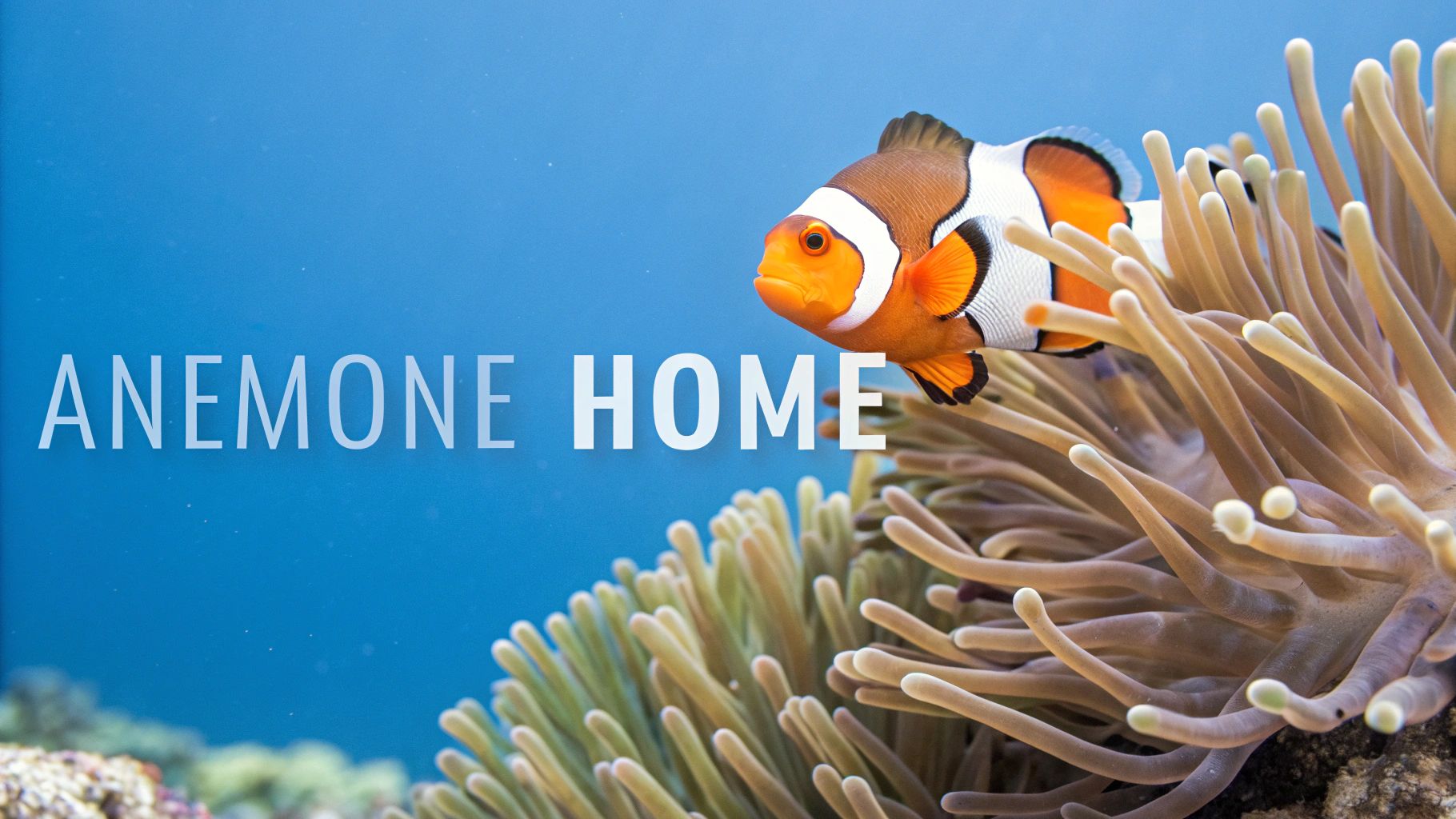
1. Clownfish (Amphiprion ocellaris)
Easily one of the most recognizable fish in the world, the Clownfish is a small, vibrant orange and white-banded fish made famous by the film Finding Nemo. These fish are a perfect example of the intricate, symbiotic relationships that make coral reef ecosystems so fascinating. They live among the stinging tentacles of sea anemones, to which they are immune. This unique partnership provides the clownfish with protection from predators, while the clownfish helps the anemone by cleaning it, luring in food, and circulating water.
Sighting Likelihood in Marathon
While clownfish are iconic reef dwellers, you won’t find them in the wild waters of the Florida Keys. Their natural habitat is in the warmer waters of the Indian and Pacific Oceans, such as the Great Barrier Reef. However, their inclusion in this list is essential because they perfectly illustrate the complex life found in healthy reef systems worldwide. Observing them in aquariums offers a valuable educational opportunity to understand the delicate balance of what fish live in coral reefs.
Identification & Behavior
- Size: Typically 3 to 4 inches long.
- Appearance: Bright orange body with three distinct, vertical white stripes outlined in black.
- Behavior: Clownfish are highly territorial and rarely stray from their host anemone. They exhibit a unique "dancing" motion as they nestle into the anemone's tentacles. They are also known for sequential hermaphroditism; the largest fish in a group is the female, and the next largest is the breeding male. If the female dies, the male will change sex to become the new female.
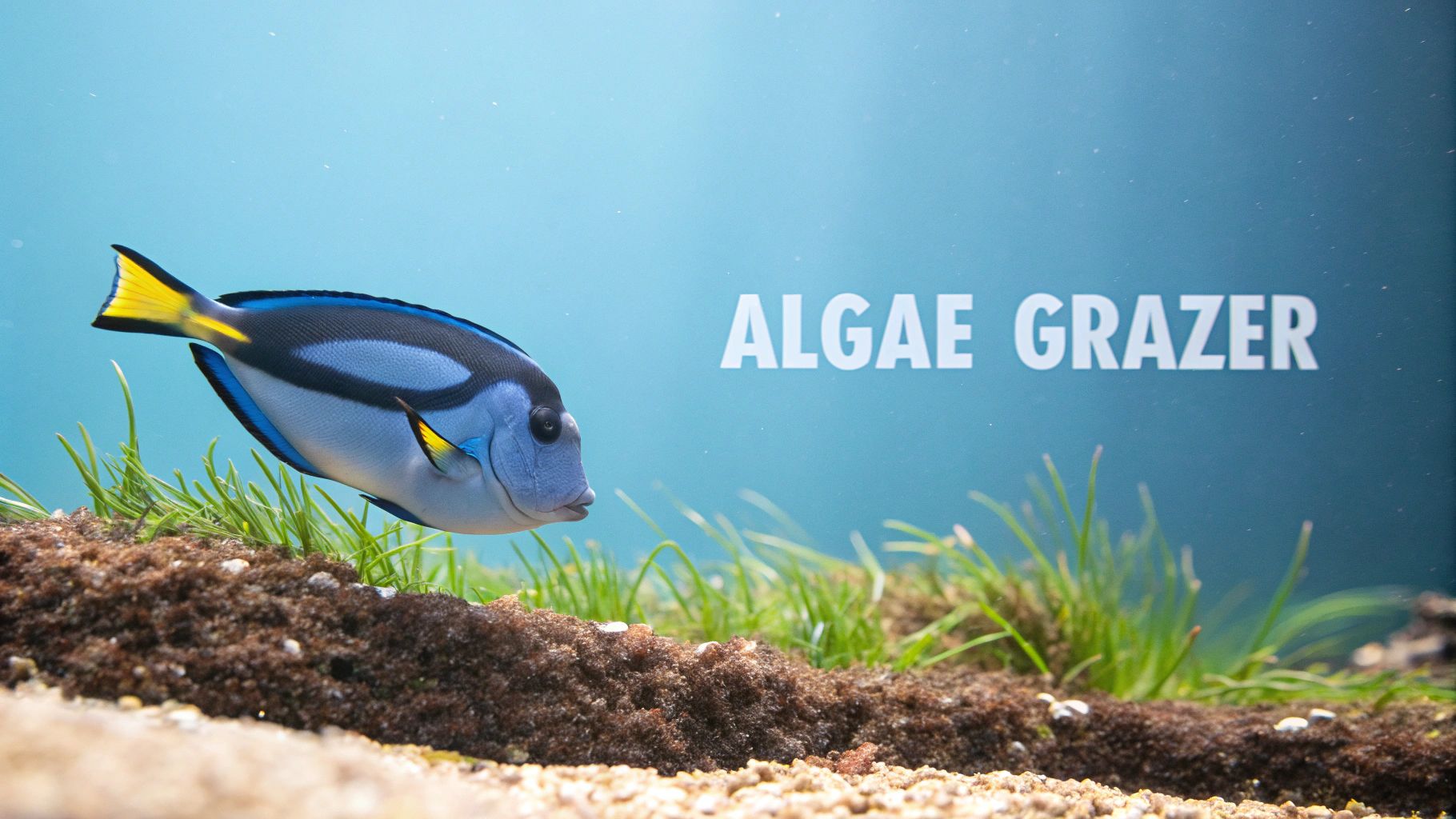
2. Blue Tang (Paracanthurus hepatus)
Another cinematic superstar, the Blue Tang is an electric blue surgeonfish with a vibrant yellow tail, made famous by the character Dory in Finding Dory. These fish are not just beautiful; they are vital to the reef's health. As active grazers, they consume algae, preventing it from overgrowing and smothering the corals. Their role as reef "gardeners" is a perfect example of how different species contribute to the overall balance of a coral reef ecosystem.
Sighting Likelihood in Marathon
Similar to the clownfish, the Pacific Blue Tang is not native to the Atlantic Ocean, so you won't encounter it while snorkeling in Marathon. Their natural habitat is across the vast Indo-Pacific, from the Philippines to Australia's Great Barrier Reef. However, Florida is home to a different species, the Atlantic Blue Tang (Acanthurus coeruleus), which you might spot on a reef trip. Observing either species helps us understand the crucial role of surgeonfish in what fish live in coral reefs globally.
Identification & Behavior
- Size: Can grow up to 12 inches long.
- Appearance: Distinctive deep blue, oval-shaped body with a bright yellow, flag-like tail and black markings that create a "palette" shape.
- Behavior: Blue Tangs are very active swimmers, often seen grazing in schools across the reef. When threatened, they can extend a sharp, venomous spine at the base of their tail, which is characteristic of all surgeonfish. They often hide among branching corals when startled.
3. Yellow Tang (Zebrasoma flavescens)
The Yellow Tang is a vibrant, disc-shaped fish that brings a splash of brilliant yellow to Indo-Pacific coral reefs. As one of the most popular aquarium fish, its image is synonymous with a healthy, colorful reef environment. These fish are herbivores, playing a crucial role as grazers. By constantly feeding on turf algae, they prevent it from overgrowing and smothering the coral, helping to maintain the delicate ecological balance of their habitat.
Sighting Likelihood in Marathon
Similar to clownfish, Yellow Tangs are not native to the Atlantic Ocean or the Caribbean. You will not encounter them while snorkeling in the waters around Marathon. Their natural range is primarily around the Hawaiian Islands and other parts of the Indo-Pacific. Despite their absence in the Florida Keys, they are an essential species to know because they exemplify the role of herbivorous fish in a reef ecosystem. Understanding their job helps us appreciate the diverse group of what fish live in coral reefs and the specific roles each one plays.
Identification & Behavior
- Size: Can grow up to 8 inches in length.
- Appearance: A bright, uniform lemon-yellow body with a pointed snout and a small, razor-sharp spine at the base of its tail for defense.
- Behavior: Yellow Tangs are active swimmers, often seen grazing in groups. They use their scalpel-like tail spine to defend themselves against predators and establish dominance. They are generally peaceful but can be territorial with other tangs.
4. Green Sea Turtle (Chelonia mydas) – Reef Associate
While not technically a fish, the Green Sea Turtle is a keystone species and an iconic resident of reef ecosystems around the world. These gentle giants, named for the greenish color of their body fat, play a crucial role in maintaining the health of the reef. As herbivores, they graze on seagrass and algae, which prevents overgrowth and allows the reef’s habitat to thrive. Their presence is a strong indicator of a healthy and balanced marine environment.
Sighting Likelihood in Marathon
Your chances of spotting a Green Sea Turtle while snorkeling in Marathon are very high. The warm, shallow waters of the Florida Keys provide an ideal habitat with abundant seagrass beds for them to feed on. These ancient mariners are frequently seen gliding gracefully near patch reefs or resting on the sandy bottom. The Turtle Hospital in Marathon is a testament to the local importance of this species, and you can learn more about local conservation efforts by visiting. Find out more about the Turtle Hospital in Marathon, FL and how to support these amazing creatures.
Identification & Behavior
- Size: Adults can grow up to 5 feet long and weigh up to 700 pounds.
- Appearance: They have a smooth, heart-shaped carapace (shell) that can range in color from olive-brown to nearly black. Their head is relatively small compared to their body, and they have non-retractable limbs in the form of flippers.
- Behavior: Green Sea Turtles are powerful swimmers, capable of migrating vast distances across oceans. When not feeding, they can often be found resting under rock ledges or in the coral itself. As reptiles, they must surface periodically to breathe air.
5. Parrotfish (Scaridae family)
Parrotfish are the tireless gardeners and architects of the coral reef, easily identified by their fused teeth that form a parrot-like beak. These vibrant, often large fish play a crucial role in reef health by grazing on algae that would otherwise smother corals. As they scrape the reef, they also ingest coral rock, which is ground up and excreted as fine, white sand. In fact, a single parrotfish can produce hundreds of pounds of sand each year, creating the pristine beaches many tropical islands are famous for.
Sighting Likelihood in Marathon
Excellent! Parrotfish are common and vital members of the Florida Keys reef ecosystem. Snorkelers in Marathon are very likely to spot several species, such as the Stoplight, Queen, and Rainbow Parrotfish. Their constant grazing activity makes them one of the most visible and important examples of what fish live in coral reefs here. Protecting them is essential for reef resilience, as their algae-eating habits help corals recover from stressors like those that cause coral bleaching.
Identification & Behavior
- Size: Varies greatly by species, from one foot to over four feet long.
- Appearance: Typically very colorful, with scales in brilliant shades of blue, green, pink, and yellow. Their most defining feature is their powerful, beak-like mouth.
- Behavior: Parrotfish are active during the day, moving across the reef and audibly crunching on coral and rock. At night, some species create a protective mucous cocoon to hide their scent from predators like moray eels. They are constantly on the move, making them a fascinating fish to observe while snorkeling.
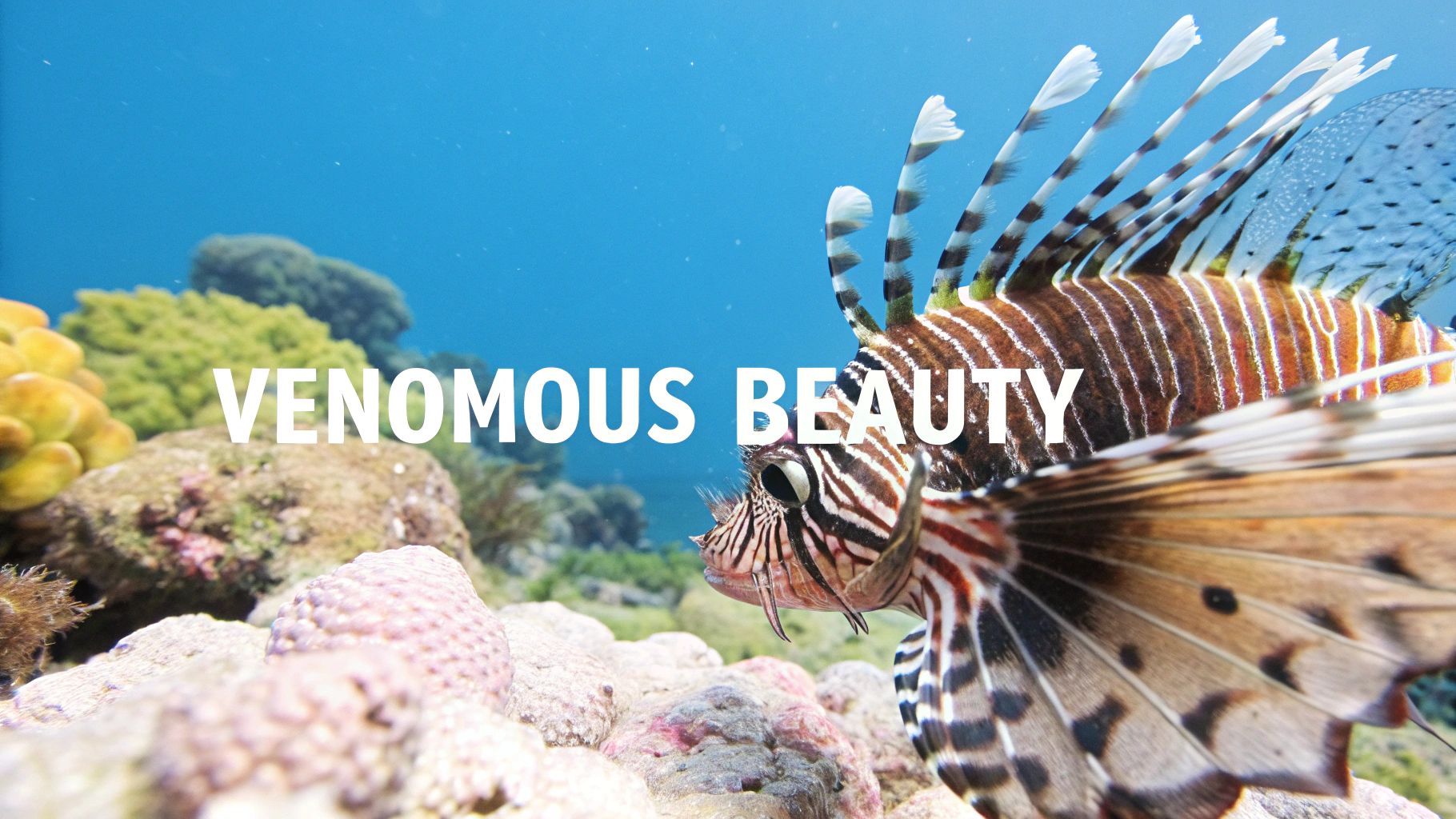
6. Lionfish (Pterois species)
The Lionfish is a stunningly beautiful but notoriously venomous predator, easily recognized by its dramatic, fan-like pectoral fins and bold reddish-brown and white stripes. These fish are a powerful example of how marine ecosystems can be disrupted. While they are a natural part of Indo-Pacific reefs, their introduction to the Atlantic and Caribbean has created a significant ecological challenge due to their voracious appetite and lack of natural predators in their invasive range. They are ambush hunters, using their ornate fins to corner prey before striking.
Sighting Likelihood in Marathon
Unfortunately, Lionfish are now a common sight in the Florida Keys, including popular snorkeling spots. Their invasive presence poses a major threat to native fish populations that are crucial for reef health. Local conservation efforts, including organized "lionfish derbies" and specialized spearfishing, are underway to control their numbers. Seeing one is a reminder of the delicate balance of what fish live in coral reefs and the impact of invasive species. Responsible removal efforts are critical, and you can learn about the ecosystems they threaten by exploring locations like Coffins Patch.
Identification & Behavior
- Size: Can grow up to 18 inches, but are more commonly seen around 12 inches.
- Appearance: Distinctive red, maroon, and white zebra-like stripes; numerous long, separated dorsal spines; and large, fan-like pectoral fins.
- Behavior: Lionfish are slow-moving and often hover motionless in the water or rest near ledges and crevices during the day. They are not aggressive towards humans but will defend themselves with their venomous spines if they feel threatened. Never attempt to touch a lionfish, as a sting from its spines is extremely painful.
7. Moorish Idol (Zanclus cornutus)
The Moorish Idol is an unmistakable and elegant inhabitant of the coral reef, famed for its dramatic appearance and graceful swimming. With its stark, vertically striped body of black, white, and brilliant yellow, and a long, flowing dorsal fin filament called a "philomantis," this fish is a showstopper. Though it looks similar to some butterflyfish, it is the sole surviving species in its own unique family, Zanclidae. Its distinctiveness makes it a prized sighting for snorkelers and divers.
Sighting Likelihood in Marathon
Similar to the Clownfish, the Moorish Idol is not native to the Atlantic Ocean and therefore cannot be found while snorkeling in Marathon, FL. Its natural range is vast, spanning the Indo-Pacific from the coast of Africa to Mexico. Despite its absence in the Keys, the Moorish Idol is a crucial species to learn about when asking what fish live in coral reefs, as its presence signifies a diverse and healthy ecosystem, particularly one rich with the sponges and tunicates it feeds on.
Identification & Behavior
- Size: Can grow up to 9 inches long.
- Appearance: A compressed, disc-shaped body with bold vertical bands of black, white, and yellow. A prominent, elongated white dorsal fin streamer trails behind it.
- Behavior: Moorish Idols are often seen in pairs or small groups and are known to be long-lived, with pairs mating for life. They use their long snouts to forage for food, primarily feeding on sponges, tunicates, and other benthic invertebrates found on the reef. They are notoriously difficult to keep in aquariums due to this highly specialized diet.
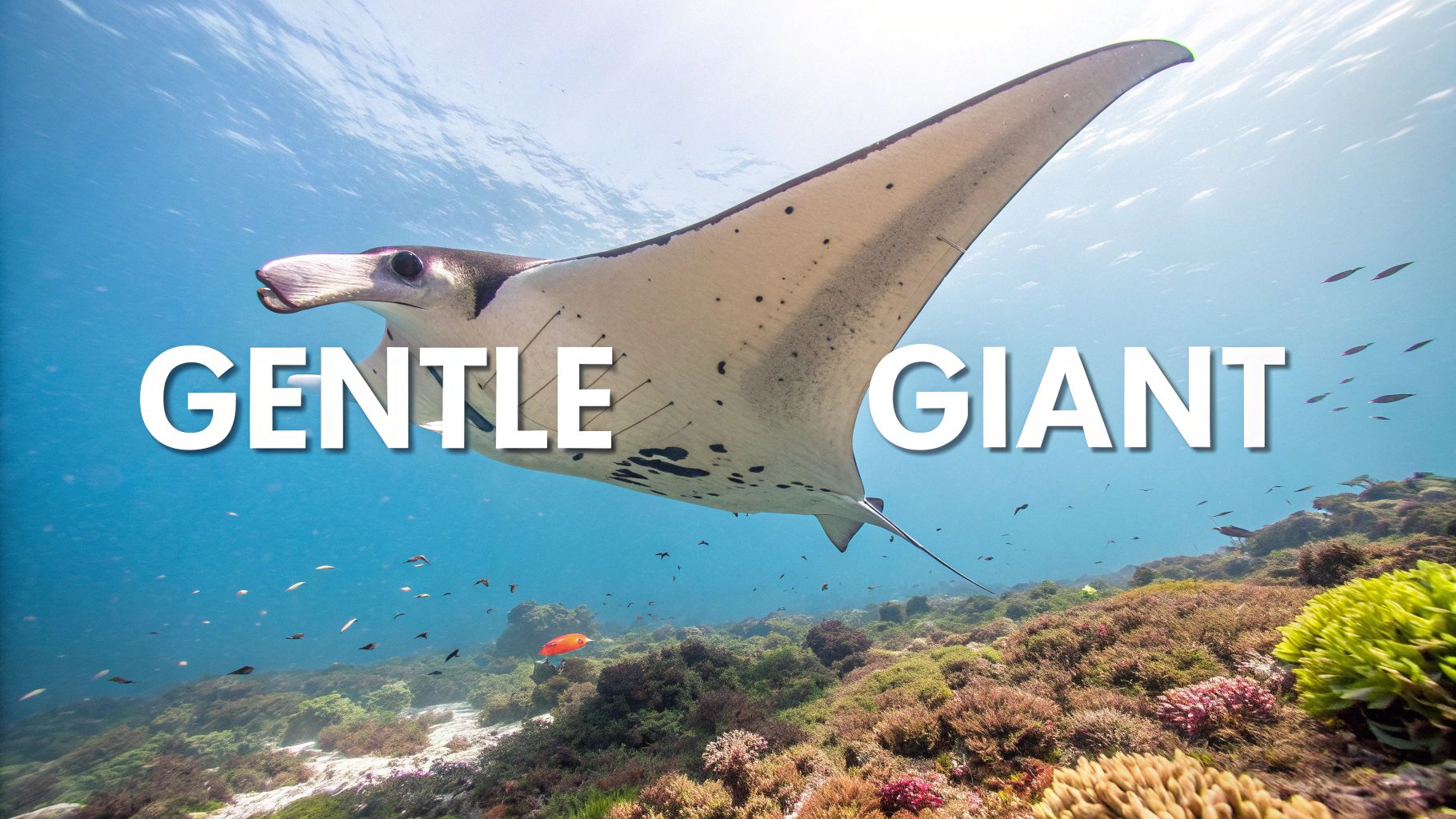
8. Manta Ray (Manta birostris)
Among the most majestic inhabitants of coral reef ecosystems, the Manta Ray is a true giant of the sea. These gentle filter-feeders are the largest rays in the world, renowned for their incredible intelligence and graceful, wing-like movements as they glide through the water. Manta Rays frequent coral reefs in tropical and subtropical waters to feed on zooplankton, which they funnel into their mouths using specialized cephalic lobes, and to visit "cleaning stations" where smaller fish remove parasites.
Sighting Likelihood in Marathon
While Manta Rays inhabit the Atlantic, sightings in the Florida Keys are exceptionally rare and considered a once-in-a-lifetime event for most. They prefer deeper waters and specific feeding grounds not typically found along the Marathon reef tract. However, their cousins, the smaller Southern and Cownose Rays, are common sights. Understanding the Manta Ray is crucial for appreciating the diversity of life that what fish live in coral reefs can support globally. For an unparalleled experience with these gentle giants, discover this comprehensive guide to the Manta Ray night dive in Kona.
Identification & Behavior
- Size: Can reach an astonishing wingspan of up to 23 feet.
- Appearance: Diamond-shaped body, typically black on top and white underneath, with unique spot patterns on their belly that act like fingerprints. They have two prominent cephalic lobes at the front of their head.
- Behavior: Manta Rays are highly intelligent and social, often seen traveling in groups. They are filter feeders, swimming with their mouths wide open to consume massive amounts of plankton. They are completely harmless to humans and are known for their curious and gentle nature around divers and snorkelers.
9. Butterflyfish (Chaetodontidae family)
Often called the butterflies of the sea, these fish bring a delicate beauty and vibrant color to coral reefs. Butterflyfish are named for their graceful, fluttering swimming patterns and thin, disk-like bodies. They are a crucial part of the reef ecosystem, with many species feeding primarily on coral polyps and small invertebrates. Their presence is often considered a key indicator of reef health; a thriving butterflyfish population signals a vibrant, living coral system.
Sighting Likelihood in Marathon
You have an excellent chance of spotting several species of Butterflyfish while snorkeling in Marathon. The Florida Keys are home to species like the Foureye Butterflyfish, Spotfin Butterflyfish, and Banded Butterflyfish. They are commonly seen flitting in pairs among the coral heads and patch reefs. Their dependency on healthy corals makes protecting their habitat vital. Understanding their role is a great first step, and you can learn more about how to help through local coral reef conservation efforts.
Identification & Behavior
- Size: Varies by species, but most are between 4 to 8 inches long.
- Appearance: Typically have yellow, white, and black coloration with intricate patterns. Many species have a dark bar over their eye and a false "eyelid" or spot near their tail to confuse predators.
- Behavior: Butterflyfish are diurnal, meaning they are active during the day and rest at night. They often form monogamous pairs that remain together for life, defending a territory. Observing these pairs as they navigate the reef is a common and fascinating sight for snorkelers wondering what fish live in coral reefs.
10. Humphead Wrasse (Cheilinus undulatus)
As the largest member of the wrasse family, the Humphead Wrasse is a magnificent and gentle giant of the coral reef. Growing up to six feet long and weighing nearly 400 pounds, these fish are easily recognized by the prominent hump on their forehead, which becomes more pronounced with age. They play a crucial role in maintaining reef health by preying on crown-of-thorns starfish, a notorious coral predator. Made famous by documentaries like Planet Earth, this highly intelligent and long-lived fish is a symbol of the majesty and fragility of reef ecosystems.
Sighting Likelihood in Marathon
Like the clownfish, the Humphead Wrasse is not found in the Atlantic Ocean or the Florida Keys. Its natural range is in the Indo-Pacific, from the Red Sea to the Great Barrier Reef. Sadly, this species is critically endangered due to overfishing and is now a rare sight even in its native habitats. Its struggle for survival highlights why understanding what fish live in coral reefs is so tied to conservation. Strong conservation efforts, especially in marine protected areas, are essential to saving this iconic species. You can learn more about marine protected areas and their importance on our blog.
Identification & Behavior
- Size: Can reach up to 6 feet long, but more commonly seen at 2 to 3 feet.
- Appearance: Olive to green or blueish body with intricate, wavy patterns on its face and a large, fleshy hump on its forehead. They have thick, pouty lips.
- Behavior: Humphead Wrasse are curious, intelligent, and known to interact with divers. They are one of the few predators of toxic animals like the crown-of-thorns starfish and boxfish. These fish are also protogynous hermaphrodites, starting life as females and later changing to males.
10 Coral Reef Species Comparison
| Species | 🔄 Care Complexity | ⚡ Space & Resources | 📊 Ecological Impact | ⭐ Key Advantages | 💡 Ideal Use Cases |
|---|---|---|---|---|---|
| Clownfish (Amphiprion ocellaris) | Low–Moderate — hardy but best with host anemone | Small tanks (20–50 gal) + host anemone if kept | Symbiotic partner; reef health indicator; parasite removal | Hardy, well-studied, educationally iconic | Home aquaria with host, education, captive-breeding programs |
| Blue Tang (Paracanthurus hepatus) | High — complex diet and constant swimming needs | Large tanks (100+ gal), varied algae, strong filtration | Major algae grazer; controls reef vegetation growth | Extremely effective algae controller; vivid coloration | Public aquaria, experienced hobbyists, conservation exhibits |
| Yellow Tang (Zebrasoma flavescens) | Moderate — generally hardy but territorial | Medium–large tanks (75+ gal); ample grazing surfaces | Efficient algae grazer supporting reef resilience | Long-lived, adaptable, effective grazer | Aquariums (single tang), reef restoration education |
| Green Sea Turtle (Chelonia mydas) | Very High — unsuitable for private care; specialized long-term care | Ocean-scale habitats or large rehabilitation facilities | Keystone seagrass/algae grazer; maintains ecosystem balance | Long-lived, major ecosystem stabilizer, eco-tourism draw | Conservation programs, protected areas, responsible eco-tourism |
| Parrotfish (Scaridae family) | Moderate — species-dependent; some large/long-lived | Variable; many require extensive reef habitat | Reef engineers; produce sand, remove algae/dead coral | Maintain reef structure and prevent algal dominance | Marine reserves, reef monitoring, eco-tourism support |
| Lionfish (Pterois spp.) | Moderate — manageable in captivity; invasive management needed | Small–medium tanks in captivity; active culling logistics in invasions | Native predator in Indo-Pacific; severe invasive predator in Atlantic | Striking appearance; important invasive-species research subject | Invasive culling programs, research, public awareness campaigns |
| Moorish Idol (Zanclus cornutus) | Very High — highly specialized diet; poor aquarium survival | Medium tanks but demanding specialized feeding | Spongivore/tunicivore niche; indicator of biodiversity | Distinctive appearance and unique feeding ecology | Wild observation, public aquaria with specialist feeding, photography |
| Manta Ray (Manta birostris) | Extremely High — not suitable for private captivity | Oceanic habitats, large sanctuaries, research vessels | Keystone filter-feeder; supports plankton dynamics and tourism | Charismatic megafauna with high ecotourism and research value | Responsible manta tourism, conservation research, MPAs |
| Butterflyfish (Chaetodontidae family) | Moderate–High — many species are coral-dependent | Tanks with live coral or specialized diets; healthy reefs | Primary corallivores; sensitive indicators of coral health | Behavioral indicators of reef condition; attractive for tourism | Reef health monitoring, documentaries, selective aquarium keeping |
| Humphead Wrasse (Cheilinus undulatus) | Very High — large, long-lived, not appropriate for captivity | Large reef habitats and strict protection measures | Apex predator; controls invertebrate populations and maintains balance | Top predator role; conservation flagship species | Marine Protected Areas, international protection, advocacy programs |
Your Turn to Explore the Reef
From the iconic Clownfish nestled in its anemone home to the majestic Manta Ray gliding through the water column, the variety of life on a coral reef is nothing short of breathtaking. We've journeyed through a curated list of some of the most vibrant and essential inhabitants, exploring the unique roles each plays in this delicate underwater city. You now know what fish live in coral reefs, not just by name, but by their behavior, their importance, and how you can spot them right here in the Florida Keys.
Understanding these species transforms a simple snorkeling trip into a profound ecological safari. Recognizing a school of Parrotfish isn't just about seeing a flash of color; it's about witnessing the very process that creates our beautiful white-sand beaches. Identifying a Lionfish is a reminder of the delicate balance of native versus invasive species. This knowledge empowers you to appreciate the intricate web of life that thrives just beneath the waves.
Putting Your Knowledge into Practice
The true magic happens when you move from reading on a screen to seeing with your own eyes. Armed with the identification tips and behavioral insights from this guide, you are perfectly prepared to make the most of your underwater adventure. Remember these key takeaways for your next snorkeling trip:
- Observe, Don't Disturb: The most fundamental rule of reef exploration is to be a respectful guest. Keep a safe distance from all marine life, never touch the coral, and simply enjoy the view. Your passive observation ensures the animals remain unstressed and the reef stays healthy.
- Look for Relationships: Notice how different species interact. You might see a cleaner wrasse working on a larger fish, or a school of Blue Tangs grazing on algae. These observations bring the ecosystem to life and reveal the complex connections you've just read about.
- Connect with Your Guide: Our crew members at Marathon Snorkeling & Sunset Cruise are passionate experts. Don't hesitate to ask them what they've been seeing lately or to help you identify a creature you don't recognize. Their on-the-water experience is an invaluable resource.
By learning to identify what fish live in coral reefs, you've taken the first step toward becoming a more conscious and engaged ocean explorer. This connection fosters a deeper appreciation for marine conservation and highlights the critical need to protect these vital habitats for generations to come. Your curiosity is the spark that fuels conservation, and your experience in the water is what turns that spark into a lifelong passion.
Ready to put your new fish identification skills to the test in the crystal-clear waters of the Florida Keys? Join Marathon Snorkeling And Sunset Cruise for an unforgettable excursion to world-class reefs like Coffins Patch. Our expert guides will help you spot the incredible marine life you've just learned about on a safe, fun, and educational adventure. Book your trip with Marathon Snorkeling And Sunset Cruise today and dive into the vibrant world of the coral reef