
What Is a Marine Ecosystem? Key Facts and Importance

When you hear the term "marine ecosystem," what comes to mind? For many, it's a simple picture of fish swimming around coral. But it's so much more than that.
Think of it as a massive, intricate underwater city. In this city, every single resident—from the tiniest plankton to the biggest whale—and every piece of infrastructure—like the water, sand, and sunlight—has a critical job to do. These dynamic, interconnected communities cover over 70% of the Earth's surface, running the whole show beneath the waves.
Decoding the Ocean's Underwater Cities
Instead of picturing the ocean as one giant, uniform body of water, imagine it as a collection of unique, bustling neighborhoods. A vibrant coral reef is one neighborhood, a dark, mysterious deep-sea trench is another. Each one is its own distinct marine ecosystem.
In these underwater cities, the living residents are constantly interacting with their physical and chemical surroundings. This complex web of relationships is the very heart of what makes a marine ecosystem tick. To really get it, you have to break it down into its two core ingredients: the living and the non-living.
The Living Inhabitants
The living parts of the ecosystem are what scientists call biotic factors. This includes every plant, animal, and microorganism you can imagine. They are the producers, the consumers, and the decomposers that create the ocean's intricate food webs. These residents range from microscopic plankton, which form the very foundation of marine life, all the way up to apex predators like sharks.
The Non-Living Foundation
The non-living parts are known as abiotic factors. These are the physical and chemical building blocks that create the environment and basically set the rules for who can live where.
Key abiotic factors include:
- Sunlight: The amount of light that filters down through the water determines which plants can photosynthesize, directly fueling the entire food chain.
- Water Chemistry: This covers everything from salinity (how salty the water is) and pH levels to the amount of dissolved oxygen—all critical for survival.
- Temperature: Water temperature changes dramatically with depth and location, creating invisible boundaries that define where different species can thrive.
- Substrate: This is simply the seafloor—whether it's sandy, rocky, or muddy, it provides the physical foundation for different habitats.
At its core, a marine ecosystem is a delicate balance. It's the sum of countless interactions between living organisms and their physical surroundings, creating a self-sustaining community where energy and nutrients are constantly cycled.
The best way to see this in action is to look at a coral reef. The corals themselves build the physical city, providing homes for countless fish and invertebrates. In return, they depend on the abiotic factors—plenty of sunlight and clear, warm water—to survive.
To help you visualize how these parts work together, here’s a simple breakdown:
The Building Blocks of a Marine Ecosystem
This table breaks down the core components, showing how the living and non-living elements come together to create a functioning ecosystem.
| Component Type | Definition | Example in a Coral Reef |
|---|---|---|
| Biotic (Living) | Any living or once-living organism in the ecosystem. | Fish, corals, algae, sea turtles, bacteria. |
| Abiotic (Non-Living) | The non-living chemical and physical parts of the environment. | Sunlight, water temperature, salinity, sand, rocks. |
Once you understand these individual components, you can start to see the bigger picture and appreciate the ocean's incredible complexity. A coral reef is a perfect example, and you can dive deeper into how these specific underwater neighborhoods work by checking out our guide on the coral reef ecosystem.
The Intricate Food Web of Marine Life
To really get what a marine ecosystem is, you have to look past the coral and the sand and see the invisible flow of energy that makes it all tick. Picture it like a bustling underwater city. In this city, every single organism has a job, and the currency they all trade in is energy—energy that starts with the sun.
This isn't just a simple "big fish eats little fish" situation. It's a massive, tangled network where producers, consumers, and decomposers all play a part in keeping the whole community alive and kicking. The balance is surprisingly delicate, and every player, no matter how tiny, is a critical gear in the engine.
The Power Generators of the Sea
At the very bottom of this food web, you'll find the producers. Think of them as the power plants for the entire ocean. Most of these are microscopic organisms called phytoplankton. Like countless tiny solar panels, they drift in the sunlit surface waters, using photosynthesis to turn sunlight into chemical energy.
These producers are the foundation for nearly every marine food web on the planet. They're so incredibly numerous that, together, they produce more than half of the oxygen we breathe. Without these little power generators, the entire marine economy would crash before it even got started.
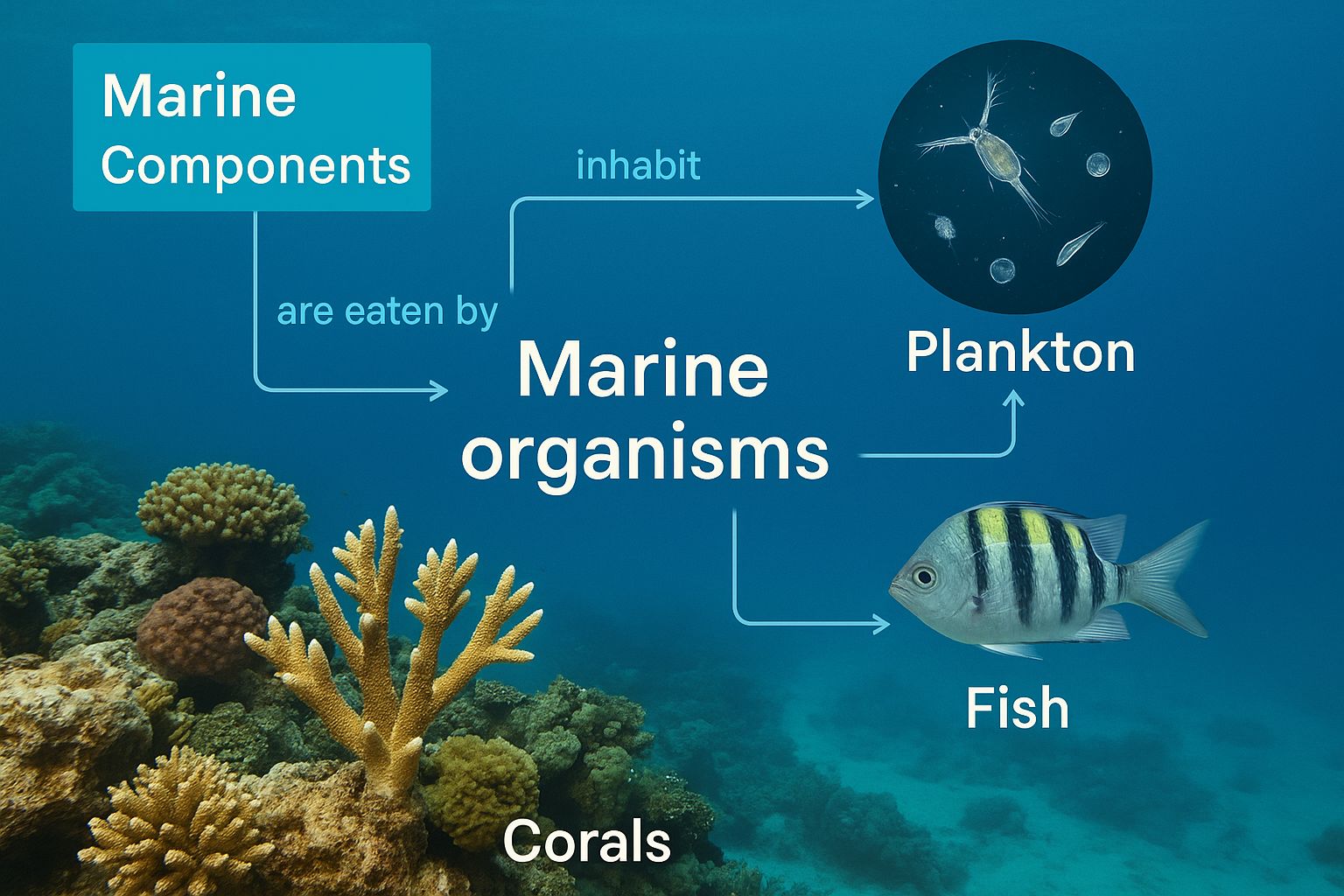
This visual shows just how connected everything is. From the smallest plankton to the largest fish, each organism has its own niche, contributing to the health of the whole system.
Consumers: The Movers and Shakers
The energy captured by producers gets passed along through the ecosystem by consumers. We can sort these critters by what they eat, creating different levels in the food web, almost like a corporate ladder.
- Primary Consumers: These are the herbivores, the first ones to munch on the producers. Picture tiny zooplankton grazing on phytoplankton or a sea turtle snacking on seagrass.
- Secondary Consumers: These are carnivores that feed on the primary consumers. A small fish gobbling up zooplankton is a perfect example, moving that solar energy another step up the chain.
- Tertiary Consumers: Now we're getting into the bigger predators. A grouper that hunts smaller fish fits right in here.
- Apex Predators: Sitting at the top of the food chain are the apex predators, like sharks or dolphins. They have few, if any, natural predators of their own.
But this flow of energy is rarely a straight line. Many animals have varied diets, creating a messy, overlapping web instead of a neat chain. A sea turtle, for instance, might mostly eat seagrass but will also eat jellyfish, making it both a primary and secondary consumer. The health of these important animals is crucial, and you can see local conservation efforts in action by visiting the incredible Sea Turtle Hospital in Marathon, FL.
The Ultimate Recycling Crew
So, what happens when something in the ocean dies? Well, in this economy, absolutely nothing goes to waste. This is where the decomposers—mostly bacteria and fungi—get to work. They are the ultimate recycling plants, breaking down dead organic stuff from every level of the food web.
Decomposers are the unsung heroes of the marine ecosystem. They unlock vital nutrients like nitrogen and phosphorus from dead organisms, returning them to the water. This allows producers like phytoplankton to use them all over again, kickstarting the entire cycle.
This recycling job is absolutely essential. It makes sure the basic building blocks for life are always available, keeping the whole ecosystem productive. Without the decomposers, the ocean would eventually run out of raw materials, and this vibrant underwater city would grind to a halt.
Exploring Major Marine Ecosystems and Habitats
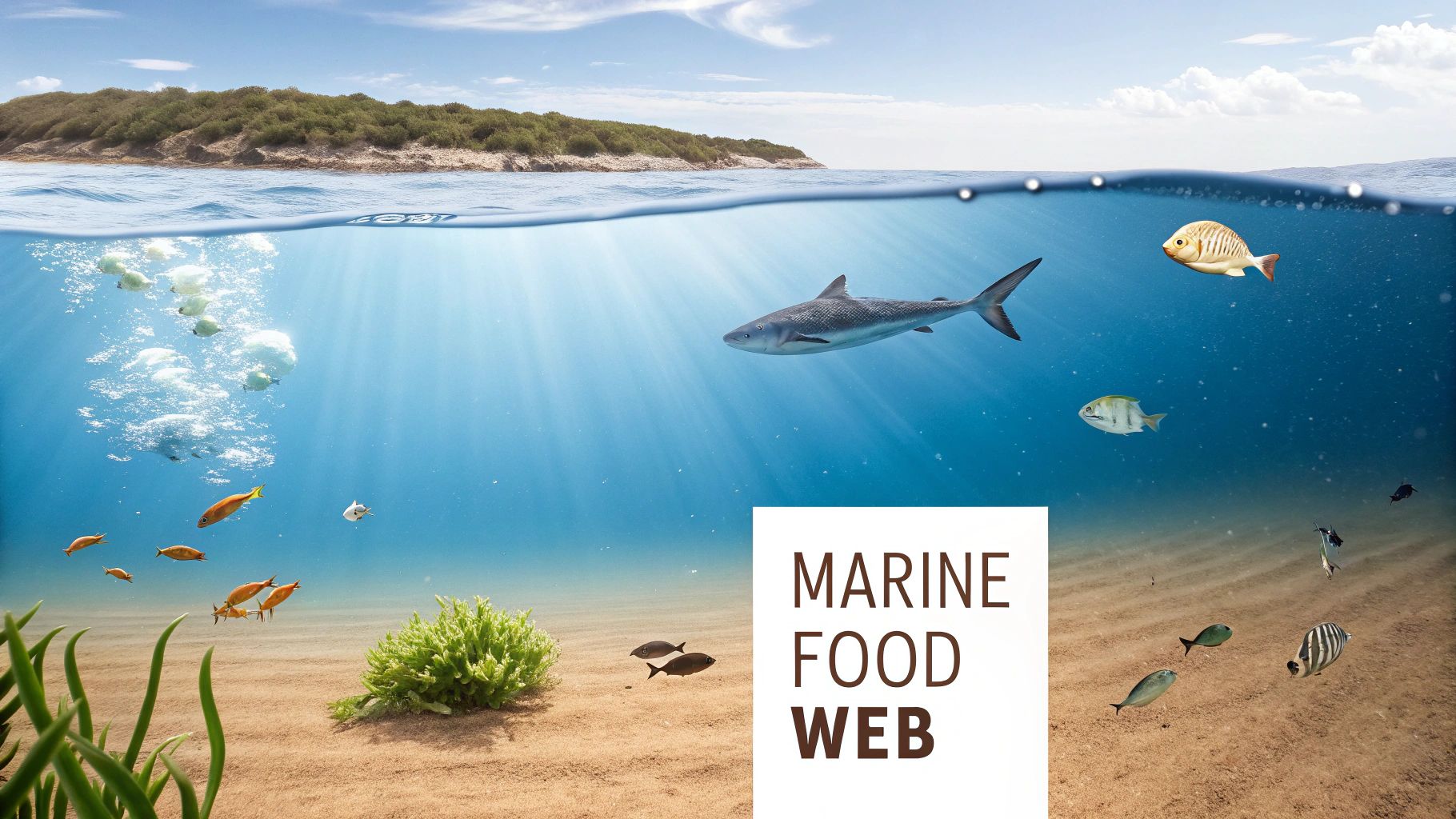
It’s easy to think of the ocean as one big, blue expanse. But that couldn’t be further from the truth. The ocean is a massive world filled with radically different neighborhoods, each with its own character, residents, and unique rules for survival.
These diverse marine ecosystems are shaped by things like sunlight, depth, and how far they are from the shore. This creates a stunning variety of habitats, from sun-drenched coastal shallows to the crushing, absolute darkness of the deep sea. To really get a feel for what a marine ecosystem is, let's take a tour of these incredible underwater worlds.
Vibrant Coastal Ecosystems
Think of coastal ecosystems as the bustling suburbs of the marine world. They’re shallow, sunny, and constantly interacting with the land, which means they get a steady flow of nutrients that fuels an explosion of life. These habitats aren't just beautiful—they’re critical nurseries, feeding grounds, and protective barriers for our coastlines.
Here are three of the most important coastal players:
-
Coral Reefs: People call them the "rainforests of the sea" for a reason—they are absolutely bursting with life. These incredible structures, built by tiny coral polyps, provide a home for an estimated 25% of all marine species while covering less than 1% of the ocean floor. They are true hotspots of activity.
-
Mangrove Forests: These are unique coastal forests that actually thrive in salty, brackish water. Their dense, tangled root systems act like a natural fortress, stabilizing shorelines, preventing erosion, and filtering out pollutants. For countless juvenile fish and crustaceans, these roots are the perfect protected nursery.
-
Seagrass Beds: Picture sprawling underwater meadows—that’s what seagrass beds are. These gentle giants are powerhouses, pumping out oxygen, storing carbon, and providing a critical food source for animals like manatees and sea turtles. They also offer food and refuge for the young of many important fish species.
Coastal ecosystems are the bridge between land and sea. Their health is directly tied to human activity, making them some of the most threatened yet most important marine environments on the planet.
Because they’re so accessible, these areas are amazing places to explore. For a real-world peek into one of these dynamic habitats, a guide to the Captain Cook Snorkel Tour in Kealakekua Bay offers a great look at what's out there. Protecting these zones is a top priority, and you can learn more about how it's done by exploring the concept of a marine protected area.
The Vast Open Ocean
Once you move away from the coast, you enter the immense open ocean, known as the pelagic zone. This is that endless blue that makes up most of the ocean's volume. Life here is much more spread out and is defined by a vertical journey, from the sunlit surface down to the dark abyss.
The pelagic zone is split into layers based on how far sunlight can reach:
-
Sunlight Zone (Epipelagic): This is the top layer, where there’s enough light for photosynthesis. It’s home to phytoplankton—the foundation of the entire open ocean food web—and the big predators like tuna, sharks, and dolphins that roam these waters.
-
Twilight Zone (Mesopelagic): Just below the sunlight, the light fades into a permanent twilight. The pressure cranks up, and the temperatures drop. Animals here often have huge eyes to catch what little light there is, and many use bioluminescence to communicate, hunt, or hide.
-
Midnight Zone (Bathypelagic & Abyssopelagic): In these deepest layers, there is no sunlight at all. The pressure is insane, and the water is near freezing. Life here is sparse and frankly, a bit bizarre, with creatures perfectly adapted to survive on whatever scarce food drifts down from above.
The Mysterious Seafloor
Our final stop is the very bottom of the ocean, a habitat known as the benthic zone. This isn't just one place; it's a collection of all the different environments that make up the seafloor, from shallow sandy bottoms to the deepest, darkest trenches on Earth.
Life in the benthic zone is a completely different ballgame from the open water above. The organisms here are called benthos, and they include everything from crabs and sea stars crawling on the surface to worms and clams burrowing into the sediment.
In the deep sea, where no sunlight ever reaches, some ecosystems are powered by chemical energy seeping from hydrothermal vents. This creates truly unique communities found absolutely nowhere else on the planet. From a sunny seagrass bed to a lightless deep-sea vent, each habitat is a unique piece of the puzzle, forming the incredibly diverse and interconnected world that covers most of our planet.
Why Marine Ecosystems Are Essential for Our Planet
It’s easy to get lost in the sheer beauty of the ocean, but marine ecosystems are so much more than just pretty underwater worlds. They are, quite literally, the life-support systems for our entire planet. Their health is directly connected to the air we breathe, the climate we rely on, and the economies that keep us afloat.
When we think about "what is a marine ecosystem," coral reefs and schools of fish usually come to mind. But their importance runs far, far deeper. From the microscopic to the massive, the work they do makes life on Earth possible.
The Lungs of the Earth
You probably think of rainforests when you think of oxygen production. But the real powerhouse? It's the ocean. The unsung heroes of this process are tiny marine organisms called phytoplankton.
Through photosynthesis, these microscopic powerhouses generate over half of the world's oxygen—that’s more than all the forests on land combined. Think about that for a second. Every other breath you take is a gift from the ocean. This makes the health of these tiny producers a matter of survival for every single one of us.
A Global Climate Regulator
Marine ecosystems also play a massive role in keeping our planet's climate in check. The ocean acts like a giant sponge, soaking up huge amounts of heat from the sun and moving it around the globe with its currents. This process helps balance global temperatures and prevents wild, extreme climate swings.
On top of that, the ocean has absorbed roughly 25-30% of the carbon dioxide (CO2) that humans have pumped into the atmosphere. By pulling this potent greenhouse gas out of the air, marine ecosystems help put the brakes on climate change. Our world would be a much hotter, more volatile place without this critical service.
The ocean is our planet's ultimate buffer, absorbing heat and carbon that would otherwise make our climate far more unstable. Its ability to perform this function is directly linked to the health of the ecosystems within it.
Powering Economies and Feeding Nations
The value of marine ecosystems hits close to home, too, impacting our global economy and food supply. These underwater worlds are incredibly productive, creating immense economic and social benefits for people everywhere.
Marine ecosystems cover more than 70% of the Earth’s surface and are some of the most productive on the planet. They generate trillions of dollars in revenue each year and support hundreds of millions of people. For example, coral reefs alone provide a home for at least 25% of all marine species, even though they cover less than 0.2% of the ocean floor. If you want to dive deeper, you can explore the full research on global marine ecosystem models.
This incredible productivity translates into real-world benefits we all feel:
- Fisheries and Aquaculture: Billions of people depend on seafood as their main source of protein. Global fisheries are a multi-billion dollar industry, providing jobs and food for coastal communities worldwide.
- Tourism and Recreation: The stunning beauty of marine environments fuels a massive tourism industry. Here in Marathon, Florida, activities like snorkeling, diving, and fishing aren't just hobbies—they're the lifeblood of our local economy.
- Coastal Protection: Healthy ecosystems like mangrove forests and coral reefs act as natural seawalls. They protect our coastlines from storm surges and erosion, saving communities billions of dollars in potential damage.
- Medical and Scientific Discoveries: Marine life has led to incredible breakthroughs in medicine, giving us compounds used in everything from anti-cancer drugs to painkillers.
From the air we breathe to the food we eat, our connection to the ocean is absolute. Protecting these ecosystems isn't just about saving fish; it's about securing our own future. One of the simplest things we can do on our ocean adventures is choose products that don't harm these fragile environments, which is why the importance of reef-safe sunscreen is so critical.
The Primary Threats Endangering Our Oceans
While marine ecosystems are vast and powerful, they are also incredibly vulnerable. The delicate balance that keeps these underwater cities thriving is now under severe strain from human activities. To really understand what a marine ecosystem is, we also have to confront the serious challenges threatening its very existence.
These threats aren't abstract problems happening somewhere far away; they're interconnected issues that are chipping away at the ocean's resilience. From the smallest plankton to the largest whale, every single inhabitant feels the impact.
Let's break down the four biggest dangers our oceans are facing.
Overfishing and Destructive Practices
For centuries, the ocean seemed like an endless pantry. Unfortunately, modern industrial fishing has pushed many fish stocks right to the brink of collapse. Overfishing is what happens when we pull fish out of the water faster than they can reproduce. We're literally emptying the seas.
This doesn't just hurt the one species being caught; it sets off a chain reaction across the entire food web. When you remove a key predator or prey, other populations can either starve or grow completely out of control, throwing the whole system out of whack.
On top of that, destructive methods like bottom trawling physically demolish critical habitats, leaving behind barren wastelands where vibrant communities once thrived.
The Rising Tide of Pollution
Our oceans are becoming a dumping ground for the byproducts of modern life. This pollution shows up in a few different forms, and each one poses a unique threat to marine life.
-
Chemical Contamination: Runoff from farms and cities carries a nasty cocktail of pesticides, fertilizers, and industrial chemicals into coastal waters. These contaminants can create massive "dead zones" where oxygen levels plummet, making it impossible for most life to survive. They also build up in the tissues of marine animals, getting more concentrated as they move up the food chain.
-
Plastic Pollution: This is one of the most visible and devastating threats. There's an estimated 75 to 199 million metric tons of plastic swirling in our oceans right now, with another 33 billion pounds pouring in each year. This plastic flood is projected to triple by 2040, leading to the deaths of over 100 million marine animals annually from getting tangled up or eating it.
Pollution acts like a slow-moving poison, weakening organisms and degrading habitats. From microscopic plastic fibers to invisible chemical contaminants, these pollutants undermine the health of the entire marine ecosystem from the ground up.
Habitat Destruction
Marine organisms need healthy places to feed, reproduce, and take shelter. It's that simple. When these essential neighborhoods are damaged or destroyed, the species that depend on them disappear, too.
Coastal development, for instance, can wipe out vital mangrove forests and seagrass beds that act as nurseries for countless juvenile fish. Dredging projects can smother sensitive communities on the seafloor, while a carelessly dropped anchor can shatter decades of coral growth in an instant. Protecting these foundational habitats is just as critical as protecting the animals themselves.
The Overarching Threat of Climate Change
Climate change is the big one—a global crisis with profound consequences for every single marine ecosystem. As the planet warms up, the ocean is absorbing huge amounts of heat and carbon dioxide, which is fundamentally changing its chemistry and temperature.
This leads to two massive problems:
-
Ocean Warming: Rising water temperatures put immense stress on marine life, especially corals. This stress can trigger coral bleaching, a process where corals expel the symbiotic algae living in their tissues. They turn stark white and become incredibly vulnerable to disease and death. You can dive deeper into the specifics of what causes coral bleaching in our detailed guide.
-
Ocean Acidification: When the ocean absorbs all that extra CO2 from the atmosphere, the water becomes more acidic. You can think of it as "osteoporosis of the sea." This change in chemistry makes it incredibly difficult for organisms like corals, clams, and oysters to build and maintain their protective shells and skeletons. Their survival—and the stability of the reefs they build—is on the line.
How We Can Help Protect Marine Ecosystems
It’s easy to feel overwhelmed after diving into the threats facing our oceans. The scale of the problem can feel massive. But this is where the story shifts from problems to solutions, empowering every single one of us to become part of the fix. Protecting a vast marine ecosystem really does begin with small, collective actions.
Individual choices have a way of creating powerful ripple effects. Simple changes in our daily habits, when adopted by enough people, can seriously reduce the pressure on these fragile underwater worlds. The journey to a healthier ocean starts right here on land, with the mindful decisions we make every day.
Making a Difference Through Daily Choices
You don’t have to be a marine biologist to be a guardian of the sea. Your power is in your everyday actions and what you choose to buy.
Here are a few practical steps anyone can take:
- Reduce Plastic Consumption: Consciously choose reusable bags, water bottles, and containers. This one simple act directly fights the flood of plastic pollution threatening marine life.
- Choose Sustainable Seafood: Use resources like the Monterey Bay Aquarium Seafood Watch guide to make smarter choices at the grocery store or restaurants. This helps support responsible fishing and discourages practices that deplete our oceans.
- Practice Responsible Tourism: When you visit coastal areas, respect the environment. Never touch coral or marine life, and make sure you leave no trace behind. One of the biggest impacts tourists can have is choosing products that don’t harm coral reefs, which is why understanding what reef-safe sunscreen is is so critical for ocean lovers.
Protecting our oceans isn't about a few people doing conservation perfectly; it's about millions of people doing it imperfectly. Every small, positive action contributes to a larger, collective impact.
Broader Strategies for Ocean Conservation
While individual actions are the foundation, bigger strategies are crucial for creating lasting protection for our marine ecosystems. These efforts involve policy, science, and creating safe havens for ocean life.
One of the most effective tools we have is the creation of Marine Protected Areas (MPAs). Think of these as national parks for the ocean. MPAs are designated zones where human activity is restricted to protect the natural environment. They act as sanctuaries, allowing marine populations to recover and thrive without the constant pressure of fishing or development.
Scientific research is another cornerstone of conservation. By studying how these ecosystems work and respond to threats, scientists provide the essential data needed to guide smart policies and management strategies. The final piece of the puzzle is global cooperation—international agreements that ensure nations work together to manage shared ocean resources and tackle planet-wide issues like climate change and pollution.
Got Questions About Marine Ecosystems?
Diving into the world of marine ecosystems can feel a bit overwhelming at first. There are a lot of moving parts, and a few terms get tossed around that can be confusing. Let's clear the water on a few of the most common questions people have.
Getting these basics down helps you see how the whole underwater puzzle clicks together.
What’s the Difference Between a Marine Ecosystem and a Marine Habitat?
This one trips a lot of people up because the words are often used interchangeably, but they actually describe two different things. It’s all about scale.
Think of a marine habitat as an organism's specific street address. It’s the physical place it calls home—the nooks and crannies of a coral reef, a patch of sandy seafloor, or the tangled roots of a mangrove forest.
A marine ecosystem, on the other hand, is the entire neighborhood. It’s the house (the habitat) plus all the neighbors (the fish, crabs, algae) and how they all interact with each other and with non-living things like the water, sunlight, and currents.
Why Is Everyone So Obsessed With Coral Reefs?
You’ll often hear coral reefs called the "rainforests of the sea," and it's not just a catchy phrase. It’s the absolute truth. Despite covering less than 1% of the ocean floor, they are bursting with life, supporting about 25% of all known marine species.
Coral reefs are biodiversity hotspots. They provide the food, shelter, and nursery grounds that thousands upon thousands of species need to survive. On top of that, they act as natural barriers, protecting our coastlines from storms, and they fuel local economies through tourism and fishing.
Protecting them isn't just about saving pretty corals; it's about protecting the foundation of ocean life and our own coastal communities.
How Does Climate Change Actually Hurt Marine Ecosystems?
Climate change hits the ocean with a devastating one-two punch. First, as the planet heats up, the ocean absorbs a lot of that extra warmth, leading to ocean warming. This heat stress is what causes coral bleaching, turning vibrant reefs into ghostly white graveyards. It also messes with fish migration, pushing them into new, often less suitable, waters.
The second punch is ocean acidification. The ocean also soaks up a massive amount of carbon dioxide from the atmosphere, which makes the water more acidic. This is a huge problem for animals like corals, clams, and oysters that build shells or skeletons. The acidic water literally makes it harder for them to grow and maintain their protective homes, threatening the very building blocks of countless marine food webs.
Ready to see a vibrant marine ecosystem up close? Join Marathon Snorkeling And Sunset Cruise for an unforgettable adventure to Sombrero Reef and experience the magic for yourself. Book your trip today at https://snorkelingmarathon.com