
Finding the Best Waterproof Phone Case for Travel

Let’s be honest, that "water-resistant" label on your brand-new phone is more of a polite suggestion than a rock-solid guarantee, especially when you’re headed for the ocean. For snorkeling, a day on the boat, or even just lounging on the sand, you need a dedicated waterproof case to truly protect your phone from the elements.
Why Your Phone Needs a Dedicated Waterproof Case
That little "water-resistant" sticker can give you a dangerous sense of confidence. Think of it like a light windbreaker in the middle of a hurricane—sure, it helps with a surprise splash, but it was never designed for full submersion or the harsh realities of a marine environment. When you're out on the water, you're not just dealing with a quick drop in a puddle; you're up against saltwater, sand, and constant pressure.
This is where the line between "water-resistant" and "waterproof" gets drawn in the sand. A water-resistant phone can probably shake off a little rain or sweat, but its seals are simply no match for the ocean.
The Dangers of Saltwater and Sand
Saltwater is incredibly corrosive. It can sneak into charging ports, speaker grills, and other openings, quickly wrecking the delicate electronics inside your phone. Even if water doesn't get all the way in, the salt residue left behind can cause creeping, long-term damage.
Sand is just as bad. Those tiny, abrasive grains can worm their way into every crevice, scratching your screen or camera lens and compromising your phone's seals and functionality.
A real waterproof case creates a complete, airtight barrier against these specific threats. It’s an absolute must-have piece of gear for anyone bringing their phone near the ocean, right up there with the other essentials you pack when figuring out what to bring on a boat trip.
Grabbing a quality waterproof case isn't just about preventing a dramatic, phone-killing plunge. It's about preserving your phone's performance, camera quality, and resale value by shielding it from the slow, destructive power of saltwater and sand.
More and more people are catching on. The global market for mobile phone waterproof cases was valued at around US$ 9.97 billion in 2024. That number is expected to more than double, hitting a projected US$ 20 billion by 2031, which shows just how many of us realize we need serious protection. To keep your phone safe on any water-based journey, understanding the need for a dedicated case is just as crucial as packing all the essential gear for your diving adventure.
Decoding Waterproof Ratings for Real-World Use
When you start hunting for a waterproof phone case, you'll see a bunch of codes thrown around, like "IP68" or "IPX8." These aren't just random letters and numbers—they’re the key to figuring out just how much protection you're actually getting. Think of the Ingress Protection (IP) rating as a universal language for durability.
The code breaks down into two digits. The first number, from 0 to 6, tells you how well it guards against solids like dust and sand. A 6 is the top score, meaning it's completely dust-tight. For snorkeling and beach days, this is just as crucial as the water rating. You don’t want tiny grains of sand scratching your screen or getting into ports.
The second number, from 0 to 9, is the one we really care about for water activities. It rates how well the case handles moisture, from a light splash to being fully submerged.
This image really helps visualize what true waterproof protection means for your phone.
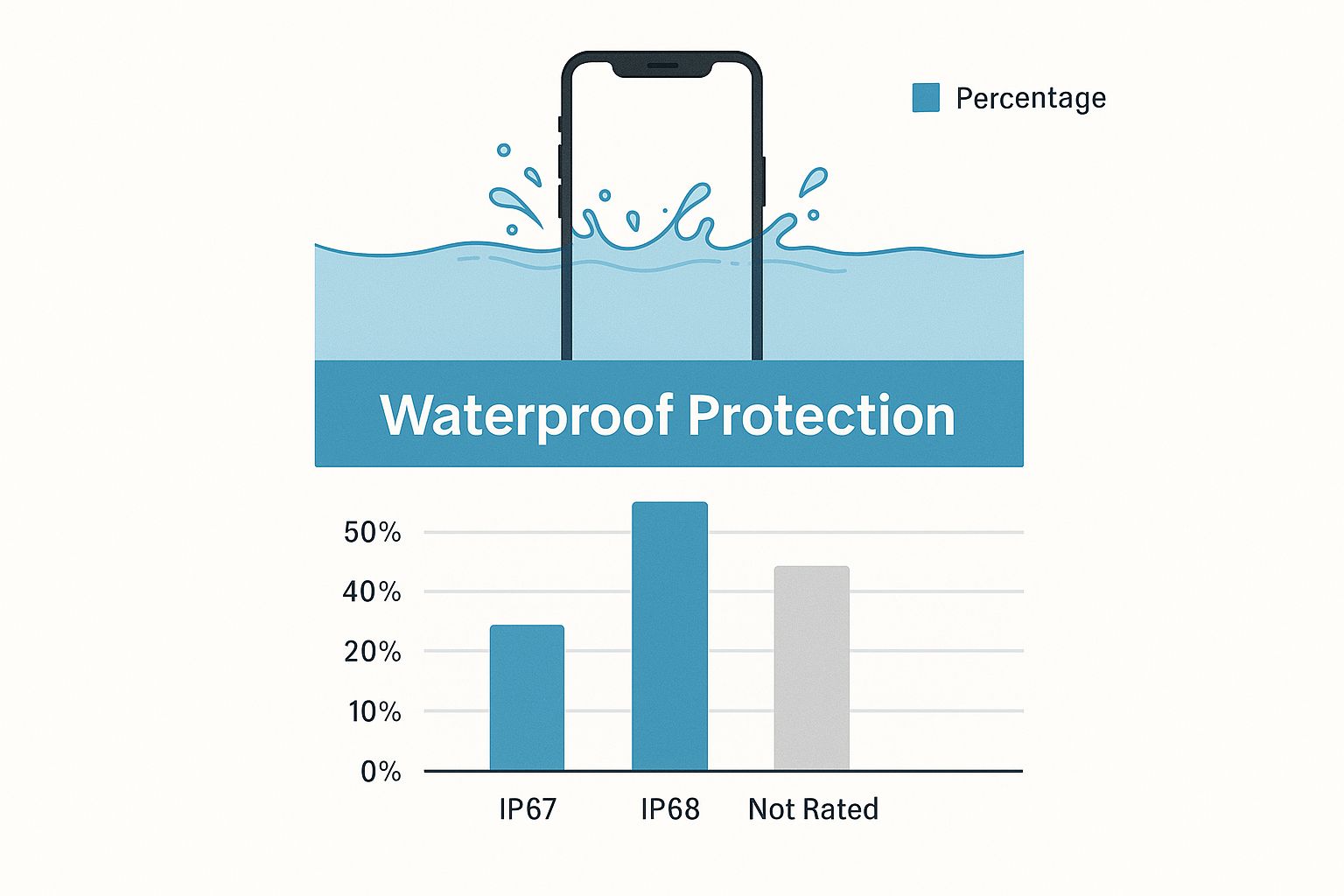
As you can see, a good case creates a perfect seal, letting you take your phone underwater without a second thought.
Translating Ratings Into Snorkeling Scenarios
Let's get practical. A case with an IPX7 rating can handle being submerged in up to 1 meter (about 3 feet) of water for 30 minutes. That’s perfectly fine if you accidentally drop your phone off a boat or fumble it by the pool, but it’s not built for the constant pressure of swimming or snorkeling.
For any real time in the water, you absolutely need a rating of IPX8. This is where things get a little more specific, and you need to pay attention.
An IPX8 rating means the product is protected against continuous submersion in water, but—and this is the important part—under conditions specified by the manufacturer. You have to read the fine print, because one company's IPX8 is not the same as another's.
One case might be rated for 2 meters for an hour, while a more heavy-duty one could be certified for 10 meters or even more. So, is an IPX8 rating good enough for a 45-minute snorkel session? Absolutely, as long as the manufacturer’s depth limit is more than the few feet you'll be swimming at.
A great case can easily turn your phone into a fantastic underwater camera. But if you're a serious hobbyist looking for specialized gear, it's worth seeing how it stacks up against the best underwater cameras for snorkeling.
Common IP Ratings Explained for Water Activities
To help you cut through the jargon, I've put together a quick table that breaks down what these common IP ratings actually mean for your water adventures.
| IP Rating | What It Means (Protection Against) | Ideal For | Not Recommended For |
|---|---|---|---|
| IP67 | Dust-tight. Can be submerged in up to 1 meter of water for 30 minutes. | Rain, poolside splashes, accidental drops in shallow water. | Swimming, snorkeling, or any prolonged water immersion. |
| IP68 | Dust-tight. Can handle continuous submersion beyond 1 meter. | Snorkeling, swimming, kayaking, boating, and beach use. | Deep diving (unless specified by the manufacturer). |
| IPX7 | No dust rating. Can be submerged in up to 1 meter of water for 30 minutes. | Accidental submersion, like dropping it in a puddle or sink. | Any intentional or extended time in the water. |
| IPX8 | No dust rating. Can handle continuous submersion beyond 1 meter. | The minimum for snorkeling and swimming, but check specs. | Activities where sand or dust is a major concern. |
Essentially, for snorkeling, IP68 is the gold standard you should be looking for. It gives you that dual protection from both sand and water. Just remember to always double-check the specific depth and time limits listed by the brand before you dive in.
Essential Features of a Reliable Waterproof Case
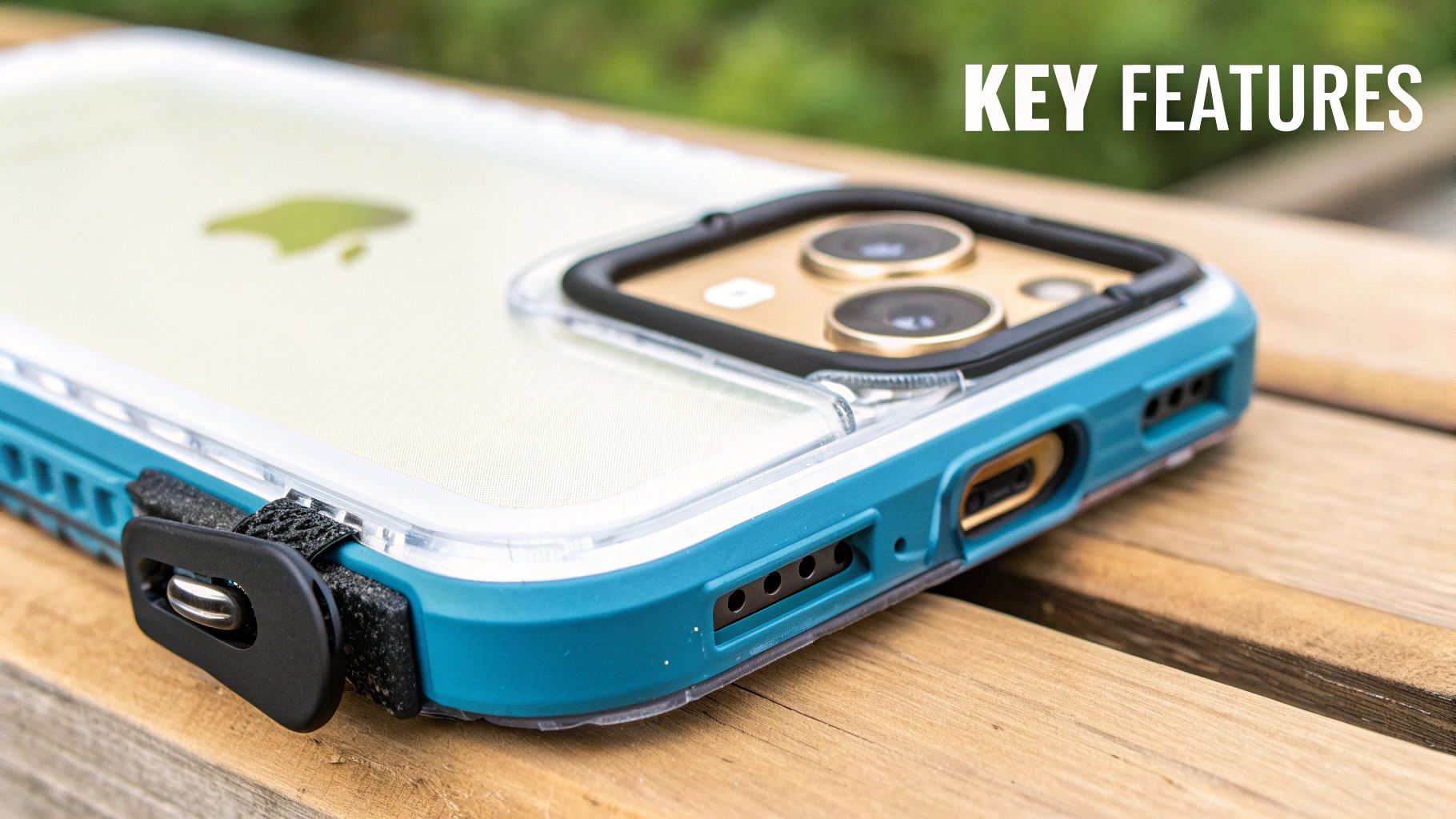
When you're hunting for the best waterproof phone case, it's tempting to think it's all about the seal. But a truly great case does more than just keep the water out—it makes your underwater photography a breeze instead of a frustrating mess. The best features are the ones that work so well you forget they're even there.
Beyond just a watertight closure, the most critical feature is the touchscreen's responsiveness. I've seen so many cases that turn your screen into a useless piece of plastic the second it gets wet, forcing you to use the volume buttons for every single photo. A high-quality case, on the other hand, is made with materials that let you keep using the screen, so you can switch camera modes or check your shots without having to surface.
This isn't just a niche concern, either. The market for mobile phone protective covers is massive, valued at USD 28.16 billion in 2024. And in the U.S. alone, about 79% of smartphone users have a case on their phone. People clearly want to protect their devices from expensive damage, and that demand drives innovation even in specialized gear like this.
Beyond the Basics Checklist
To tell a dependable case from one that's just a disaster waiting to happen, you need to look for a few key things. These are the details that really make a difference when you're out in the water.
- Optical Camera Lens Cover: A cheap, hazy plastic window over your camera will absolutely ruin your photos. The best cases have an optically clear, anti-fog, and scratch-resistant cover for the lens, making sure your underwater pictures come out sharp and vibrant.
- Secure Lanyard Attachment: A flimsy lanyard is just asking for a lost phone. The spot where the lanyard attaches should be reinforced and built right into the case's body, not just a thin plastic loop that could snap. A strong, adjustable lanyard is a non-negotiable safety feature.
- Buoyancy: Not all cases float, but the ones that do are trip-savers. A buoyant design means that if your phone slips out of your hand, it'll pop right back up to the surface instead of sinking to the bottom of the ocean.
- Durable Materials: Saltwater is incredibly corrosive. Look for cases made from tough stuff like polycarbonate and TPU (thermoplastic polyurethane), which are built to stand up to saltwater and sun damage.
A truly functional waterproof case isn't just about survival; it's about usability. The goal is to forget you're using a case at all, allowing you to focus on capturing the beauty around you without wrestling with your gear.
Ease of Use and Accessibility
Finally, think about how easy it is to actually get your phone into and out of the case. A complicated locking system is a nightmare, especially when your hands are wet. The best designs use simple but secure snap-and-seal latches that you can feel and hear click shut, giving you confidence in the seal.
Pairing a top-notch case with the right accessories is the secret to a great day on the water. It’s a lot like putting together the best snorkel gear for beginners; choosing a case with the right features makes the whole experience safer and way more enjoyable.
Choosing Between a Hard Case and a Soft Pouch
When you start shopping for a waterproof phone case, you’ll quickly notice two main players on the field: the rigid hard case and the flexible soft pouch. It’s a bit like choosing between a hardshell suitcase and a lightweight duffel bag for a trip. One gives you bomb-proof, structured protection, while the other is all about easy-to-carry, adaptable convenience.
A hard case is your hardshell suitcase. These things are built tough, usually from rugged polycarbonate and aluminum, and are designed to take a hit. If you accidentally drop your phone on a rocky shoreline or the deck of a boat, a good hard case is made to absorb that shock. This heavy-duty construction also means they typically have deeper depth ratings, making them the go-to choice for more serious underwater adventures.
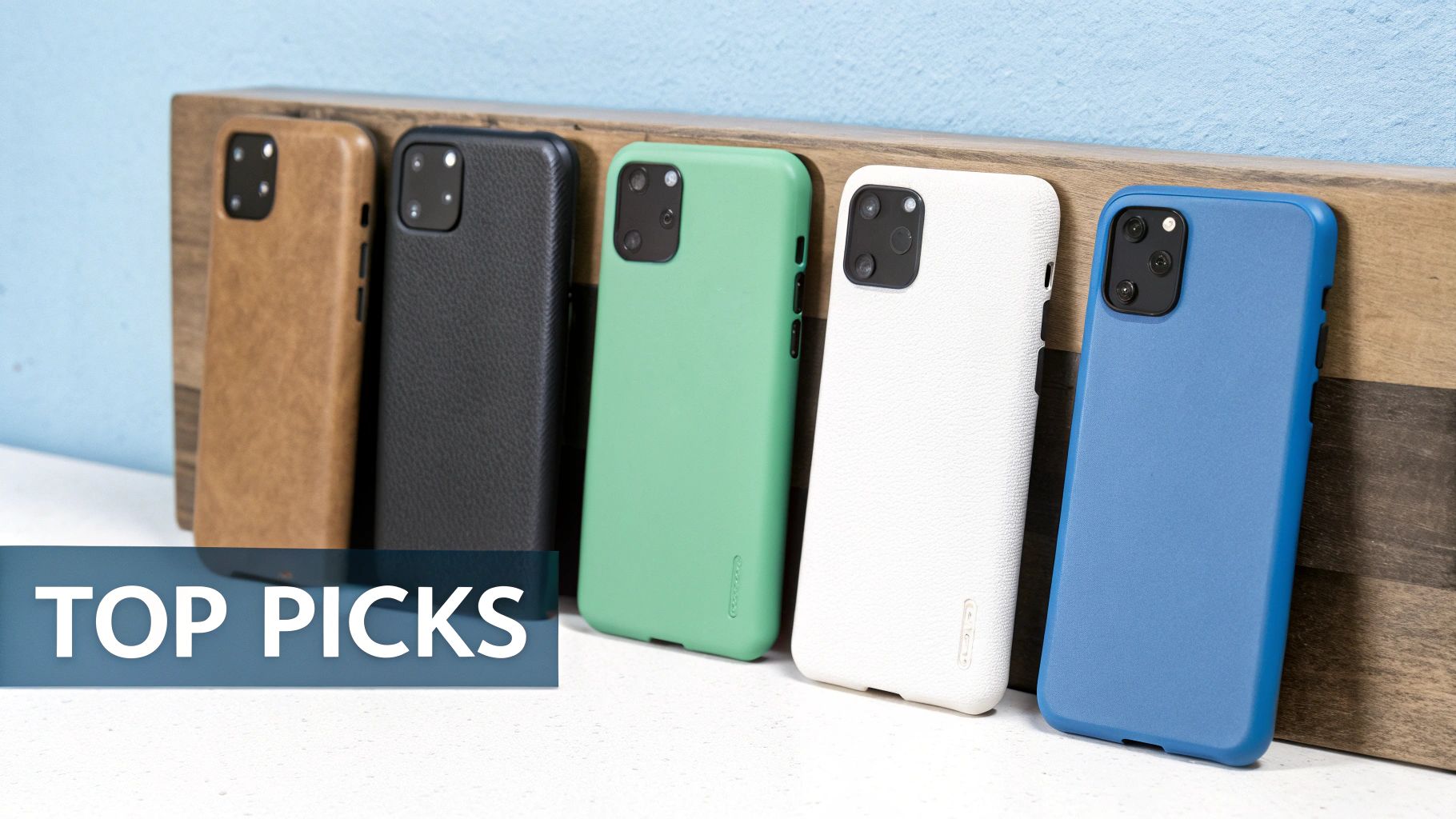
On the other hand, a soft pouch is your trusty duffel bag. They are incredibly lightweight and often have a universal fit, meaning you can pop almost any phone model inside—sometimes even with its everyday case still on. This grab-and-go flexibility is their biggest selling point.
The Trade-Offs: Portability and Protection
The real difference boils down to a classic trade-off: ruggedness versus convenience. A hard case, like those from Beeasy or OtterBox, feels like a personal vault for your phone but can definitely be on the bulky side. Its rigid frame adds noticeable weight and size, which might be overkill if you just need some basic splash protection at the beach.
In contrast, a soft pouch from a brand like JOTO or ProCase is perfect for casual, everyday use. It’s a breeze to slip into a pocket or toss in a beach bag. Plus, a huge advantage is that many of these pouches are designed to float, which can be an absolute lifesaver if your phone takes an unexpected plunge.
The right choice really just depends on what you have planned. Are you gearing up for a rugged kayaking trip where drops and bumps are a real possibility? Or are you planning a relaxed snorkeling session where portability and quick access to your camera are the main priorities?
Making the Final Decision
At the end of the day, your decision should line up with what you’ll actually be doing. The extra security of a hard case is perfect for adventurers who need serious impact resistance and the ability to go deeper.
However, for most snorkelers and beachgoers, a high-quality soft pouch strikes a fantastic balance of waterproofing, portability, and ease of use. It gives you more than enough protection for swimming near the surface and is often a better choice for snapping clear photos. If photography is your main goal, our guide on how to take underwater photos has some great tips that work no matter which case you pick. A good pouch keeps your phone dry without adding a bunch of unnecessary bulk to your gear.
How to Properly Test and Maintain Your Case
Even the best waterproof phone case on the market can fail if you don't take a few simple precautions. Trust me, trusting your expensive phone to a brand-new case without a quick check is a gamble you just don't want to take.
The single most important habit to get into is the pre-trip "tissue test." It's a completely foolproof way to make sure your case's seal is solid before your phone ever goes inside.
This simple procedure is non-negotiable. Don't put your phone in the case just yet. Instead, grab a dry piece of tissue or paper towel, pop it inside the empty case, and seal it up. Make sure every single clasp and closure is locked down tight, just like the instructions say.
Once it's sealed, submerge the case completely in a sink or a bucket of water for at least 30 minutes. You might need to place a weight on top to keep it from floating. When the time's up, dry the outside of the case thoroughly before you even think about opening it. If that tissue inside is perfectly dry, your case is ready for an adventure.
Keeping Your Case in Top Condition
Proper maintenance is just as critical as that initial test. A little regular care ensures your case will give you reliable protection trip after trip, safeguarding your investment in both your phone and your gear.
- Rinse After Every Saltwater Dip: Saltwater is incredibly corrosive and will absolutely degrade the seals over time. Always give the case a good rinse with fresh water after you get out of the ocean.
- Inspect the O-Ring Seal: Before every single use, take a close look at the rubber O-ring or gasket. You're checking for sand, hair, or any tiny bit of debris. A single grain of sand is all it takes to break the seal and cause a catastrophic leak.
- Avoid Sealing in Humidity: Here’s a classic mistake: closing your case in a super humid spot, like a steamy bathroom right after a shower. This traps moisture inside, which can lead to annoying condensation or fogging on your camera lens once you hit the cooler water.
Think of your case's O-ring as the gatekeeper. Keeping it clean and free from anything that doesn't belong there is the key to an impenetrable seal. A quick visual check takes only seconds but can save you hundreds of dollars in the long run.
It's no surprise people are spending more on protective gear. The mobile phone waterproof case market was pegged at USD 2.5 billion in 2024 and is expected to more than double by 2033. That alone shows how vital this kind of protection has become.
This simple maintenance routine is just a small part of a larger safety mindset. It's a lot like following a comprehensive boat safety equipment checklist before leaving the dock. By making these habits second nature, you ensure your case performs exactly as it should for years to come.
Got Questions? We've Got Answers
Stepping into the world of waterproof phone cases can feel a little confusing at first. Let's clear up some of the most common questions snorkelers and travelers have, so you can pick your case with total confidence.
Can I Still Use My Touchscreen Inside the Case?
Yes, but with a catch. Most good cases use a special touch-sensitive screen that lets you scroll, tap, and text just fine when you're above the water. I've found that the flexible pouches are often the most responsive for this.
Here’s the thing, though: pretty much all modern smartphone screens are "capacitive," and they don't work underwater. The water messes with the electrical field the screen needs to sense your touch. It's just physics.
So, how do you take photos and videos? Easy. You use your phone's physical volume buttons as your shutter. Before you buy any case, it's a smart move to scan the reviews to see what people say about its underwater button access.
Will a Waterproof Case Ruin My Photos?
Absolutely not—as long as you get a decent one. A well-designed case won't get in the way of your camera at all. The best ones have a dedicated, optically clear window for the lens that's treated to prevent fogging, keeping your shots crisp and clear.
The real photo-killers are those cheap, flimsy pouches made from plastic that scratches if you so much as look at it funny. One scrape from a grain of sand or a piece of gear in your bag, and you can kiss those sharp underwater images goodbye.
My pro tip? Always give the lens window a quick wipe with a soft cloth before you hop in the water. And if you really want to guarantee stunning photos, choose a case that gets rave reviews specifically for its camera clarity.
The whole point of a waterproof case is to protect your phone while you capture amazing memories. A high-quality, crystal-clear lens cover isn't just a feature—it's essential for anyone who cares about getting great shots.
Are Those Universal Pouches Actually Safe?
They sure are! Universal pouches are a fantastic, flexible option, and they're perfectly safe when you use them the right way. It all comes down to paying attention to the details.
First, always check your phone's dimensions against the pouch's maximum size. Don't forget to factor in your regular phone case if you plan to keep it on inside the pouch—it adds more bulk than you'd think.
Most importantly, you must do a quick tissue test before every single time you go in the water. It takes 30 seconds and confirms the seal is still solid. While these pouches offer great waterproofing for a day at the beach, they don't offer much protection if you drop your phone. If you want true peace of mind against both water and impacts, stick with reputable brands known for their tough, reliable locking systems.
How Deep Can I Really Take My Phone?
This is one rule you don't want to bend. The maximum depth is set by the case's specific IP rating and what the manufacturer tells you. Never, ever guess. Water pressure is no joke, and it increases fast the deeper you go. Pushing past a case's limit is a recipe for disaster.
Most quality cases are rated for depths between 15 to 100 feet (that's about 5 to 30 meters). It is critical that you stick to that number.
For snorkeling, you're golden with a case rated for 30 feet (10 meters). That gives you a huge safety buffer for floating on the surface and making those cool shallow dives to get a closer look at a passing turtle or a colorful reef.
Ready to put that new waterproof case to the test and capture some incredible underwater shots in the Florida Keys? At Marathon Snorkeling And Sunset Cruise, we'll take you to the most vibrant reefs teeming with life. It's the perfect place for an unforgettable adventure.