
How to Clear a Snorkel Mask Underwater

It’s one of the most common hiccups for new snorkelers: you’re floating along, mesmerized by a school of parrotfish, and suddenly your vision blurs as water seeps into your mask. Don't panic! Clearing your mask underwater is a fundamental skill that's surprisingly easy to master.
You just need to press the top of the mask frame firmly against your forehead, tilt your head back to look up at the surface, and exhale steadily through your nose. That's it. The air you push out forces the water right out the bottom, and just like that, you can see clearly again. Getting this move down is a huge confidence booster.
Why Your Mask Fills With Water in the First Place
Nothing ruins a beautiful underwater moment faster than a leaky mask. Before you even get in the water, it helps to understand why this happens. It's almost never a major issue—usually, it’s just a small, fixable problem breaking that all-important seal between the silicone skirt and your face.
A great day on the reef starts with the right gear. A mask that just doesn't fit your face shape is hands-down the number one reason for constant leaks. If you're wrestling with a rental or a hand-me-down, checking out our guide on the best snorkel gear for beginners can make all the difference in the world.
The Usual Suspects Behind Mask Leaks
So, what's causing that annoying trickle of water? It's almost always one of these four culprits:
- A single strand of hair. Yep, that’s all it takes. Even one little piece of hair caught under the mask's edge creates a perfect little channel for water to sneak in. Always make sure to sweep your hair completely clear before sealing your mask.
- The wrong fit. Masks aren't one-size-fits-all. A mask that’s too wide, too narrow, or just doesn't sit right against the bones of your face will never give you a good seal.
- Smiling for the camera. That huge grin when you spot a sea turtle or pose for an underwater photo changes the shape of your face, creating little wrinkles around your eyes and cheeks. This movement can break the seal just for a second, letting water in.
- Cranking the straps too tight. This is such a common mistake. It feels like tighter should be better, right? But over-tightening the straps actually warps the soft silicone skirt, creating gaps for water to pour through. You're aiming for a snug, comfortable fit, not a pressure headache.
Understanding these simple triggers is your first step toward a leak-free snorkel. It also shows why taking care of your gear is so important. In fact, research shows that masks cleaned with proper solutions maintain their anti-fog properties 35% longer than those just rinsed with soap. It’s a small step that has a big impact on your day.
Learning to clear your mask is more than just a technique—it builds real confidence. Once you know you can handle a little water without missing a beat, you become a much more relaxed and capable snorkeler, ready to truly enjoy the reef.
It happens to everyone. You're floating along, mesmerized by a school of parrotfish, and suddenly a trickle of water seeps into your mask. The first instinct for most beginners is to shoot straight to the surface, but there’s a much slicker way to handle it.
Learning this classic mask-clearing technique is a total game-changer. Seriously. Once you nail it, a little leak goes from being a trip-interrupting nuisance to something you fix in seconds without even thinking about it.
The whole trick is based on simple physics: air pushes water out of the way. You’re just going to use a puff of air from your nose to gently force that annoying water out of the bottom of your mask. It's the go-to method taught by dive pros all over the world for a reason—it just works.
First Things First: Don't Panic
Okay, so water is in your mask. Take a breath. It’s surprising, for sure, but it’s not a big deal. The most important thing you can do is just chill out. Stop kicking, get vertical in the water, and focus on taking a few slow, easy breaths through your snorkel.
If you start to panic, you'll just burn through energy and make everything feel more frantic than it needs to be. This is where mastering the basics really pays off. Having your breathing down makes handling minor issues like this a breeze. For a refresher, check out our guide on how to breathe when snorkeling.
Once you're calm, you're ready for the easy part.
This infographic is a great reminder of why masks leak in the first place. Often, it's something super simple like a stray piece of hair caught in the seal.
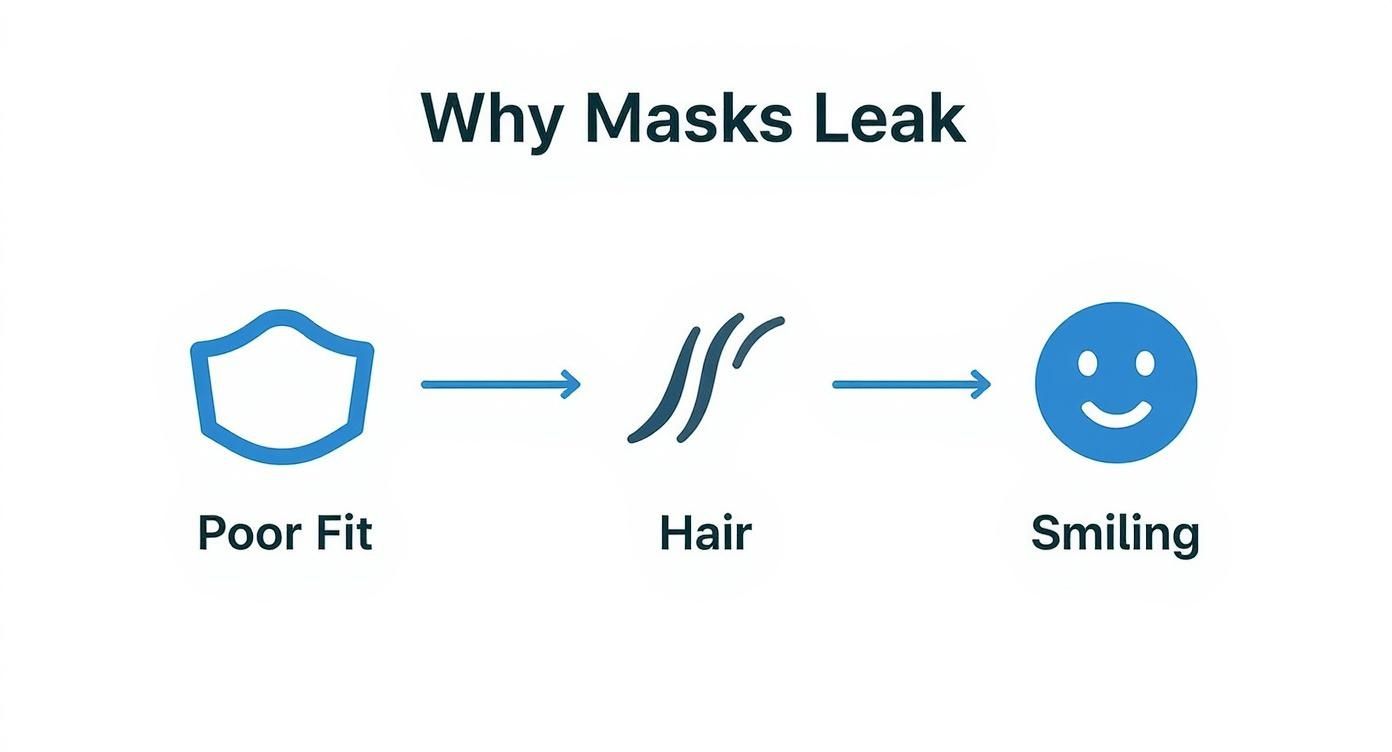
As you can see, most leaks are minor and easily fixed with the technique we're about to cover. No need to interrupt your underwater tour.
The 3-Step "Press, Look Up, Exhale"
Got your breathing nice and steady? Great. Now it’s time to clear that water out. I always tell people to remember three simple words: Press, Look Up, Exhale. It becomes muscle memory after you do it a couple of times.
Here’s the breakdown:
- Press the Frame: Use the fingertips or the heel of your hand to apply gentle but firm pressure to the top frame of your mask, right against your forehead. This is the key. You're tightening the seal at the top while creating a tiny gap at the bottom for the water to escape.
- Look Toward the Surface: Now, just tilt your head back a bit. Look up. Gravity will do the work for you here, causing all the water in your mask to pool right at the bottom where you just made that exit.
- Exhale Through Your Nose: The final step. Take a breath through your snorkel and then exhale steadily out of your nose. Don't blast it out. Think of it more like a long, slow hum. This continuous stream of air will bubble into your mask and push that collected water right out the bottom.
Sometimes it takes more than one puff, and that’s totally fine. If a little water is left, just take another breath and repeat the gentle exhale through your nose. Keep going until your mask is clear.
To make it even clearer, here’s a quick-glance table breaking down the actions.
Traditional Mask Clearing Quick Reference
This table summarizes the key actions for clearing a traditional snorkel mask, explaining the technique and why each step is effective.
| Action | Technique | Why It Works |
|---|---|---|
| Press Firmly | Use fingertips or the heel of your hand on the top frame of the mask. | Creates a tight seal at the top and a small opening at the bottom for water to exit. |
| Tilt Head Back | Gently look up towards the surface of the water. | Uses gravity to pool all the water at the bottom of the mask, right by the exit point. |
| Exhale Steadily | Blow air out through your nose in a long, controlled stream, not a short burst. | The air displaces the lighter water, pushing it out through the bottom opening until the mask is clear. |
A couple of common mistakes I see are people blowing out way too hard (which can break the top seal) or not pressing firmly enough on the mask frame. If it's not working, just reset, make sure you have solid pressure on top, and try that slow, steady exhale again.
Master this, and you’ll spend less time fiddling with gear and more time enjoying the incredible world under the waves.
Clearing a Full-Face Snorkel Mask
Full-face snorkel masks have really taken off, and it’s easy to see why. That panoramic view is a total game-changer compared to traditional masks. But when it comes to getting water out, you have to throw the old rulebook out the window. Forget pressing on the frame or looking up at the sky.
The secret weapon on a full-face mask is its one-way purge valve, which you'll usually find right at the chin. This little piece of engineering makes dealing with a leak ridiculously simple.
The Simple Lift-and-Drain Method
Got a tiny bit of water sloshing around? The fix is almost laughably easy. Just lift your head until your chin is above the water's surface. Gravity does all the work, letting the water drain right out through that purge valve. No hands, no fuss.
If you’d rather stay face-down in the action, that’s just as straightforward. One sharp, forceful exhale is all it takes. That puff of air shoves the water out through the valve, and you can get right back to fish-watching. It's quick, efficient, and lets you stay in the moment.
The beauty of a full-face mask's purge system is just how intuitive it is. It's a hands-free solution that lets you clear a minor leak without breaking your focus on the incredible world below.
Important Safety Considerations
While clearing them is a breeze, full-face masks come with a few critical safety warnings you absolutely need to know about. The number one concern is the potential for carbon dioxide (CO2) buildup. If you're using a poorly designed or cheap knock-off mask, the airflow system might not properly flush out your exhaled air. That can lead to a dangerous accumulation of CO2.
This is exactly why you should never cut corners and always buy from a reputable, well-tested brand. The good ones invest serious time and money into designing airflow systems that efficiently get your exhaled air out and away from your face. For more on gear safety, our guide on snorkeling tips for beginners is a great place to start.
Proper care is also a big deal. The way we clean snorkel gear has come a long way. Recent studies show that using warm water for cleaning can boost efficiency by 20-25% compared to cold water—a key factor in keeping those important valves and seals working perfectly. These cleaning standards became even more critical after 2020 with new disinfection protocols for shared equipment. You can dive deeper into proper cleaning methods at dedepudive.com.
How to Practice Mask Clearing at Home
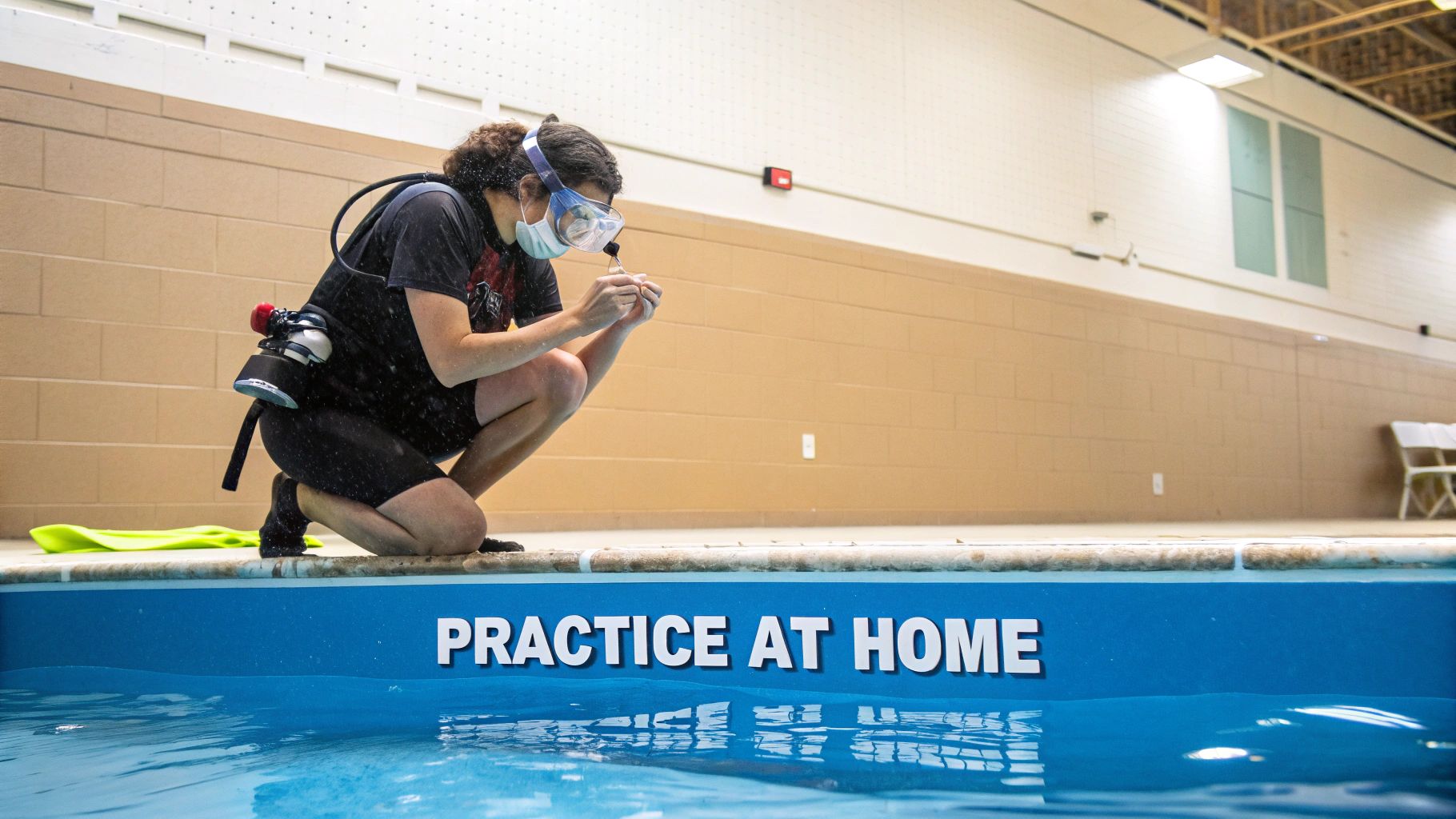
The best way to build true confidence in the water is to start on dry land. Turning a potentially stressful situation, like a leaky mask, into a simple reflex you barely think about is all about practice. And the best place to do that? Right at home, in a totally controlled environment.
Getting the muscle memory down before your trip is a game-changer. It means your time on the reef will be spent admiring the parrotfish, not fumbling with your gear. This is the exact hands-on approach we take on our Marathon Snorkeling & Sunset Cruise—we build our guests' confidence before they even dip a toe in the ocean.
Start in the Bathtub or Sink
Believe it or not, your training can begin in the simplest places, like your bathtub or even a deep kitchen sink. The goal here is purely psychological: getting used to the feeling of water on your face while knowing you can breathe just fine.
- Pop on your mask and snorkel, but don't go underwater just yet.
- Take a few slow, deliberate breaths through the snorkel to get the rhythm.
- Now, lean forward and put only your face in the water. That's it. Just focus on that sensation while you continue your calm breathing.
This first drill helps desensitize you to having your face in the water and reinforces the fact that your airway is totally separate and safe. For some people, this is a huge step. If you feel even a little bit anxious, check out our guide on how to overcome fear of water for some great strategies to get comfortable.
Progressing to the Swimming Pool
Once you’ve conquered the sink, it’s time to level up to a swimming pool. The shallow end is your new classroom. This is where you'll start combining the physical action of clearing with the breathing control you've already practiced.
First, just stand in waist-deep water. With your mask on, purposely break the seal just a tiny bit at the bottom and let a small trickle of water in. Now, run through the sequence: press the top of the mask frame, tilt your head back to look up, and give a firm puff of air out through your nose. Do it again and again until it feels completely automatic.
Building that muscle memory in a calm pool is the secret to reacting coolly in the open ocean. Every time you successfully clear your mask, you're reinforcing a sense of control and kicking anxiety to the curb.
After you've mastered it standing up, move to kneeling in the shallow end. This gets you a bit closer to a real swimming position and changes the water pressure slightly. Let a bit more water in this time and practice clearing it out.
The final drill is trying it while floating or swimming horizontally. This is as real as it gets without being on the reef, preparing you to clear your mask on the move without ever needing to stop and stand up.
Tips to Prevent a Leaky Mask
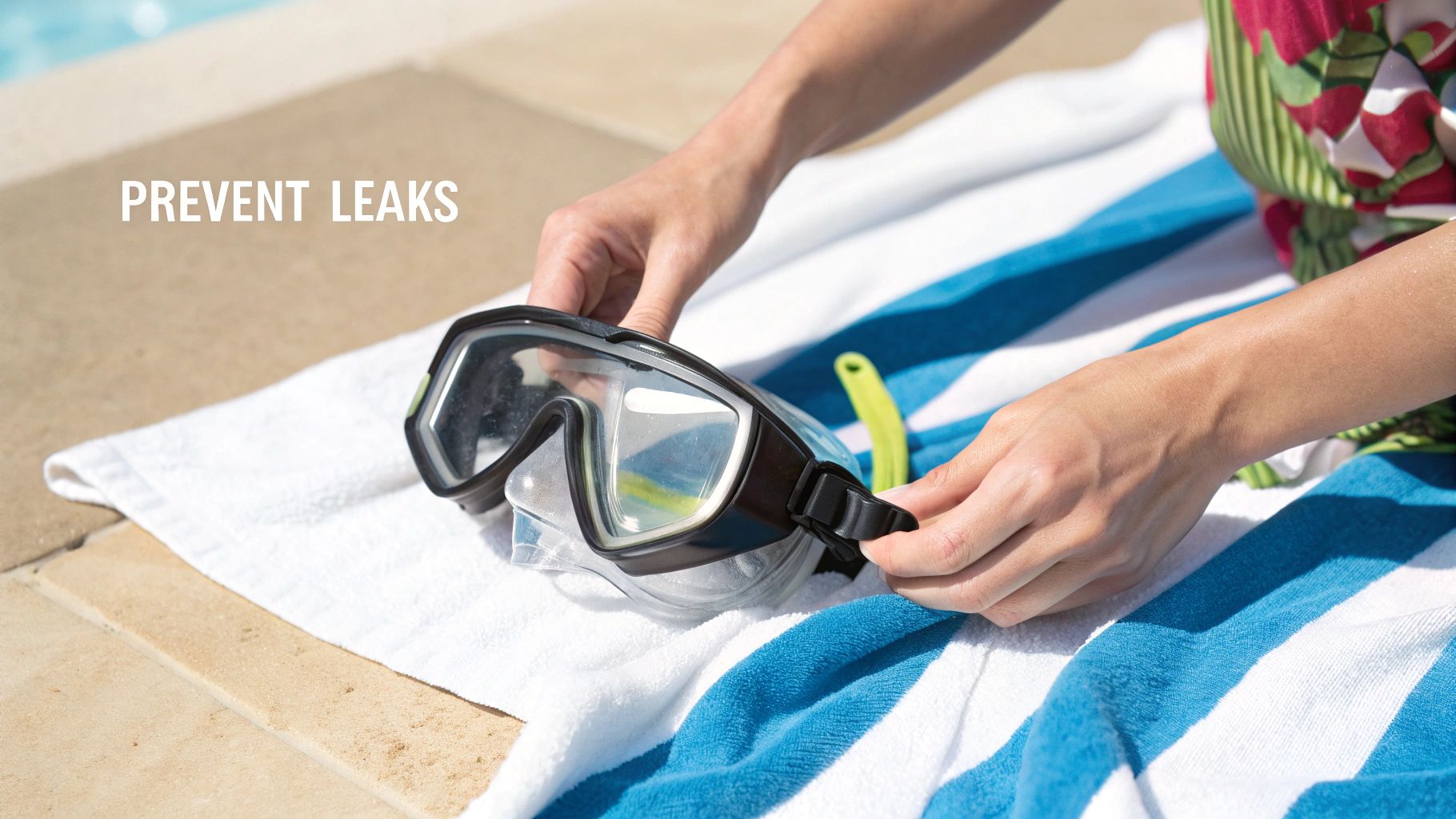
Knowing how to clear a leaky mask is a must-have skill, but honestly, preventing the leak in the first place is way better. A perfect, leak-free seal means you can focus entirely on the vibrant reef below instead of constantly fiddling with your gear.
Getting that perfect seal just takes a few simple checks before you hit the water, but they make a world of difference. Your first line of defense? A thorough hair check. It sounds silly, but even a single strand of hair caught under the soft silicone skirt creates a tiny channel for water to trickle in. Always sweep your hair back and away from your face before the mask goes on.
Next up is getting the strap tension just right. It's a classic rookie mistake to yank those straps as tight as possible. Over-tightening actually warps the mask's skirt, creating gaps and making it more likely to leak. The straps should just be snug enough to hold the mask comfortably in place, not so tight that you feel like your eyeballs are about to pop.
Seal Saboteurs to Avoid
Sometimes, you can sabotage your mask's seal without even realizing it. A few common habits can mess things up before you even get your fins wet.
Here’s what to watch out for:
- Sunscreen and Lotions: That greasy film from sunscreen or moisturizer is the enemy of a good seal. If you apply it right before putting on your mask, the silicone skirt will just slide around. Try to put sunscreen on well in advance so it has time to absorb, and give the skin around the mask area a quick wipe before you gear up.
- Facial Hair: Let's be real, a big beard can make sealing a mask tough. But even heavy stubble or a thick mustache can break that perfect seal. If you're rocking a mustache, a little bit of silicone grease (the kind made specifically for dive masks) can work wonders to fill in the gaps.
- Facial Expressions: That huge, cheesy grin for the underwater camera? It changes the shape of your face, creating little wrinkles around your eyes that can let water seep in. Just be aware that big smiles or other exaggerated expressions might break the seal for a second.
Preventing leaks is more than just a comfort thing—it's a core part of being prepared in the water. A secure, comfortable mask helps you stay calm and focused, which is the foundation of all good snorkeling safety tips.
Besides keeping water out, you also want to keep your vision crystal clear. Fogging is another common annoyance, but there are plenty of strategies to prevent mask fogging that will keep your view unobstructed.
Common Questions About Mask Clearing
Even after you get the hang of clearing your mask, a few questions might still pop into your head. That's totally normal. It’s smart to think through all the "what-ifs" before you're actually face-down in the water. Here are the quick-and-dirty answers to the things we hear most often from new snorkelers.
What if I Can't Clear All the Water on the First Try?
This is, without a doubt, the most common question we get. The answer is simple: don't sweat it. It’s completely expected, especially when you’re just learning, for a little bit of water to stick around after the first go. The absolute most important thing you can do is stay calm.
Just take another easy breath through your snorkel, get your hands back in position on the top of the mask frame, and give it another shot. It’s not unusual for it to take two or three gentle, continuous exhales to get every last drop out. A steady, controlled stream of air works way better than one big, frantic puff.
The real secret is patience. Think of it like slowly pushing something heavy—a slow, steady exhale is far more effective at displacing water than a short, powerful blast. If you feel yourself getting flustered, just pause, breathe, and reset.
Can I Accidentally Breathe in Water Through My Nose?
This is a huge fear for many people, but it’s pretty much impossible if you're doing the skill correctly. The physics are on your side here. When you exhale through your nose, you're creating positive air pressure inside your mask.
That outward-moving air has only one job: to push things out. As long as you are actively and continuously breathing out, water simply can't come in. The force of the air leaving your nose acts like a one-way-only barrier, preventing any water from getting inhaled.
Why Does My Mask Keep Leaking No Matter What?
If you feel like you're constantly clearing your mask, the problem is almost always the mask's seal or fit, not your clearing technique. It’s time to play detective.
First, check for the number one culprit: trapped hair under the mask's silicone skirt. Even a single strand can break the seal. Next, look at your straps. Are they cranked down super tight? A common mistake is over-tightening, which can actually warp the skirt and create new leaks. You’re aiming for a comfortable, snug seal—not a pressure headache.
If you’ve checked for hair and adjusted the straps and it's still leaking, that mask probably isn't the right shape for your face. The best fix is to head to a dive shop and get properly fitted. Trying on a few different styles will make all the difference in finding one that seals perfectly.
Does This Technique Work for Prescription Masks?
Yes, one hundred percent. The method for clearing a traditional snorkel mask is exactly the same whether your lenses are standard or prescription.
The science doesn't change—you're still using air pressure from your nose to push water out. The type of lens in the mask has zero effect on how you clear it. Just like with any other mask, the most important thing is making sure it fits your face well from the start. A good seal is your best defense against leaks, no matter what kind of lenses you've got.
Ready to put your new skills to the test on a stunning Florida Keys reef? At Marathon Snorkeling And Sunset Cruise, our expert, lifeguard-certified crew provides hands-on guidance right on the boat to make sure you feel totally confident and safe in the water. Book your unforgettable underwater adventure with us today.