
How to Overcome Fear of Water for Good

Overcoming a fear of water isn’t about brute force; it’s about understanding where that fear comes from and then slowly, intentionally building positive experiences. It starts with recognizing that fear is just a natural survival instinct. From there, you can use a slow, controlled approach to reframe your entire relationship with water, one small, manageable step at a time in a place where you feel completely safe.
Why You Are Afraid of Water (And Why It's Okay)
That jolt of anxiety—the racing heart, the shallow breath—when you get near a pool or the ocean can feel overwhelming. But I want you to know it's a completely normal human response. Your brain is hardwired for survival, and for many people, deep water simply registers as a potential threat.
This reaction isn't a weakness. It’s your body's ancient, protective instinct kicking in.
Instead of fighting this feeling, the very first step is to just acknowledge it. Understanding where the fear comes from is the key to dismantling it, piece by piece. For most, it’s rooted in very specific—and often common—experiences.
Unpacking the Roots of Aquaphobia
A deep-seated fear of water, often called aquaphobia, usually traces back to a few common sources:
- A bad past experience: A childhood incident, like being pushed into a pool unexpectedly or even just slipping on a wet deck, can forge a powerful negative association that lasts for years.
- Lack of exposure: If you never really had the chance to learn how to swim or just get comfortable in the water, it’s only natural to feel anxious about something so unknown.
- Learned behavior: Sometimes, we inherit our fears. If a parent or close family member was afraid of water, their anxiety could have easily shaped your own perceptions from a very young age.
And you're not alone in this. An estimated 2 to 3% of the global population experiences some form of aquaphobia. It often leads to avoiding water altogether, which only reinforces the fear over time. For those whose fear stems from a particularly negative event, learning the principles behind concepts like trauma-informed care can be incredibly helpful in understanding how to move forward gently.
The goal isn't to force bravery overnight. It's to build a new, positive relationship with water by proving to yourself, through small actions, that you are safe and in control.
Reframing this fear is all about shifting your perspective. Once you feel ready to start this journey, arming yourself with the right foundational knowledge is a game-changer. For a little inspiration on how simple skills can build massive confidence, check out our guide with some fantastic snorkeling tips for beginners. It’s a great look at how you can begin to safely and comfortably enjoy the water.
Build Confidence Before You Even Touch the Water
The journey to overcoming your fear of water doesn't have to start in the deep end. In fact, the most powerful first steps happen somewhere you already feel completely safe and in control: your own home. This is where you build your mental toolkit.
You can start making real progress right now by preparing your mind for a new, positive relationship with water. Think of it like stretching before a workout; you're just warming up your mind to be more flexible and open. When you do this, your first actual trip to the pool will feel way less intimidating.
Master Your Breath to Master Your Nerves
One of the first things fear steals is your breath. It gets shallow and fast, which basically sends a panic signal to your entire body. Getting control over your breathing is a foundational skill that directly fights back against that anxiety.
The best tool for the job is diaphragmatic breathing, sometimes called belly breathing. It's a simple technique that flips the switch on your body's relaxation response.
Here's how to do it:
- Find a quiet place to sit or lie down comfortably.
- Put one hand on your chest and the other on your stomach.
- Breathe in slowly through your nose for a count of four, feeling your stomach rise. Your chest should stay pretty still.
- Hold it for just a moment, then breathe out slowly through your mouth for a count of six.
- Repeat this for five to ten minutes every day.
This practice trains your nervous system to stay calm under pressure. These exact skills are crucial later on, and you can dive deeper into controlled breathing in our guide on https://snorkelingmarathon.com/how-to-breathe-when-snorkeling/.
Visualize a Calm Water Experience
Visualization is a potent technique used by pro athletes and top performers to prepare for success. You can use it to build your water confidence, too. It’s all about creating a vivid, detailed mental movie of yourself feeling calm and in control around water.
Close your eyes and imagine yourself at a beautiful, quiet pool. Picture the warm sun on your skin and hear the gentle sound of the water. See yourself calmly sitting at the edge, dipping your feet in, and feeling completely at ease. The trick is to focus on the positive feelings, not the fear.
Consistently visualizing a positive outcome helps rewire the neural pathways in your brain, replacing old patterns of fear with new associations of safety and enjoyment.
Building confidence before you even get wet is all about mental prep. Just like with any new physical activity, starting small and with an open mind is key. For a different take on approaching a new physical journey, it can be helpful to read about how to start yoga as a real beginner. This kind of mindset helps build a strong foundation for any new skill, including getting comfortable in the water.
Your First Gentle Steps into the Pool
Alright, you've done the mental prep work. Now it’s time to get your feet wet—literally. This is where your journey truly begins, but we're going to take it slow. Incredibly slow. The goal isn't to swim a lap or even learn a stroke. It's just about being in the water, feeling safe, and proving to yourself that you're the one in charge.
The right environment makes all the difference here. Try to find a pool that feels calm and welcoming. Think warm water, a very shallow end, and minimal noise. Going during off-peak hours can be a game-changer, giving you the space to focus without an audience.
A Gentle Introduction to the Water
The only rule at this stage? Go at your own pace. There's no stopwatch, no finish line. Every tiny movement forward is a huge win, so treat it like one.
This slow-and-steady approach is actually a form of exposure therapy, a method proven to be highly effective for overcoming specific fears. You’re gradually introducing yourself to the source of your anxiety in a controlled, safe way, which helps rewire your brain's fear response. You can learn more about exposure therapy to see just how powerful this technique is.
Here’s a simple, step-by-step plan you can follow for your first few visits. This isn't a race; one step might be all you do in one session, and that's perfect.
To keep things clear and manageable, I've put together a small checklist. Think of this as your personal roadmap for your first few pool sessions.
Gradual Water Exposure Plan
| Milestone | Action | Goal |
|---|---|---|
| 1. The Edge | Sit on the side of the pool with your feet in the water. | Get used to the temperature and the sensation on your skin. That's it. |
| 2. Shallow Standing | Slide into the shallowest end, holding onto the wall. | Stand comfortably with your head well above water, feeling the floor beneath you. |
| 3. The Wall Walk | Take a few sideways steps while still holding the wall for support. | Feel the water supporting your body as you move with complete control. |
| 4. Bubble Time | Lean forward and gently blow bubbles on the surface of the water. | Get comfortable with your face being close to the water without any pressure. |
Each action on this list, no matter how small it seems, reinforces a critical message to your brain: "I am safe. I am in control." This isn't about fighting the water; it's about learning to coexist with it peacefully.
Your only job during these first few sessions is to stay within your comfort zone and end each visit on a positive note. Even five minutes of calm is a huge success.
The image below shows the positive feedback loop you're creating. As you get more comfortable, your physical well-being improves, your confidence grows, and your stress melts away.
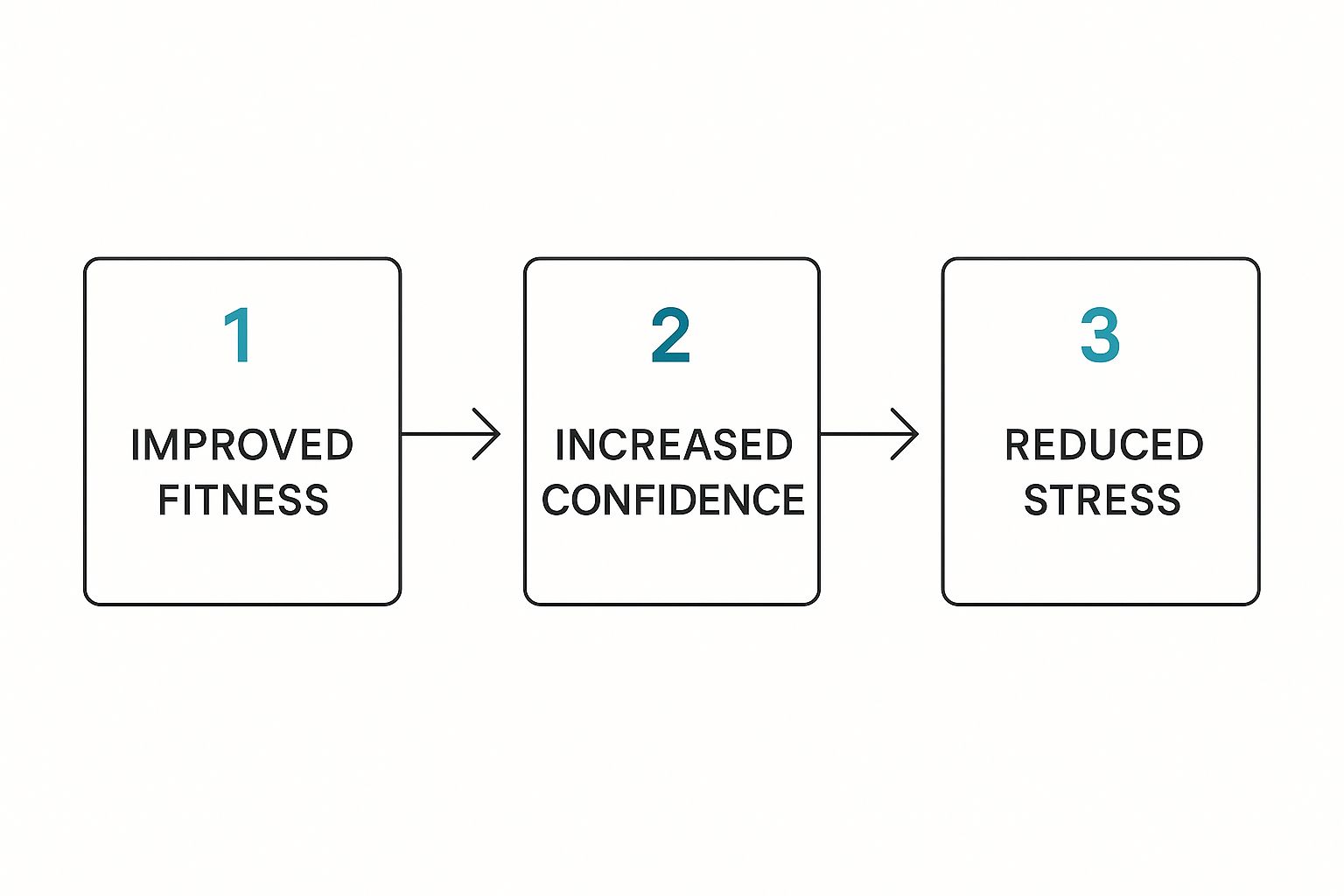
This cycle is incredibly powerful. Each small victory builds momentum. Before you know it, you might even find yourself looking forward to future adventures. A great way to stay motivated is to think about the amazing things you'll be able to do, like capturing incredible underwater photos. Checking out the best underwater cameras for snorkeling can be a fun way to get excited about what's to come.
Learning Skills That Keep You Safe and in Control
Feeling comfortable in the water is one thing, but true, lasting confidence? That comes from knowing you can handle yourself. When you have the skills to stay safe, the water’s power feels a whole lot less intimidating. This is where we shift from just being in the water to being in control.
Mastering a few fundamental survival skills completely changes your relationship with the water. It’s no longer this unpredictable force you’re just trying to survive in; it’s a space where you have choices and can act to keep yourself safe. That knowledge alone is a powerful antidote to the helplessness that fuels a fear of water.
The Foundation of Water Safety: Floating
If there's one skill you learn, make it this one: floating on your back. Think of it as your personal "pause" button. It’s a game-changing technique that lets you rest, catch your breath, and conserve precious energy if you ever feel tired or overwhelmed.
Floating isn't about strength; it's all about physics and relaxation. Your body is naturally buoyant, and your lungs act like a pair of built-in floaties. The real trick is learning to trust that the water will hold you up.
Here's how to practice:
- Start in the shallow end, holding onto the side of the pool.
- Take a deep breath and gently lean your head back, letting your ears dip just under the surface.
- Allow your back to arch a little and feel your hips start to rise.
- Stretch your arms out to the side for balance, almost like you're making a T-shape.
It’s going to feel weird at first, but with a little practice, you'll find that effortless sweet spot. Getting this one skill down is a massive confidence booster.
Treading Water and Staying Calm
Once you're good with floating, treading water is the next logical step. This is the skill that lets you stay upright in one spot without needing to touch the bottom, giving you time to think and get your bearings in deeper water.
The goal isn't to thrash around like a maniac. You're looking for an efficient, energy-saving motion. A simple flutter kick or an "eggbeater" motion with your legs, combined with a gentle sculling (back-and-forth) motion with your hands, is really all it takes.
Start practicing in water that's just deep enough that your feet can't touch, but stay close enough to the wall that you can grab it anytime you need to.
Mastering these basic survival skills—floating and treading water—is what gives you real control. They are your safety net, proving you have the ability to handle yourself calmly and effectively.
This focus on safety is no small thing. The World Health Organization estimates that a shocking 372,000 people die from drowning each year around the globe. A huge number of these tragedies are preventable, which is why organizations like UNESCO stress that learning to swim and understanding water safety are essential life skills.
Building these skills isn't just for the pool, either. As you get more confident, you might start thinking about snorkeling or swimming in the ocean. Understanding the basic safety rules for natural water environments is key. Our guide on essential https://snorkelingmarathon.com/snorkeling-safety-tips/ is a great place to start before you plan any future aquatic adventures.
Finding the Right Instructor and Support System
Let’s be honest: tackling a deep-seated fear is a huge undertaking. But you absolutely do not have to go it alone.
In fact, building a strong support system is one of the fastest ways to make real progress. Having the right people in your corner gives you more than just expertise—it provides the encouragement and patience you need to feel genuinely safe in the water.
Choosing the right instructor or learning partner is just as critical as mastering floating or treading water. It can transform the journey from a lonely struggle into a shared, reassuring experience.
Choosing an Instructor Who Gets It
Not all swim instructors are created equal, especially when it comes to teaching adults with anxiety. You need someone who is more of a patient coach than a drill sergeant. The key is to look for instructors who specifically mention they have experience with adult beginners or even aquaphobia.
Before you commit to lessons, don’t ever hesitate to have a real conversation with a potential instructor. That first chat is your chance to see if they’re the right fit for you.
Here are a few questions I always recommend asking:
- "What's your experience with adult learners who have a real fear of the water?" Their answer should ooze empathy and lay out a clear, gentle strategy, not just some one-size-fits-all program.
- "How do you structure your lessons for someone who's extremely nervous?" Listen for phrases like "at your own pace," "gradual," and "your choice." These are green flags.
- "What are your qualifications and certifications?" At a minimum, they should be certified in both swim instruction and lifesaving. That’s a layer of reassurance you definitely want.
This little vetting process helps ensure you find a true partner for your journey, not just a teacher.
The Power of a Supportive Partner
Sometimes, the best first step isn't a formal lesson at all. It might be simply getting in the water with a trusted and patient friend or family member.
If you have someone in your life who is a calm, confident swimmer, their presence can be incredibly grounding. The most important quality here is patience.
Make it clear that their role is to support you, not push you. Their job is simply to be there, offer a steady hand, and help you feel secure while you get comfortable in the shallow end, moving at your own speed.
A supportive learning environment—whether it's with a professional instructor, a small group, or a patient friend—is non-negotiable. It creates the psychological safety needed to rewire your brain’s response to water from fear to confidence.
Sadly, access to quality instruction and safe places to swim hasn't always been equitable. In the United States, drowning is a leading cause of accidental death, with stark disparities among different communities. For instance, African American youth are 5.5 times more likely to drown in pools than White youth. This is a tragic statistic directly tied to historical and socioeconomic barriers to swimming education. For many, overcoming the fear of water also means dismantling these long-standing obstacles.
Building your skills with the right support can open up a world of new experiences. Eventually, you might even feel ready for an incredible adventure like exploring the vibrant reefs detailed in our guide to snorkeling in Marathon Key.
Got Questions About Overcoming Your Fear of Water?
Stepping into the water when you've been afraid for a long time is a huge deal. It’s a brave move, and it's totally normal to have a bunch of questions swirling around in your head. Getting some clear, straight answers can make all the difference, helping you push past those hurdles and stay on track.
Let's tackle some of the most common worries people have when they decide it's time to finally face the water.
How Long Is This Going to Take?
This is the big one, isn't it? Everyone wants to know. The honest answer? It’s different for everyone. There's no magic timeline. It really depends on how deep your fear runs, how often you can get to the water, and who you have in your corner supporting you.
Some people feel a major shift after just a few weeks of consistent, gentle practice. For others, it might be a few months before they feel truly at ease, and that is completely okay.
The goal isn't to race to the finish line. It's about making steady, sustainable progress. Celebrate the small wins—like putting your face in the water or floating for three whole seconds—and remember to be kind to yourself. This is a journey, not a sprint.
Should I Start in a Pool or Open Water?
A pool, absolutely. A controlled setting like a swimming pool is the best place to start, hands down. It just takes so much of the anxiety out of the equation and lets you focus on building your confidence.
- No Surprises: Pools have clear water, you always know how deep it is, and there are no sneaky currents or waves to catch you off guard.
- Built-in Support: The walls are always right there. Any time you feel a little wobbly, you have something solid to grab onto. It's a huge comfort.
- A Safer Vibe: A good pool is supervised, which adds that extra layer of mental security, letting you relax just a little bit more.
Once you’re feeling totally comfortable in the pool and have the basics down, then you can think about making a slow, safe transition to calm, supervised open water. But don't rush it.
What if I Panic?
This is a really common fear, and just thinking about it can be stressful. But having a plan is the key to managing it. Always, always practice in a shallow area where you can stand up easily and instantly. If that’s not an option, make sure you're with a certified instructor.
If you feel that familiar wave of panic starting to build, your first move is simple: stand up or grab the side of the pool.
The second you're grounded, shift your focus to your breathing. Remember those slow, deep belly breaths you practiced? Do them now. Remind yourself, out loud if you have to, that you are in a safe place and you can get out at any time. It is perfectly fine to call it a day. Trying to "push through" a full-blown panic attack just creates more negative associations. This whole process is about building positive experiences, one splash at a time.
At Marathon Snorkeling And Sunset Cruise, we believe feeling safe is the first step to having an amazing time. Our captains and crew are lifeguard and CPR-certified and have been voted the Best Watersports in Marathon for two years running. We're here to make sure you have a secure and unforgettable experience on the water. When you're ready to see the beautiful reefs for yourself, book your adventure with us.