
Marathon Key Water Temp A Guide for Swimmers

If you’re picturing the perfect Florida Keys trip, chances are that warm, crystal-clear water is a big part of that picture. Good news: the Marathon Key water temp is fantastic all year long, hanging out in the low 70s during the winter and climbing into the high 80s in the summer. That kind of consistency makes this a top-tier spot for snorkeling and swimming no matter when you decide to visit.
Your Guide to Marathon Florida Water Temperatures
Getting a feel for the seasonal water patterns in Marathon is the first step to planning the perfect trip on the water. Unlike other beach destinations where the ocean is only swimmable for a few months, Marathon stays comfortable year-round. You can thank the powerful Gulf Stream current for that—it acts like a natural thermostat for the Middle Keys, keeping the water inviting even on our coolest winter days.
This guide will walk you through exactly what to expect from the Marathon Key water temp each season. Whether you're dreaming of floating in bath-like summer seas or escaping a northern winter for a refreshing dip, you'll have all the info you need. We'll break down the average temperatures so you can confidently pick the right time for your trip. For a bigger picture of what the weather is like, our guide on the best time to visit the Florida Keys will give you even more context.
What to Expect Each Season
Knowing the general temperature range helps you pack the right gear and set your expectations. Believe me, the difference between 72°F and 87°F water definitely influences how long you’ll want to stay in and what you should wear. Here’s a quick look at what the water feels like throughout the year.
-
Winter (December – February): Water temperatures hover in the low to mid-70s. It’s definitely refreshing but still comfortable for swimming. If you're planning a longer snorkeling trip, a light wetsuit or rash guard will make it even more enjoyable.
-
Spring (March – May): Things warm up nicely, with water temps climbing from the mid-70s to the low 80s. This is one of my favorite times because the water clarity is often incredible, making for perfect underwater exploring conditions.
-
Summer (June – August): Welcome to peak warmth. The water often hits the mid to high 80s, feeling just like a bathtub. It’s absolutely perfect for any and all water activities, from leisurely floating to snorkeling for hours.
-
Fall (September – November): The water starts to cool down from its summer peak but stays very warm, usually in the high 70s to low 80s. It’s a great time to visit, as the summer crowds have thinned out but the water is still amazing.
Marathon Key Water Temperature At a Glance
To make it even simpler, here's a quick table that sums up what you can expect from the water in Marathon depending on when you visit.
| Season | Average Water Temp (°F) | Average Water Temp (°C) | Recommended Activity |
|---|---|---|---|
| Winter | 70-75°F | 21-24°C | Refreshing swimming; wetsuit recommended for snorkeling. |
| Spring | 75-82°F | 24-28°C | Ideal for all water sports with fantastic clarity. |
| Summer | 83-88°F | 28-31°C | Perfect bath-like water for swimming & snorkeling. |
| Fall | 78-84°F | 26-29°C | Very warm and comfortable for extended time in the water. |
No matter which season you choose, you're pretty much guaranteed great conditions for getting in the water. It really just comes down to your personal preference for how warm you like it
A Month-by-Month Breakdown of Marathon Water Temps
While the seasonal averages give you a great bird's-eye view, getting into the month-to-month details is where you can really dial in your trip planning. The water's personality shifts throughout the year, and that subtle change affects everything from what you should pack to how long you’ll want to stay in the ocean.
So, let's go beyond the numbers and talk about what the water actually feels like each month.
This simple visual breaks it all down, showing the difference between the refreshing winter temps and the bathwater-warm summer highs.
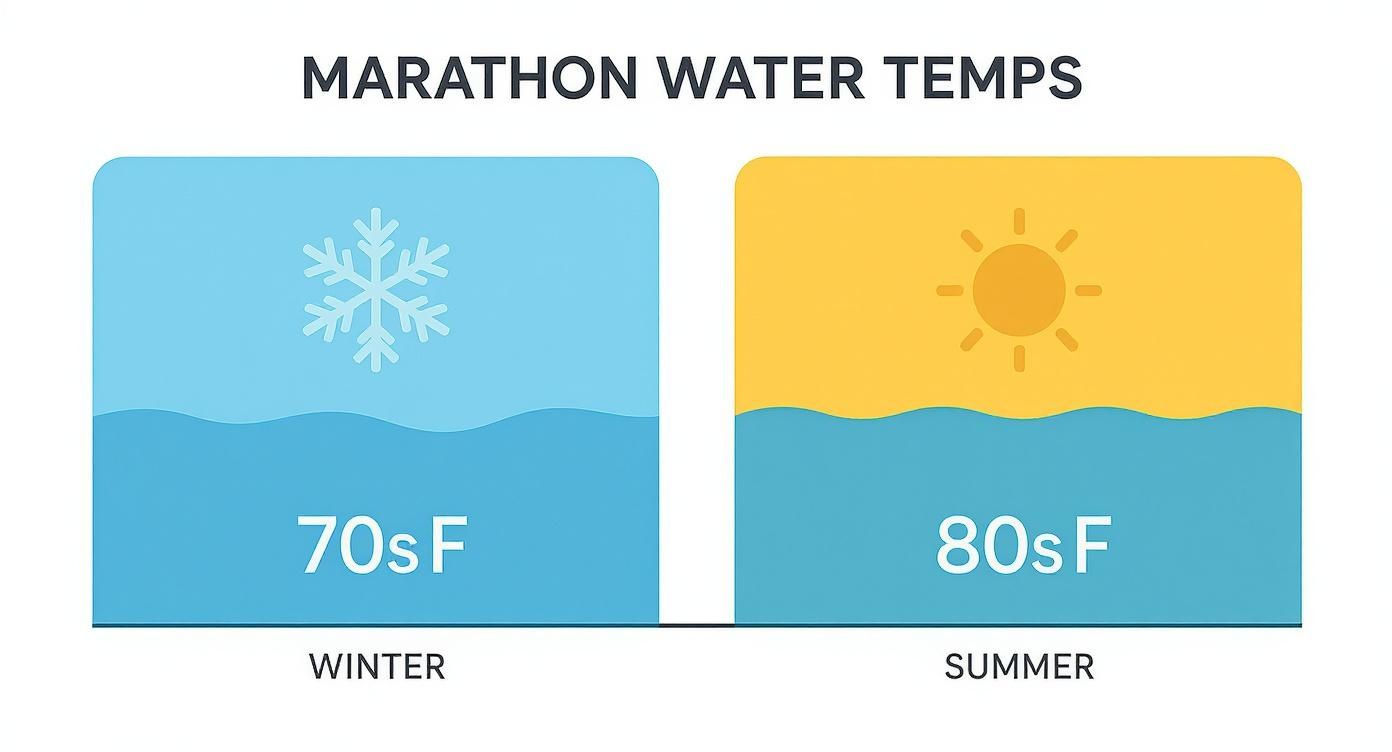
As you can see, even our "coldest" months are still in the inviting 70s. Come summer, we're talking about true tropical bliss in the 80s.
The Cooler Months: January to March
The year kicks off with Marathon’s coolest water, but let's be clear—"cool" here is nothing like what most people are used to. In January, the ocean averages a refreshing 71.2°F (21.8°C). Some folks will have no problem jumping right in, but if you're planning a long snorkeling session, a light wetsuit is your best friend for staying perfectly comfortable.
By February, you can feel things starting to warm up, with the water climbing into the low to mid-70s. That trend keeps rolling right into March, when the water hits a very pleasant 75°F (24°C), signaling the unofficial start of spring. To see how the air temps and sunshine line up with these conditions, our guide to the Florida Keys weather by month has all the details.
The Prime Spring Months: April and May
April and May are, for many, the absolute sweet spot for visiting Marathon. The water is just perfect. In April, you can expect temps in the upper 70s, often getting close to 78°F (26°C). It’s warm enough for just about everyone to snorkel and swim for as long as they want without any extra gear.
May keeps the good times rolling, with water temperatures pushing firmly into the low 80s. When you combine that warm water with the typically crystal-clear visibility, you have a recipe for some of the best underwater exploring of the year, all before the peak summer heat sets in.
The Peak Summer Months: June to August
Welcome to summer, when the water around Marathon feels like a warm, luxurious bath. June sends the average into the mid-80s, which is absolutely ideal for lazy floating and hours-long snorkeling adventures.
The warmth hits its peak in July and August, when the water consistently hangs out around 86.7°F (30.4°C). Seriously, you can stay in the water for hours without even a hint of a chill. This is the ultimate time for families with small kids or anyone who dreams of that truly tropical ocean feel.
The Golden Fall Months: September to December
Fall is a fantastic time in the Keys. You get to hang onto much of that amazing summer warmth but with fewer people around. September still delivers water in the mid-80s, feeling almost identical to summer.
- October: The water slowly starts to cool but stays incredibly pleasant, usually averaging around 82°F (28°C).
- November: Temperatures dip back into the upper 70s, which is still more than comfortable for any water activity you have in mind.
- December: As we head into the holiday season, the water settles into the mid-70s—a refreshing and delightful escape for visitors coming from colder climates.
This amazing predictability is what makes Marathon such a reliable spot for anyone who loves the water. You can book your trip with confidence, knowing incredible ocean conditions are always here waiting for you.
What to Wear for Snorkeling and Swimming in Marathon
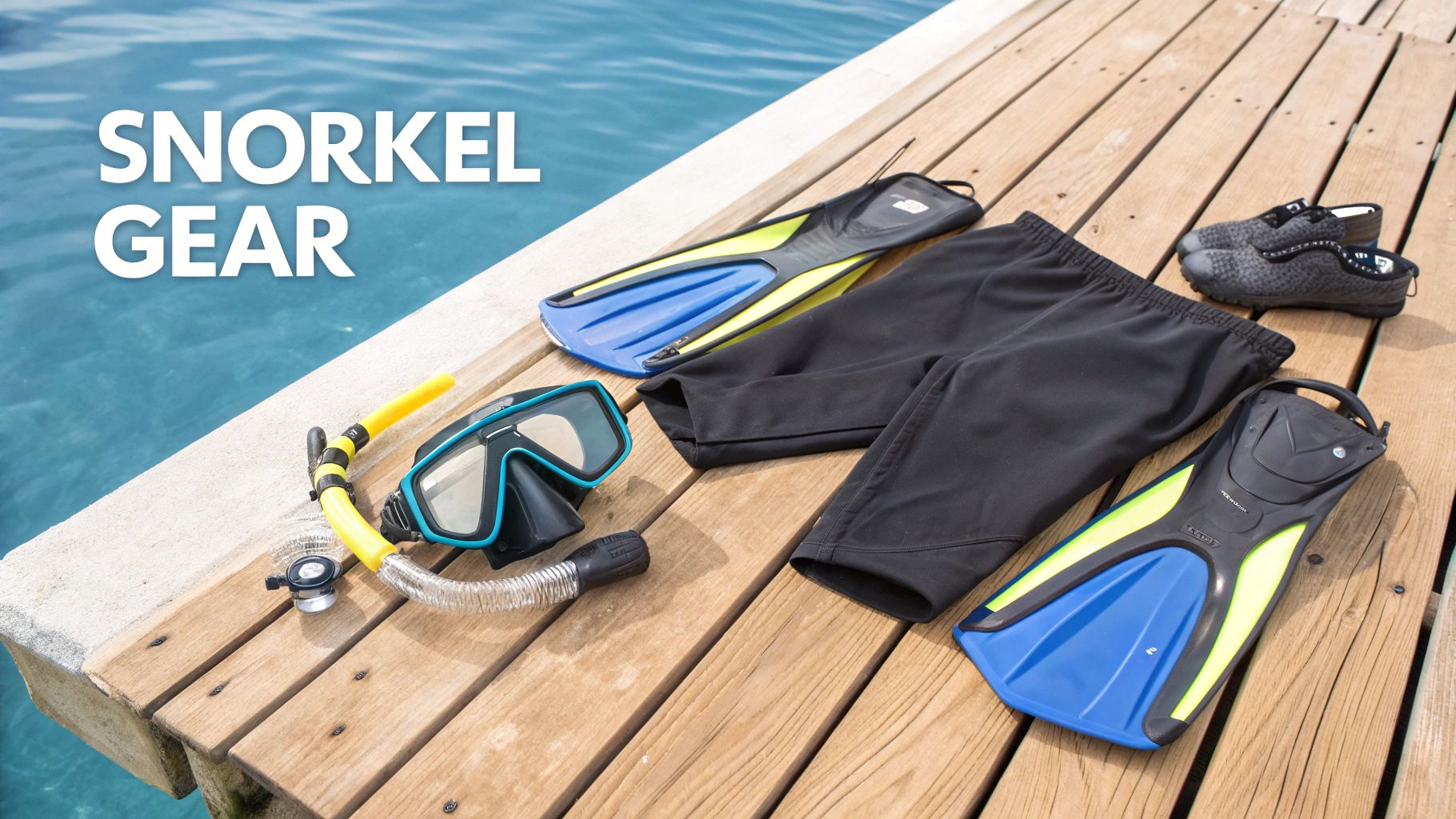
Knowing the Marathon Key water temp is one thing, but translating that number into a packing list is what really sets you up for an amazing day on the water. The right gear is all about comfort. It lets you focus on the incredible coral reefs and schools of fish instead of feeling a chill.
Packing for Marathon isn't about bracing for the cold; it's about matching your gear to the season for maximum enjoyment.
For most of the year, especially from late spring through early fall, the water is so warm and inviting that your favorite swimwear is all you need to dive in. But don't underestimate the Florida sun—it’s intense, even on cloudy days. A long-sleeved rash guard is an absolute must-have, not for warmth, but for critical UV protection that will save you from a nasty sunburn.
Dressing for Summer Bliss
During the peak summer months, when water temperatures climb into the mid and high 80s, your main focus shifts to sun protection and staying comfortable. Think of the ocean as a giant, warm bathtub where you can easily float for hours.
- Swimwear: Your go-to swimsuit or trunks are perfect for these conditions.
- Sun Protection: A good-quality rash guard is non-negotiable. It’s the best way to protect your back and shoulders, which are constantly exposed to direct sun while you're snorkeling.
- Hat and Sunglasses: For any time you spend on the boat, a wide-brimmed hat and polarized sunglasses are essential for cutting down the glare off the water.
The name of the game in summer isn't staying warm; it's staying safe from the sun. A solid rash guard means you can extend your snorkeling time without worrying about a painful burn ruining your vacation.
Gearing Up for Cooler Winter Waters
Once winter rolls around and the water dips into the low 70s, your packing list needs a few tweaks. While plenty of folks from colder climates find this temperature perfectly fine for a quick dip, it can start to feel chilly during a two-hour snorkeling tour.
This is where a wetsuit can completely transform your experience for the better.
A 3/2mm wetsuit is the ideal choice for Marathon's mild winter waters. The "3/2" simply refers to the thickness of the neoprene: 3mm around your core to keep your torso warm, and a more flexible 2mm on the arms and legs. This thin layer traps a bit of water against your skin, which your body quickly heats up, creating a personal insulation barrier. It’s the difference between tapping out after 30 minutes and comfortably exploring the reef for the entire trip.
Picking the right equipment can feel like a lot, but it doesn't have to be. For more great tips on masks, fins, and snorkels, check out our guide on the best snorkel gear for beginners to make sure you're all set. With the right gear, every season in Marathon is the perfect time to explore the underwater world.
How Water Temperature Shapes Marine Life and Snorkeling
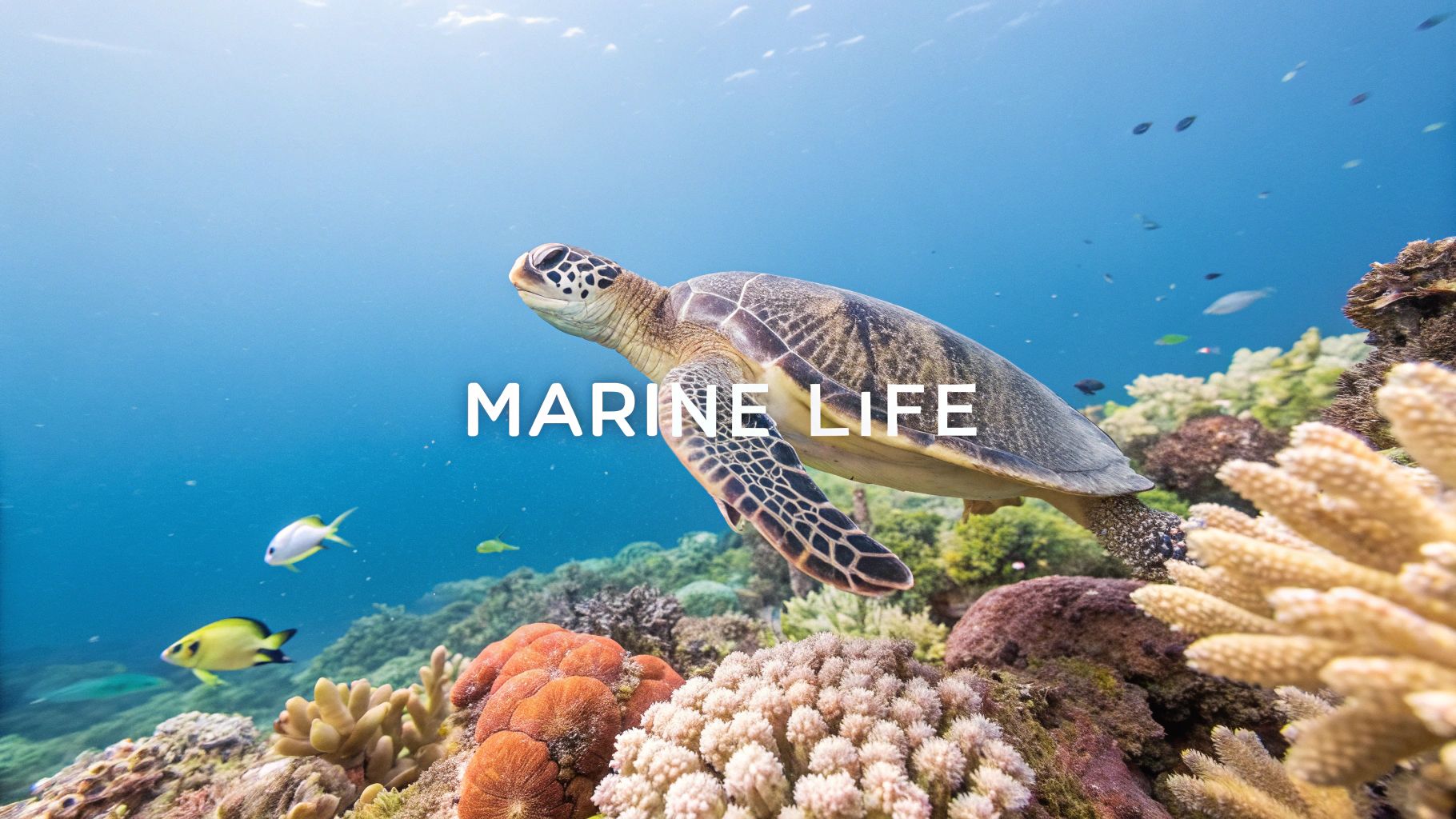
That consistently warm Marathon Key water temp is more than just pleasant for us swimmers—it's the lifeblood of the entire underwater ecosystem. Think of it as Mother Nature setting the thermostat to the perfect temperature for a vibrant, bustling marine metropolis to thrive.
This stable warmth, which rarely ever drops below 70°F, creates the ideal conditions for our beautiful coral reefs. These reefs are the underwater equivalent of sprawling cities, providing critical shelter, food, and breeding grounds for hundreds of species. From the tiniest neon-colored goby to majestic sea turtles, everything you see on a snorkeling trip is here because of that warm, life-sustaining water.
Seasonal Marine Life Activity
While the underwater world here is buzzing year-round, you'll notice subtle shifts in activity as the water temps change with the seasons. It keeps things interesting, and there's always something new to see.
-
Winter Wonders: As the Gulf of Mexico cools down a bit, gentle manatees often head for Marathon's warmer, more stable shallows to hang out. Spotting one of these "sea cows" is a truly special winter treat.
-
Spring Spawning: When temperatures climb into the upper 70s and low 80s, it's go-time for many reef fish. They begin their spawning rituals, filling the reefs with incredible energy and huge, dazzling schools of fish.
-
Summer Abundance: The bathtub-like warmth of summer is peak season for bigger species like grouper and tarpon. You’ll also find spiny lobsters getting more active along the edges of the reef.
This reliable warmth is what makes Marathon such a predictable paradise for snorkelers. No matter when you visit, you can bet on seeing a rich variety of incredible marine life.
The health of our reefs is directly tied to water temperature. When waters get too warm for too long, it can stress the coral, leading to a phenomenon known as bleaching. It's a delicate balance that highlights the importance of a stable marine climate.
Protecting Our Underwater Paradise
Keeping the Marathon Key water temp stable is absolutely crucial. Abnormally high temperatures can pose a serious threat to the coral that forms the very foundation of this ecosystem.
Taking a moment to understand what causes coral bleaching helps us all appreciate just how fragile this beautiful underwater world is. Choosing responsible tour operators who put reef safety first is one of the best things you can do to help. When you join us for a tour, you’re not just seeing the reef—you’re learning how to be a steward of this incredible natural treasure for years to come.
Planning Your Trip Around the Best Water Conditions
Now that you know how the Marathon Key water temp shapes everything from the fish you'll see to what you should pack, let's nail down the perfect time for your trip. Honestly, the "best" time to visit really comes down to you. By matching your travel dates with the conditions you'll love most, you're setting yourself up for an incredible time on the water.
Dreaming of that perfect, bath-like water where you can just float for hours and snorkel without a care in the world? Aim for late summer. August and September are your golden months when the ocean feels like a giant, warm tub. It's an ideal setup for families with young kids or anyone who gets cold easily.
Finding Your Perfect Season
What if you want to skip the peak summer heat but still enjoy incredibly comfortable swimming? You're in luck. Plan your trip for late spring (May) or early fall (October). The water stays beautifully warm, usually in the low 80s, but the air temperatures are a bit milder than in the dead of summer.
And if you're trying to escape a brutal northern winter, any time between December and February will feel like a tropical paradise. Even at its "coolest," Marathon's water hovers in the low 70s, which is a wonderfully refreshing change of pace from snow and ice. For a bigger picture of how our local temps fit into the regional patterns, check out our complete guide to the Florida Keys water temperature.
Marathon Key is famous for its unbelievably warm and stable ocean temperatures, which is why it’s a genuine year-round destination. Looking at the data, the water rarely dips below 68°F (20°C), even on the chilliest winter days. On the flip side, it peaks with an average of 86.9°F (30.5°C) in August.
To make your trip truly seamless, think about weaving your water plans into a bigger adventure. A well-planned Florida Keys road trip itinerary can help you line up all the pieces for a perfect vacation. Once you’ve settled on the best time for your visit, you can book your snorkeling tour with us knowing exactly what to expect when you take that exciting leap into the water.
Your Top Questions About Marathon's Water Temps
Planning a trip is exciting, but you've probably got a few questions before you start packing your bags. Let's clear up some of the most common ones about Marathon's water temperatures so you can feel totally confident about the amazing experience waiting for you.
What's the Coldest the Water Ever Gets in Marathon Key?
The coolest the water gets here is in January, with an average temperature right around 71.2°F (21.8°C). Honestly, for anyone visiting from up north, it feels incredible. It's refreshing, not shocking.
On very rare occasions, maybe after a strong winter cold front rolls through, the water might briefly dip into the high 60s. But it almost never drops below 68°F (20°C), which is still plenty comfortable for most people to jump right in.
Do I Really Need a Wetsuit to Snorkel in the Winter?
This all boils down to personal preference and how long you plan on being in the water. If you're just going for a quick swim in January or February, most folks are perfectly happy without any extra gear.
But if you're joining us for a longer snorkeling tour where you'll be in the water for a while, a shorty wetsuit or a 3/2mm full suit makes a world of difference. It's not about surviving the cold; it's about staying so comfortable that you lose track of time while exploring the reef. We have rentals available on all our tours to make it easy.
Is the Water Warm Enough for Kids to Swim Year-Round?
Absolutely, for most of the year! From March straight through November, the water is like a bathtub, and kids will happily splash around for hours on end.
In the peak winter months of January and February, the low 70s might feel a bit chilly for younger children, especially if there's a breeze. A simple thermal rash guard or a kid-sized wetsuit is the perfect fix. It ensures they stay toasty warm and can enjoy the ocean just as much as the grown-ups.
How Does Marathon's Water Temp Compare to the Rest of Florida?
Thanks to our prime southern location and the ever-present warmth of the Gulf Stream, Marathon's water stays consistently warmer than almost anywhere else in Florida, especially in the winter.
While places in the Florida Panhandle can see their water temps drop into the 50s, you just don't see that here. Marathon rarely ever dips below the high 60s, making it a uniquely reliable destination for warm-water fun, no matter the season.
This unique warmth is what makes the Keys so special. It's a topic that comes up often when people compare water temperatures in other popular diving destinations like Kona.
Ready to feel Marathon's perfect water for yourself? Marathon Snorkeling And Sunset Cruise offers unforgettable trips to the most beautiful reefs and sandbars. Book your adventure today and dive into the warm, clear waters of the Florida Keys! https://snorkelingmarathon.com