
8 Effective Seasickness Prevention Tips for 2025

A day spent snorkeling at Coffins Patch reef or enjoying a sunset cruise in Marathon should be filled with incredible memories, not the discomfort of seasickness. While the gentle waves of the Florida Keys are usually pleasant, motion sickness can affect anyone, turning a dream trip into a queasy ordeal. This feeling occurs when your brain receives conflicting signals from your inner ears, eyes, and body, disrupting your sense of balance and leading to nausea, dizziness, and fatigue.
Fortunately, with a little preparation, you can keep your sea legs steady and focus on the fun. This guide offers eight practical, expert-backed seasickness prevention tips to ensure your experience on a Marathon Snorkeling And Sunset Cruise is nothing short of spectacular. We'll cover everything from simple, on-the-spot adjustments to proven remedies, helping you prepare for a smooth and enjoyable trip. Whether you're a seasoned sailor or a first-time boater, these actionable strategies will help you stay comfortable and fully enjoy the breathtaking beauty of the Florida Keys. Let's dive into the techniques that will keep you feeling your best on the water.
1. Choose Your Position on the Vessel
Where you stand or sit on a boat can dramatically influence your susceptibility to motion sickness. The physics of a vessel's movement on water means that some areas are inherently more stable than others. Think of a seesaw; the ends go up and down dramatically, while the center point, or fulcrum, moves very little. A boat operates on the same principle, pitching and rolling around a central axis.
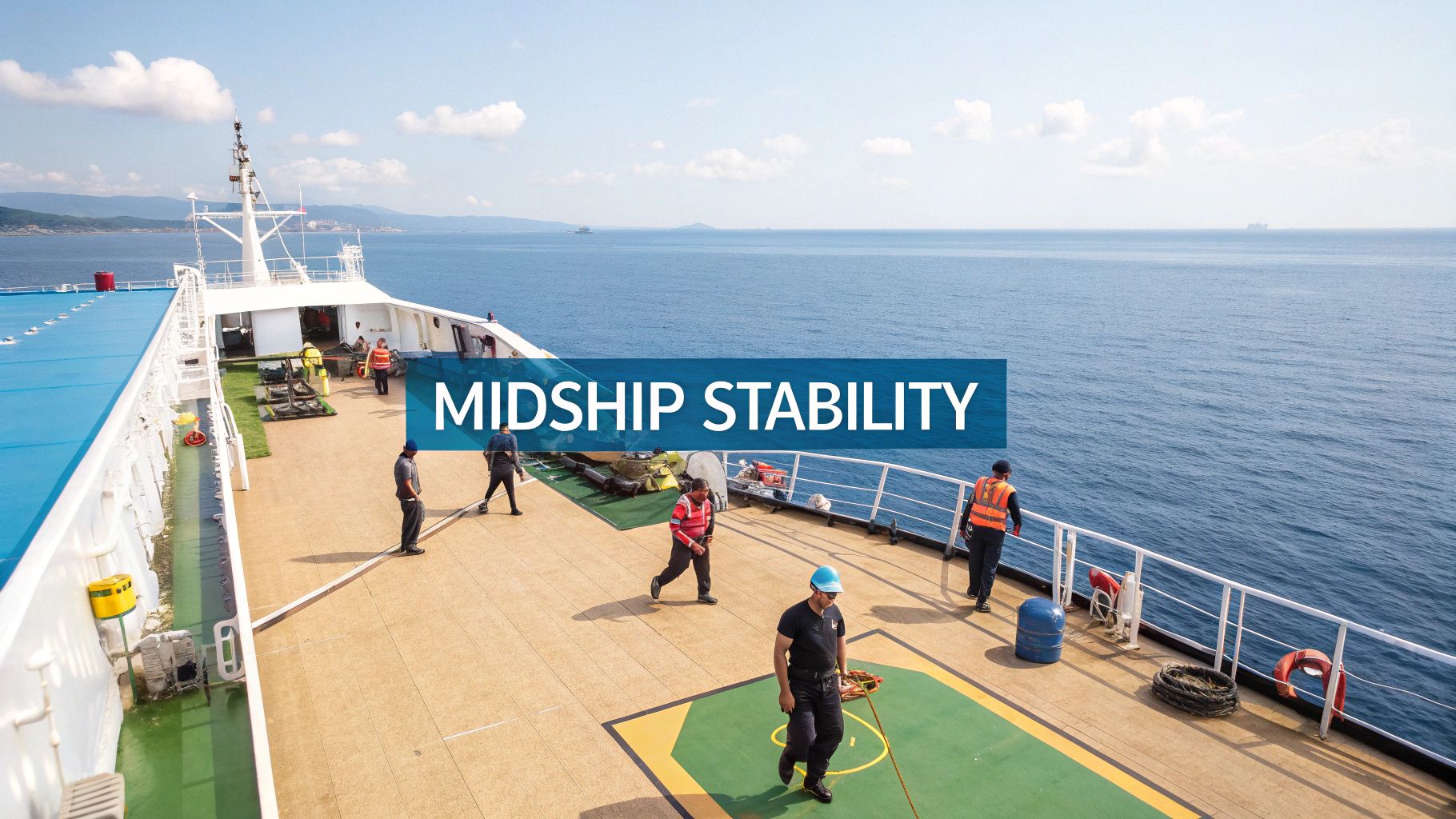
The most stable area is the middle of the vessel (midship) on the lowest possible deck. This spot is closest to the boat's center of gravity and experiences the least amount of rocking and swaying. Conversely, the bow (front) and stern (back) will have the most exaggerated movements, making them the worst places to be if you're prone to seasickness.
Why Location Matters
This principle is so effective that it's a core component of naval training for sailors. Ferry operators often designate central, lower-deck areas as "stability zones" for passengers who feel unwell. Studies on large cruise ships have even shown that passengers in midship cabins report significantly less nausea compared to those in cabins at the front of the ship. By strategically placing yourself, you can minimize the sensory conflict that triggers seasickness.
Practical Tips for Optimal Positioning
To make this one of the most effective seasickness prevention tips, you need to be proactive.
- Upon Boarding: Immediately claim a spot in the center of the boat. On a snorkeling or sunset cruise tour boat, this is often a seating area on the main deck, away from the bow and stern.
- During the Trip: If you start to feel queasy, don't wait. Move to the most stable central area you can find. Staying on an open deck is preferable, as fresh air also helps.
- On Overnight Trips: If booking a cabin, always request one that is midship and on a lower deck. Avoid cabins located very high up or at the extreme ends of the ship.
Being mindful of your location is a simple, no-cost strategy that can make the difference between a miserable trip and a fantastic day on the water. Proper positioning is just as crucial as remembering to pack the right gear; for a comprehensive checklist, see our guide on what to bring on a boat trip on snorkelingmarathon.com.
2. Maintain Visual Reference with the Horizon
One of the most powerful and immediate seasickness prevention tips is to fix your gaze on a stable, distant point: the horizon. Seasickness originates from a sensory mismatch. Your inner ear’s vestibular system feels the boat's motion, but if your eyes are focused on the stationary interior of a cabin, your brain receives conflicting information. This sensory conflict is what triggers nausea, dizziness, and that classic queasy feeling.

Watching the horizon forces your eyes to see the same motion your body is feeling, allowing your brain to synchronize the conflicting signals. The steady line where the sea meets the sky acts as a true, fixed reference point, helping your brain make sense of the vessel's rocking and swaying. This re-calibration effectively short-circuits the trigger for motion sickness.
Why Location Matters
This technique is a time-tested staple for maritime professionals. Merchant marine training programs drill this into new sailors, and experienced fishing charter captains routinely advise queasy guests to stop looking at their fishing line and start looking at the horizon. Even the Coast Guard uses this method to help personnel and rescued individuals manage motion sickness during operations in rough seas. By consciously giving your brain the visual data it needs, you can actively combat the root cause of the problem.
Practical Tips for Optimal Positioning
To make this strategy work for you, it requires conscious effort, especially when you start to feel unwell.
- Go Outside Immediately: At the very first sign of queasiness, stop what you’re doing and get on an open deck where you have a clear, unobstructed view of the horizon.
- Focus, Don't Stare: Find a comfortable spot to stand or sit. You don't need to stare intently, just keep the horizon in your field of vision.
- Avoid Close-Up Tasks: Put away your phone, book, or camera. Looking at a fixed object up close while your body is in motion is a guaranteed recipe for sensory conflict.
- Take Regular Horizon Breaks: If you're on a longer trip, like our Marathon sunset cruises, make a point to step outside every 15-20 minutes to reorient your senses by watching the horizon.
Keeping your eyes on the horizon is a simple, free, and incredibly effective method to keep seasickness at bay, allowing you to fully enjoy your time on the water.
3. Use Scopolamine Patches
For those who need a powerful, reliable solution, scopolamine transdermal patches are often the most effective medical intervention available. This prescription-only medication works by delivering a steady, controlled dose of an anticholinergic drug through the skin. Applied behind the ear, the patch effectively blocks nerve signals between the inner ear and the brain's vomiting center, preventing the sensory mismatch that causes motion sickness.
The patch is a small, circular bandage that provides long-lasting protection, typically for up to three days. This makes it an ideal choice for multi-day boat trips or for individuals who are extremely susceptible to seasickness, even on shorter excursions. Its efficacy has made it a go-to for professionals who cannot afford to be incapacitated by nausea.
Why This Method is So Effective
The continuous, transdermal delivery system is what sets scopolamine apart. Unlike pills that can cause peaks and troughs in medication levels, the patch maintains a consistent concentration in the bloodstream. This reliability is why it is standard issue for U.S. Navy personnel and relied upon by commercial fishing crews on long voyages. Scientific expeditions crossing notoriously rough waters, like the Drake Passage to Antarctica, frequently depend on scopolamine to keep researchers functional.
Practical Tips for Using Scopolamine Patches
To maximize the benefits of this powerful seasickness prevention tip, proper application and timing are critical.
- Apply in Advance: The patch should be applied to a clean, dry, hairless area of skin behind the ear at least 4 to 12 hours before your boat trip. This gives the medication ample time to be absorbed.
- Handle with Care: Always wash your hands thoroughly with soap and water before and after handling the patch. Avoid touching your eyes, as contact with the medication can cause blurred vision.
- Know the Side Effects: Common side effects include dry mouth and drowsiness. If you experience more severe reactions, remove the patch and consult your doctor.
- Consult a Professional: As a prescription medication, you must discuss its use with your doctor, especially if you are taking other medications or have pre-existing health conditions like glaucoma.
When other remedies fail, the scopolamine patch offers a robust defense against seasickness, ensuring you can enjoy your adventure on the water. Proper planning, including medication, is just as vital as knowing which snorkeling spots to visit on snorkelingmarathon.com.
4. Take Antihistamines Preventively
Over-the-counter antihistamines are one of the most reliable methods for preventing motion sickness before it starts. Medications containing active ingredients like meclizine (Bonine, Dramamine Less Drowsy) or dimenhydrinate (original Dramamine) work by blocking signals in your brain that trigger the nausea and dizziness associated with seasickness. The key to their success lies in taking them proactively, not reactively.

These medications prevent the sensory mismatch from escalating into full-blown seasickness. By taking a dose 30 to 60 minutes before you even step on the boat, you allow the medication to build up to an effective level in your system. This preemptive approach is far more effective than trying to treat symptoms once they’ve already begun.
Why Timing is Everything
This preventative strategy is standard practice for seasoned boaters and is often recommended by charter fishing captains who want to ensure their guests have an enjoyable trip. Once your brain's motion-sensing system is in an over-stimulated state, it becomes significantly harder for medication to reverse the symptoms. Taking the medication in advance allows it to intercept the nausea-inducing brain signals before they can gain momentum. This turns it into a powerful tool in your seasickness prevention tips arsenal.
Practical Tips for Using Antihistamines
To get the most out of this preventative measure, follow these specific guidelines.
- Time Your Dose: Take the medication approximately one hour before your boat is scheduled to depart. This ensures it's fully active when you encounter the first waves.
- Choose Wisely: If you need to stay alert for activities like snorkeling, opt for a non-drowsy formula like meclizine. Always read the label to understand potential side effects.
- Avoid Alcohol: Combining antihistamines with alcohol can significantly increase drowsiness and other side effects, so it’s best to avoid it.
- Check Dosage: Always follow the dosage instructions on the package. Do not take more than the recommended amount.
Using antihistamines preventively is a simple, science-backed way to guarantee a comfortable and enjoyable boat trip. For more detailed information, our guide explores a full range of strategies for how to prevent motion sickness on snorkelingmarathon.com.
5. Apply Acupressure Techniques
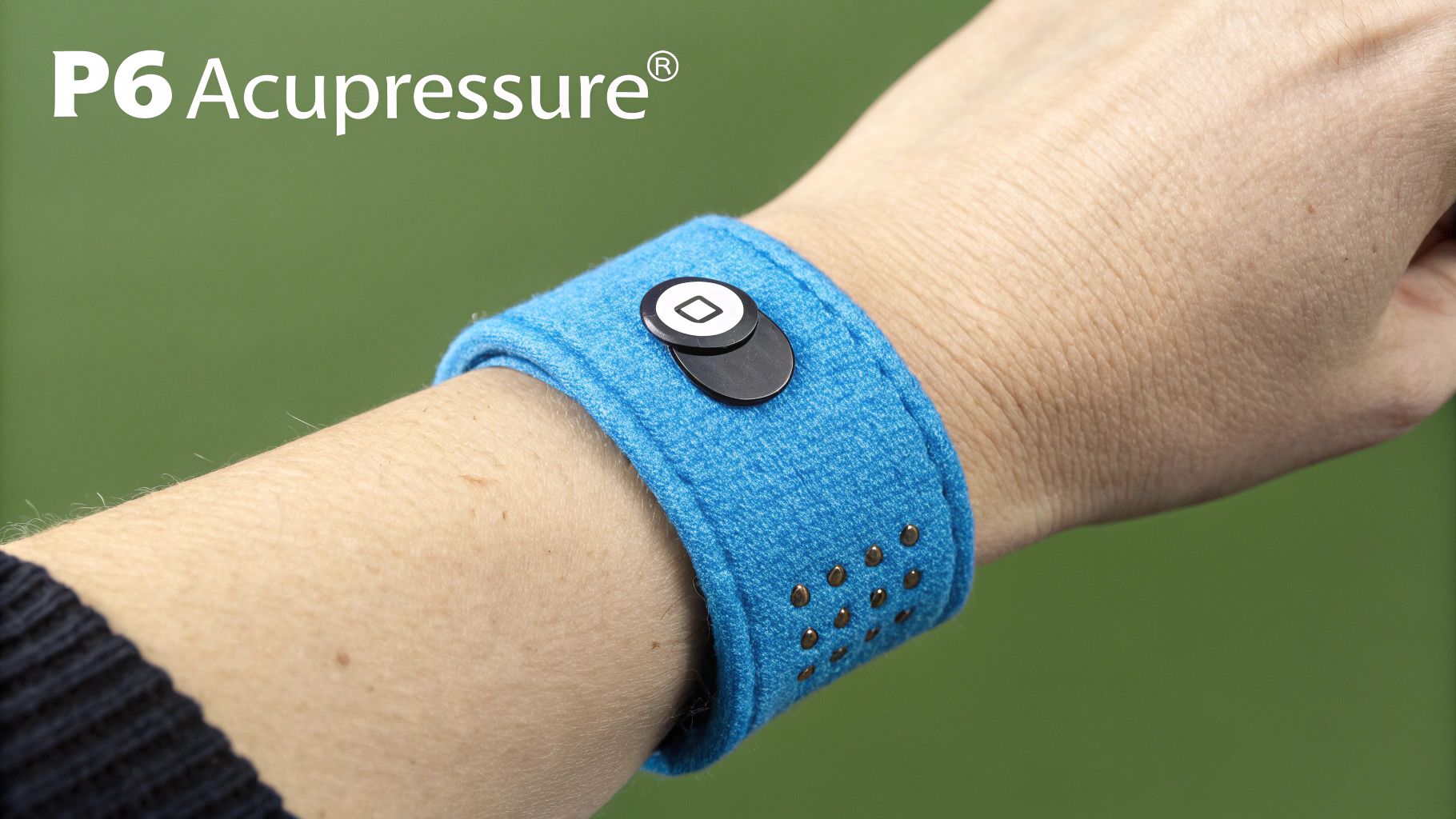
For a non-medicinal approach, applying acupressure to a specific point on your wrist can significantly curb feelings of nausea. This method is rooted in traditional Chinese medicine and targets the P6 (or Nei-Kuan) point, located on the inner forearm. Applying steady pressure here is believed to rebalance the flow of energy, or chi, and modern research suggests it helps disrupt the nausea signals sent from the brain to the stomach.
The most common way to utilize this technique is with wearable acupressure bands, often sold under brand names like Sea-Band. These elasticated bands have a small plastic stud that presses continuously on the P6 point, offering a simple, drug-free solution for seasickness prevention. They are a popular choice because they have no side effects like drowsiness.
Why Acupressure Works
The effectiveness of P6 acupressure isn't just anecdotal. It has been validated in numerous clinical settings for various types of nausea. For instance, a landmark study by researcher Dr. John Dundee found it highly effective for post-operative nausea, and it's widely recommended for morning sickness during pregnancy. Cruise ship medical centers frequently provide these bands to passengers, and pediatric hospitals even use them to help children manage nausea from chemotherapy. This widespread use across different medical fields underscores its reliability as a seasickness prevention tip.
Practical Tips for Effective Acupressure
To get the most out of this technique, correct application is key.
- Locate the P6 Point: Find the spot on your inner wrist, about three finger-widths down from the first wrist crease, directly between the two main tendons. You've found the right spot when you feel a slight sensitivity.
- Apply Before Symptoms Start: Put the bands on both wrists before you even step onto the boat. Acupressure is far more effective as a preventative measure than a reactive one.
- Ensure Firm Pressure: The plastic stud should apply firm, constant pressure. If you don't have a band, you can press the point yourself with your thumb for several minutes at a time when you start to feel uneasy.
This method provides a safe and effective way to combat motion sickness for all ages, making it an excellent option for families enjoying a day of snorkeling or a sunset cruise. For more details on what to expect on your trip, check out our Marathon, FL snorkeling tours page.
6. Control Your Diet and Hydration
What you eat and drink before and during your boat trip can be a deciding factor in whether you feel great or green. The goal is to keep your digestive system calm and your body properly hydrated without overloading it. Certain foods and drinks can irritate your stomach or cause fluctuations in blood sugar, which exacerbates the sensory conflict that leads to seasickness. A stable, well-nourished system is far more resilient to the challenges of motion.
The right nutritional approach can be one of the most effective seasickness prevention tips. Choosing light, bland, and easily digestible foods helps maintain equilibrium. Think of it as preparing your body for a minor physical challenge; you wouldn't eat a heavy, greasy meal right before a run, and the same logic applies to heading out on the water.
Why Diet Matters
This principle is so fundamental that it's a core part of training for professionals who spend their lives at sea. Naval sailors are instructed on pre-voyage nutrition to ensure they remain mission-ready, and many commercial fishermen stick to simple diets of crackers and water when conditions are rough. Some cruise lines even offer specific menu items, like plain rice and broth, for passengers feeling unwell. By managing your diet, you proactively reduce potential stomach irritation, giving your body one less thing to worry about.
Practical Tips for Optimal Diet and Hydration
To properly leverage this strategy, you need to plan ahead.
- Pre-Trip Meal: Eat a light, non-greasy meal about 2-3 hours before you board. Good options include toast, oatmeal, a banana, or a plain bagel. Avoid spicy, fatty, or highly acidic foods.
- Onboard Snacks: Pack some simple, starchy snacks. Saltine crackers, pretzels, and ginger chews or snaps are excellent choices. Nibbling on crackers can help absorb excess stomach acid.
- Hydration Strategy: Sip water regularly throughout the day to stay hydrated. Avoid chugging large amounts at once. Dehydration can cause headaches and nausea, mimicking seasickness symptoms.
- What to Avoid: Steer clear of alcohol and caffeine for at least 24 hours before your trip, as they are diuretics and can contribute to dehydration and stomach upset. This is especially important if you anticipate choppy seas, which can be influenced by local weather patterns. To better plan your trip, check out our guide on Florida Keys weather by month on snorkelingmarathon.com.
A mindful approach to what you consume is a powerful, non-medicinal tool for ensuring your snorkeling or sunset cruise is a comfortable and enjoyable experience.
7. Use Ginger Supplements
For centuries, mariners and traditional healers have turned to ginger as a powerful remedy for nausea, and modern science now supports its effectiveness. This natural root contains active compounds, primarily gingerols and shogaols, which are believed to work by calming the digestive system and influencing neurotransmitter receptors in the brain that are responsible for nausea. It stands out as a potent, non-drowsy alternative to over-the-counter medications.
Unlike pharmaceutical options that often target brain chemistry and cause drowsiness, ginger works directly on the gastrointestinal tract to quell stomach unease. It offers a gentle yet effective way to manage the symptoms of motion sickness without the side effects that can dull your experience on the water. This makes it an ideal choice for those who want to stay alert and enjoy their Marathon snorkeling trip or sunset cruise.
Why Ginger Works
Ginger's efficacy isn't just anecdotal. Clinical studies have validated its role as one of the most reliable natural seasickness prevention tips. One notable study demonstrated that participants who took ginger experienced a 38% reduction in motion sickness symptoms compared to a placebo group. Many modern cruise ships even stock ginger products in their medical centers, a testament to its accepted value in maritime wellness. Traditional Chinese and Ayurvedic medicine have also prescribed ginger for motion-related ailments for thousands of years.
Practical Tips for Using Ginger
To get the most out of this natural remedy, proper timing and form are key.
- Start Early: Begin taking ginger supplements 24 to 48 hours before your boat trip. This allows the active compounds to build up in your system for maximum effectiveness.
- Choose Your Form: Ginger is available in capsules, chews, crystallized candy, and tea. Capsules with standardized extracts offer consistent potency, while candies and chews are easy to take on the go.
- Maintain Dosage: Continue taking ginger throughout your time on the water to maintain its anti-nausea effects. Follow the recommended dosage on the product label.
- Combine with Other Tips: Ginger works well in conjunction with other strategies, like proper positioning and hydration, to create a robust defense against seasickness.
Using a natural remedy like ginger is a proactive step that aligns with an environmentally-conscious mindset, similar to choosing the right gear for your trip. For more on making eco-friendly choices for your Keys adventure, check out our guide on reef-safe sunscreen brands on snorkelingmarathon.com.
8. Practice Controlled Breathing and Relaxation
Your mind can be a powerful ally or a formidable foe when it comes to motion sickness. Anxiety and panic are known to intensify feelings of nausea, creating a feedback loop that makes symptoms worse. By practicing controlled breathing and relaxation, you can interrupt this cycle and calm the physiological stress response that contributes to seasickness. The core principle involves using your breath to manage your nervous system.
Deep, slow breathing stimulates the vagus nerve, a key component of the parasympathetic nervous system, which is responsible for the body's "rest and digest" functions. This stimulation can directly counteract the "fight or flight" stress response and the nausea signals being sent to your brain. It's a non-medicinal, mind-over-matter approach that gives you a sense of control when you start to feel unwell.
Why It Matters
This is not just a mindfulness trend; it's a proven physiological tool. Military pilots and astronauts are trained in specific breathing exercises to enhance their tolerance to extreme motion and G-forces. On a less extreme scale, many cruise ship wellness programs now teach passengers relaxation techniques as a primary strategy for seasickness prevention. Dr. Andrew Weil popularized the 4-7-8 breathing technique specifically for its ability to calm the nervous system, making it an ideal tool for managing motion-induced stress.
Practical Tips for Breathing and Relaxation
To make this one of the most effective seasickness prevention tips, you need to practice before you even step on the boat.
- Practice Ashore: Familiarize yourself with breathing exercises in a calm, stable environment first. The 4-7-8 technique is simple: inhale through your nose for 4 seconds, hold your breath for 7 seconds, and exhale slowly through your mouth for 8 seconds. Repeat 3-4 times.
- Act at the First Sign: Don't wait until you're already feeling very sick. The moment you notice a slight unease, find a comfortable seat, focus on the horizon, and begin your breathing exercises.
- Combine with Visualization: As you breathe, visualize something stable and unmoving, like a calm shoreline or a solid mountain. This mental anchor can help override the confusing sensory inputs from the boat's motion.
Mastering breath control is a powerful skill for any boater. The techniques are similar to those used to stay calm and conserve air while exploring underwater, as detailed in our guide to proper breathing techniques on snorkelingmarathon.com.
Seasickness Prevention: 8-Tip Comparison Chart
| Method | Implementation Complexity 🔄 | Resource Requirements ⚡ | Expected Outcomes 📊 | Ideal Use Cases 💡 | Key Advantages ⭐ |
|---|---|---|---|---|---|
| Choose Your Position on Vessel | Low – requires planning & booking | None or cost of premium midship cabins | Moderate to high – significant motion reduction | All boat travelers, especially cruise & ferry | Free, immediate effect, no side effects |
| Maintain Visual Reference Horizon | Low – requires clear weather & deck access | None | Moderate – effective for mild symptoms | Daytime travel in good weather | Instant relief, no cost, reduces anxiety |
| Use Scopolamine Patches | Medium – prescription & timely application | Prescription medication | High – very effective for severe cases | Long voyages, severe motion sensitivity | Long-lasting, proven, no pill remembering |
| Take Antihistamines Preventively | Low – OTC medication, requires timing | Easily accessible OTC meds | Moderate – good for mild to moderate symptoms | Recreational boaters, cruise passengers | Affordable, well-known, various formulations |
| Apply Acupressure Techniques | Low to medium – correct point location necessary | Wristbands or manual pressure | Moderate – reduces nausea, less effective for severe | Drug-free option for all ages | Drug-free, safe, backed by research |
| Control Your Diet and Hydration | Low – requires discipline and planning | Food & beverage choices | Moderate – can reduce symptom severity | All travelers, especially sensitive individuals | Natural, no side effects, improves comfort |
| Use Ginger Supplements | Low – requires advance and consistent use | Ginger products (capsules, tea, candy) | Mild to moderate – natural nausea reduction | Pregnant women, children, natural remedy seekers | Natural, safe, pleasant taste options |
| Practice Controlled Breathing | Medium – requires learning and practice | None | Mild to moderate – reduces anxiety-related nausea | Travelers with anxiety, complements other methods | No side effects, improves overall experience |
Set Sail with Confidence on Your Next Marathon Adventure
Navigating the beautiful waters of the Florida Keys should be an experience filled with wonder, not worry. Seasickness, while a common concern, is a challenge you can actively manage and overcome. Throughout this guide, we've explored a comprehensive toolkit of seasickness prevention tips, moving beyond generic advice to provide you with a strategic, multi-layered approach to ensure your comfort at sea. From the simple, immediate action of positioning yourself in the most stable part of the vessel to the proactive measure of applying a scopolamine patch well before departure, you now have a variety of proven methods at your disposal.
The key takeaway is that prevention, not reaction, is the cornerstone of a pleasant voyage. Your ideal strategy might involve a combination of techniques tailored to your personal needs. For one person, carefully managing their pre-trip diet and staying hydrated, while focusing on the horizon, is enough. For another, the added security of an antihistamine like Dramamine, taken an hour before setting sail, combined with the natural anti-nausea properties of ginger, provides the ultimate peace of mind. The power lies in understanding these options and knowing you can layer them for maximum effectiveness.
Your Proactive Plan for a Smooth Sailing Experience
Mastering these concepts transforms your vacation from a source of anxiety into an opportunity for pure enjoyment. Instead of hoping for the best, you can step aboard with a concrete plan, ready to fully immerse yourself in the breathtaking beauty of a Marathon sunset or the vibrant underwater world of Sombrero Reef. Think of these strategies not as a chore, but as the first step in creating a truly unforgettable memory.
The real benefit extends beyond just avoiding discomfort; it's about reclaiming your adventure. By implementing these seasickness prevention tips, you are ensuring that your focus remains on spotting dolphins, marveling at colorful coral, and sharing joyful moments with your loved ones. You are equipping yourself to be present and engaged, ready to experience everything a world-class snorkeling trip or sunset cruise has to offer. With this knowledge, you are no longer just a passenger; you are a prepared, confident mariner, ready to make the most of every second on the water.
Ready to put your newfound confidence to the test? The award-winning crew at Marathon Snorkeling And Sunset Cruise is committed to your comfort, offering the lowest passenger-to-crew ratio in Marathon to ensure a personalized and secure experience. Book your unforgettable reef snorkeling or sunset adventure with us today and set sail without a worry.