
Discover types of fish in the florida keys: top 10 spots

The Florida Keys are more than just stunning sunsets and turquoise waters; they are home to one of the most vibrant marine ecosystems in the world. Beneath the surface lies a bustling metropolis of colorful and diverse sea life, especially around the pristine coral reefs like Coffins Patch. Whether you're a seasoned snorkeler or dipping your fins in for the first time, knowing the different types of fish in the Florida Keys can transform your underwater tour from a casual swim into a captivating treasure hunt. This comprehensive guide is designed to act as your underwater field manual, helping you identify the incredible marine life you'll encounter.
This article will introduce you to 12 of the most common and spectacular fish you can see while exploring the Keys. We'll provide clear identification tips, interesting behavioral insights, and pinpoint exactly where you’re most likely to find them. By understanding the species you're swimming alongside, you'll gain a deeper appreciation for the delicate balance of this underwater world. For those preparing for their own underwater explorations, more general resources on diving and snorkeling adventures can also be highly beneficial for building skills and confidence.
We'll connect these fascinating fish sightings to prime snorkeling spots that are easily accessible on a Marathon Snorkeling & Sunset Cruise, ensuring you’re perfectly prepared for an unforgettable adventure. From the vibrant Yellowtail Snapper darting through coral gardens to the majestic Tarpon gliding through the channels, you'll learn what to look for and how to spot them. Let’s dive in and discover the incredible cast of characters that call the Florida Keys home.
1. Parrotfish (Sparisoma & Scarus species)
Parrotfish are the dazzling, rainbow-hued architects of the Florida Keys' marine ecosystem. Easily identified by their fused teeth that form a parrot-like beak, these fish are not just beautiful, they are essential. As one of the most common types of fish in the Florida Keys, their presence signals a healthy, functioning reef.
These vibrant fish spend their days scraping algae and dead coral off the reef structure with their powerful beaks. This constant grazing, or bioerosion, is vital; it cleans the coral, allowing it to breathe and grow, and prevents algae from smothering the entire system. What’s truly remarkable is that after digesting the algae and coral polyps, they excrete fine, white sand. A significant portion of the pristine sand you see on beaches and sandbars is actually a byproduct of parrotfish digestion!
How to Spot Parrotfish in the Keys
- Key Identification: Look for their kaleidoscopic colors ranging from brilliant blues and greens to vivid pinks and oranges. Their unique beak and constant, deliberate munching on coral are dead giveaways. Common species include the Rainbow, Queen, and Stoplight Parrotfish.
- Typical Habitat: You'll find them in shallow reef environments, typically at depths of 3 to 25 feet, making them perfect subjects for snorkelers. They are abundant at iconic Marathon locations like Sombrero Reef and Coffins Patch.
- Snorkeling Tip: Listen closely while you snorkel. You can often hear the distinct scraping and crunching sound of parrotfish feeding before you even see them. Approach slowly, as they can be shy, and watch for the small puffs of sand they leave behind.
By keeping the reefs clean and producing sand, the parrotfish is an indispensable steward of the Keys. Joining a guided trip, like the ones offered on our Marathon Snorkeling & Sunset Cruise, ensures you visit the most active and vibrant sections of the reef where these colorful fish are plentiful.
2. Tarpon (Megalops atlanticus)
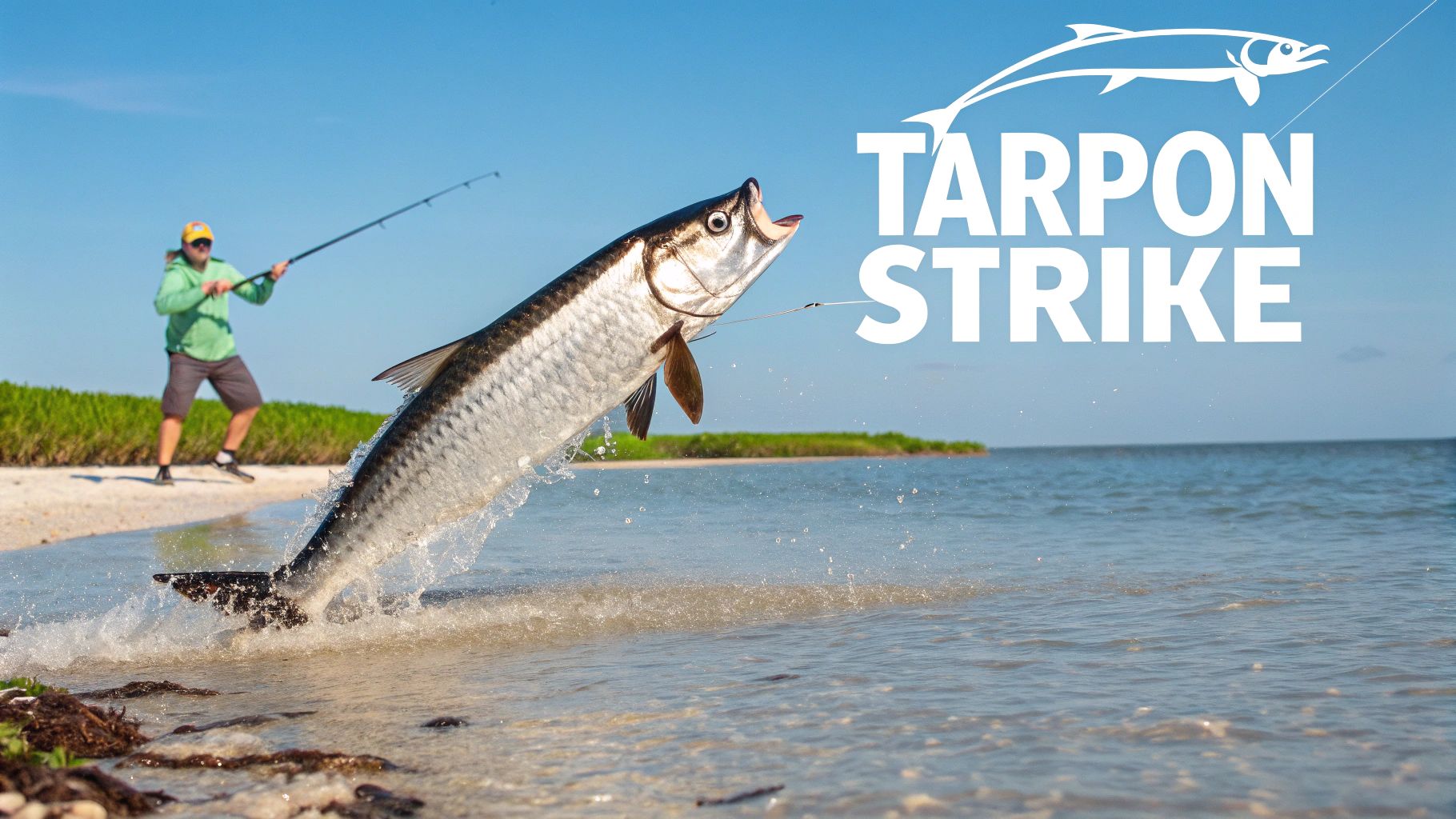
Known as the "Silver King," the Tarpon is a legendary giant of the Florida Keys, revered by anglers for its breathtaking acrobatic leaps and immense power. These prehistoric-looking fish, with their large silver scales and powerful jaws, are a bucket-list prize for any serious fisherman. While primarily a game fish, spotting one of these behemoths rolling on the surface to gulp air is a thrilling sight for any visitor, connecting you to the wild, untamed spirit of the Keys.
Their presence signifies a healthy and robust inshore ecosystem, as they frequent the mangrove channels, flats, and historic bridges that define the islands. Seeing a school of 100-pound tarpon cruise past is an unforgettable experience, showcasing the raw power that has captivated figures from Ernest Hemingway to modern-day fishing tournament champions.
How to Spot Tarpon in the Keys
- Key Identification: Look for their massive, silver, armor-like scales and a distinct, large, upturned mouth. They often "roll" on the surface, breaking the water to take a breath of air, which is a classic giveaway.
- Typical Habitat: Tarpon are most famously found congregating around the Seven Mile Bridge and Bahia Honda Bridge, especially during the spring migration. They also patrol the shallow flats and deeper channels throughout the Middle Keys.
- Viewing Tip: Your best chance to see these giants is during early morning or late evening hours when the water is calm. Look for their tell-tale surface roll or the commotion caused when they feed on baitfish. They are a common, awe-inspiring sight on the journey out to the reef.
While our main focus is snorkeling, the trip to and from the reef often provides incredible opportunities to see these majestic fish. For those inspired to pursue a closer encounter with the Silver King, a private Florida Keys boat charter can be arranged to target these incredible sport fish.
3. Bonefish (Albula vulpes)
Known as the "ghost of the flats," the Bonefish is one of the most revered and sought-after game fish in the Florida Keys. Prized for their blistering speed and elusive nature, these silver bullets offer an unparalleled angling challenge. Their uncanny ability to sense vibrations and their reflective, silvery scales make them incredibly difficult to spot against the sandy bottoms, testing the skills of even the most seasoned fishers.
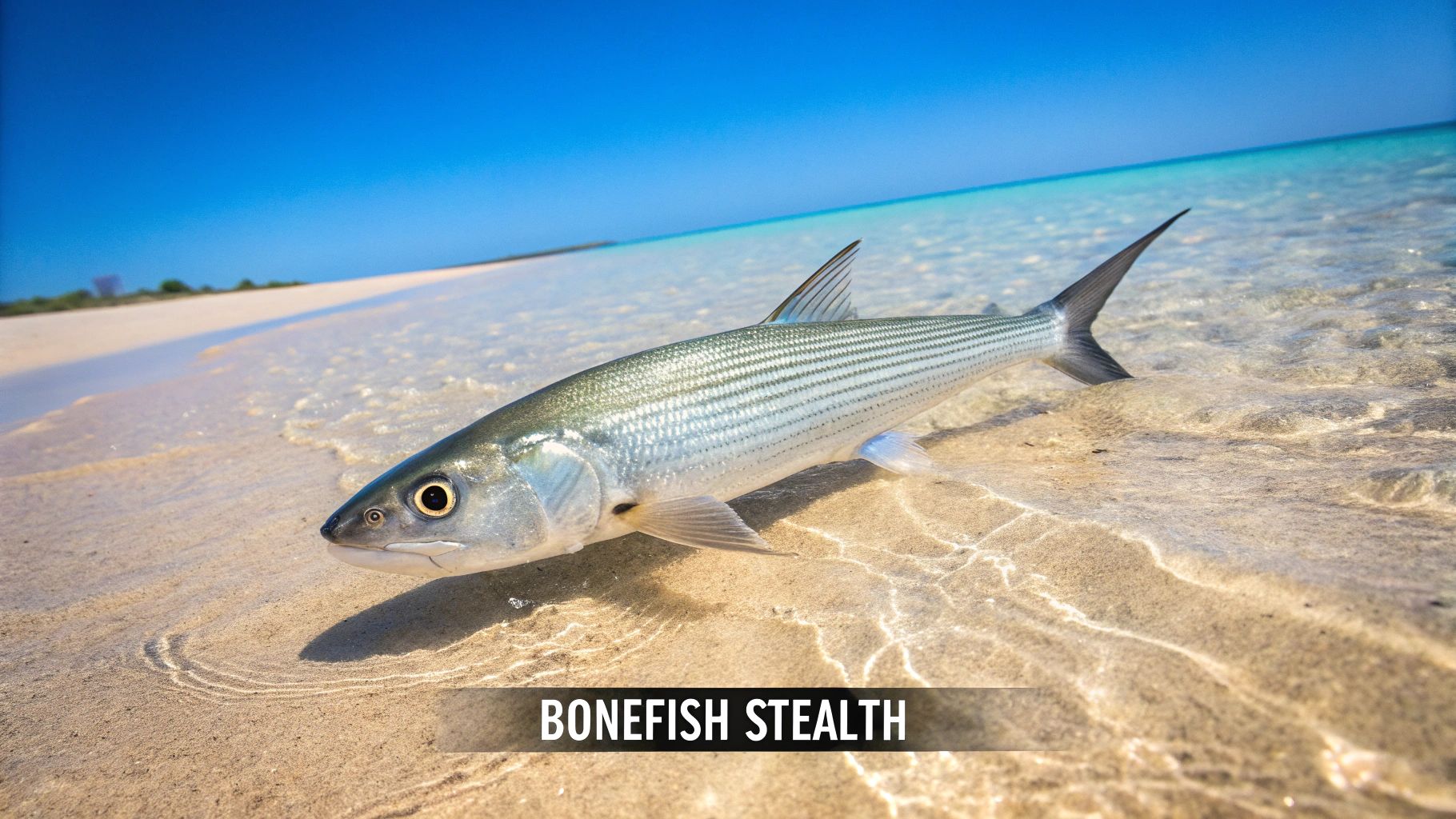
While primarily a target for sportfishing, snorkelers occasionally witness these incredible fish. Observing a bonefish in its natural habitat is a rare treat. They patrol the shallow flats in search of crabs, shrimp, and other crustaceans, often creating small "puffs" of sand as they feed. Catching a glimpse of this legendary species is a true highlight for anyone exploring the inshore waters of the Keys.
How to Spot Bonefish in the Keys
- Key Identification: Look for a streamlined, silver body with faint dark lines running down its sides and a darker, conical snout. They are masters of camouflage, so watch for their shadows or the subtle movement of their forked tails against the sand.
- Typical Habitat: Bonefish thrive in ultra-shallow water, often just 1 to 3 feet deep. You'll find them on sandy flats, seagrass beds, and mangrove shorelines, especially around Marathon and Islamorada.
- Snorkeling Tip: The key to spotting them is patience and high-quality polarized sunglasses to cut the glare. Scan the shallow waters near sandbars like the Valhalla Sandbar during calm, sunny days. Move slowly and avoid making sudden movements, as their sensitivity to pressure changes means they will vanish in an instant.
4. Permit (Trachinotus falcatus)
The Permit is the elusive, silver ghost of the Florida Keys flats, a fish that fuels the obsessions of anglers and offers a rare, thrilling sight for snorkelers. Known for their incredible intelligence and extreme caution, these members of the jack family are a true prize to witness in their natural habitat. Their deeply forked tails and sleek, laterally compressed bodies are built for speed, allowing them to vanish in an instant.
Permit are highly sought-after gamefish, but spotting them while snorkeling provides a different kind of reward. They often travel in schools when young, but larger adults can be solitary hunters, using their sensitive snouts to detect crustaceans buried in the sand. Finding one of these wary fish is a testament to both patience and luck, making any encounter a memorable highlight of a trip to the Keys. Their presence is a strong indicator of a healthy flats ecosystem.
How to Spot Permit in the Keys
- Key Identification: Look for a tall, silvery body with a steep, sloping forehead and a distinctive dark blotch on its side near the pectoral fin. Their long, sickle-shaped dorsal and anal fins are a key feature, as is their deeply forked tail. They can be confused with Pompano but are generally larger and have a more rounded shape.
- Typical Habitat: While famous on the shallow grass flats, larger Permit are also found near wrecks and reefs, often in slightly deeper water. They scour sandy bottoms and channels looking for crabs and shrimp, so areas like Valhalla Sandbar can be prime viewing spots during the right tide.
- Snorkeling Tip: Permit are notoriously spooky. The best way to see one is to stay still and quiet, letting them come to you. Avoid sudden movements or splashing. If you spot one from a distance, don't chase it; observe it from afar as it forages on the bottom. Their reflective bodies can make them hard to see, so watch for the distinct shadow they cast on the sand.
Spotting a Permit is an uncommon but incredible experience, offering a glimpse into the more challenging and subtle side of the Keys' marine life. While our Marathon Snorkeling & Sunset Cruise focuses on the vibrant reefs, the journey through the channels provides an opportunity to keep an eye out for these silver phantoms patrolling the edges of the flats.
5. Redfish (Red Drum)
Redfish, also known as Red Drum, are one of the most sought-after gamefish in the Florida Keys, prized for their strength and distinctive copper-red hue. Easily recognized by the signature black spot (or spots) at the base of their tail, these powerful fish are a staple of the inshore flats and mangrove ecosystems. Their robust nature and aggressive feeding habits make them an exciting target for anglers and a common sight for those exploring the backcountry waters.
Unlike many reef-dwelling species, redfish thrive in the shallow, murky waters of the mangrove channels and seagrass flats. They use their downturned mouths to root around the bottom, searching for crabs, shrimp, and small baitfish. This feeding behavior often results in "tailing," where their spotted tail fins break the water's surface, creating a thrilling visual for sight-fishers. As one of the more resilient types of fish in the Florida Keys, their presence is a good indicator of a healthy inshore habitat.
How to Spot Redfish in the Keys
- Key Identification: Look for a bronze or reddish-colored body and one or more prominent black spots on the tail. Young redfish are often found in schools, while larger "bull" reds can be more solitary.
- Typical Habitat: They patrol shallow flats, oyster bars, and mangrove shorelines, especially in the backcountry areas around Marathon. They can tolerate a wide range of salinities and are often found in less than 3 feet of water.
- Fishing Tip: Early morning on an incoming tide is a prime time to target redfish. Using live shrimp or mullet near mangrove roots is a highly effective technique. They are often found in areas with less water clarity, so you don’t need perfect conditions to find them.
While not a primary target for snorkelers, understanding the inshore ecosystem they inhabit enriches any trip to the Keys. Exploring these diverse habitats is a key part of the local fishing culture, offering a different perspective on the islands' marine life. To delve deeper into angling opportunities, check out our guide to fishing in Marathon, Florida.
6. Snook (Centropomus undecimalis)
The Common Snook, often called "Robalo," is a legendary inshore predator and one of the most sought-after game fish in the Florida Keys. Revered for its powerful strikes and acrobatic fights, the snook is a true symbol of the mangrove-lined channels and coastal ecosystems. Its sleek, silver body is instantly recognizable by the distinct black lateral line that runs from its gills to its tail, a feature that makes it a standout among the types of fish in the Florida Keys.
Snook are ambush predators, using structure and currents to their advantage. They lie in wait near mangrove roots, bridge pilings, and docks, exploding from cover to inhale shrimp, crabs, and smaller fish. This aggressive feeding behavior makes them a thrilling sight for anglers and even observant snorkelers exploring the calmer backcountry waters. Their presence indicates a healthy, thriving estuary system, as they are sensitive to water temperature and quality, making their conservation crucial.
How to Spot Snook in the Keys
- Key Identification: Look for a streamlined, silvery fish with a high, divided dorsal fin, a protruding lower jaw, and the unmistakable solid black stripe running down its side. They can grow quite large, often exceeding 30 inches.
- Typical Habitat: Snook are most commonly found in the backcountry, hiding in the shade of mangrove shorelines, navigating tidal creeks, and lurking around docks and bridge pilings. They prefer the warmer, brackish waters found away from the main reef tract.
- Snorkeling Tip: While not a reef fish, you can sometimes spot juvenile snook in the calm, shallow waters around places like Pigeon Key. Look for them near any submerged structure. They are wary, so a slow, quiet approach is necessary. Observing their lightning-fast predatory strikes from a distance is a truly special experience.
For those interested in exploring the mangrove ecosystems where these elusive predators thrive, our Marathon Snorkeling & Sunset Cruise offers a chance to see the unique habitats that support incredible species like the snook.
7. Grouper (Black, Red, Gag)
Grouper are the heavyweight champions of the Florida Keys' reef and wreck ecosystems. These powerful, bottom-dwelling predators are a cornerstone of the marine food web and a prized sight for both anglers and divers. Known for their stout bodies, large mouths, and often impressive size, groupers are ambush predators that use structure like ledges, caves, and shipwrecks for cover.
These formidable fish, including common species like the Black, Red, and Gag Grouper, play a crucial role in maintaining a balanced ecosystem by controlling populations of smaller fish and crustaceans. They are masters of camouflage, often blending seamlessly with their surroundings before inhaling their prey with a sudden, powerful gulp. While they are a popular target for fishing, seeing one of these giants emerge from a rocky outcrop is an unforgettable underwater experience.
How to Spot Grouper in the Keys
- Key Identification: Look for their thick, robust bodies, large heads, and huge mouths. Coloration varies by species: Gag Grouper are typically grayish-brown with worm-like markings, Red Grouper have a reddish-brown hue, and Black Grouper are dark gray to olive with box-like blotches.
- Typical Habitat: Grouper are structure-oriented. You will find them near the seafloor around wrecks, ledges, and rocky outcroppings. While some can be seen in shallower patch reefs, larger individuals often prefer deeper water, typically from 25 to 100 feet or more.
- Snorkeling Tip: When snorkeling over patch reefs or ledges like those at Sombrero Reef, scan the areas underneath and around large coral heads and rock formations. Grouper are territorial and often return to the same hiding spots. Approach with slow, non-threatening movements, as they can be shy and will retreat into their holes if they feel threatened.
Grouper rely on healthy reef structures to survive, making reef conservation critical for their populations. You can learn more about the intricate ecosystems they call home and why protecting the coral reefs in the Florida Keys is so important for these magnificent fish.
8. Mahi-Mahi (Coryphaena hippurus)
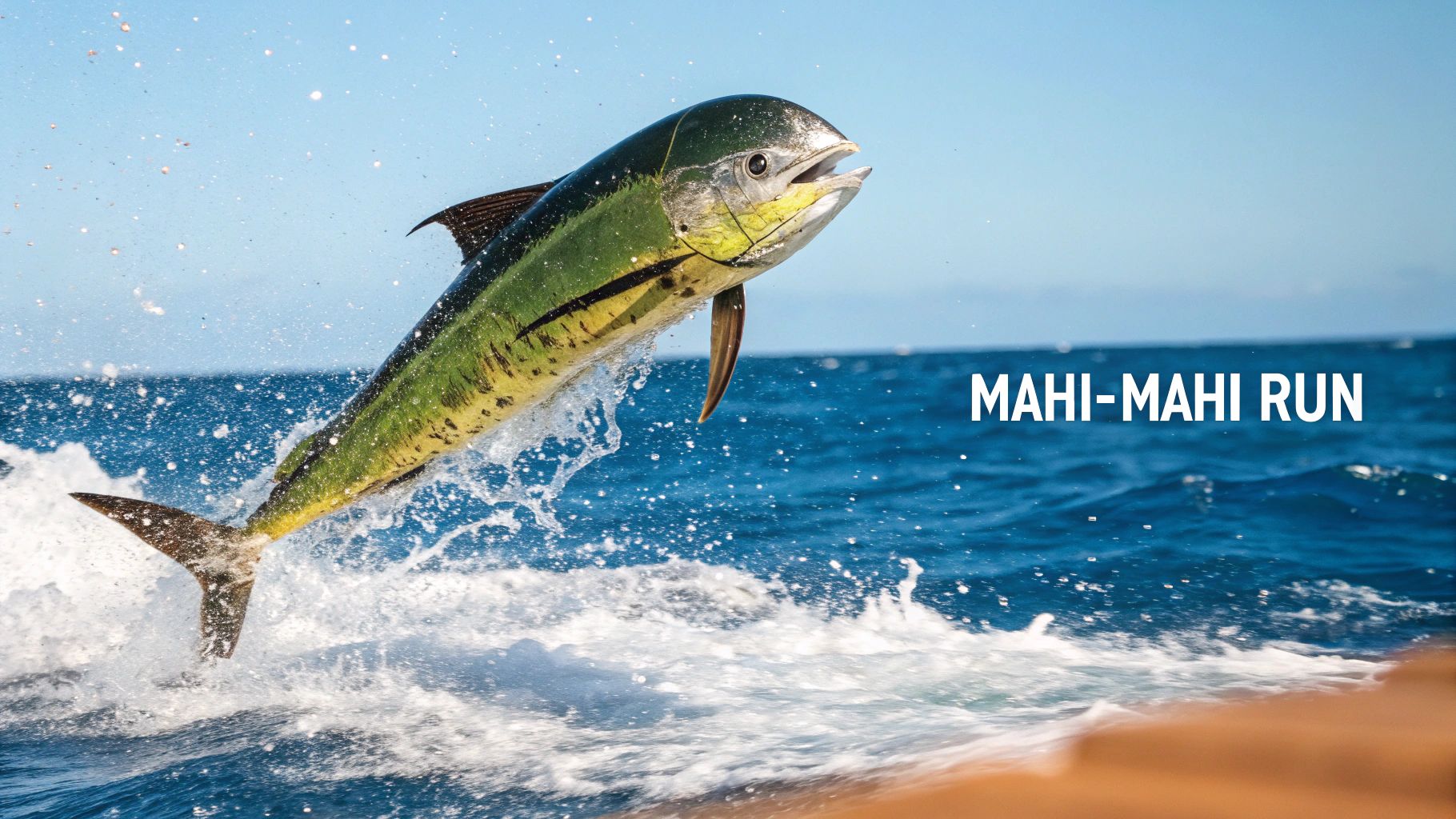
Often called Dorado or Dolphin Fish, Mahi-Mahi are the iridescent jewels of the Florida Keys' offshore waters. These stunningly beautiful fish are famous for their vibrant color palette of electric blues, greens, and brilliant yellows that shimmer and flash in the sunlight. As one of the most exciting types of fish in the Florida Keys for anglers, they are celebrated for their incredible speed, acrobatic leaps, and delicious, firm white meat.
These pelagic predators are incredibly fast-growing and are found cruising the open ocean, often traveling in schools. They are aggressive feeders, hunting for flying fish, crabs, and squid, frequently congregating around floating sargassum weed lines which provide both cover and a source of food. A healthy Mahi-Mahi population makes them a sustainable choice for sport fishing, offering a thrilling chase for anyone venturing beyond the reef.
How to Spot Mahi-Mahi in the Keys
- Key Identification: Look for their unmistakable blunt head (especially prominent on males, called "bulls") and a long dorsal fin running nearly the entire length of their body. Their dazzling, shifting colors are their most famous feature, often lighting up brilliantly when they are excited or hooked.
- Typical Habitat: Mahi-Mahi are found offshore in deeper waters, particularly along the edges of the Gulf Stream. They are almost always associated with floating structures like sargassum weed, buoys, or any floating debris.
- Angling Tip: Look for diving birds, as this is a prime indicator that baitfish are being pushed to the surface by predators like Mahi-Mahi. Trolling with live bait or brightly colored lures along weed lines is the most effective technique to entice a strike.
While you won't spot these fish while snorkeling on the reef, they are a primary target for offshore fishing adventures. To get a sense of the incredible deep-sea action the Keys offer, you can learn more about Florida Keys deep sea fishing and what it takes to land one of these beautiful ocean athletes.
9. King Mackerel (Scomberomorus cavalla)
King Mackerel, or Kingfish, are the silver bullets of the Florida Keys' offshore waters. These powerful, migratory predators are renowned among anglers for their lightning-fast speed and ferocious, high-impact strikes on bait. As an apex predator, their presence indicates a healthy offshore food chain, making them a prized and thrilling encounter for sport fishers.
These streamlined fish are built for velocity, often traveling in large schools as they hunt smaller fish like sardines and mullet along reef edges and current breaks. Their aggressive nature and impressive fighting ability make them one of the most exciting types of fish in the Florida Keys for offshore charters. Due to their popularity, they are carefully managed with strict size and bag limits to ensure their populations remain sustainable for future generations.
How to Spot King Mackerel in the Keys
- Key Identification: Look for a long, slender, silver body with a prominent lateral line that drops sharply below the dorsal fin. Their mouths are filled with razor-sharp teeth, a key feature for this voracious predator.
- Typical Habitat: Kingfish are typically found in offshore waters, patrolling wrecks, reef lines, and ledges. They often hunt near the surface, but can also be found in deeper water, making them a target for various fishing techniques.
- Fishing Tip: Trolling with live bait or lures is the most common method to catch them. Because of their sharp teeth, using a wire leader is essential to prevent them from cutting the line. Pay close attention to current changes and temperature breaks where baitfish congregate.
10. Yellowtail Snapper (Ocyurus chrysurus)
The Yellowtail Snapper is an iconic reef fish and one of the most sought-after species by anglers and snorkelers in the Florida Keys. Recognizable by its streamlined, silvery body and a distinct, brilliant yellow stripe that runs from its snout to its deeply forked tail, this fish adds a flash of gold to the vibrant reef backdrop. They are social, schooling fish, often seen hovering in large, impressive groups over coral heads and other structures.
As a crucial part of the reef ecosystem, Yellowtail Snapper are mid-level predators that feed on smaller fish, shrimp, and crabs, helping to maintain a balanced food web. Their presence indicates healthy reef structures with plenty of hiding spots and food sources. While famous as a delicious table fish, their beauty and graceful movements make them a highlight for anyone exploring the underwater world, representing the dynamic life found among the different types of fish in the Florida Keys.
How to Spot Yellowtail Snapper in the Keys
- Key Identification: Look for the unmistakable bright yellow mid-body stripe and a completely yellow tail. They have a slender, torpedo-shaped body and are typically 12 to 16 inches long, though they can grow larger.
- Typical Habitat: Yellowtail are most common along the edge of the reef in slightly deeper water, often from 20 to 70 feet. They congregate around high-relief coral formations and ledges, such as those found at Sombrero Reef.
- Snorkeling Tip: While snorkeling, look for them hovering in the water column just above the reef. They are often curious but cautious. Approach their schools slowly and remain calm; if you don't make sudden movements, the school will often part and flow around you, providing a mesmerizing underwater experience. You can learn more about the diverse species that share this environment by exploring what fish live in coral reefs.
11. Cobia (Rachycentron canadum)
Cobia are powerful, shark-like predators that bring a jolt of excitement to the waters of the Florida Keys. Often mistaken for small sharks due to their dark bodies and solitary nature, these migratory fish are a prized sight for their sheer strength and curious behavior. They are known to follow larger animals like rays and sea turtles, using them as moving cover to ambush unsuspecting prey.
While not a common reef-dweller, spotting a Cobia is a memorable experience. These aggressive hunters are known for their impressive size and fighting spirit, making them one of the most sought-after types of fish in the Florida Keys for sport fishermen. For snorkelers, an encounter is a rare treat, often occurring in open water or around navigational markers where they hunt for crabs, squid, and smaller fish. Their presence signifies the rich, dynamic food web that thrives just beyond the reef’s edge.
How to Spot Cobia in the Keys
- Key Identification: Look for a long, dark brown body with a distinctive single dorsal fin and a white belly. They have a broad, flat head and a curious, inquisitive nature, often approaching boats and snorkelers.
- Typical Habitat: Cobia prefer a mix of habitats, from offshore wrecks to inshore channels and flats. They are frequently seen shadowing large southern stingrays in the sandy areas near prominent reefs like Sombrero Reef.
- Snorkeling Tip: Keep an eye out for large stingrays moving across the sand flats adjacent to the reef. Cobia will often trail directly behind or above them, so spotting one large creature may lead you to another. Stay calm and observe from a distance, as they are powerful and fast-moving fish.
While our primary snorkeling tours focus on the vibrant reef ecosystems, the journey to and from these sites on a Marathon Snorkeling & Sunset Cruise often crosses the very channels and flats where these incredible predators roam.
12. Pompano (Trachinotus carolinus)
Often mistaken for its larger cousin, the Permit, the Florida Pompano is a prized catch and a thrilling sight for anglers and snorkelers alike. These deep-bodied, silvery fish are distinguished by their bright yellow underbelly and fins. As a key member of the Jack family and one of the most sought-after types of fish in the Florida Keys, Pompano are celebrated for their delicious taste and energetic fight when on the line.
Pompano are schooling fish that patrol the sandy flats, channels, and surf zones in search of small crustaceans and sand fleas. Their flattened bodies are perfectly adapted for zipping through shallow waters, making them a common but exciting find. While primarily known as a light-tackle game fish, spotting a school of these metallic fish flashing in the sunlight is a fantastic experience for anyone exploring the nearshore waters of the Keys.
How to Spot Pompano in the Keys
- Key Identification: Look for a tall, flat, silver body with a distinctive yellow coloration on the throat, belly, and fins. They are generally smaller than Permit, typically ranging from 1 to 3 pounds.
- Typical Habitat: They thrive in shallow water, often less than 10 feet deep, over sandy bottoms, grass flats, and along channel edges. They are frequently seen around sandbars like Valhalla Sandbar and near the bridges connecting the islands.
- Snorkeling Tip: The best time to spot them is often during an incoming tide when they move onto the flats to feed. Look for them kicking up small puffs of sand as they hunt for buried crustaceans. Since they are often in very shallow water, they can sometimes be seen right from the boat.
Catching a glimpse of these swift, beautiful fish adds an element of excitement to any inshore adventure. The shallow habitats they prefer are easily accessible on our Marathon Snorkeling & Sunset Cruise, which visits the exact sandbars and flats where Pompano are known to school.
Florida Keys: 12 Fish Comparison
| Species | 🔄 Skill / Complexity | ⚡ Gear & Access (Resources) | ⭐📊 Expected Outcome & Impact | Ideal Use Cases | 💡 Key Advantages |
|---|---|---|---|---|---|
| Largemouth Bass | Moderate — basic techniques, aggressive strikes | Light to medium tackle, shallow mangroves/brackish access | ⭐⭐⭐ — High catch rate, strong fights for size | Beginner to tournament, shallow mangrove fishing | Accessible year-round, excellent for learning |
| Tarpon (Silver King) | Very high — advanced hookup & fight management | Heavy tackle, boat/guide recommended, specialized gear | ⭐⭐ — Epic trophy fights, low hookup-to-land ratio | Experienced anglers, bucket-list trophy hunts | Massive size/jumping spectacle, highly photogenic |
| Bonefish | High — precision casting and stealth required | Ultralight/light tackle, flats wading or poling | ⭐⭐⭐ — Challenging hookups, long fast runs | Flats sight-fishing, fly-fishing skill development | Pure flats experience, abundant in Keys |
| Permit | Very high — expert presentation and patience | Expert guide, live crabs, precise casts and timing | ⭐⭐ — Very low success rate, high prestige reward | Expert anglers targeting the "big three" | Ultimate angling challenge, distinctive species |
| Redfish (Red Drum) | Moderate — forgiving technique, strong fights | Moderate tackle, mangroves/oyster bars/shallow flats | ⭐⭐⭐ — Consistent catches, solid fighting ability | Inshore anglers, beginners to experienced | Abundant, versatile presentations, good table fish |
| Snook (Robalo) | High — structure fishing and accurate placement | Moderate-heavy tackle, mangrove channels & jetties | ⭐⭐⭐ — Powerful, acrobatic fights; regulated in many areas | Structure-focused inshore fishing | Aggressive strikes, multiple effective techniques |
| Grouper (Black/Red/Gag) | Moderate-high — bottom tactics, handling structure | Offshore/boat access, medium-heavy tackle, vertical rigs | ⭐⭐⭐ — Reliable table fish, hard pulls into structure | Reef/structure anglers, bottom fishing charters | Excellent eating quality, consistent on reefs |
| Mahi-Mahi (Dorado) | Moderate — trolling/working weedlines, fast action | Offshore boat, light-medium tackle, sighting from birds/sargassum | ⭐⭐⭐⭐ — Highly acrobatic, frequent school catches when present | Offshore sportfishing, sargassum/weedline trips | Vibrant, sustainable stocks; spectacular fights |
| King Mackerel (Kingfish) | Moderate-high — fast hookups, toothy species | Offshore boat, trolling gear, heavy leader/wire | ⭐⭐⭐ — Explosive strikes, strong sustained runs | Offshore trolling, structure/ledges | Aggressive strikes, year-round offshore availability |
| Yellowtail Snapper | Low-moderate — simple bottom/vertical fishing | Near-reef boat, light tackle, small baits/hooks | ⭐⭐⭐ — Consistent bites, schooling catches for table | Family trips, reef fishing for fresh table fish | Reliable action, sustainable and abundant |
| Cobia | High — locating fish and handling big runs | Nearshore/structure or bridge, live bait, moderate-heavy tackle | ⭐⭐⭐ — Powerful fights, seasonal but rewarding | Spring/early-summer targeting near structure | Strong fighters, excellent table quality |
| Pompano (Permit family) | Moderate — light-tackle accuracy and quick presentation | Ultralight/light tackle, shallow flats and channels | ⭐⭐⭐ — Fast, fun action; smaller but spirited fights | Light-tackle flats fishing, family-friendly outings | Fast action, abundant, great light-tackle experience |
Your Ultimate Underwater Adventure Awaits with Marathon Snorkeling
The vibrant tapestry of marine life beneath the turquoise waters of the Florida Keys is more than just a list of species; it's a living, breathing ecosystem brimming with color, movement, and endless discovery. From the powerful Tarpon patrolling the bridges to the elusive Bonefish ghosting across the flats, and the kaleidoscope of reef dwellers like the Parrotfish and Sergeant Major, you now have the knowledge to not just see, but truly recognize the incredible types of fish in the Florida Keys. This guide has equipped you with the ability to identify key species, understand their behaviors, and know the best spots to find them, transforming a simple swim into an informed exploration.
Understanding the differences between a Snook and a Redfish, or knowing that the flash of silver in the distance could be a majestic Permit, elevates your entire snorkeling experience. It connects you more deeply to the environment, fostering a greater appreciation for the delicate balance that sustains this underwater paradise. You are no longer just a visitor, but an educated observer, capable of spotting the subtle dramas of the reef unfold.
From Identification to Immersion: Your Next Steps
The true magic happens when you take this knowledge from the page and into the water. The best way to solidify your understanding and witness these creatures firsthand is by joining an expert-led excursion. A knowledgeable crew can point out camouflaged species you might otherwise miss, share fascinating insights about their behavior in real-time, and ensure your adventure is both safe and unforgettable. They know precisely where the Grouper are likely hiding at Coffins Patch or where you might spot a cruising Eagle Ray near the Valhalla Sandbar.
To take your planning a step further, researching the variety of available Marathon Snorkeling tours can help you visualize the different experiences offered and choose the one that best fits your dream underwater adventure. Seeing the itineraries and photo galleries can build excitement and help you prepare for the specific marine life you're likely to encounter.
Key Takeaway: The ultimate value in learning about the diverse fish of the Florida Keys is not just academic. It's about enriching your real-world experience, creating lasting memories, and fostering a profound connection with the ocean's inhabitants.
This journey of discovery is about more than checking species off a list. It’s about the thrill of spotting a Yellowtail Snapper darting through a coral head, the awe of watching a school of Grunts move as one, and the quiet joy of floating above a world so different from our own. By equipping yourself with this information, you have unlocked a new level of engagement with one of the planet's most spectacular natural wonders. Your next snorkeling trip to Marathon is poised to be your most rewarding yet, filled with moments of recognition and a deep appreciation for the complex, beautiful world just below the surface.
Ready to meet these incredible marine residents face-to-face? Let the award-winning, lifeguard-certified crew at Marathon Snorkeling And Sunset Cruise guide you to the best reefs in the Keys. With our low passenger-to-crew ratio and commitment to a premium experience, we provide the perfect platform to discover the stunning variety of fish the Florida Keys have to offer. Book your unforgettable Marathon Snorkeling And Sunset Cruise adventure with us today