
water temp marathon florida: Your Guide to Ocean Temps

The waters around Marathon, Florida are pretty much always inviting. Think warm, comfortable conditions perfect for swimming, snorkeling, and just splashing around with the family. In the summer, the ocean feels like a bathtub, often getting into the mid-80s. Even in the "coldest" part of winter, it rarely drops below a refreshing 70°F.
Your Guide to Marathon Florida Water Temperatures
Planning a trip to Marathon means you're heading to a place where the ocean is always open for business. Unlike spots with short swimming seasons, Marathon's subtropical climate gets a major boost from the nearby Gulf Stream current. The result? A water lover's paradise, 365 days a year. The temperature does shift a little from season to season, but it's just enough to change the feel of the water, not keep you out of it.
This year-round warmth is one of the best things about the Florida Keys. Looking at historical data, Marathon's sea surface temperature swings from a cool 69.2°F (20.6°C) in the dead of January to a balmy peak of about 86.9°F (30.5°C) in August. This amazing stability is what keeps the coral reefs buzzing with life and guarantees a 12-month swimming season—a rare perk for any beach town.
Marathon Florida Water Temperature and Activities at a Glance
To make your trip planning a little easier, here's a quick breakdown of what to expect from the water each season and the best ways to enjoy it.
| Season | Average Water Temp (Fahrenheit) | Recommended Activities |
|---|---|---|
| Winter (Dec-Feb) | Low to Mid 70s | Snorkeling with a wetsuit, fishing, sunset cruises, beachcombing |
| Spring (Mar-May) | Mid 70s to Low 80s | Snorkeling, swimming, kayaking, sandbar hopping |
| Summer (Jun-Aug) | Mid to Upper 80s | Long, leisurely swims, floating at the sandbar, all water sports |
| Fall (Sep-Nov) | Low to Mid 80s | Ideal for all water activities, often with fewer crowds |
This table gives you a great starting point, but remember that the best activity is always the one you'll enjoy the most!
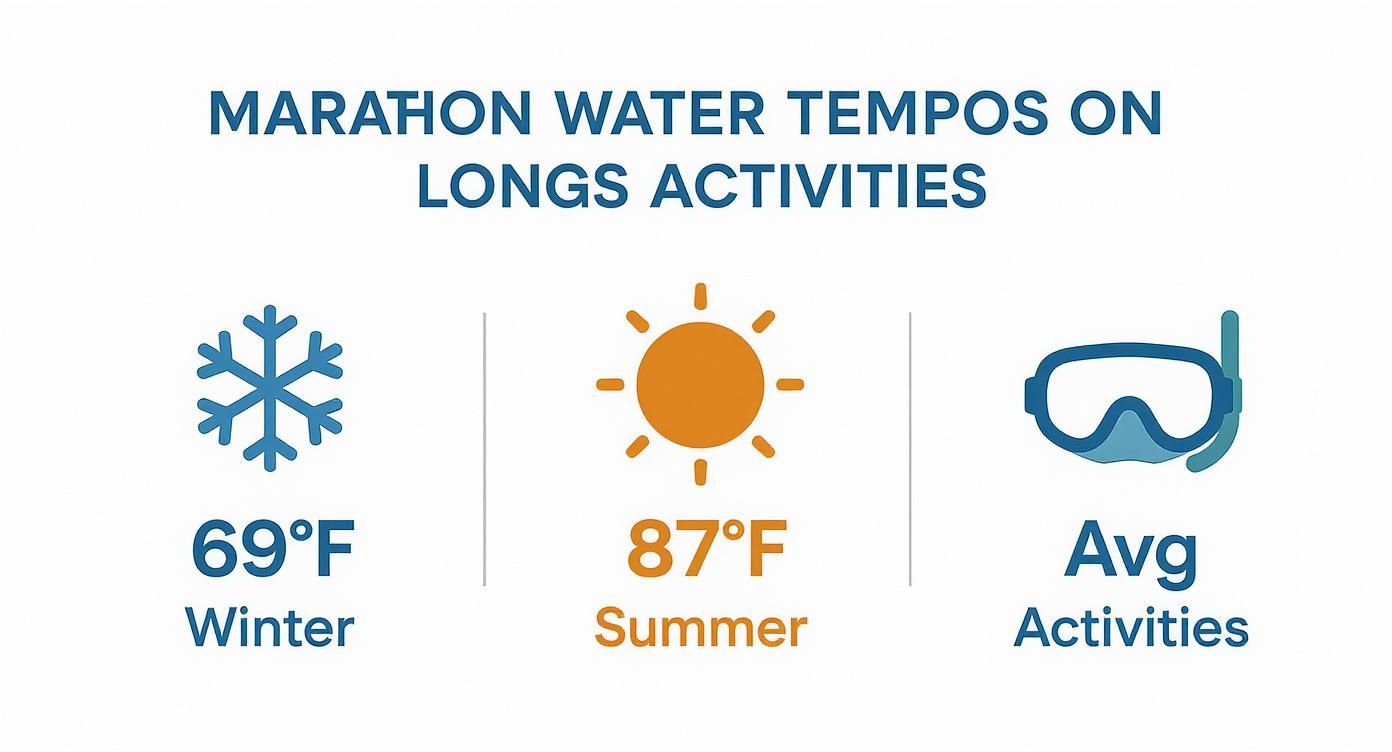
As you can see, that comfortable range between winter and summer means snorkeling is pretty much always on the table here.
The most important takeaway is that there is truly no "bad" time to get in the water in Marathon. Your decision depends more on your personal comfort and the type of adventure you're seeking, whether it's a long, leisurely float in the summer or a crisp, refreshing swim in the winter.
This guide will walk you through what these temperatures really mean for your trip—from what to pack to the best times for specific adventures. Getting a handle on the broader patterns of Florida Keys water temperature helps you appreciate what makes Marathon so special. Whether you're dreaming of exploring Sombrero Reef or just chilling on a sandbar, knowing what to expect from the water is the first step toward an amazing vacation.
A Seasonal Guide to Marathon's Ocean Temperatures
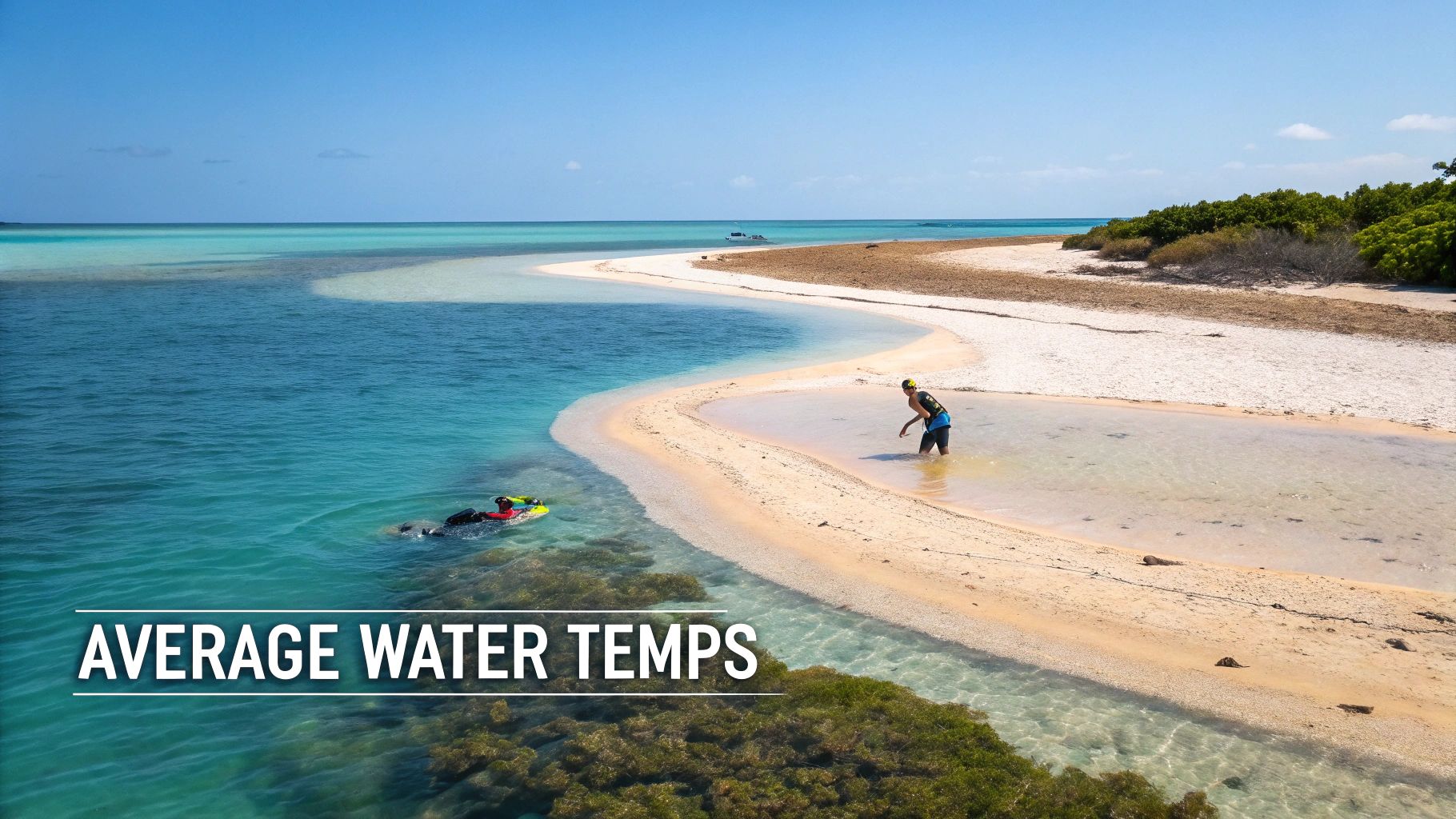
Knowing the average water temp in Marathon is one thing. Understanding what it actually feels like when you dive in? That’s what turns a good vacation plan into a great one.
The water here tells a different story each season. Let's translate the numbers into real-world experience, so you know exactly what to expect. Think of January, when the water is a crisp 74°F. That’s not chilly—it’s refreshing. Perfect for an active snorkel session where you won’t get overheated.
Now, picture a lazy August afternoon. The ocean can feel like a warm bath, hitting 88°F. It's the kind of water you can float in for hours at a sandbar with a cold drink, soaking up the tropical vibe.
Winter Wonders and Spring Splendor
From December to February, Marathon’s water settles into the low to mid-70s. This is as cool as it gets, but let's be real—it’s warmer than just about anywhere else in the country.
For longer snorkeling trips during these months, a thin wetsuit top or rash guard is a smart move to stay comfortable. But for most folks, the water is still perfect for a quick, invigorating swim on a sunny afternoon.
Once spring rolls in, things start heating up. From March through May, the ocean warms into the upper 70s and low 80s. This is the sweet spot for a lot of visitors. The water is plenty warm for hours of swimming without any special gear, and the underwater visibility is often fantastic before the summer haze arrives.
The way the seasons shift is a huge part of Marathon's charm. These subtle changes dictate the best times for different activities, whether you're a diver chasing crystal-clear visibility or a family looking for bathtub-warm water for the kids.
Getting a handle on these trends helps you pick the perfect time to visit based on your comfort level. For the full picture, check out how the air and ocean conditions line up in our guide to Florida Keys weather by month.
Summer Heat and Autumn Calm
Summer in Marathon, from June to August, is when the ocean goes full-on tropical. Water temps are consistently in the mid-to-upper 80s, and they can even kiss 90°F in the shallows.
This is prime time for pure relaxation. The warmth is incredible for families with little ones and anyone who just wants to drift without a care in the world.
Historically, the water hits its peak in late summer. August averages around 86.7°F, with some shallow spots near the shore reaching a balmy 90.7°F.
Then comes autumn, bringing a gentle cooldown from September to November. The water is still deliciously warm, hanging out in the low to mid-80s, but the summer crowds have thinned out. It’s a favorite season for locals and the perfect window for an unforgettable trip.
What to Wear for Snorkeling and Swimming in Marathon
Knowing the water temperature in Marathon is one thing, but packing the right gear is what really turns a good day on the water into a great one. Let's translate those temperature numbers into a practical packing list so you can stay comfortable, whether you're taking a quick dip at the sandbar or going on a three-hour snorkeling tour.
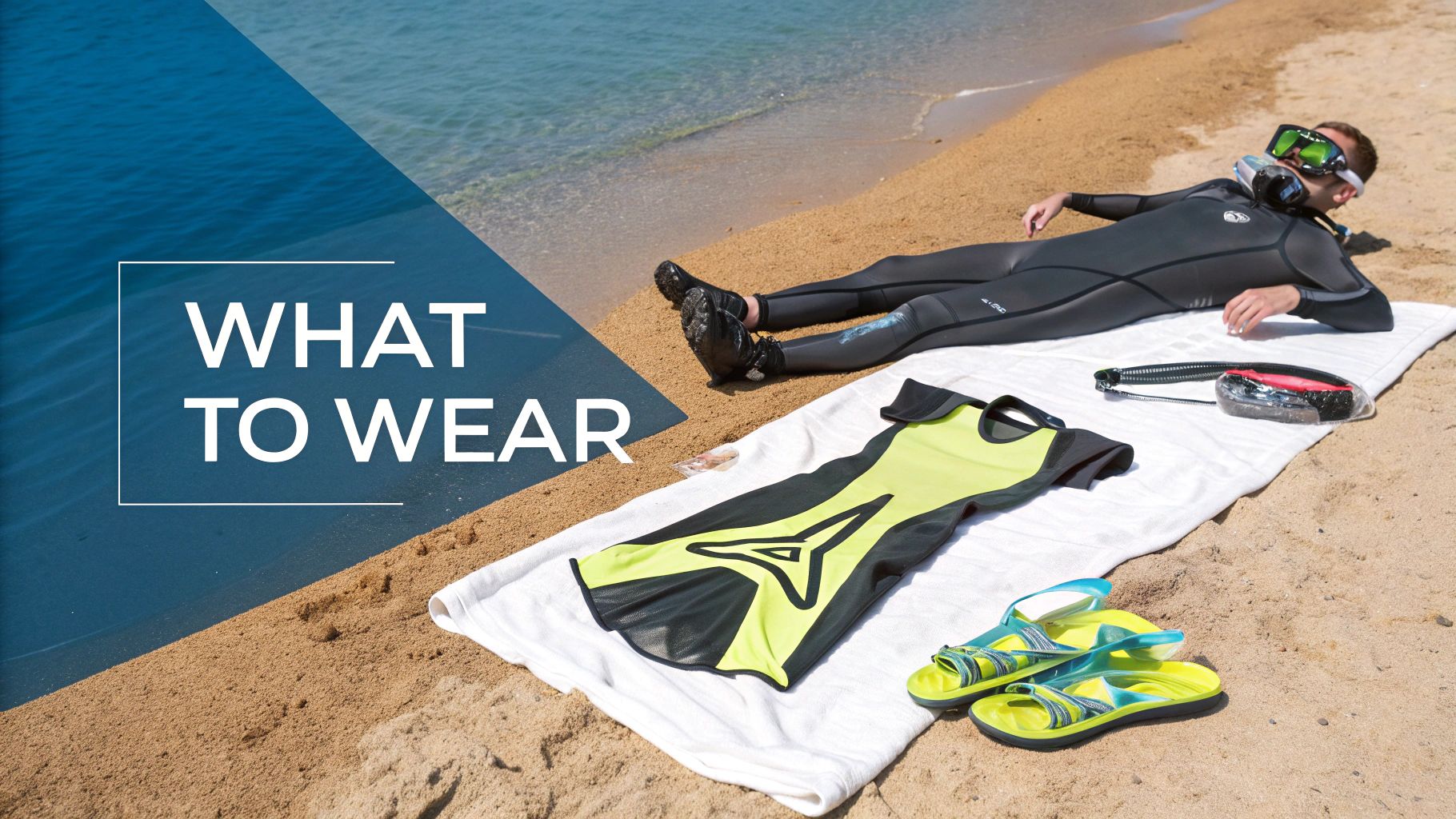
When the summer sun is blazing and the ocean feels like a bathtub, your packing list is pretty straightforward. A standard swimsuit and a good rash guard will do the trick. The rash guard isn't really for warmth—it's your best defense against the sun during those long, lazy hours floating around or exploring a shallow reef.
Gearing Up for Cooler Temperatures
But what about a breezy January day when the water dips into the low 70s? It’s still beautiful, but that cooler temperature can cut your swim time short, especially if you have kids or just tend to get cold easily. This is where a little thermal protection becomes your best friend.
For those cooler days or longer snorkeling trips, think about bringing one of these:
- Wetsuit Top: A thin neoprene top (1-3mm) is perfect for taking the edge off. It gives your core a fantastic boost of warmth without making you feel like you're wrapped in a full suit.
- "Shorty" Wetsuit: This one-piece covers your torso and upper arms/legs. It strikes the perfect balance between warmth and freedom of movement, making it ideal for active snorkelers.
- Full Wetsuit: For the chilliest winter days, or if you're just really sensitive to the cold, a 3mm full wetsuit will keep you toasty and comfortable for hours on end.
Look, the goal isn't just to survive the water; it's to actually enjoy it. A simple wetsuit top can be the difference between a rushed, 20-minute snorkel and a relaxed, 90-minute underwater adventure at a stunning spot like Coffins Patch.
Essential Gear for the Whole Family
Beyond what keeps you warm, having the right basic equipment is a must for a safe and fun time. If you're new to snorkeling or just tired of renting, check out some guides on the best snorkel gear for beginners. Getting your own quality mask, snorkel, and fins makes a world of difference in comfort and reliability.
And if you're traveling with little ones, don't forget about them! A quality one-piece can offer both comfort and crucial UV protection for a baby’s delicate skin. For a deep dive on this, there’s a helpful guide to baby one-piece swimsuits that points out what to look for. Making sure every family member is properly outfitted means everyone—from grandpa down to the baby—can have a blast in Marathon's beautiful water.
How Water Temperature Shapes Your Marathon Adventure
The water temp in Marathon isn’t just some number you glance at—it's the secret ingredient that dictates what kind of magic you’ll find on your trip. Once you understand how it shapes everything around here, you can connect the dots between the thermometer and your perfect vacation.
Think of our ocean as a living, breathing world where temperature is the master conductor. It tells the fish when to feed, where to migrate, and when it’s time to put on a show for snorkelers. This direct relationship is exactly why planning your trip around the seasons is so rewarding.
Snorkeling Paradise in Warmer Waters
When the water climbs into the mid-80s during the summer, something incredible happens just beneath the surface. Those warmer currents trigger a huge surge of activity on shallow reefs like Coffins Patch. This is the time you’ll see brilliant schools of parrotfish and angelfish darting through the corals, creating a non-stop underwater spectacle.
The warm, almost bath-like water makes for incredibly comfortable and long snorkeling sessions. You can just float for hours without ever feeling a chill, completely immersing yourself in all the action on the reef.
This thermal sweet spot is absolutely critical for the health of our reefs. Consistently warm, stable temperatures are what allow these delicate ecosystems to thrive, though it's a fine line—extreme heat can be a major threat. It’s important to understand this delicate balance, including learning about what causes coral bleaching, to really appreciate these natural wonders.
Ideal Conditions for Beach Days and Fishing
The perfectly pleasant temperatures of spring and fall create the ultimate backdrop for a family day at a spot like Sombrero Beach. With the water in the upper 70s to low 80s, it’s refreshing without being chilly—perfect for kids who want to splash for hours and adults who just want to relax by the shore. The sun isn’t nearly as intense as in mid-summer, making for a truly perfect beach day.
And for anyone with a fishing rod, temperature is everything. Those subtle shifts in the water trigger different fish to become more active, essentially ringing the dinner bell for them—and for you.
Here’s a quick breakdown of how the temperature influences your activities:
- Summer (82°F – 87°F): This is prime time for long, leisurely snorkeling trips and lazy afternoons floating at the sandbar. Marine life on the reefs is at its most active and colorful.
- Spring & Fall (74°F – 84°F): These seasons offer the perfect balance for all-around fun. The water is super comfortable for swimming, and the milder weather is fantastic for beach days and kayaking.
- Winter (70°F – 74°F): Cooler water often brings crystal-clear visibility, which is a dream for underwater photography. It also signals different fish to move into the area, creating unique opportunities for anglers.
By understanding how the water temp in Marathon Florida influences the environment, you can stop guessing and start planning like a pro. Matching your dream activities with the peak conditions for that experience is the real key to an amazing and unforgettable adventure in the Keys.
Staying Safe in Marathon's Waters Year-Round
Marathon’s famously beautiful waters are generally safe and inviting, but being prepared for the conditions is the real key to a worry-free vacation. The incredible water temp in Marathon Florida is what draws people here, and understanding the environment just makes every dip in the ocean that much better.
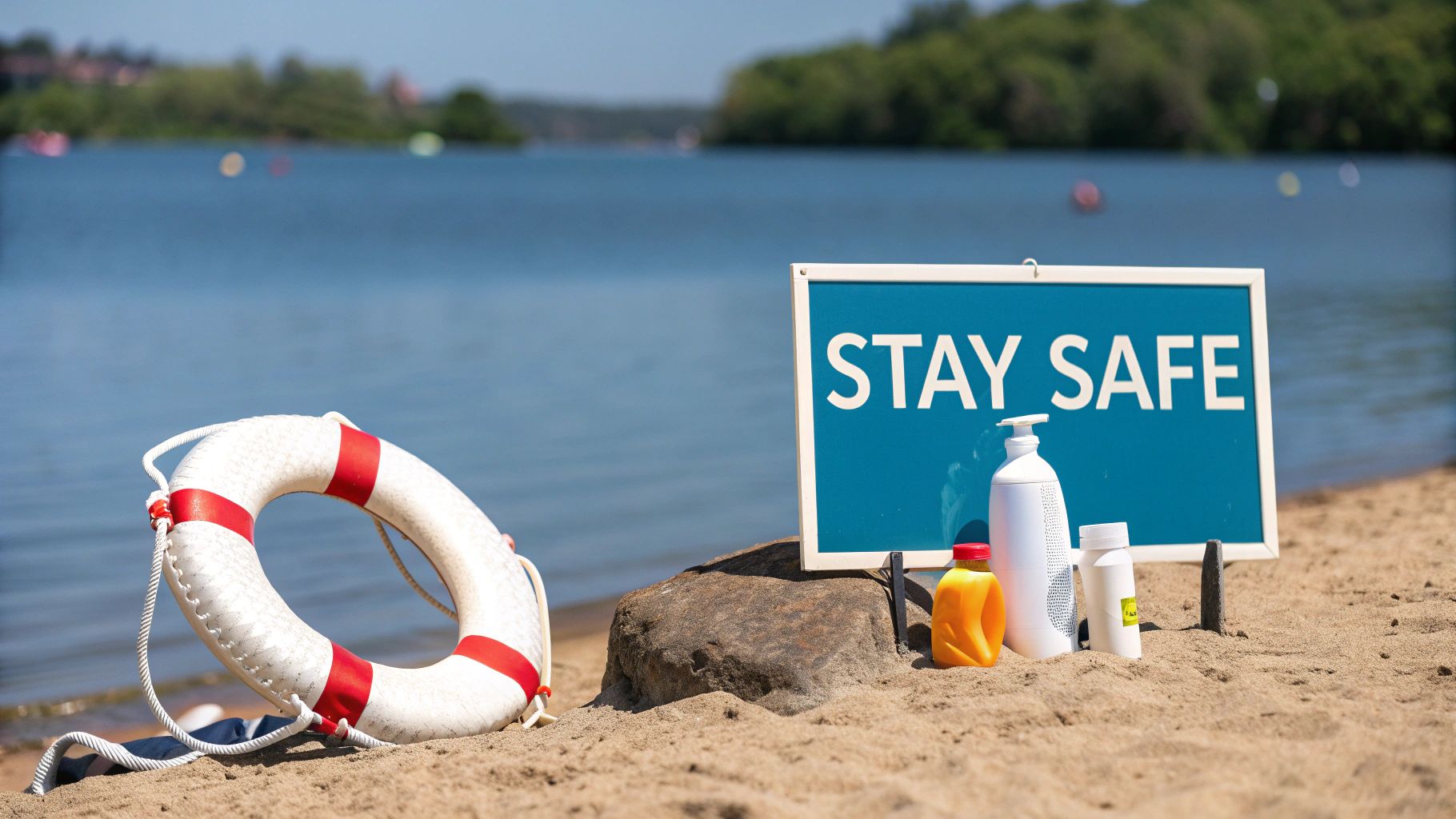
The Florida sun is no joke—it's intense all year long, even when it's cloudy. That makes UV protection absolutely non-negotiable. A high-SPF, reef-safe sunscreen is a must, but honestly, a long-sleeved rash guard is even better. It’s perfect for long snorkeling sessions or lazy afternoons on the sandbar, protecting you from the sun while adding a little warmth on a cooler winter day.
Navigating Seasonal Marine Life
While the underwater world is a massive highlight, it's smart to know who your neighbors are. In the late summer and early fall, the warmer water can sometimes bring an increase in jellyfish. Don't worry, these blooms are usually temporary and stick to certain areas.
A few local tricks can help you minimize any encounters:
- Shuffle your feet when you're wading in sandy spots. This little dance gives anything resting on the bottom a heads-up that you're coming through.
- Wear a rash guard or a "stinger suit." It's a thin layer, but it provides a surprisingly effective barrier against accidental stings.
- Listen to the local experts. Your boat captain or the folks at the dive shop are on the water every day. They'll have the most current info.
Most of the time, you won’t run into anything problematic at all, but a little awareness goes a long way. For a deeper dive, our guide on snorkeling safety tips has some excellent advice.
Understanding Temperature and Your Body
Even in paradise, you can get chilled during a long swim, especially in the winter months. If you start shivering, that’s your body’s signal to get out and warm up. This is exactly why having the right gear, like a simple wetsuit top, can make all the difference for a long winter snorkel trip.
Historical water temperature records show just how stable our climate is. Over the past decade, summer highs have touched 88°F, while the monthly average rarely drops below 68°F, even in the dead of winter. You can nerd out on more of these trends over at Climate-Data.org.
This incredible consistency is what makes Marathon such an amazing year-round destination. Just remember to respect the water and be ready for its subtle shifts—that’s the real secret to a fantastic and safe adventure every single time you jump in.
Common Questions About Marathon Water Temperatures
After covering the seasonal trends and how to stay safe, you might still have a few questions rattling around. That's perfectly normal. Let's tackle some of the most common ones we hear from visitors so you can finalize your plans and pack with total confidence.
Think of this as the local inside scoop—we've gathered these answers from years of experience out on the water.
What Is the Best Month to Snorkel in Marathon?
While you can technically snorkel here any day of the year, if you ask a local, they'll likely point you to late spring (April-May) or early fall (September-October). These months are the sweet spot.
The water temperature is typically in the low 80s, which is perfect—warm enough to stay in for hours without a wetsuit, but not quite the bathwater temps of peak summer. This also happens to be when water clarity is fantastic, marine life is buzzing, and the crowds have thinned out. It just makes for a more relaxed and magical time on the reef.
Is the Water Warm Enough for Kids in Winter?
Yes, absolutely. For most families visiting from up north, Marathon’s winter water feels like a treat. We're talking average temperatures in the mid-70s. It's way warmer than almost anywhere else in the U.S. during winter.
On a sunny day, it’s plenty comfortable for kids to splash around and have a blast. If your little one gets chilly easily or you're planning an all-day water adventure, a simple rash guard or a thin wetsuit top is a great idea. It’s a small thing that can keep them happy in the water for hours.
The key takeaway for families is that Marathon's winter water is far from frigid. It’s more like a cool, refreshing swimming pool temperature that's perfectly suitable for kids who love to splash around.
How Can I Check the Current Water Temperature?
For the most accurate, up-to-the-minute data, you'll want to check sources that pull live information. Your best bet is the NOAA National Data Buoy Center (NDBC) website, which gives you the hard science from buoys right off the Florida Keys.
For a more "on the ground" report, check in with local dive shops and tour operators. They're out on the water every day and often post current conditions—including temps and visibility at specific reef sites—on their websites or social media. Exploring our snorkeling tours page is a great way to find partners who share these real-world updates.
Is There a Temperature Difference Between the Atlantic and Gulf Sides?
You bet. It's not a huge difference, but it's definitely noticeable. The Gulf side, which is really the shallow Florida Bay, tends to heat up faster on sunny days. This can make the water feel a degree or two warmer, especially at popular spots like the Marathon sandbar.
The Atlantic side, on the other hand, is influenced by deeper ocean currents, so its temperature stays a bit more stable. Both sides are beautifully warm, but knowing this little local quirk can help you pick the perfect spot for your day's adventure.
Ready to experience Marathon's perfect waters for yourself? At Marathon Snorkeling And Sunset Cruise, we offer unforgettable trips to the best reefs and sandbars, guided by an award-winning crew. Book your adventure today at https://snorkelingmarathon.com.