
Best Time of Day to Snorkel in Marathon Florida

Let's be real—if you ask ten different guides when the best time of day to snorkel is, you’ll probably get ten different answers. But if you want the short and sweet version, it's usually the early morning. That's when the water is often at its calmest and clearest, giving you a front-row seat to the underwater show.
Of course, the ocean doesn't run on a simple clock, so the "best" time isn't a one-size-fits-all deal.
Your Quick Guide to the Perfect Snorkel Time
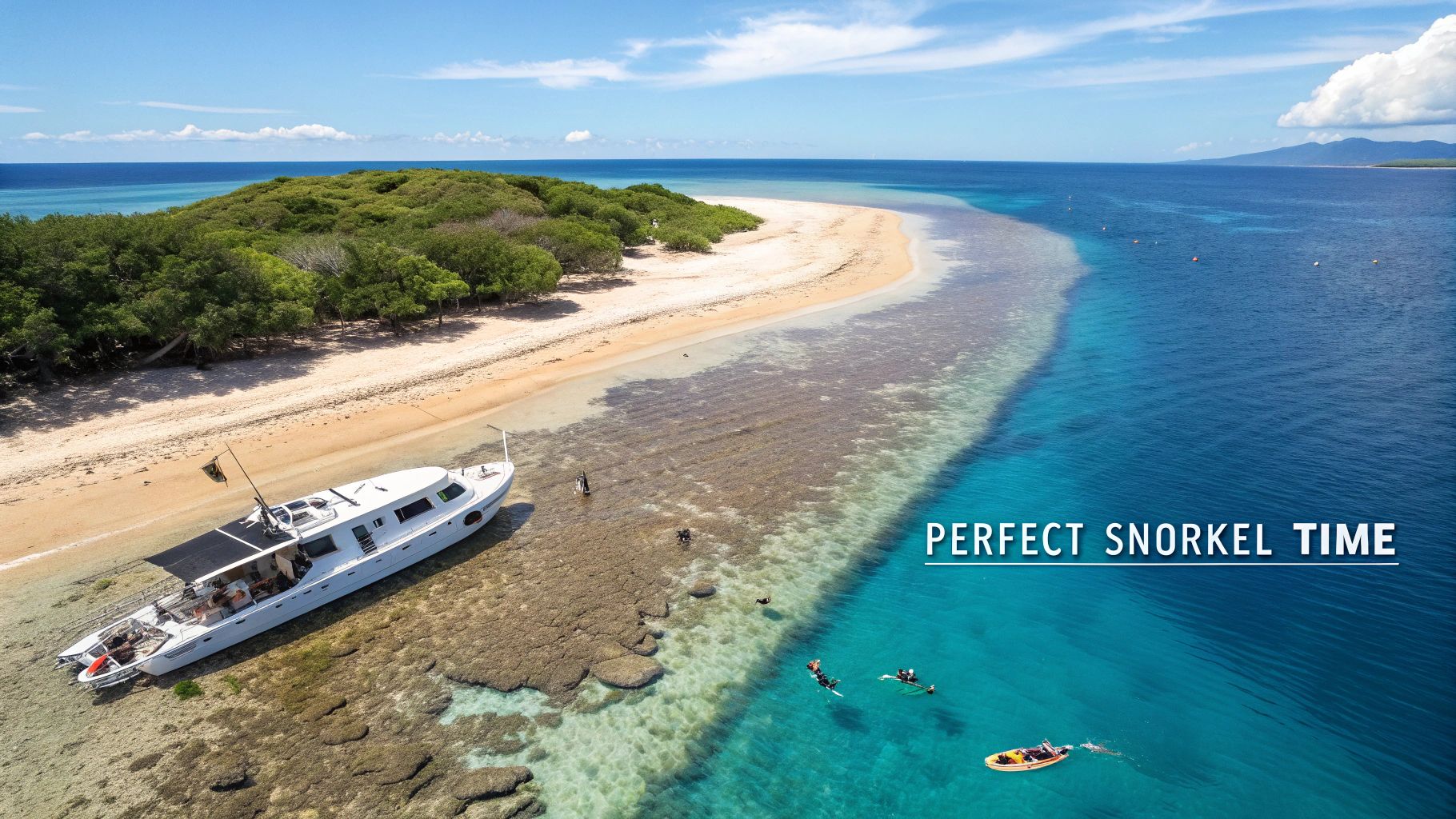
Picking the right moment to slip beneath the waves can take a good snorkel trip and make it truly unforgettable. Think of it like trying to catch the perfect sunrise; timing is everything. It changes what you see and how you see it. In the ocean, that means things like tides, sunlight, and even the daily routines of fish and turtles play a huge role.
This guide will break down how to read the water like a seasoned local. We'll get into why the morning often wins for visibility and how the sun's angle can make the reef pop with color. As Marathon's go-to experts, we'll help you find the perfect trip, whether you’re heading out to the reef or just want to chill on a sandbar.
The whole game is about syncing your snorkel trip with the ocean's natural rhythm. Once you understand a few key elements, you can dodge murky water and seriously boost your chances of spotting vibrant fish, graceful sea turtles, and stunning coral gardens.
What Determines the Best Snorkel Time
To really nail your timing, you have to look beyond the clock. The ocean has its own schedule, driven by some pretty powerful natural forces. Learning to read these signs is the secret to unlocking the most spectacular underwater views.
Here are the main things we'll cover in this guide:
- Sunlight and Visibility: How the sun's position can light up the reef and make the colors explode.
- Tides and Currents: Why "slack tide" is your best friend for the clearest, safest conditions.
- Wind and Sea State: How a little bit of wind can stir things up and affect what you see.
- Marine Life Activity: When different critters are out and about, ready for their close-up.
Getting a handle on these not only helps you plan your day but also your entire trip. Seasonal patterns are just as important, and you can learn all about them in our detailed guide on the best time to visit the Florida Keys.
Why Morning Offers Unmatched Underwater Clarity
Think of the ocean as a giant snow globe. All day long, it gets shaken up by wind, boats, and currents. But overnight, everything gets a chance to settle down. The sand and sediment drift back to the seafloor, leaving the water unbelievably clear by sunrise.
This is exactly why that early window, from sunrise to around 10 AM, is almost always the best time of day to snorkel.
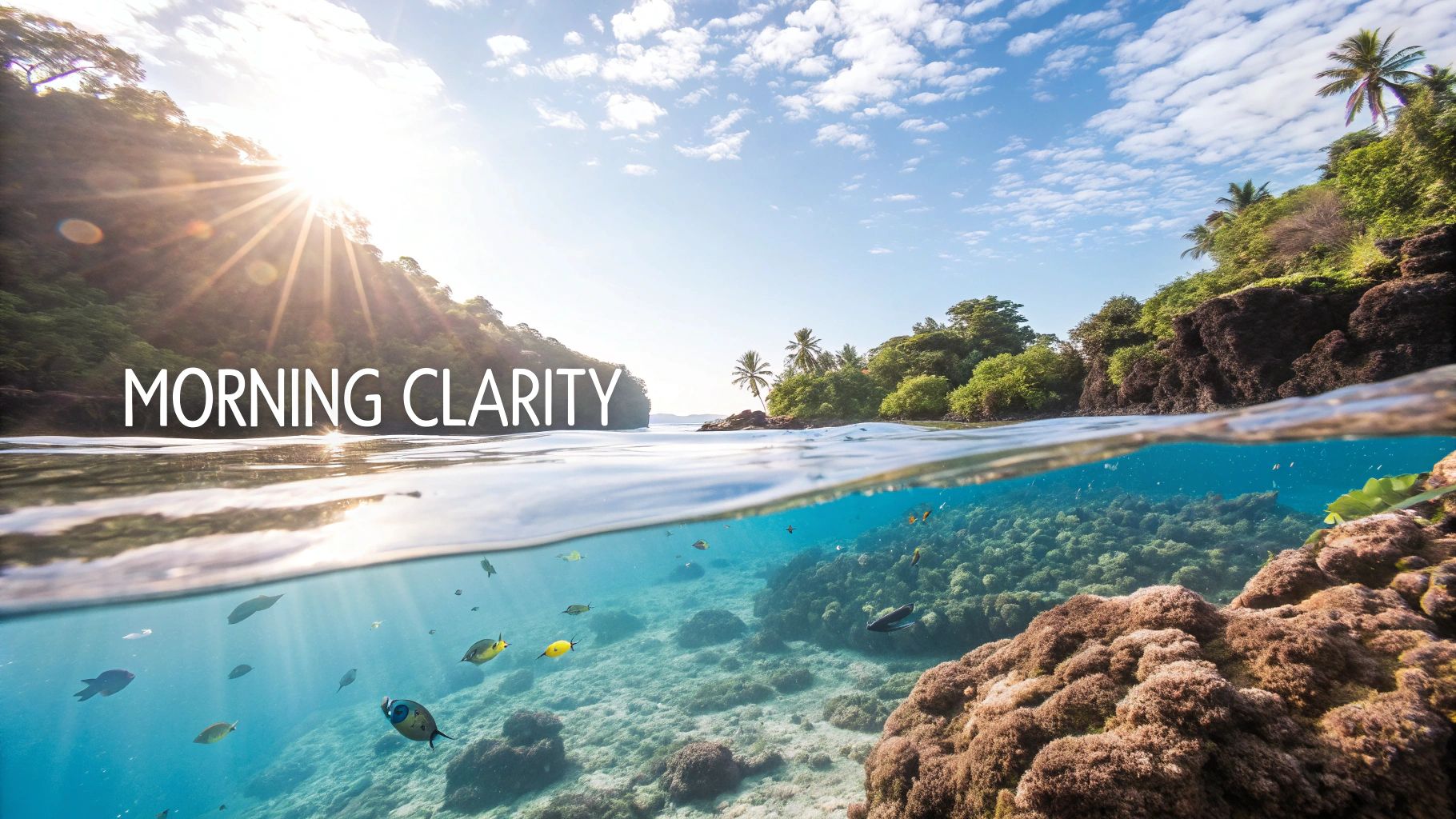
It’s not just a feeling; it’s simple physics. Less wind means a calmer, glassier sea surface, which in turn means fewer particles get churned up from the bottom. That peace and quiet translates directly to incredible underwater visibility, letting the sunlight pierce deeper and light up the reef in all its glory.
Maximizing Light and Minimizing Crowds
The quality of the morning light is another huge plus. The early sun hits the water at an angle, sending beautiful, long rays dancing through the water. You avoid the harsh, direct glare that comes with the midday sun, making for a much more pleasant view and absolutely stunning photos.
Then there's the practical side of things: beating the crowds. Popular snorkeling spots can get pretty busy as the day wears on. Heading out early means you get to enjoy the reef in a more peaceful, intimate setting. You'll be sharing the water with more fish than people.
This early morning window is a game-changer for families and first-time snorkelers. The calm, predictable conditions create a safer and more comfortable environment, helping build confidence while delivering the most rewarding views possible.
It's a proven fact that the ocean is calmest in these early hours. Overnight winds have usually died down, so there's less wave action stirring things up. In fact, water visibility can be up to 30% better on a calm morning compared to a windy afternoon. You can learn more about how water conditions play a role over at greatever.com.
The Reef Wakes Up with You
The morning isn't just about clear water—it's also prime time for wildlife spotting. Just like on land, many reef creatures are most active in the early hours as they start their daily search for food.
- Parrotfish: You'll see them everywhere, busily munching on algae and keeping the coral reef clean and healthy.
- Schools of fish: Many species are way more active and gather in large, visible groups while they forage in the morning.
- Larger creatures: The calm conditions really up your chances of spotting more elusive animals like sea turtles or majestic eagle rays gliding over the sand flats.
To make sure our guests get the best of all this, our reef snorkeling tours are specifically timed for the morning. We plan our departures to get you on the water right when the visibility is at its peak, so you can experience the breathtaking beauty of Marathon's reefs when they're truly at their best.
How to Use Tides and Currents for a Better Snorkel
If you really want to level up your snorkeling game, you’ve got to learn the ocean's rhythm. Sure, bright sun and calm winds are important, but understanding the tides? That’s the secret weapon for planning an absolutely epic snorkel. The ocean is always on the move, and that movement is the number one thing that impacts water clarity and safety.
Honestly, mastering the tides is often the difference between a pretty good snorkel and a truly unforgettable one.
The goal here is simple: you want to hit the water during slack tide. This is that magical, peaceful pause in water movement that happens right between high and low tides. Think of it as the ocean taking a deep, calming breath before it switches direction.
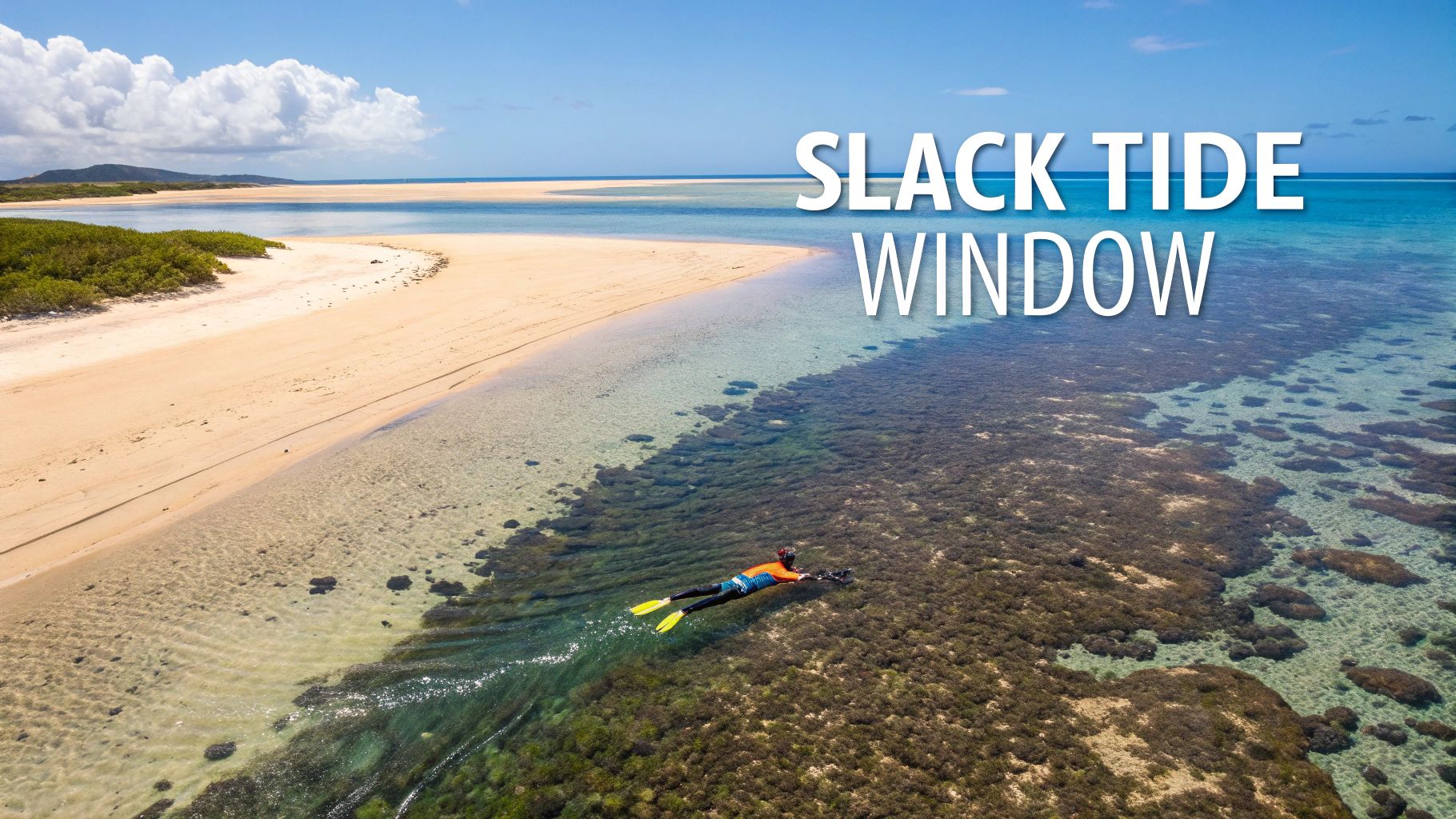
During this brief window, the currents just… chill out. They weaken dramatically, which makes swimming a whole lot easier and safer, especially if you have kids or beginners with you. But here’s the real prize: when the water isn't churning, less sediment gets kicked up from the seafloor. The result? Much, much better visibility.
Finding Your Slack Tide Window
So, how do you find this sweet spot? It’s easier than you might think. A quick online search for "tide charts Marathon, FL" will pull up exactly what you need. These charts show the precise times for high and low tide each day. The slack tide—that calm period you're aiming for—typically lasts for about 30-60 minutes right around the peak of high tide and the bottom of low tide.
Getting this timing right makes a huge difference. Around the world, snorkeling experts have found that hitting the water at slack tide can improve underwater visibility by 15-40% compared to times when the tide is really ripping. It all comes down to avoiding that underwater turbulence that clouds everything up.
High Tide vs. Low Tide Snorkeling
Beyond just finding the slack period, the actual height of the tide changes the whole experience. Each has its own perks depending on where you're headed.
-
High Tide: This is your friend when exploring the reefs. It gives you more water depth, creating a safer buffer between you and the delicate coral formations below. You can glide right over the intricate structures without having to worry about getting too close.
-
Low Tide: This brings you closer to the action. It's perfect for spotting critters hiding in the sand and getting a better look at marine life on the seafloor. This is especially key for our sandbar trips, where the super shallow, clear water at low tide creates that stunning tropical paradise you see in pictures.
Your ideal tide really depends on your destination. For deep reef exploration, aim for a high slack tide. For sandbar fun and spotting shallow-water creatures, low slack tide is your absolute best bet.
Taking a moment to understand what drives these massive water movements gives you a whole new appreciation for the ocean's power. If you want to dive a little deeper into the science, check out our guide on what causes ocean currents and how they shape the underwater world we love to explore. When you time your adventure with the tides, you're not just snorkeling; you're working in harmony with the ocean itself.
How Sun Angle Changes Your Underwater View
Think of the sun as a massive spotlight for the reef below. Its position in the sky completely changes the underwater show, just like adjusting the lighting on a stage. Different angles bring out different colors, create new moods, and reveal hidden details. Knowing how to use this natural light is the secret to seeing the reef at its absolute best.
Choosing the perfect time of day to snorkel is really a trade-off between the most brilliant colors and the most relaxing experience. Luckily, each part of the day offers its own unique visual treat.
Midday, from about 11 AM to 2 PM, is when the sun is directly overhead. This high-noon position lets sunlight punch straight down into the water with incredible intensity, like a powerful downlight. The effect is breathtaking—the vibrant reds, oranges, and purples on the coral and fish practically glow. It’s like someone cranked the saturation dial all the way up.
The Midday Trade-Offs
While midday gives you the most vivid colors, it does have a couple of downsides. That intense overhead sun can create a serious glare on the water's surface, which can sometimes make it a little tough to see clearly from above. This is also, unsurprisingly, the most popular time for snorkeling, so expect to share the view.
Midday snorkeling has the advantage of direct sunlight, which makes the reef's colors pop like nothing else. But this popular window often comes with more people—sometimes up to 50% more than in the early morning—and potential surface glare that can get in the way.
It's the classic snorkeler's dilemma: do you go for the absolute brightest colors, or do you opt for a calmer, less crowded vibe? There’s no right answer—it just depends on what you’re looking for.
Golden Hour Underwater
On the flip side, the late afternoon sun casts a completely different, almost magical, kind of light. As the sun starts sinking toward the horizon, its rays hit the water at a sharp angle. This creates long, beautiful golden beams that dance through the water, casting dramatic shadows and giving the whole reef a warm, ethereal glow.
This "golden hour" light is a photographer's dream. The softer, angled light cuts down on harsh glare and adds incredible depth and atmosphere to your shots. If you're hoping to capture some stunning images, our guide on underwater photography tips has everything you need to make the most of this beautiful light.
This is also a time of change on the reef. As the daylight starts to fade, you might catch the first glimpse of nocturnal creatures emerging from their hiding spots. The whole mood shifts from the busy, bright energy of midday to something more serene and mysterious. It's a different kind of show, but every bit as captivating.
Match Your Snorkel Time to Marine Life Activity
A great snorkel trip is about more than just clear water—it’s about who you share that water with. The reef is like a bustling underwater city, and it runs on a schedule. Timing your visit to match that natural rhythm can turn a nice swim into a mind-blowing wildlife encounter.
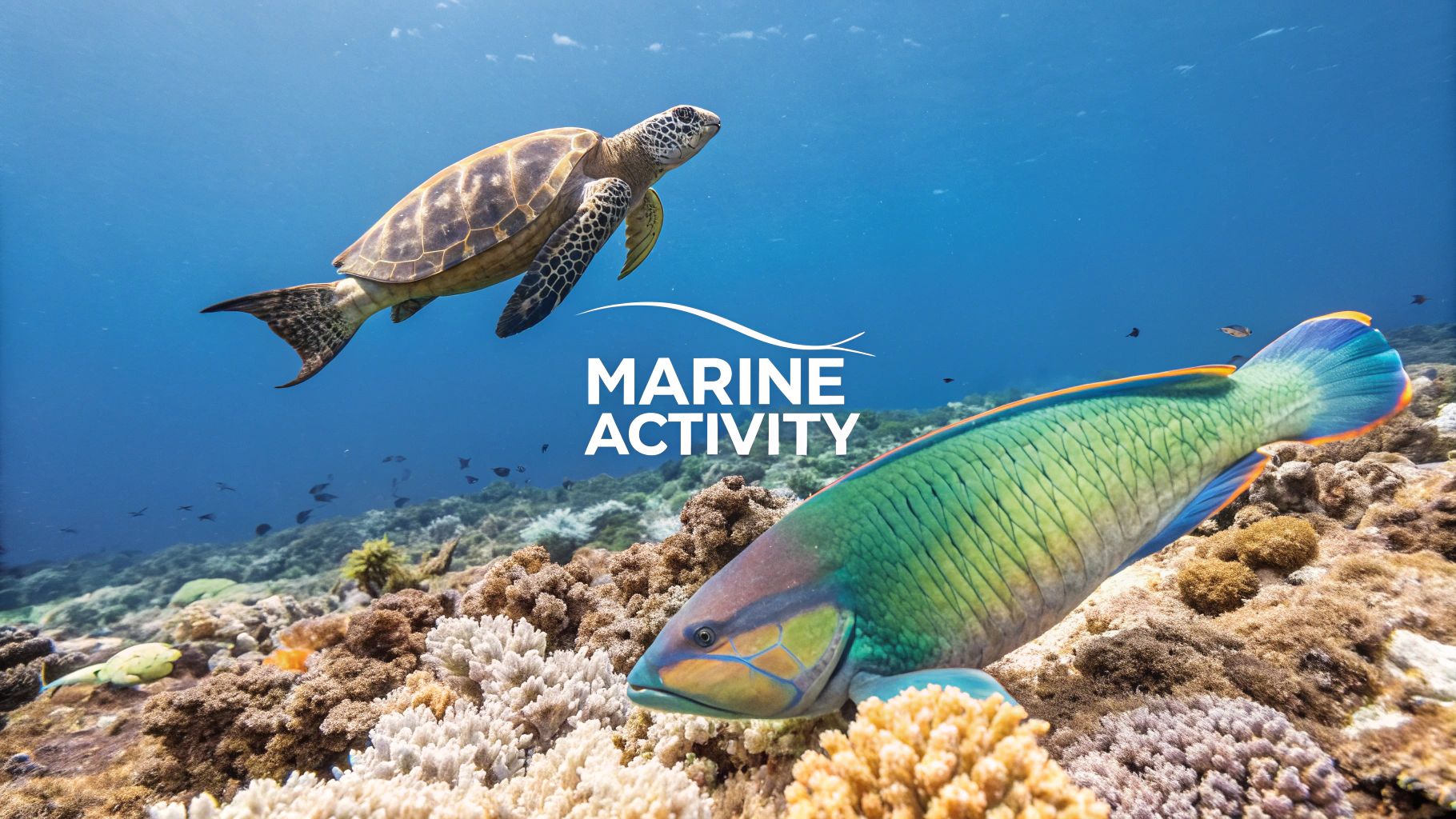
Think of the morning and late afternoon as rush hour at the reef's best restaurant. During these windows, countless fish are out and about looking for their next meal. That flurry of activity creates a vibrant, dynamic scene that makes for an absolutely unforgettable snorkel.
Prime Time for Reef Residents
Those early morning hours are pure magic. The reef is just waking up, and the calm, clear conditions give you a front-row seat to the action. It also happens to be when many diurnal (daytime) species are at their busiest.
- Parrotfish: You’ll spot these guys right away. They’re the reef's colorful janitors, and they get to work early, munching on algae-covered coral.
- Sea Turtles: While these gentle giants can be seen all day, your chances of a peaceful, up-close encounter are much higher in the tranquil morning waters.
- Eagle Rays: An early start in calm seas is your best bet for spotting a majestic eagle ray gliding effortlessly over the sand flats. It’s a truly breathtaking sight.
The best time of day to snorkel is when your schedule syncs up with the ocean's. When you understand these daily patterns, your adventure becomes a treasure hunt, and the prize is spotting the incredible creatures of the Florida Keys.
Afternoon Shifts and Custom Trips
As the day winds down, the vibe on the reef changes. The late afternoon sun casts long shadows, creating a whole different atmosphere. Some fish are settling in for the night, while nocturnal critters are just starting to stir. It’s a fantastic, and often quieter, time to be in the water.
Knowing who you're looking for makes the whole experience richer. If you want to get familiar with the cast of characters you might meet, check out our guide on what fish live in coral reefs. It helps to know what to keep an eye out for!
This is where a private charter really shines. It gives us the flexibility to build your trip around your wishlist. Whether you’re dreaming of seeing playful dolphins or a specific type of angelfish, we can help plan your trip to put you in the right place at the right time.
Planning Your Perfect Marathon Snorkel Adventure
Alright, now that you’ve got the inside scoop on how tides, sun, and wildlife schedules play out in the Keys, it’s time to put it all together. Think of it like making the perfect recipe—combining all the right ingredients is the secret to an unforgettable day on the water.
Your first move should always be to check the local forecast for Marathon. Don't just glance at the sun and rain icons; the real key is the wind. A forecast calling for winds under 10 mph is your green light for calm, glass-like water where you can see for miles.
Next up, pull up a local tide chart. Pinpoint the times for high and low tide, and then look for that magical window known as "slack tide." It's that peaceful 30-60 minute pause right at the peak of high or low tide when the water gets incredibly still. This is hands-down the best time for clear views and an easy, current-free swim.
Tailoring Your Trip
One of the best things about snorkeling in Marathon is that there’s a perfect time of day for everyone. It all just depends on the kind of vibe you're going for.
- For Families with Young Children: Early morning is your best friend. The conditions are usually the calmest and most predictable, and the water clarity is often at its peak. It's the perfect gentle introduction for kids just getting their fins wet.
- For Couples and Photographers: You can't beat the late afternoon. The "golden hour" light filters through the water in the most dramatic way, creating absolutely stunning underwater photos. Plus, the midday crowds have usually thinned out, leaving you with a more peaceful and romantic experience on the reef.
Let the Experts Handle the Planning
Honestly, the easiest way to get it all right without the headache is to let our captains handle the details. When you book a guided trip with Snorkeling Marathon, you can just sit back and relax, knowing we're putting you in the best possible spot at the best possible time. We're constantly watching the weather, wind, and tides to guarantee a safe and amazing trip.
If you want to get a better sense of how the conditions change with the seasons, check out our guide to Marathon, FL water temperature.
Joining one of our tours takes all the guesswork out of the equation. Our crew lives and breathes these waters. We know the reefs like the back of our hands and will always take you to where the conditions are prime for spotting incredible marine life in crystal-clear water.
Ready to jump in? Have a look at our reef trips, sunset cruises, and private charters on snorkelingmarathon.com to find the perfect adventure waiting for you.
Your Snorkeling Questions, Answered
Planning the perfect snorkel trip comes with a lot of questions. We get it. Here are some quick answers to the things we hear most often, helping you sort out those final details before you hit the water.
Is It a Bad Idea to Snorkel in the Middle of the Day?
Not at all, but it’s a classic case of give-and-take. Midday, let's say from 11 AM to 2 PM, is when the sun is directly overhead, blasting the reef with the most intense light. This makes the corals and fish pop with incredibly bright, vibrant colors.
The trade-off? That sun is also at its harshest, so you'll need serious sun protection. It's also prime time for other boats, and as the day wears on, afternoon breezes can start kicking up, which sometimes stirs the sand and clouds the water. If seeing the reef in all its technicolor glory is your number one goal and you don’t mind sharing the view, midday is a fantastic option. For calmer seas and a more peaceful vibe, mornings usually win out.
What's the Worst Time of Day to Go Snorkeling?
Honestly, the "worst" time changes daily with the weather, but if we had to pick one, it would be a windy afternoon. Strong winds create choppy waves on the surface, which is not only tiring to swim in but also churns up the seafloor. The result is murky water and seriously reduced visibility.
You also want to avoid snorkeling when the tide is moving at its fastest—right in the middle of its cycle between high and low. This can create surprisingly strong currents that can be a real challenge, especially for beginners or kids. A quick check of the local wind and tide report is always a smart move if you're venturing out on your own.
Snorkeling is absolutely an adventure, and just like any adventure, it pays to be prepared for the unexpected. Checking out a good guide to adventure travel preparedness can help you cover all your bases before you even leave home.
Do I Need to Stress About Tides When Booking a Tour?
Absolutely not—and that’s one of the best parts of letting an expert handle the logistics. When you book a trip with us, you can completely forget about all those tricky variables. Our captains are out on this water every single day; it’s their backyard.
We’re constantly watching the tides, wind patterns, and daily forecasts to pick the absolute best spot for your specific tour. We do all the complicated planning so you can just show up, relax, and focus on enjoying the incredible underwater world of the Florida Keys. We've got your back.
Ready to see the best of Marathon's reefs without any of the guesswork? Let our award-winning crew at Snorkeling Marathon And Sunset Cruise guide you to crystal-clear water at the perfect time. Book your unforgettable adventure today at https://snorkelingmarathon.com.